
Israel has become the first country in the world to recognize Somaliland as an independent and sovereign state. This landmark decision marks a turning point in the geopolitics of the Horn of Africa and carries wide-ranging implications for Somalia, the Middle East, Africa, and global diplomacy.
The recognition not only challenges Somalia’s long-standing opposition to Somaliland’s secession but also signals Israel’s expanding strategic footprint in Africa. For UPSC, APSC, and other civil services aspirants, this development is highly important from the perspective of international relations, geopolitics, security, and regional stability.
This article examines the issue comprehensively by covering the historical background of Somaliland, its geographical location, regional context, reasons behind Israel’s move, global implications, and exam-oriented relevance.
What Is the Recent Development?
Israel has formally recognized Somaliland as a sovereign nation through a joint declaration of mutual recognition signed by:
- Israeli Prime Minister Benjamin Netanyahu
- Israeli Foreign Minister Gideon Saar
- The President of Somaliland

Prime Minister Netanyahu stated that the recognition lines up with the spirit of the Abraham Accords, 2020. The Abraham Accords, 2020 aim to build new diplomatic partnerships and promote regional stability.
Israel has also announced its intention to pursue immediate cooperation with Somaliland in areas such as Agriculture, Health, Technology and Economic development. This step has placed Somaliland on the global diplomatic map for the first time since its declaration of independence in 1991.
What Is Somaliland?
Somaliland, officially the Republic of Somaliland, declared independence in 1991 following the collapse of the central government in Somalia. The declaration came amid prolonged civil war, political instability, and humanitarian crises in Somalia.
Historically, Somaliland was a British protectorate known as British Somaliland. In contrast, southern Somalia was under Italian control. In 1960, British Somaliland gained independence and voluntarily united with Italian Somalia to form the Somali Republic.
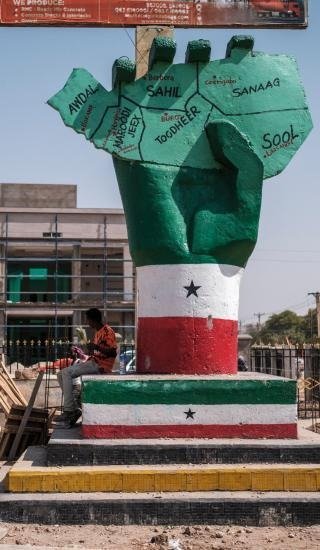
History of Somaliland:
The region known today as Somaliland possesses a long and complex political history that predates the modern nation-state system in Africa. During the early Islamic period, several Somali Muslim kingdoms emerged in this strategically located area along the Horn of Africa. Between the 14th and 15th centuries, the region formed the core territory of the Zeila-based Adal Sultanate, which played a major role in shaping the political, religious, and military landscape of Northeast Africa.
As the Adal Sultanate declined in the early modern period, successor Somali states began to assert authority over the region. Among them, the Isaaq Sultanate, established in the mid-18th century, emerged as a dominant political entity. These indigenous governance systems reflected a strong tradition of autonomy, clan-based administration, and regional control that continued well into the colonial era.
By the late 19th century, European imperial expansion reached the Horn of Africa. During this period, the United Kingdom signed a series of treaties with local Somali clans, leading to the creation of the British Somaliland Protectorate. After decades of colonial administration, Britain formally granted independence to the territory as the State of Somaliland on 26 June 1960.
However, within just five days, the newly independent State of Somaliland voluntarily united with the Trust Territory of Somaliland (formerly Italian Somalia) to form the Somali Republic. Although the union was driven by pan-Somali nationalist aspirations, it soon revealed deep political and structural imbalances. Power increasingly became centralised in Mogadishu, while the northern regions experienced political marginalisation.
Tensions intensified during the rule of Siad Barre, particularly after the failed Ogaden War. The regime’s harsh policies and military repression against the Isaaq clan, the dominant clan family in Somaliland, deepened grievances. Consequently, a prolonged ten-year armed struggle followed, culminating in 1991, when Somaliland unilaterally declared independence following the collapse of the Somali state.
Since then, the Government of Somaliland has consistently maintained that it represents the successor state to British Somaliland, rather than a secessionist entity from Somalia. This historical trajectory forms the foundation of Somaliland’s contemporary quest for international recognition.
Political and Administrative Structure of Somaliland:
Somaliland has functioned as a de facto state for more than three decades.
It has a functioning constitution, an elected president and parliament, its own judiciary, a separate currency (Somaliland shilling), and independent security forces.
Importantly, Somaliland has conducted relatively peaceful democratic elections, which sharply contrast with the instability witnessed in much of Somalia.
Nevertheless, the international community continued to treat Somaliland as part of Somalia due to concerns about territorial integrity and regional secessionist precedents.
Geographical Location of Somaliland:
Somaliland occupies a strategically crucial location in the Horn of Africa.
Key Geographical Features:
- Located in northwestern Somalia.
- Bordered by Ethiopia (south and west), Djibouti (northwest) and Somalia (east).
- Has a long coastline along the Gulf of Aden.
This coastline lies close to major global maritime routes connecting the Red Sea, the Bab el-Mandeb Strait, and the Indian Ocean.
Because nearly 12%-15% of global trade passes through the Red Sea route, Somaliland’s location holds immense strategic importance.
Why Is Somaliland Geopolitically Important?
Somaliland’s importance stems from its proximity to the Red Sea shipping lanes, the Middle East, East African trade corridors.
Moreover, the Horn of Africa has emerged as a zone of great power competition, involving Middle Eastern states, Western powers, China and Regional African actors.
Ports, logistics hubs, and security partnerships in this region directly affect global trade, energy security, and military strategy.
Israel’s recognition of Somaliland must be seen against this broader geopolitical backdrop.
Why Did Israel Recognize Somaliland?
Israel’s decision is strategic rather than symbolic.
- First, Strategic Location: Israel gains a diplomatic foothold near the Red Sea and Bab el-Mandeb, enhancing its maritime security interests.
- Second, Expansion of Abraham Accords Logic: Netanyahu described the move as aligned with the Abraham Accords, which emphasise pragmatic partnerships over ideological barriers.
- Third, Security and Intelligence Interests: The Horn of Africa sits close to regions affected by piracy, terrorism, and regional conflicts. Cooperation with Somaliland strengthens Israel’s security outreach.
- Fourth, Economic and Technological Cooperation: Israel aims to collaborate with Somaliland in agriculture, healthcare, water management, and digital technology, areas where Israel has proven expertise.
Somalia’s Position and Regional Tensions:
Somalia has consistently opposed Somaliland’s independence, viewing it as a violation of its territorial integrity. Somalia argues that recognition may encourage other secessionist movements in Africa. It undermines African Union principles. It complicates peace and reconciliation efforts. Israel’s move will likely strain its relations with Somalia and could trigger diplomatic pushback at international forums such as the African Union and United Nations.
Impact on the Horn of Africa and Africa at Large:
Israel’s recognition could create a domino effect, prompting other countries to reconsider their stance on Somaliland.
At the same time, African nations remain cautious because many African borders were inherited from colonial arrangements. Recognition of secessionist states could destabilise fragile regions. Therefore, the decision places African diplomacy at a critical crossroads.
Conclusion:
Israel’s recognition of Somaliland marks a historic and controversial shift in international diplomacy. It brings Somaliland out of three decades of diplomatic isolation while simultaneously testing Somalia’s sovereignty claims and Africa’s unity. The decision highlights how strategic interests, geography, and global realignments increasingly shape diplomatic recognition in the 21st century. For civil services aspirants, this development offers a rich case study that integrates history, geography, international law, security, and diplomacy. Understanding it holistically will significantly strengthen geopolitical awareness and analytical depth.
Sources:
- https://www.reuters.com/world/middle-east/israel-recognises-somaliland-somalias-breakway-region-independent-state-2025-12-26/
- https://www.ndtv.com/world-news/does-anyone-know-what-somaliland-is-trump-after-israels-big-move-10035824
Israel recognizing Somaliland is important because it marks the first-ever formal international recognition of Somaliland as a sovereign state since 1991, reshaping geopolitics in the Horn of Africa and challenging Somalia’s territorial claims.
Israel recognized Somaliland through a joint declaration of mutual recognition signed by Israeli Prime Minister Benjamin Netanyahu, Israeli Foreign Minister Gideon Saar, and the President of Somaliland.
Somaliland is geopolitically significant due to its location near the Red Sea–Bab el-Mandeb–Indian Ocean trade route, through which around 12–15% of global trade passes, making it vital for maritime security and energy flows.
Somalia has strongly opposed Israel recognizing Somaliland, stating that it violates Somalia’s territorial integrity and could encourage secessionist movements across Africa, potentially destabilising the region.
Yes, Somaliland largely meets the international law criteria of statehood, as it has a defined territory, permanent population, functioning government, and independent institutions, but it lacked international recognition until Israel’s recent decision.