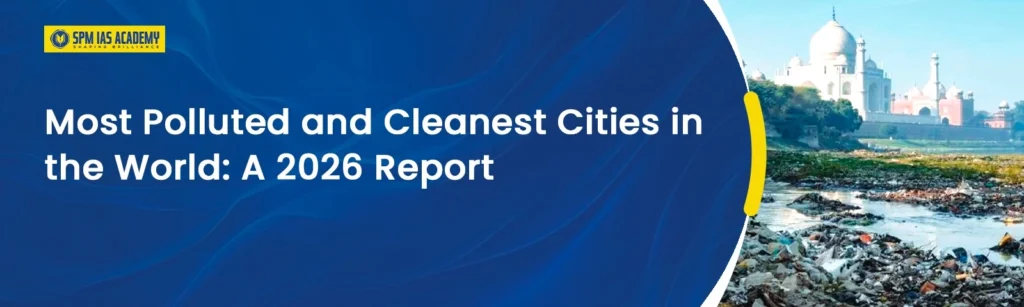
Air pollution remains one of the most critical environmental challenges. It significantly affects global public health and urban sustainability. There is a stark contrast between the most polluted cities and the cleanest cities in the world 2026. While some regions struggle with hazardous air quality, others are successfully implementing effective environmental policies.
According to recent findings from the 2026 global air pollution report 2026, urban centers across Asia continue to dominate the list of cities with the worst air quality. In contrast, several European and Oceanian cities rank among the cleanest.
In this article, we will look into the AQI ranking cities and how they raise environmental awareness. We will also discuss how it is important for aspirants preparing for civil services examinations, such as UPSC and APSC. Topics like environmental governance, pollution control, and sustainable development frequently appear in their syllabus.
What is AQI or the Air Quality Index?
The Air Quality Index (AQI) is a globally recognized system that measures air pollution levels in urban areas. It assesses pollutants that impact human health and environmental conditions.
Below are some major pollutants and the health effects of AQI:
1. Major Pollutants Measured in AQI
- PM2.5 (Fine Particulate Matter)
- PM10 (Coarse Particulate Matter)
- Nitrogen Dioxide (NO₂)
- Sulfur Dioxide (SO₂)
- Carbon Monoxide (CO)
- Ground-Level Ozone (O₃)
2. AQI Categories and Health Effects
The urban air quality index helps governments monitor pollution levels and implement control policies. Below are the AQI categories and their effects on our health:
| AQI Range | Air Quality | Health Impact |
| 0–50 | Good | Clean air, minimal risk |
| 51–100 | Moderate | Acceptable, but may affect sensitive groups |
| 101–200 | Unhealthy for Sensitive Groups | Respiratory irritation possible |
| 201–300 | Unhealthy | Health effects for everyone |
| 301–400 | Very Unhealthy | Serious respiratory problems |
| 401–500 | Hazardous | Severe health emergency |
Most Polluted Cities in the World 2026
The cities with the worst air quality are mostly concentrated in developing nations where rapid urbanization, industrial growth, and traffic congestion contribute heavily to air pollution.
1. Delhi, India
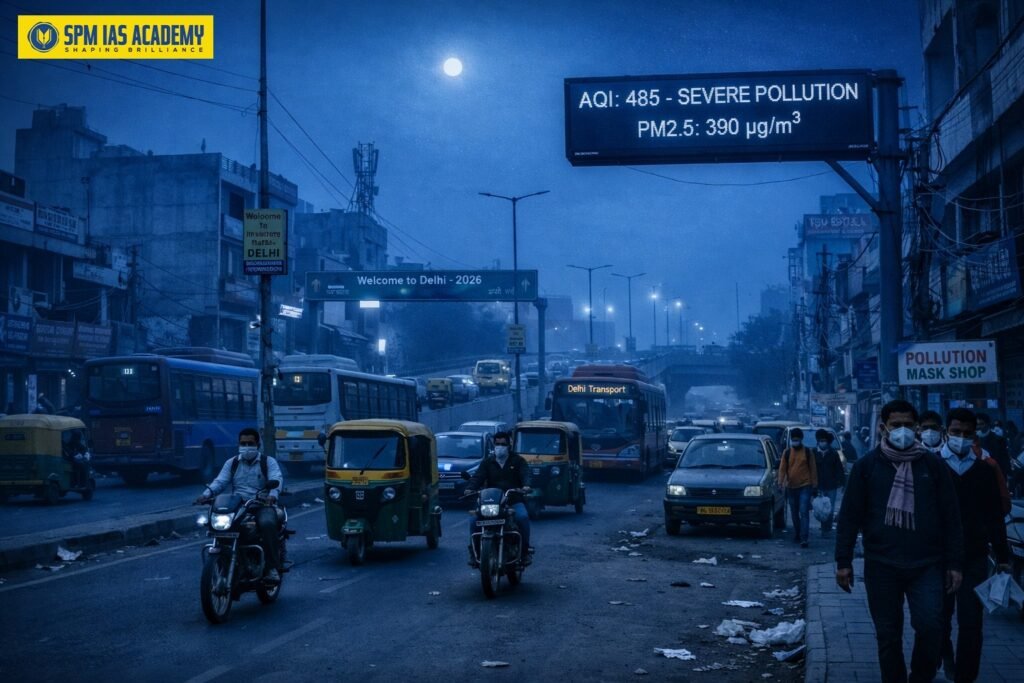
During the winter months, smog levels rise dramatically, pushing AQI readings into hazardous categories in Delhi. Delhi frequently ranks among the cities with worst air quality in the world due to a combination of:
- Vehicular emissions
- Crop residue burning
- Industrial pollution
- Construction dust
- Winter temperature inversion
2. Lahore, Pakistan
Lahore experiences severe smog episodes. The city regularly records AQI levels above 300 caused by:
- Heavy traffic congestion
- Industrial emissions
- Crop burning in the surrounding regions
3. Dhaka, Bangladesh
Dhaka’s rapid population growth and urban expansion contribute to severe pollution caused by:
- Brick kilns
- Construction dust
- Traffic emissions
4. Hotan, China
Hotan’s air pollution is strongly influenced by desert dust storms combined with industrial emissions.
5. Baghdad, Iraq
Frequent dust storms and urban emissions make Baghdad one of the AQI ranking cities with hazardous air quality.
Top 5 Most Polluted Cities in the World 2026
Below are the top 5 most polluted cities in the world in 2026:
| Rank | City | Country | Key Pollution Sources |
| 1 | Delhi | India | Vehicles, crop burning, and industries |
| 2 | Lahore | Pakistan | Traffic, smog, and factories |
| 3 | Dhaka | Bangladesh | Brick kilns, construction |
| 4 | Hotan | China | Desert dust, industry |
| 5 | Baghdad | Iraq | Dust storms, urban emissions |
Cleanest Cities in the World 2026
While some cities struggle with pollution, others demonstrate that clean air can be achieved through strong environmental governance.

Below are some of the cleanest cities in the world 2026:
1. Reykjavik, Iceland
Reykjavik consistently ranks among the cleanest cities in the world 2026 due to its reliance on renewable energy sources such as geothermal power.
2. Wellington, New Zealand
Strong environmental laws and coastal wind patterns help maintain excellent air quality.
3. Helsinki, Finland
Helsinki focuses heavily on:
- Sustainable public transport
- Green urban planning
- Renewable energy infrastructure
4. Zurich, Switzerland
Strict vehicle emission standards and efficient public transportation systems contribute to clean air.
5. Hobart, Australia
Low population density and strict environmental regulations keep pollution levels extremely low.
Top 5 Cleanest Cities in the World 2026
| Rank | City | Country | Environmental Strength |
| 1 | Reykjavik | Iceland | Renewable energy |
| 2 | Wellington | New Zealand | Strong environmental policies |
| 3 | Helsinki | Finland | Sustainable urban planning |
| 4 | Zurich | Switzerland | Low vehicle emissions |
| 5 | Hobart | Australia | Low industrial activity |
Major Causes of Air Pollution in Cities
Understanding the causes of air pollution in cities helps policymakers develop strategies to reduce emissions. There are several reasons that can cause air pollution:
1. Vehicular Emissions
Transportation contributes significantly to urban air pollution due to:
- Fossil fuel combustion
- Traffic congestion
- Older vehicle fleets
2. Industrial Pollution
Factories release pollutants including sulfur dioxide, nitrogen oxides, and particulate matter.
3. Construction Dust
Rapid urban infrastructure development generates dust particles that increase PM10 levels.
4. Fossil Fuel Burning
Coal-based power plants and domestic fuel use are major pollution contributors in developing countries.
5. Agricultural Burning
Seasonal burning of crop residues significantly worsens air quality in many South Asian cities.
Global Measures to Combat Air Pollution
Governments worldwide are adopting strategies to reduce urban pollution, which include:
1. Renewable Energy Adoption: Solar, wind, and hydroelectric power help reduce dependence on fossil fuels.
2. Promotion of Electric Vehicles: Electric mobility initiatives significantly cut down vehicular emissions.
3. Urban Green Infrastructure: Cities are expanding green spaces, tree plantations, and eco-friendly infrastructure.
4. International Climate Agreements: Global initiatives like the Paris Climate Agreement aim to reduce greenhouse gas emissions and improve air quality worldwide.
Why This Topic Is Important for Civil Services Examinations
The pollution levels of cities are important for civil service aspirants. In Prelims, questions can involve the air quality index (AQI) and polluted cities. For Mains, topics like urban governance, pollution control, and Sustainable Development Goals (SDGs) are common in essays and General Studies.
Additionally, knowledge of air pollution rankings and global environmental issues for UPSC and APSC is important for interviews, emphasizing the need to stay updated on these matters.
Conclusion
In conclusion, the contrast between the most polluted and cleanest cities in the world 2026 highlights an urgent need for sustainable urban planning. Moreover, many developing cities struggle with hazardous pollution levels. In contrast, several cities demonstrate that cleaner air is achievable. This is possible through renewable energy adoption, strict emission regulations, and sustainable infrastructure.
For civil services aspirants, understanding global air pollution trends is important. Additionally, knowledge of AQI rankings and environmental policies is invaluable. This understanding not only aids in examinations but also prepares future administrators to develop policies. Consequently, these policies will help ensure healthier and more sustainable cities.
Frequently Asked Questions
According to recent global air quality reports, Delhi frequently ranks among the most polluted cities in the world, primarily due to vehicular emissions, industrial activity, and seasonal crop burning.
Reykjavik in Iceland is often ranked among the cleanest cities in the world because of its extensive use of renewable geothermal energy.
The major causes of air pollution in cities include vehicular emissions, industrial pollution, fossil fuel combustion, construction dust, and agricultural burning.
Air pollution is a key environmental topic included in the syllabus of civil services exams. Questions related to AQI ranking cities, climate change, and pollution control policies often appear in prelims, mains, and interviews.