
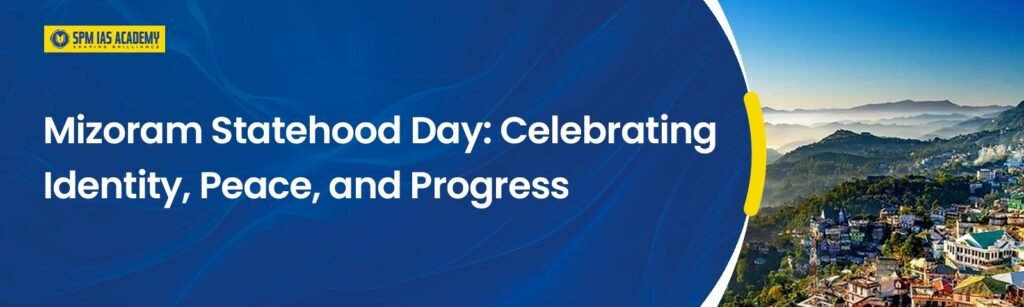
Every year on 20th February, the hills of Mizoram echo stories of peace, identity, and growth. This day marks the celebration of the state’s historic journey to becoming the 23rd State of India.
The story of Mizoram Statehood Day is not just a date on the calendar. Instead, it serves as a testament to resilience, negotiated peace, and the aspirations of the Mizo people.
Additionally, Mizoram’s transformation from a district of Assam to a full-fledged Indian state showcases its rich socio-cultural fabric. Moreover, it highlights the political evolution of the region.
What Is Mizoram Statehood Day?
Mizoram Statehood Day commemorates the Mizoram Foundation Day. This day marks the moment when Mizoram officially became the 23rd state of India on 20th February 1987. Prior to this achievement, the region was designated as a Union Territory (UT) since 1972.
The change occurred after it was separated from Assam. Consequently, the anniversary serves as a milestone that connects Mizoram history, peace, and growth for the Mizo community. Furthermore, it highlights Mizoram’s role within India’s northeastern mosaic.
Below are some facts about Mizoram:
| Aspect | Details |
| Statehood Date | 20 February 1987 |
| Former Status | Union Territory (since 1972) |
| Capital | Aizawl |
| Cultural Identity | Predominantly tribal with rich traditions |
| Major Achievement | Peace agreement → end of decades-long insurgency |
| Celebrated With | Parades, cultural programs, and official events |
Historical Journey to Statehood
The evolution of Mizoram into a state was long and layered, shaped by socio-political movements and a spirited regional identity.
1. Early Beginnings
Initially part of Assam as the Lushai Hills District, the area was renamed the Mizo Hills in 1954. Political awareness began to develop as local unions formed and advocated for administrative autonomy.
2. Insurgency and Peace
A turning point came after the Mautam famine of 1959. This event catalyzed the rise of the Mizo National Front (MNF). The MNF was a group that sought sovereignty for the region. Subsequently, they led an armed insurgency starting in 1966.
3. Landmark Accord
The signing of the Mizo Peace Accord in 1986 marked a significant milestone. This agreement was established between the MNF and the Government of India. Not only did it bring peace, but it also paved the way for full statehood. Consequently, this peace agreement remains one of India’s most successful negotiated settlements.
Furthermore, on 20th February 1987, Mizoram officially became India’s 23rd state. This event marked the culmination of political reconciliation, trust-building, and democratic governance.
Significance of Mizoram Statehood Day
The significance of Mizoram Statehood Day goes far beyond a simple ceremonial celebration. It represents a transformative phase in India’s post-independence political evolution. This is particularly true in the context of the Northeast.
Furthermore, the grant of statehood on 20 February 1987 was not merely an administrative restructuring. Instead, it was a recognition of regional identity. Additionally, it acknowledged political aspirations and the power of democratic reconciliation.
1. Political Identity
Statehood acknowledged the unique identity and governance aspirations of the Mizo people, giving them constitutional space within the Indian Union.
2. Triumph of Peace
The peace accord shifted Mizoram from decades of conflict into a framework of dialogue, cooperation, and development.
3. Cultural Preservation
Mizoram’s statehood allows for better preservation and celebration of its traditions, including dance, music, festivals, and tribal heritage, which reinforces pride in cultural roots.
4. Growth & Development
Since 1987, Mizoram has not only strengthened social infrastructure but also achieved progress in literacy, health, and community participation, reflecting a steady socio-economic growth trajectory. (While not included in the two main sources, recent reports highlight educational progress in the state.)
How Mizoram Celebrates the Day
The observance of Mizoram Statehood Day is marked by several significant events. First and foremost, flag hoisting ceremonies and official addresses by state leaders set the tone for the celebrations. In addition to these formalities, cultural performances that showcase traditional dances and music enrich the festivities, adding a vibrant cultural dimension.
Moreover, social gatherings and community parades foster a sense of togetherness among residents. As a result, this day also becomes an opportunity for reflection on themes of peace, unity, and future aspirations. In many places, particularly in the state capital of Aizawl, people take part in collective prayers and community service events, further honoring their shared heritage and the spirit of unity that the day represents.
Why It Matters Today
For students, culture enthusiasts, and citizens of India, Mizoram Statehood Day serves as a powerful reminder of the importance of dialogue over conflict, the value of respecting and integrating diverse identities, and the role of equitable governance in nation-building.
Aspirants can benefit from UPSC coaching in north east India for region-focused guidance and mentorship.
Conclusion: Relevance for UPSC & Governance Perspective
Statehood Day of Mizoram reflects one of India’s most successful examples of conflict resolution through constitutional accommodation and political dialogue. Notably, the transition from insurgency to stability after the Mizo Peace Accord highlights the effectiveness of cooperative federalism. Moreover, it emphasizes the role of decentralization and negotiated settlements in addressing regional aspirations.
From a UPSC perspective, Mizoram’s journey underscores important themes. For instance, it highlights internal security management, tribal autonomy, and the integration of the Northeast. Additionally, it illustrates the dynamics of Centre–State relations under the Indian Constitution. Furthermore, this case demonstrates how inclusive governance and recognition of cultural identity can strengthen national unity.
Thus, Mizoram Statehood Day is not only a commemorative event but also serves as a case study. In fact, it exemplifies peace-building, federal restructuring, and democratic consolidation in India.
For structured preparation, explore UPSC coaching in Assam to strengthen governance and current affairs understanding.
Frequently Asked Questions:
Mizoram Statehood Day is celebrated every year on 20th February. On this day in 1987, Mizoram officially became the 23rd state of India under the State of Mizoram Act, 1986.
The day is important because it marks the successful implementation of the Mizo Peace Accord (1986), which ended decades of insurgency and led to full statehood. It symbolizes peace, democratic governance, and recognition of Mizo identity within the Indian Union.
Before attaining statehood in 1987, Mizoram was a Union Territory (from 1972 to 1987). Earlier, it was known as the Lushai Hills District of Assam.
The Mizo Peace Accord was an agreement signed in 1986 between the Government of India and the Mizo National Front (MNF). It brought an end to insurgency in the region and paved the way for Mizoram to become a full-fledged state.
The day is celebrated with:
Official flag hoisting ceremonies
Cultural performances and traditional dances
Speeches by state leaders
Community gatherings and public events
The capital city, Aizawl, witnesses major celebrations and government programs.
Mizoram is the 23rd state of India, attaining statehood on 20 February 1987.
Mizoram holds strategic and cultural significance in Northeast India. It shares international borders with Myanmar and Bangladesh and is known for its rich tribal culture, high literacy rate, and peaceful political environment.