
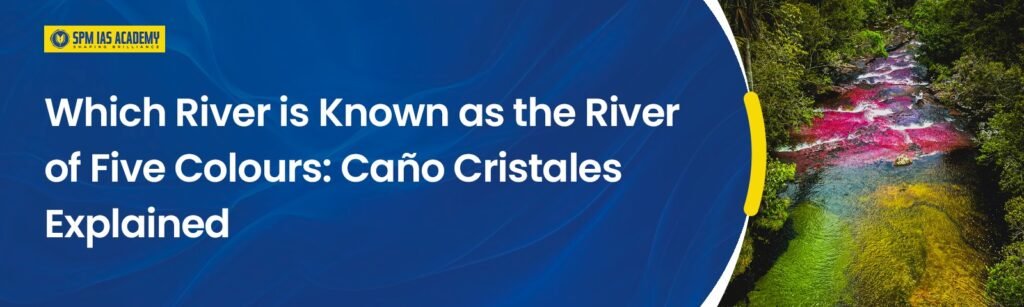
Nature has gifted the world with countless breathtaking wonders. Among the most surreal is a river that looks like a liquid rainbow. You may have heard this river referred to as the River of Five Colors. But which river is it? Furthermore, why does it look so magical? Let’s dive in!
In this article, we will look into the River of Five Colours, and we will explore why it gets its stunning hues. Additionally, we will identify where it’s located. We will also discuss the science behind Caño Cristales’ vibrant beauty.
What Is the River of Five Colours?
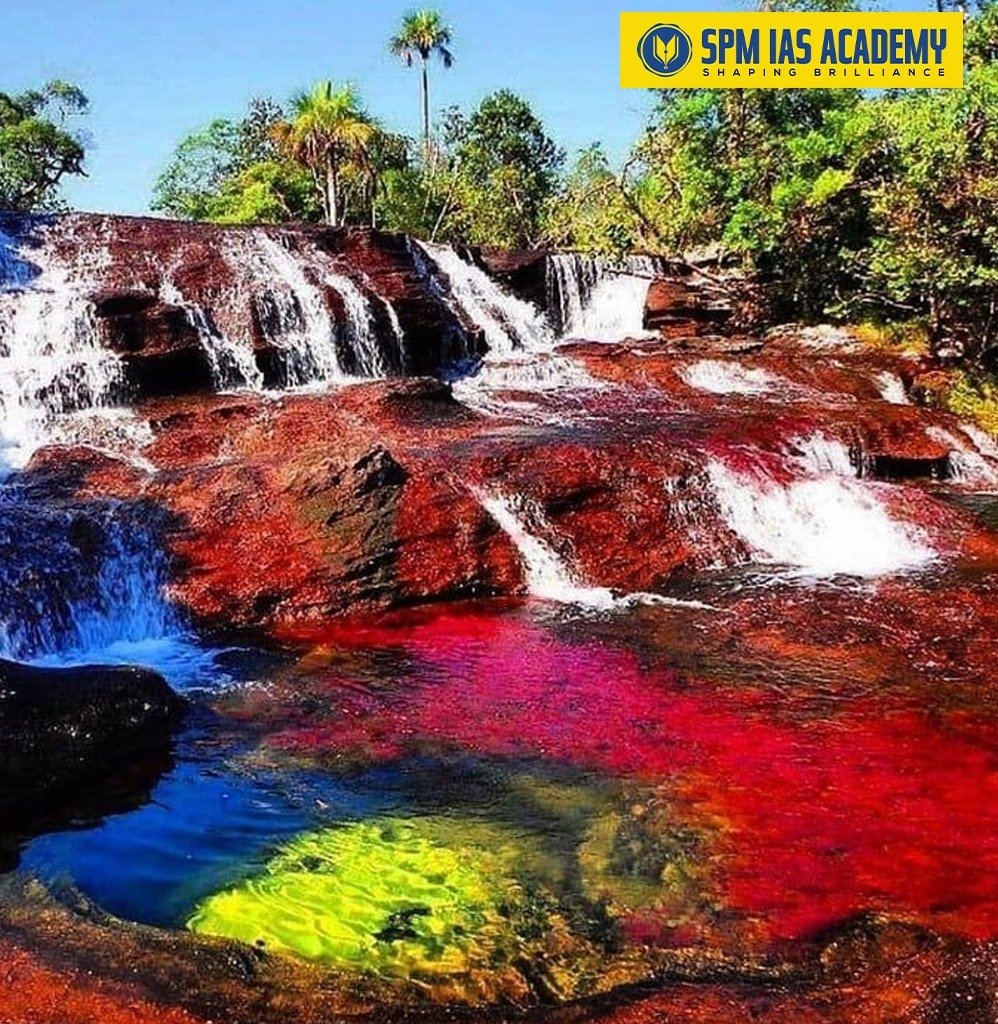
The River of Five Colours, known as Caño Cristales, is a stunning river found in Colombia’s Serranía de la Macarena National Park. It is often referred to as the Liquid Rainbow River due to the vibrant mix of colors visible along its riverbed.
1. Where is the Caño Cristales River?
Caño Cristales is a river that flows for about 100 km through the remote Macarena mountain range in the Meta Department of Colombia. It is a tributary of the Guayabero River and is situated in a biodiverse area where the ecosystems of the Andes, Amazon, and Orinoco converge.
2. Why Is It Called the Rainbow River?
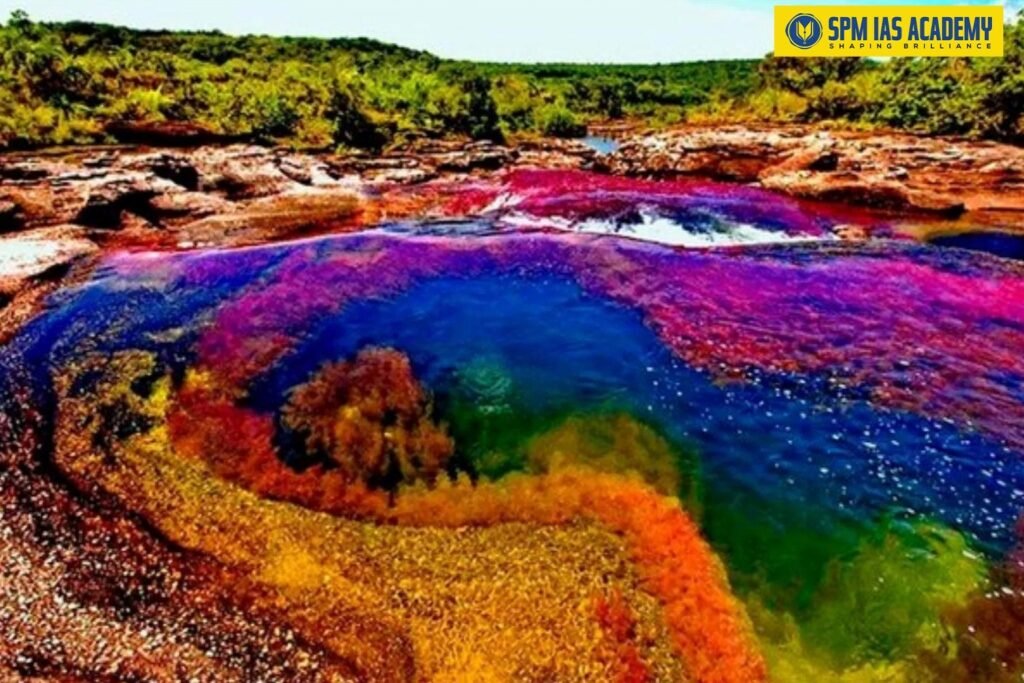
The river earns its colorful name because, during a specific period each year, its waters display a unique palette of colors. The Caño Cristales River becomes known as the “Liquid Rainbow River” because of a unique biological process involving a special aquatic plant and the right environmental conditions. Here’s how it happens:
- The bright colors of the river come from a local aquatic plant known as Macarenia clavigera. Unlike algae or moss, this resilient riverweed grows attached to the rocks on the riverbed.
- From July to November, the plant alters its growth to produce more carotenoids, the pigments that give carrots their orange color, in order to protect itself from intense tropical sunlight.
- The vibrant red and pink colors of the river are produced by the plants, while other shades derive from the environment. The green comes from aquatic mosses, yellow from sandy areas, blue reflects the sky in the clear water, and black comes from old rocks.
The river’s water contains very few nutrients or minerals, making it exceptionally clear. With little sediment present, sunlight can easily penetrate the water, aiding in the creation of the river’s vibrant rainbow colors.
| Colour | Natural Source | Explanation |
| Red | Macarenia clavigera plant | Changes colour under sunlight |
| Yellow | River sand | Golden sand patches on the riverbed |
| Green | Moss & algae | Small aquatic plants on rocks |
| Blue | Sky reflection | Crystal clear water reflects the sky |
| Black | Ancient rocks | Dark stones at the bottom |
These colours are not due to pollution; they are a natural phenomenon.
3. The Science Behind the Colours
The rainbow effect is primarily caused by an aquatic plant species known as Rhyncholacis clavigera (previously called Macarenia clavigera), which grows on the riverbed. This plant changes color depending on:
- Sunlight
- Water level
- Seasonal conditions
When the water level is optimal, typically between June and November, the plant blooms in vibrant shades of red and pink. Alongside the yellow sand, green algae, blue water, and dark rocks, the river transforms into a stunning kaleidoscope of colors.
Stay updated on environment and geography topics like this through reliable current affairs resources.
Best Time to See the Colours
The striking colours of the Caño Cristales river are seasonal. They appear when:
- Water levels drop just right
- Sunlight hits the plants.
- The climate is between the wet and dry seasons
This magical window usually falls between June and November.
Interesting Facts About the River of Five Colours
1. Unique Ecosystem: The river flows through a region with rich biodiversity, including species from three major ecosystems: the Thames, the Andes, the Amazon, and the Orinoco.
2. Natural Palette: The colours are completely natural and not man-made or chemical in origin.
3. Tourist Attraction: Increasingly popular among eco-travelers for photography and adventure tourism.
Aspirants exploring global geography and environment can benefit from UPSC & APSC Coaching in Guwahati for deeper preparation.
Conclusion
In conclusion, Caño Cristales is a mesmerizing natural wonder known as the River of Five Colours. It is located in Colombia and is considered one of nature’s most beautiful spectacles. This liquid rainbow River enchants visitors with vibrant colors.
However, these colors appear only under special natural conditions. Whether you are a travel enthusiast, a nature lover, or simply a curious reader, this incredible river captures the imagination. Ultimately, it serves as a shining example of Earth’s artistic brilliance.
Frequently Asked Questions:
The river known as the River of Five Colours is Caño Cristales in Colombia.
It gets its vivid colours from the aquatic plant Rhyncholacis clavigera and other natural elements
on its riverbed when water levels and sunlight are ideal.
It is located in the Serranía de la Macarena National Park in the Meta Department, Colombia.
The colours are most visible between June and November when the plants bloom, and water levels are just right.