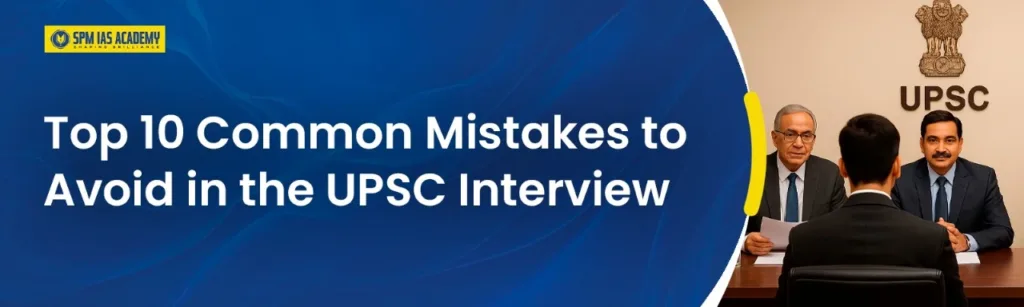
The UPSC Interview/Personality Test is the final stage of the Civil Services Examination. Many candidates reach this stage after years of preparation. However, several candidates fail to score well because they repeatedly make avoidable mistakes. It prevents them from achieving their dream jobs like IAS, IPS. The interview panel evaluates clarity, integrity, awareness, and balance in answering. Therefore, understanding common errors becomes extremely important.
In this article, we explain the top 10 mistakes candidates must avoid in the UPSC Interview, along with practical strategies to improve performance.
Top 10 Common Mistakes to Avoid in the UPSC Interview:
Wearing Inappropriate or Distracting Attire:
First impressions matter. Some candidates select attire that looks informal or distracting. The Civil Services demand discipline. Therefore, choose simple formal wear. Clean and well-fitted clothes reflect seriousness. For men, a light shirt and dark trousers work well. For women, a simple saree or formal suit looks professional.
Not Listening Carefully to Questions:
Misunderstanding a question leads to incorrect answers. Many candidates rush because they feel nervous. Therefore, listen carefully before responding. Take a short pause if needed. This pause helps you understand the question clearly. A thoughtful response always creates a strong impression.
Lack of Clarity in Answers:
Many candidates struggle to articulate their answers with clarity. They speak without structure, and this confuses the interview panel. Clear thought reflects a clear mind. Therefore, think before answering. Frame your response logically. Use short and direct sentences. Moreover, avoid adding unnecessary information. The panel prefers precise answers supported by facts or logic.
Showing Overconfidence or Underconfidence:
Confidence plays a major role in the UPSC Interview/Personality Test. However, many aspirants fail to maintain the right balance. Some candidates appear extremely nervous. Others try to sound overconfident. Both impressions harm your performance. A balanced confidence shows maturity. Therefore, we advise you to practise mock interviews regularly. Mock interviews help you to gain natural confidence without arrogance.
Not Revising the Detailed Application Form (DAF):
Your DAF is the most important document for the interview stage. The board prepares many questions from the information given in your DAF. Yet, many candidates ignore revising their DAF thoroughly. This causes stress during cross-questioning. Therefore, analyse every entry in your DAF. Prepare notes on your name and its meaning, significance, hobbies, home state, profession, your family background, and graduation subject.
Weak Awareness About Current Affairs:
The panel checks your understanding of recent events. Many candidates fail because their current affairs knowledge is outdated. UPSC expects awareness about national, international, economic, and social issues. Therefore, follow credible newspapers and monthly current affairs compilations. Moreover, revise current issues daily. This habit helps you build strong opinion-based answers. Here, we recommend you follow the Daily Newspaper Analysis by Satyajit Sir on our YouTube channel. This could be your one-stop solution for current affairs preparation.
Hiding Weaknesses Instead of Handling Them Gracefully:
Some candidates feel insecure about their weaknesses. So, they try to hide them during the interview. This approach creates an impression of dishonesty. Instead, acknowledge your weakness honestly. Then explain how you are working on improving it. This shows maturity, self-awareness, and integrity.
Using an Unstable Speaking Pace:
Communication matters a lot in the interview. Many candidates speak too fast or too slowly. This affects clarity. A fast pace shows nervousness. A slow pace shows hesitation. Therefore, practise speaking at a steady speed. Record your voice and analyse the tone. This exercise improves confidence and fluency.
Displaying Poor Body Language:
Your body language reveals your personality. Slouched posture, shaky hands, or weak eye contact reduce confidence. The panel observes these signals. Therefore, maintain a straight posture. Keep your movements controlled. Make natural eye contact. Moreover, greet the panel politely and sit comfortably. Good body language strengthens your impression and helps to fetch some extra marks.
Arguing With the Interview Board:
Many aspirants argue because they feel strongly about a topic. However, arguments create a negative impression. The board values respectful disagreement. Therefore, present your views politely. Use phrases like “With due respect” or “I believe, based on my understanding.” This tone shows professionalism.
How to Perform Better in the UPSC Interview:
While the UPSC Interview/Personality Test seems unpredictable, the right preparation reduces uncertainty. Here are a few important tips:
- Prepare and analyse your DAF thoroughly: It helps you answer questions on your background and other information in your DAF confidently.
- Improve your communication skills: Clarity and confidence matter more than complex vocabulary.
- Strengthen current affairs knowledge: Read newspapers regularly and revise monthly magazines.
- Join experienced mock interview panels: They help you understand real interview conditions.
- Maintain calmness during the interview: A composed mind gives better answers.
- Show humility and openness: The panel appreciates balanced and polite candidates.
Conclusion:
Avoiding common mistakes in the UPSC Interview/Personality Test can significantly improve your score. The Personality Test checks your values, clarity, awareness, and maturity. Therefore, focus on preparation, clarity, and authenticity. With the right guidance and consistent practice, you can confidently face the UPSC Board and move a step closer to joining the prestigious Civil Services.
Sources:
- https://www.youtube.com/watch?v=Iws9gu7HWiM
- https://spmiasacademy.com/how-to-prepare-for-upsc-interview/
Common mistakes include unclear answers, overconfidence, poor body language, weak current affairs knowledge, and incorrect facts.
DAF is crucial because most questions come from the information given on it. Proper DAF revision prevents confusion and boosts confidence.
No. Never guess. If unsure, say “I am not aware.” This shows honesty and maturity.
Practise maintaining eye contact, sitting straight, controlling hand movements, and projecting calm confidence.
Mock interviews identify weaknesses, improve clarity, enhance confidence, and simulate real board conditions, reducing errors.

Behind every article at SPM IAS Academy is a team of skilled content writers and subject experts committed to making preparation easier for aspirants. From answering common doubts to breaking down complex issues and current affairs, we create content that is accurate, easy to understand, and directly useful for UPSC, APSC, and other competitive exams.