

Many aspirants preparing for state services often ask one clear question: Can they write APSC in Assamese? This doubt usually arises because of fear, misinformation, or lack of clarity about official rules. Therefore, this blog explains everything in simple language so that confusion gets removed completely. Moreover, every point shared here reflects real exam conditions and real aspirant experiences.
The Assam Public Service Commission conducts the APSC CCE as a prestigious gateway to Assam’s administrative services. Importantly, the commission respects Assam’s linguistic diversity. It was announced in the year 2024 that mains will be conducted in both Assamese and English but now, from 2025, it was officially declared that prelims Examination will also be conducted in both the languages. As a result, candidates receive the freedom to choose their preferred language. Hence, if you feel comfortable in Assamese, you can confidently write in Assamese without hesitation.
Official Language Choices in APSC Exams
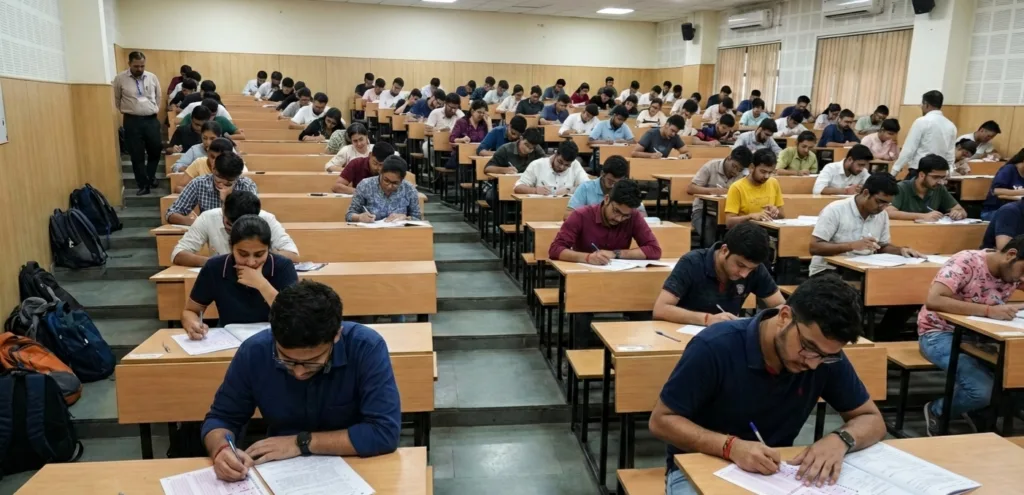
The APSC CCE follows a multilingual approach. Therefore, candidates can write answers in English and Assamese. This flexibility ensures fairness and equal opportunity for aspirants from different educational backgrounds. Because of this, Assamese-medium students do not feel disadvantaged at any stage of the exam.
When candidates write APSC in Assamese, they express ideas more naturally. Consequently, answers appear clearer and more connected to the local context. This clarity often reflects positively in evaluation.
Moreover, the commission never discriminates based on language choice. Thus, marks depend on content, structure, and relevance, not on the basis of English usage. Hence, Assamese remains a completely valid and respected medium.
Why Many Candidates Choose Assamese as Medium?
Many candidates choose Assamese because it feels natural. Firstly, those who studied in Assamese-medium schools already think and analyse in Assamese. Therefore, when they write APSC in Assamese, they save time and reduce mental pressure.
Additionally, complex ideas often flow better in one’s mother tongue. Administrative answers demand clarity, not language display. As a result, Assamese helps candidates explain arguments more smoothly and confidently.
Hence, choosing Assamese connects candidates with Assam’s cultural and social realities. Thus, answers reflect deeper understanding of local issues, which often strengthens Mains and interview performance.There is one more plus point for your own if you choose APSC in Assamese.
যিমানেই নিজৰ ভাষাটোক সাৱতি ৰাখিবা , সিমানেই তোমাৰ জাতীয়তাবাদী সত্ত্বাটো শক্তিশালী হ’ব । কৰণ সৌ তাহানিতেই সুধাকণ্ঠ গৰাকীয়ে কৈ গৈছিল , “ আজিৰ অসমীয়াই নিজক নিচিনিলে , অসম ৰসাতলে যাৱ. . . ”
Points to Keep in Mind While Writing in Assamese
If you select an Assamese medium while writing the answers, it allows aspirants to score well through familiarity and interest.
Moreover, while you write General Studies and Essay papers in Assamese, the basic administrative and technical terms should be practised beforehand. This preparation ensures accuracy and confidence.
Regardless of language, clarity remains essential. Therefore, regular answer writing practice in Assamese helps improve presentation, speed, and structure if you are thinking or making up your mind to write APSC in Assamese.
Preparation Tips for Writing in Assamese
To write effectively, candidates should learn a few terms or tricks to score good marks. Utilising these tricks and tips will make your answer smooth and also the quality of the answer will become far better.
- Learn administrative and technical terms
Candidates should consciously learn commonly used Assamese administrative terminology related to polity, economy, governance, and social issues. When these terms become familiar, answers appear more confident and structured. As a result, concepts can be explained clearly without hesitation during the exam. - Build habit of regular writing practice
Writing regularly is essential for fluency. Aspirants should write at least 2–3 answers, one short note, or one essay in Assamese every week. This consistent practice improves sentence flow, helps in organizing thoughts quickly, and slowly removes the fear of writing long answers in the exam hall. - Practice answer structuring in Assamese
Answers should follow a clear structure, introduction, body, and conclusion, even when written in Assamese. Using headings, sub-points, and short paragraphs makes answers easy to read and score-friendly. Over time, this habit increases presentation quality. - Read Assamese newspapers daily
Regular reading of Assamese newspapers helps improve vocabulary, sentence formation, and understanding of current issues. It also helps aspirants learn how administrative and political topics are naturally discussed in Assamese, which directly supports answer writing. - Refer to Assamese books and magazines
Reading Assamese books, magazines, and state-focused materials strengthens language command and subject understanding together. This dual benefit helps aspirants express ideas accurately while maintaining relevance to Assam-specific topics. - Revise written answers regularly
Aspirants should revisit their written answers to identify repeated mistakes, weak expressions, or unclear explanations. Regular revision helps correct language issues and improves clarity with each attempt. - Seek guidance when required
If confusion persists, aspirants should seek help from mentors or teachers experienced in Assamese-medium preparation. Proper feedback helps refine language use, improve answer depth, and build confidence steadily. - Stay confident in language choice
Confidence plays a major role in performance. Aspirants should trust their language ability and avoid comparing themselves with English-medium candidates. With practice and clarity, writing in Assamese becomes a strong advantage rather than a limitation.
UPSC coaching in Assam at SPM IAS Academy builds strong fundamentals for civil services aspirants with expert mentorship.
Can People from Other States Appear in APSC?
Yes, candidates from other states can apply for APSC. However, they must satisfy eligibility conditions mentioned in the notification. Therefore, checking residency requirements and document rules becomes essential before applying.
Moreover, the candidates from outside Assam can also write APSC in Assamese if they feel comfortable. The exam remains open to all eligible aspirants. But, permanent resident certificates or address proof may be required due to the state-level nature of the exam. So, candidates are requested to go through the official notification once released.
The exam strongly focuses on Assam-specific topics. Hence, non-local candidates must put extra effort into Assam’s history, geography, polity, economy, and current affairs. Local candidates often revise existing knowledge, while outsiders must build it from scratch.
How Does the Medium of Education Affect Performance?
The medium of education never decides success. Instead, strategy, consistency, and clarity shape results. Assamese-medium students often understand Assam-related topics deeply, which helps them explain answers in detail.
A common myth suggests that English answers score better. In reality, evaluators focus on relevance, facts, structure, and analysis. Therefore, a well-written Assamese answer scores equally well.
With regular practice and evaluated tests, confidence grows fast. As fear reduces, the ability to write APSC in Assamese becomes a strong advantage rather than a weakness.
Success Stories of Assamese-Medium Aspirants
Several Assamese-medium aspirants have cleared APSC and now serve the state. This year, Jasmin Sultana, who secured APS Rank 6 in APSC CCE 2024, inspired many students. She openly shared that choosing Assamese made preparation easier and more confident.
She started with doubts but stayed disciplined and focused on fundamentals, Assam GK, and answer writing. Apart from her, Anjan Jyoti Das secured the Inspector of Taxes Rank 45 and proved that clarity matters more than language.
Similarly, Anubhav Khanikar achieved Inspector of Taxes Rank 6 through disciplined writing and syllabus-based preparation. Along with them, Pinki Mani Nath, who secured Rank 39, strengthened belief in Assamese-medium success. Their journeys prove that language never limits determination. If you are thinking to write APSC in Assamese, SPM IAS Academy brings an APSC Assamese medium special batch where you will be provided Assamese medium classes with high quality notes.
Mistakes to Avoid for Assamese-Medium Aspirants
Every aspirant does hard work while preparing but still makes some common mistakes. As a result, those mistakes are reflected in the scores. Hence, here are some common mistakes highlighted by experts for those who write APSC in Assamese.
- Delaying answer-writing practice. One of the biggest mistakes many aspirants make is postponing answer writing until the syllabus feels “complete.” Because of this delay, they struggle during the Mains exam to structure answers within the time limit. Writing practice should start early, even when understanding is partial. Early practice improves clarity, speed, and confidence gradually.
- Focusing only on reading, not writing. Many Assamese-medium aspirants spend months only reading books and notes. As a result, they know content but fail to present it effectively in the exam. The APSC Mains test evaluates expression as much as knowledge. Regular writing ensures that learning translates into marks.
- Collecting too many books and notes. Another common mistake is gathering excessive study material from multiple sources. Because of this overload, revision becomes difficult and concepts remain half-prepared. Limited, reliable sources allow deeper understanding and repeated revision, which improves retention and confidence.
- Ignoring revision cycles. Without proper revision, even well-studied topics fade quickly. Many aspirants underestimate the importance of weekly and monthly revision. Consistent revision strengthens memory and ensures smoother recall during the exam.
- Compared with English-medium candidatesSome Assamese-medium aspirants lose confidence by constantly comparing themselves with English-medium students. This comparison creates unnecessary self-doubt. The exam rewards clarity, relevance, and structure, not the language used. Trusting one’s preparation is essential.
- Underestimating Assamese as a scoring mediumA wrong belief that Assamese answers score less often affects performance. In reality, well-structured Assamese answers score equally well. Confidence in the chosen medium improves presentation and depth.
- Lack of discipline and consistencyIrregular study hours and inconsistent writing practice weaken preparation over time. Discipline and daily effort matter more than occasional long study sessions.
Where to Find Assamese Local GK Resources for APSC
Assam-specific GK plays a decisive role in APSC. Hence, our SPM IAS Academy provides you with updated Assam-focused content covering history, polity, economy, government schemes, and current affairs.
Additionally, Axom Bisesh by Abhisekh Lahkar remains a trusted resource among aspirants. It covers both static and current topics in an exam-oriented manner.
Therefore, regular use of these resources strengthens Mains answers and boosts interview confidence. Over time, Assam GK becomes a scoring area instead of a challenge.
SPM IAS Academy offers trusted UPSC coaching in north east India with region-focused strategy and quality study resources.
Conclusion
Yes, you can confidently write APSC in Assamese. The APSC fully supports Assamese as an answer-writing medium. With proper practice, clear concepts, and focused preparation, language becomes a strength, not a barrier. Ultimately, determination, discipline, and smart strategy decide success, not the medium you choose. After everything, the Main and foremost thing you have to do is to stay strong as Swami Vivekananda said –
“ শক্তি হৈছে জীৱন দুৰ্বলতাই হৈছে মৃত্যু ”
Frequently Asked Questions:
No, writing answers in Assamese does not reduce marks in any way. The Assam Public Service Commission evaluates answers based on content quality, relevance to the question, factual accuracy, structure, and clarity of thought. Language is only a medium of expression, not a scoring factor. A well-written Assamese answer that directly addresses the question often performs as well as, or even better than, an average English answer because ideas are expressed more naturally and confidently.
No, it is not compulsory to be fluent in English if you plan to write the exam in Assamese. However, basic understanding of English can help while reading reference books, notifications, or standard study materials. For answer writing, essays, and optional papers, Assamese is fully acceptable. Many successful candidates have prepared primarily in Assamese and used English only as a support language for understanding certain sources.
Yes, as it was officially declared in 2024 that Mains can be written in Assamese, so this year onwards, Prelims will also be conducted in both the languages. Hence, now you can attempt prelims in Assamese as the question paper itself is bilingual. For Mains, writing consistently in Assamese is advisable if you are comfortable but don’t switch language in anyone’s advice. As you have got the option of writing in Assamese, switching of languages midway often creates confusion, so sticking to one medium throughout preparation helps maintain clarity and confidence.

Behind every article at SPM IAS Academy is a team of skilled content writers and subject experts committed to making preparation easier for aspirants. From answering common doubts to breaking down complex issues and current affairs, we create content that is accurate, easy to understand, and directly useful for UPSC, APSC, and other competitive exams.