
Mahatma Gandhi’s statement, “The best way to find yourself is to lose yourself in the service of others,” highlights the ethical principle of selflessness and the transformative power of service. It implies that true fulfillment and understanding of one’s purpose emerge when individuals dedicate themselves to the welfare of others, transcending self-interest. In today’s context, marked by individualism and material pursuits, this philosophy encourages empathy, compassion, and social responsibility, which are essential for ethical leadership and good governance.
Understanding the Statement in the Present Context
1. Discovering Purpose Through Service
○ Selfless service fosters empathy and connects individuals with the larger human experience. It aligns with Aristotle’s virtue ethics, where moral excellence comes from practicing virtues like compassion and kindness.
○ For example, Mother Teresa dedicated her life to serving the marginalized, finding her purpose in alleviating suffering and promoting human dignity.
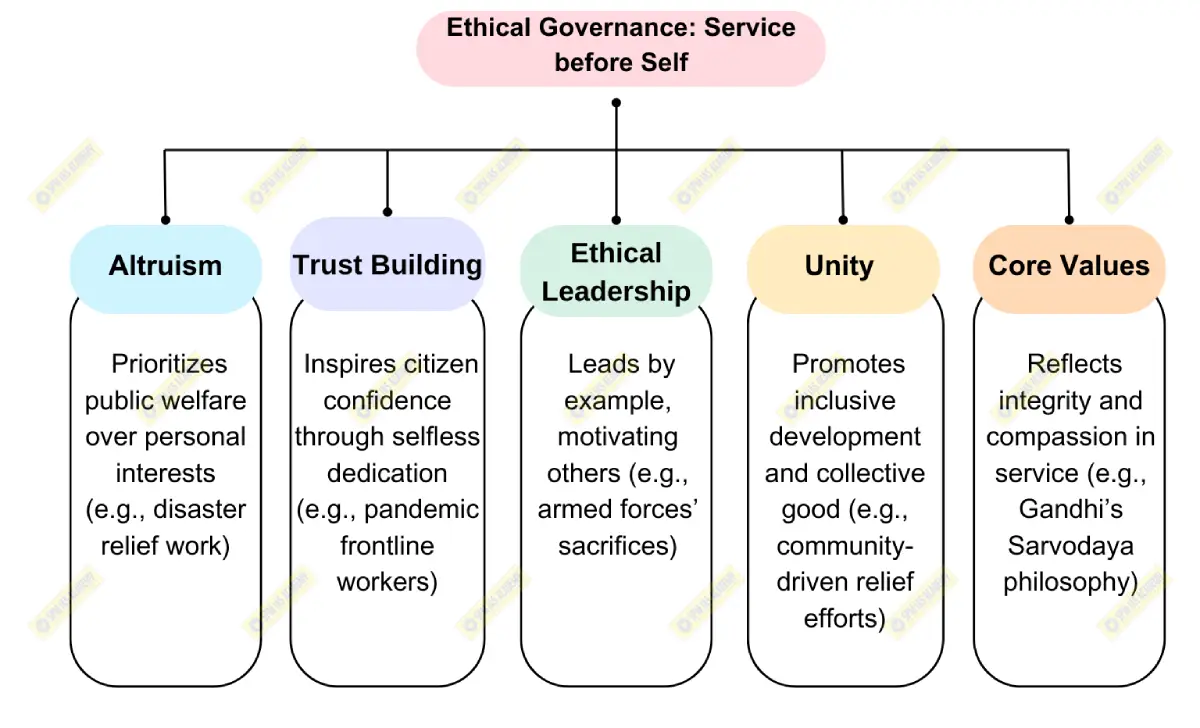
2. Service as a Path to Moral Development
○ John Stuart Mill emphasized that actions aimed at the greatest good for the greatest number lead to moral growth. Losing oneself in the service of others cultivates virtues like integrity, altruism, and justice, which are essential for building an ethical character.
○ Public servants, for instance, find fulfillment in citizen-centric administration, where their actions directly impact the well-being of others.
3. Service and Social Cohesion
○ Service fosters social responsibility and contributes to inclusive governance. As John Rawls argued in his theory of justice, fairness in societal systems can only be achieved when individuals act with a sense of collective responsibility.
○ Initiatives like volunteering in disaster relief or mentoring underprivileged students promote solidarity and equity, reflecting the essence of Gandhi’s philosophy.
4. Transformative Leadership Through Service
○ Gandhi himself exemplified this principle by dedicating his life to Sarvodaya (welfare of all), leading India’s freedom struggle with selfless devotion. Similarly, Nelson Mandela’s sacrifices during apartheid showed how service can lead to ethical leadership that transforms society.
○ Leadership rooted in service builds trust, integrity, and moral courage, qualities indispensable for solving modern challenges like inequality and climate change.
5. Relevance in Modern Challenges
○ In addressing global issues like climate change, pandemics, or poverty, Gandhi’s philosophy reminds us that collective action and service to humanity can bring about meaningful change. The Sustainable Development Goals (SDGs), particularly goals like no poverty, quality education, and climate action, reflect this idea of service for the larger good.
Gandhi’s words resonate profoundly in today’s world, where compassion, responsibility, and selflessness are essential for personal growth and societal well-being. As Dalai Lama aptly said, “Our prime purpose in life is to help others.” By embracing the philosophy of losing oneself in the service of others, individuals not only discover their true purpose but also contribute to building an ethical, just, and harmonious world.