
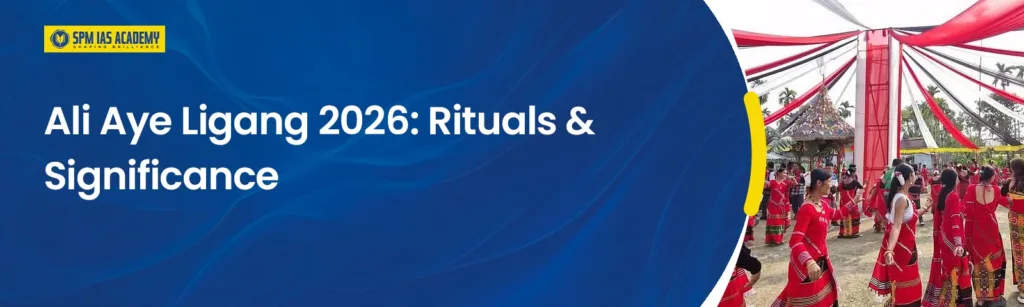
Ali Aye Ligang, celebrated on 18 February 2026, is one of the most important agricultural festivals of Assam. Observed by the Mising community, the festival marks the beginning of the agricultural cycle. It reflects the deep connection between farming, nature, and culture in Assam.
For aspirants preparing for UPSC, APSC, and other government competitive examinations, Ali Aye Ligang is a highly relevant topic. It comes under Indian Culture, Assam Art & Culture, Tribal Festivals, and Agriculture-linked traditions.
Ali Aye Ligang: A Festival Rooted in Agriculture
A large section of Assam’s population continues to depend on agriculture for livelihood. Among them, the Mising people share an especially close relationship with farming. As seasons change, agricultural activities continue without interruption, sustaining their way of life.
Traditionally, with the arrival of the Assamese New Year in Bohag, a fresh agricultural cycle begins. However, the preparation for this cycle starts earlier with Ali Aye Ligang, which is celebrated in the month of Fagun, before Bohag Bihu.
This festival symbolically sets agricultural activities in motion for the coming year.
What is the Meaning of Ali Aye Ligang?
The name of the festival itself reflects its agricultural essence. In the Mising language, Ali means legumes; Aye stands for seed and Ligang refers to sow.
Together, Ali Aye Ligang means “the season to sow seeds”, especially legume and paddy seeds. This meaning clearly highlights the farming-based worldview of the Mising community.
When and Why Is Ali Aye Ligang Celebrated?
Earlier, Ali Aye Ligang could be celebrated on any day during Fagun. Over time, a fixed tradition emerged. Since Wednesday holds sacred importance for the Mising people, the festival is now celebrated on ‘Ligange Lange’, the first Wednesday of ‘Gimur Polo’.
In the Gregorian calendar, this usually falls in February. In 2026, the festival was observed on 18th February.
Duration and Structure of the Festival:
In the past, Ali Aye Ligang was celebrated for five days. Today, the festival is generally observed over three days.
Broadly, the festival has two main components. One is Religious and agricultural rituals. Another is community celebration through dance, music, and feasting.
This structure reflects a balance between spiritual belief and social harmony.
Rituals Performed During Ali Aye Ligang:
On the first day at noon, the head of each household performs a simple but sacred ritual. After offering prayers, seeds of Ahu paddy, potato, ginger, and other crops are sown either in the field or in a corner of the household garden.
The land is prepared in advance and measured into a square plot of five feet on each side. As per tradition, a Megela tree is planted at all four corners of the plot to mark the sacred sowing area.
During the festival period, ploughing fields is prohibited and cutting trees is strictly avoided.
These restrictions reflect respect for nature and agricultural harmony.
Gumraag Dance and Cultural Celebrations:
As evening approaches, the festival turns vibrant and joyous. People of all age groups wear traditional Mising attire, proudly displaying their cultural identity.
A highlight of Ali Aye Ligang is the Gumraag dance, performed by young men and women. The dance begins at the easternmost house of the village and gradually moves through courtyards, finally extending towards fields and rivers. This movement symbolically connects human life with land and nature.
The dancers move to the rhythm of Oi Nitom folk songs, accompanied by traditional instruments such as Dhul, Taal, Gong and Gungang (gagana).
Songs of Ali Aye Ligang: Reflection of Life
The songs sung during Ali Aye Ligang cover a wide range of themes. They do not focus only on youth or celebration. Instead, they reflect human life in its entirety.
The songs speak about Love and affection, struggle and hardship. At the same time, it also highlights suffering and loss, Joy, hope, and togetherness.
These themes draw directly from the everyday experiences of the Mising people.
Lilen: The Grand Community Feast
The final day of the festival, known as Lilen. It is marked by a grand community feast. People gather to share food and strengthen social bonds.
Traditional dishes include:
- Po:ro Apong or Nogin Apong (homemade rice beer)
- Various pork preparations
- Purang Apin, a special packed boiled rice
This collective meal symbolises unity, hospitality, and communal harmony.
Ali Aye Ligang in Modern Assamese Society:
Ali Aye Ligang plays a vital role in contemporary Assamese culture. Despite rapid urbanisation, the Mising community continues to preserve its traditions. Practices like Gumraag dance, Oi Nitom songs, and traditional attire such as Ege and Ribi Gaseng remain alive.
The festival is celebrated across Assam and contributes to the composite Assamese culture. In many places, the government declares a local holiday to encourage participation.
In urban areas, celebrations often take place in auditoriums and community halls, where youth actively promote cultural awareness. The festival also supports cultural tourism, showcasing Assam’s rich tribal heritage.
Religious Beliefs and Ecological Message:
Through the worship of Donyi-Polo (Sun and Moon) and Kine Nane (goddess of fertility), Ali Aye Ligang highlights the importance of living in harmony with nature. It reminds society that agriculture forms the backbone of Assam’s economy and culture.
Significance of Ali Aye Ligang:
Ali Aye Ligang holds deep cultural, agricultural, social, and ecological significance for the Mising community and for Assamese society as a whole. The festival is not merely a celebration but a symbolic marker of life, livelihood, and continuity.
Agricultural Significance:
Ali Aye Ligang formally marks the beginning of the agricultural year for the Mising people. By initiating the sowing of Ahu paddy, the festival indicates the beginning of farming activities after the winter months.
The associated rituals reflect traditional agricultural wisdom and reinforce respect for the land, seasons, and natural cycles.
Cultural Significance:
The festival plays a crucial role in preserving Mising identity and heritage. Through traditional attire, Gumraag dance, Oi Nitom songs, and indigenous instruments, Ali Aye Ligang ensures the intergenerational cultural transmission. Moreover, it acts as a living cultural classroom where younger generations learn customs, language, music, and values.
Social and Community Significance:
Ali Aye Ligang strengthens community attachment and social harmony. Collective rituals, village-wide dances, and the final feast (Lilen) promote unity, cooperation, and shared responsibility. Furthermore, the festival transcends age and gender. It brings together youth, children, elders, and families in a spirit of togetherness.
Ecological and Environmental Significance:
Ali Aye Ligang promotes environmental balance and sustainable living. It prohibits ploughing fields and cutting trees during the festival. At the same time, the worship of Donyi-Polo (Sun and Moon) and Kine Nane (goddess of fertility) reflects an indigenous ecological worldview. It emphasises harmony between humans and nature.
Significance in Modern Assamese Society:
In contemporary times, Ali Aye Ligang contributes to Assam’s composite culture and promotes tribal cultural recognition. Government support, public celebrations, and urban observances help keep the festival relevant. At the same time, it also boosts cultural tourism. It creates awareness about Assam’s agrarian roots amid rapid urbanisation.
Serious aspirants can boost answer writing with UPSC Mains Guidance for culture and society topics.
About The Mising Community: An Overview
In the state of Assam, Mising community is one of the major indigenous tribal groups. The community plays an important role in the agrarian and cultural landscape of Assam. They are categorised as Scheduled Tribe (Plain) in the state. Traditionally, the members of this community are primarily concentrated in the riverine areas of Upper Assam, more especially along the banks of the Brahmaputra and its tributaries.
What is their Origin and Settlement Pattern?
The members of the Mising community trace their origin to the Tibeto-Burman ethnic group. Moreover, they are closely related to the Adi tribes of Arunachal Pradesh. Over time, they migrated to the plains of Assam and settled near rivers and adopted agriculture as their prime occupation.
Livelihood and Economy:
Agriculture forms the backbone of the Mising economy. They mainly cultivate Ahu paddy, Bao and Sali paddy. On the other hand, they also cultivate ginger, pulses and other vegetables.
The community members also engage in fishing, animal rearing, and weaving activities. Their association with these activities supplements their income.
All these show their dependence on land and rivers. They also highlight why festivals like Ali Aye Ligang are integrally linked to agricultural cycles and nature.
Social and Cultural Life:
The Mising society is community-oriented and egalitarian. Traditional festivals and rituals play an important role in social cohesion. Similarly, traditional institutions guide village life and resolve disputes through consensus.
Furthermore, music and dance occupy a central place in their culture. Gumraag dance and Oi Nitom songs express emotions, beliefs, and lived experiences, while reinforcing collective identity.
Traditional Attire and Handloom:
The Misings are known for their rich handloom tradition. Women weave colourful garments such as Ege (upper garment) and Ribi Gaseng (lower garment).
These attires are worn during festivals like Ali Aye Ligang and symbolise cultural pride and craftsmanship.
Religious Beliefs:
The Mising people traditionally follow Donyi-Polo which involves the worship of the Sun (Donyi) and the Moon (Polo). They also worship natural forces and fertility deities such as Kine Nane. Moreover, it reflects a deep ecological awareness and respect for nature.
Conclusion: Ali Aye Ligang as a Symbol of Assam’s Cultural Identity
Ali Aye Ligang is not just a festival. It exemplifies the Mising community’s bond with agriculture, nature, and collective life style. Celebrated with music, dance, rituals and shared meals, Ali Aye Ligang strengthens community ties while preserving Assam’s cultural diversity.
For UPSC, APSC, and other competitive exam aspirants, understanding Ali Aye Ligang offers valuable understanding into Assam’s tribal culture, agricultural festivals and ecological values. As India modernises, festivals like Ali Aye Ligang continue to remind us of the importance of roots, sustainability, and harmony with nature.
For structured preparation, explore Best UPSC & APSC Coaching in Guwahati to strengthen your concepts and exam strategy.
Sources:
Frequently Asked Questions:
Ali Aye Ligang is an important agricultural festival of Assam celebrated by the Mising community. It marks the beginning of the agricultural cycle and seed sowing season.
In 2026, Ali Aye Ligang will be celebrated on 18 February which falls on the first Wednesday of Gimur Polo in the Mising calendar.
Ali Aye Ligang means “the season to sow seeds”, where Ali refers to legumes, Aye to seeds, and Ligang to sowing. It reflects its agricultural significance.
Ali Aye Ligang is celebrated by the Mising community, a Scheduled Tribe (Plain) of Assam, primarily residing along the Brahmaputra River basin.
Ali Aye Ligang is important for UPSC and APSC as it covers Assam Art and Culture, and Tribal Festivals. It also links to agricultural traditions and indigenous ecological practices, making it relevant for Prelims, Mains, and Interviews.