As a UPSC aspirant, it is important to have a clear understanding of global economic trends. This knowledge is particularly relevant for the economy section of the exam. Moreover, international relations, geopolitics, and world affairs all intersect strongly with these trends.
For instance, when exam questions cover globalization, trade and finance, or the environment-economy nexus, knowing the important global economic trends becomes important. Additionally, being aware of India’s external sector can provide further depth and context. Ultimately, being conversant with international economic shifts will enhance your preparation for the UPSC exams.
In this article, we will look into the top global economic trends. These trends are important for every UPSC aspirant 2026.
Important Global Economic Trends 2026
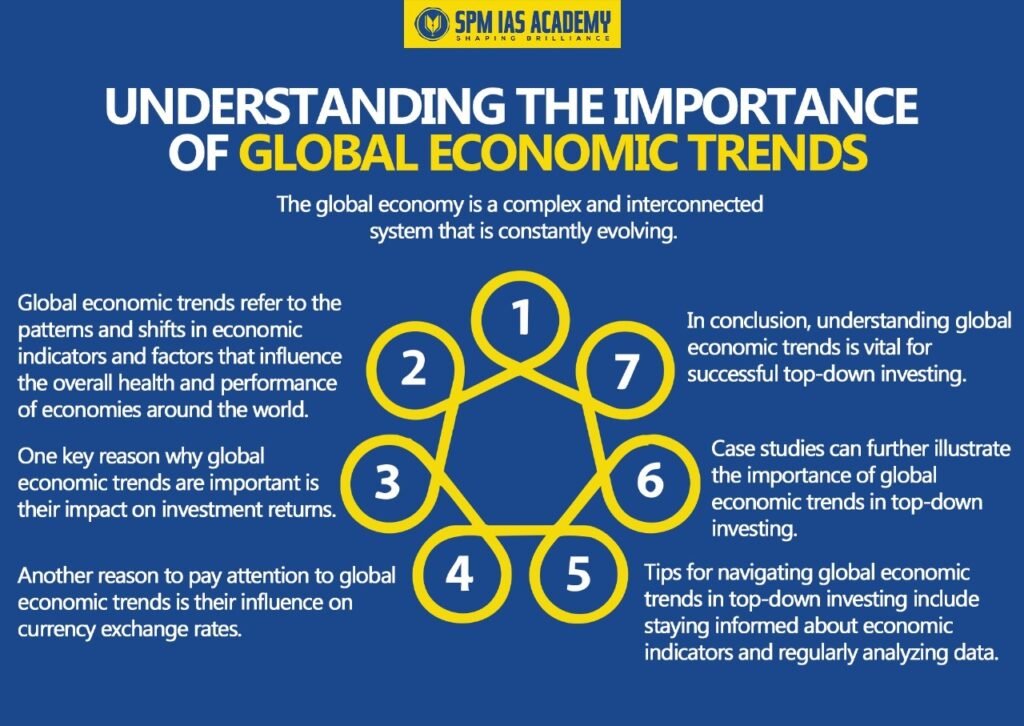
Many global phenomena influence India’s economic planning. Additionally, they impact the country’s foreign policy, trade, climate commitments, and development strategies. Furthermore, understanding the important global economic trends 2026 helps in developing critical thinking skills. Ultimately, this knowledge will enable you to write better answers in the Mains and Interview.
For guided preparation, APSC UPSC coaching in Guwahati helps aspirants understand current global economic and policy trends.
Key Global Economic Trends to Track (2024–2026)
UPSC aspirants must focus on several global economic trends. First, they should pay attention to geopolitical shifts, as these can affect international relations. Additionally, trade protectionism is another important factor to consider. It can have significant implications for India’s economy. Furthermore, climate change policies are important, given their impact on environmental and social issues. Lastly, the digital economy is rapidly evolving and cannot be overlooked. Together, these trends significantly shape India’s economic and social landscape.
Below are the key global economic trends to track for every UPSC aspirant 2026:
1. Geopolitical Shifts and Trade Protectionism
The intensifying rivalry between major powers (e.g., the US-China trade war) and conflicts disrupt global supply chains and influence trade policies worldwide. Global economic trend aspirants should track:
- Rising tariffs and their impact on India’s exports.
- Formation of new trade blocs and India’s stance on Free Trade Agreements (FTAs).
- India’s strategic autonomy in foreign and economic policy.
2. Inflationary Pressures and Monetary Policy
Global inflation, driven by commodity prices and supply chain issues, remains a key concern. Key areas of focus include:
- The role of central banks (RBI, US Federal Reserve, etc.) in managing inflation through interest rate adjustments (e.g., repo rate).
- The debate between targeting headline vs. core inflation.
- The impact of global monetary tightening on capital flows to emerging economies.
3. Digital Transformation and Emerging Technologies
The global push towards digitization affects everything from financial services to governance. Global economic trends for UPSC aspirants are:
- Growth of the digital economy in India (e.g., UPI revolution, fintech).
- Challenges and opportunities presented by Artificial Intelligence (AI), automation, and cybersecurity.
- India’s role in shaping global data privacy and technology regulations.
4. Climate Change and Green Energy Transition
Environmental concerns are driving a global shift towards sustainable practices and renewable energy. Focus areas for the Economy for UPSC 2026 include:
- India’s initiatives, like the National Solar Mission and Green Hydrogen Mission.
- International agreements (e.g., COP summits) and their impact on national policies.
- The development of climate-resilient infrastructure and agriculture practices.
5. Human Development and Inclusive Growth
The focus is shifting from mere GDP growth to inclusive development, addressing poverty, inequality, and social welfare. Important aspects include:
- India’s performance in global indices like the Human Development Index (HDI), Global Hunger Index, and Gender Inequality Index.
- Government schemes and policies aimed at poverty alleviation, skill development, and financial inclusion (e.g., PMJDY, MGNREGA).
- The concept and trials of Universal Basic Income (UBI).
6. Global Debt and Financial Stability
The high debt levels in many emerging market and developing economies (EMDEs) pose a significant risk to global financial stability. Global economic trends to track are:
- The role of institutions like the IMF and World Bank in providing financial assistance and policy advice.
- India’s Foreign Portfolio Investor (FPI) inflows and external debt management strategies.
Global Economic Trends and India
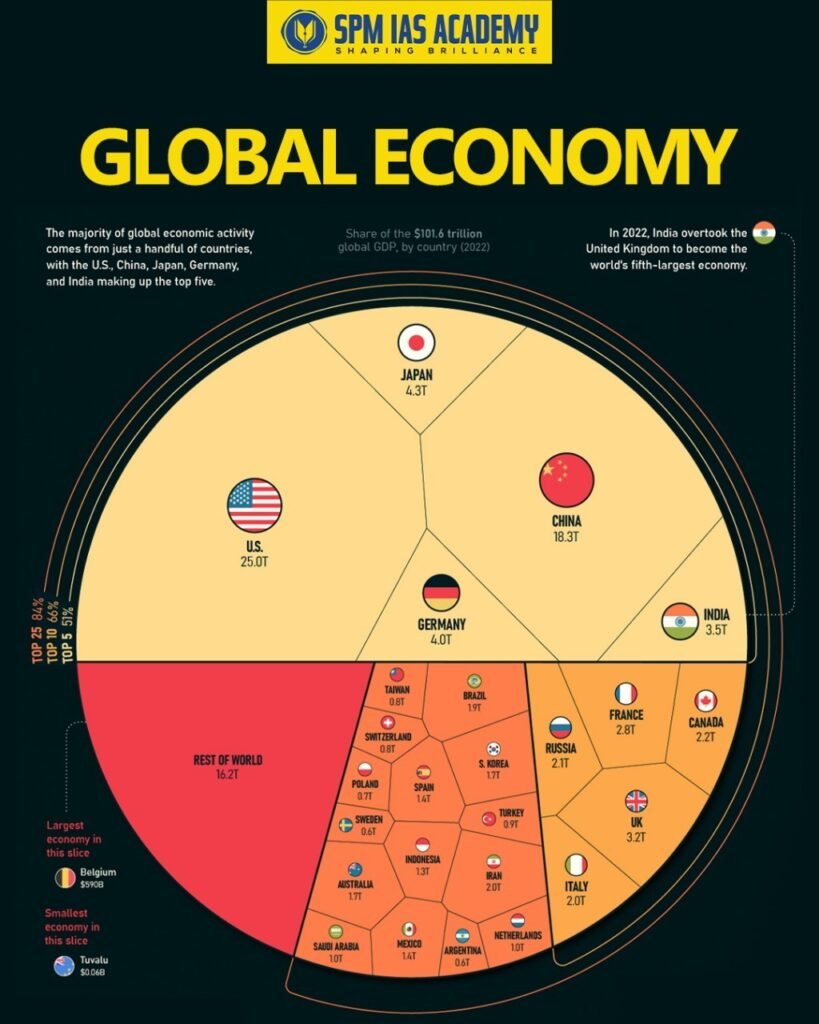
As a rising global power, India plays an important role in the world economy. Additionally, it is recognized as a major emerging economy. Consequently, India’s policies are deeply influenced by the global economic environment. For a UPSC aspirant, this situation offers several vantage points. Therefore, understanding these global economic trends is important for effective preparation.
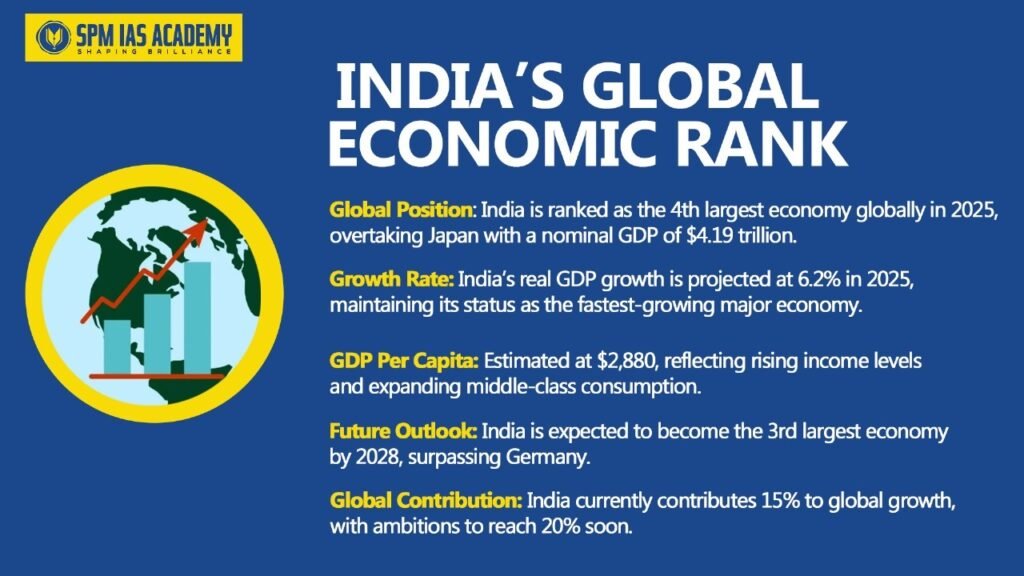
1. India’s growth prospects: India’s stable growth amid global slowdown is significant, driven by rising domestic demand, diversified trade partnerships, and a focus on self-reliance.
2. Trade & exports strategy: India must adapt to manufacturing and digital exports as global supply chains shift.
3. Climate and energy policy: India must balance decarbonization, energy transition, and sustainable development for growth and the environment.
4. Debt, finance & development strategy: Global debt stress could tighten financial conditions for India, necessitating strong domestic fundamentals and reforms.
5. Global governance & geopolitics: India’s foreign policy and trade diplomacy are vital amid global trade fragmentation.
Conclusion
The global economy is currently facing both opportunities and challenges. On the one hand, digitalization offers numerous avenues for growth. On the other hand, rising debt and geopolitical tensions pose significant obstacles.
For UPSC aspirants, understanding the global economic trends is important. This knowledge can enhance essays on globalization. Additionally, it is important for discussions on climate-economy links and India’s trade strategy.
Stay updated with the latest global and national developments through our Current affairs section for better UPSC preparation.
Quality UPSC coaching in north east India supports aspirants with structured coverage of economy, geopolitics, and current affairs.
Frequently Asked Questions
Critical trends include
Geo-Economic Fragmentation (trade wars, economic blocs),
Persistent Global Inflation
Monetary Policy Tightening (interest rate hikes).
Aspirants must also focus on Shifting Global Supply Chains and the push for Energy Transition and security. Understanding their connection to India’s Production Linked Incentive (PLI) schemes, capital flows, and energy imports is important for the Mains examination.
Global trends affect India primarily through Trade, Capital Flows, and Inflation. A global slowdown can hit India’s exports and widen the trade deficit. High interest rates abroad lead to capital outflows, weakening the Rupee. Fluctuations in crude oil and commodity prices globally are directly imported as inflation, posing a major challenge to the Reserve Bank of India’s (RBI) monetary policy and the government’s fiscal stability.
Aspirants should track annual reports from major international financial institutions for policy analysis. Key resources include the World Economic Outlook (WEO) by the IMF and the Global Economic Prospects (GEP) by the World Bank. Additionally, publications from the WTO and UN offer important insights into global trade and sustainability goals.

Behind every article at SPM IAS Academy is a team of skilled content writers and subject experts committed to making preparation easier for aspirants. From answering common doubts to breaking down complex issues and current affairs, we create content that is accurate, easy to understand, and directly useful for UPSC, APSC, and other competitive exams.