Military strength is not only about the number of soldiers a country has. A powerful defence force also needs modern weapons, trained personnel, reliable transport, strong communication, and enough money. Geography and access to natural resources also matter. The Most Powerful Militaries can defend their borders and respond to threats from far away. They usually maintain capable land, air, and naval forces. Some countries lead through advanced technology. Others depend on large forces, missile systems, and strong defence industries.
This article explains the top 10 most powerful militaries in the world in 2026. The latest ranking compares the conventional military capabilities of 145 countries. However, no ranking can predict the outcome of a real war. Leadership, alliances, geography, and battlefield conditions can change the final result.
Top 10 Most Powerful Militaries in the World 2026
| Rank | Country |
| 1 | United States |
| 2 | Russia |
| 3 | China |
| 4 | India |
| 5 | South Korea |
| 6 | France |
| 7 | Japan |
| 8 | United Kingdom |
| 9 | Türkiye |
| 10 | Italy |
United States
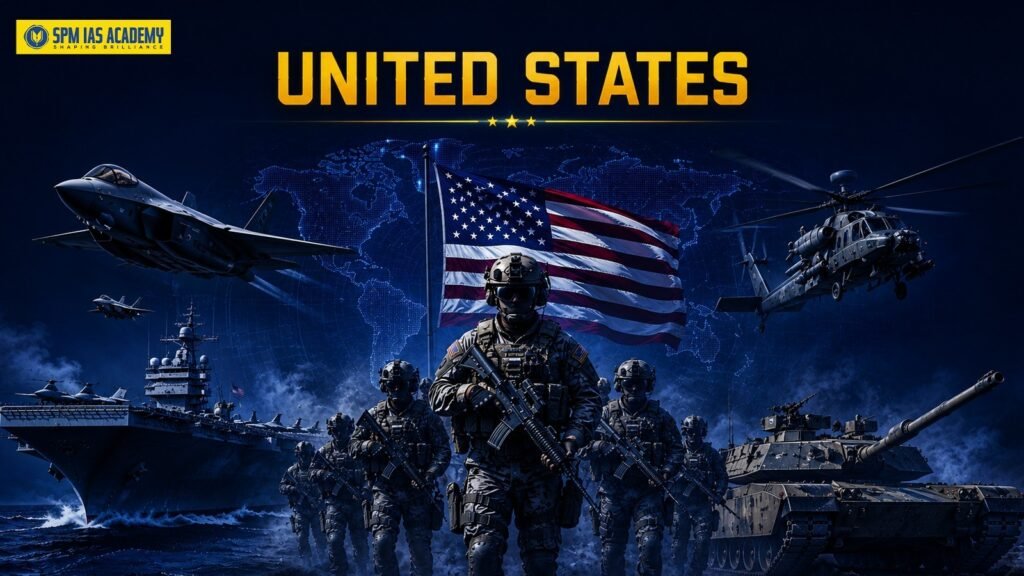
The United States holds the first position in the 2026 ranking. Its Power Index score is 0.0741. It has remained at the top of the Most Powerful Militaries for many years because it combines money, technology and global reach.
First, the country has a very large defence system. It operates advanced aircraft, submarines, warships, satellites and missile defence systems. It also has military bases and support facilities in different parts of the world.
Second, the United States has a strong air force. Its aircraft can perform combat, transport, surveillance and refuelling missions. The country also operates aircraft carriers. These floating bases allow it to move air power closer to distant regions.
The United States also invests heavily in:
- Artificial intelligence and military software
- Cyber defence and space systems
- Unmanned aircraft and drones
- Stealth aircraft
- Precision-guided weapons
- Military research and development
Russia
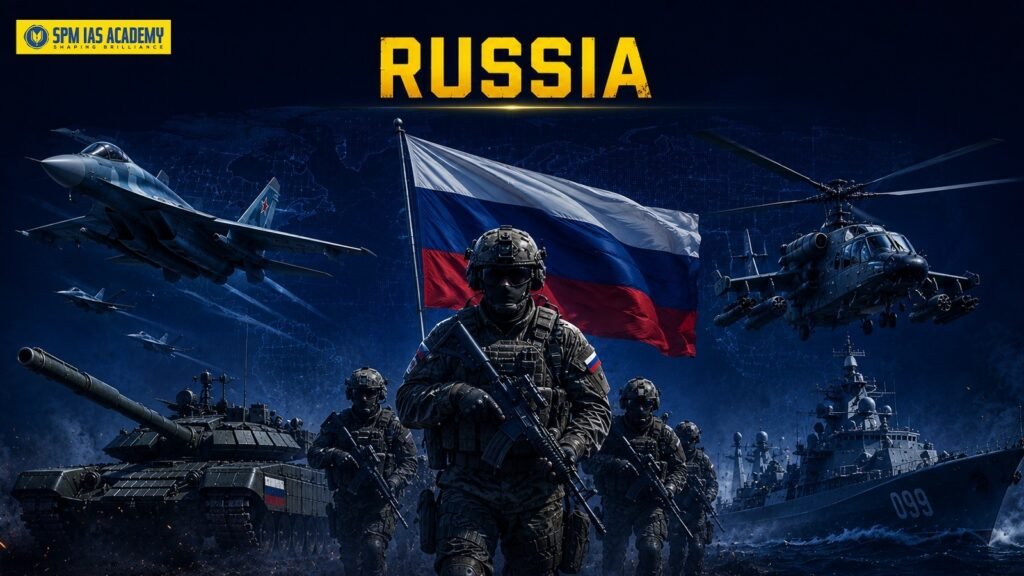
Russia ranks second among the Most Powerful Militaries, with a Power Index score of 0.0791. It has a large land area, major natural resources, and a long history of military production.
The Russian military is especially known for its land-based weapons. It operates large numbers of tanks, artillery systems, rocket launchers, and armoured vehicles. Russia also has strong missile forces. These include short-range, long-range, and strategic missile systems.
Moreover, Russia has a large nuclear arsenal. Nuclear weapons do not directly decide every conventional ranking. Still, they give the country major power in global security matters.
Russia’s key military advantages include:
- A large pool of active and reserve personnel
- Powerful artillery and missile forces
- A large submarine fleet
- Long-range bomber aircraft
- Strong domestic arms production
- Experience in cold and difficult regions
China
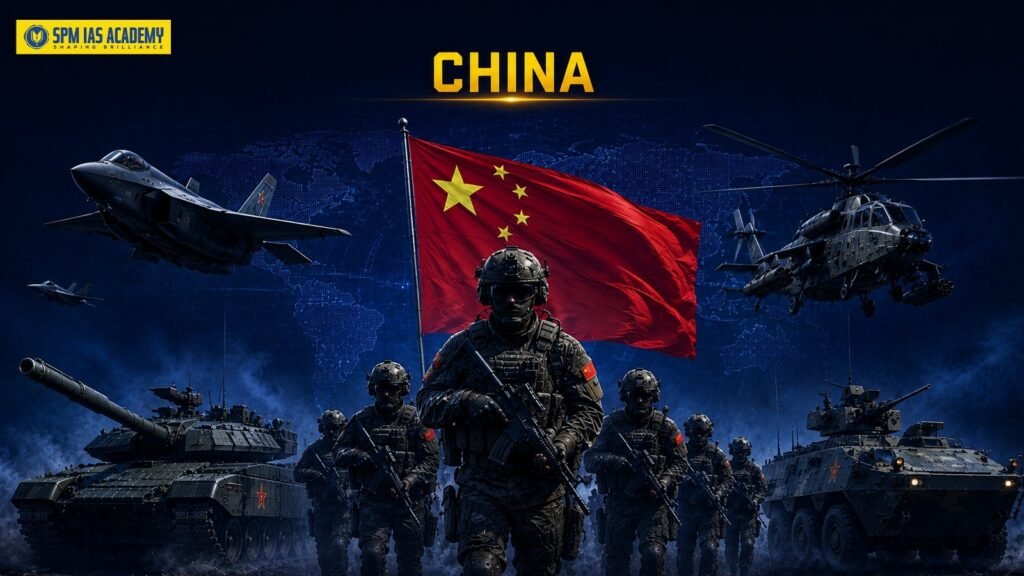
China holds third place among the Most Powerful Militaries, with a Power Index score of 0.0919. It has one of the world’s largest defence industries and a very large pool of military personnel.
The People’s Liberation Army has changed greatly over the past few decades. Earlier, China depended more on a large number of soldiers. Today, it also focuses on modern aircraft, warships, missiles, satellites, drones, and cyber systems.
China’s navy has grown quickly. It now operates aircraft carriers, submarines, destroyers, frigates, and other vessels. This growth supports China’s aim to protect its sea routes and increase its presence in nearby waters.
China also benefits from a huge industrial base. It can build many weapons, ships, and vehicles within the country. This reduces its dependence on foreign suppliers.
Its main strengths include:
- A very large active military force
- A growing navy
- Modern missile systems
- A strong manufacturing base
- Space and cyber capabilities
- A rising number of advanced aircraft
India
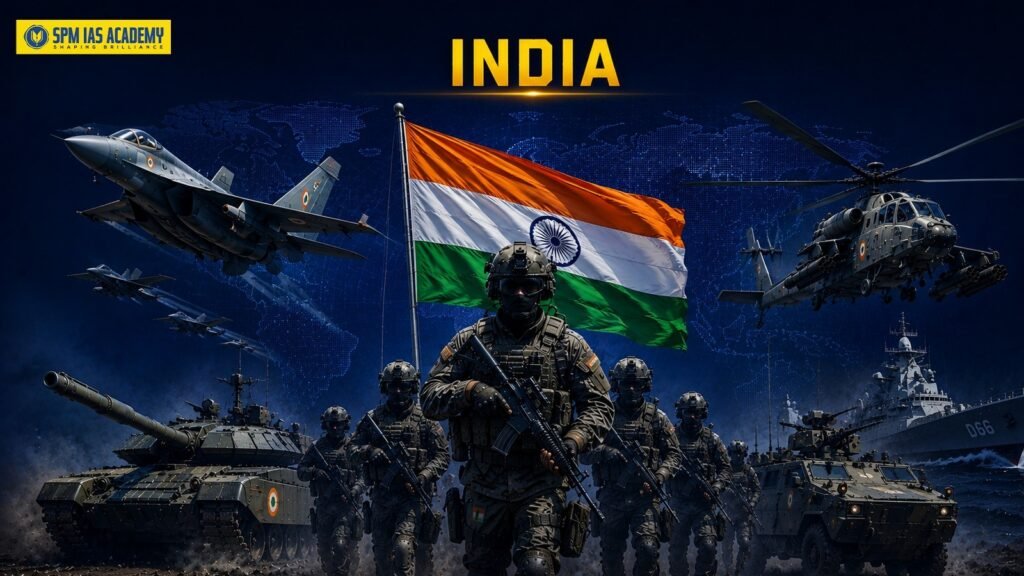
India ranks fourth with a Power Index score of 0.1346. It has one of the world’s largest armed forces and a strong position in the Indian Ocean region.
India faces different security needs. It has long land borders, a wide coastline, and important sea routes nearby. Therefore, it must maintain capable land, air, and naval forces at the same time.
The Indian Army has experience in mountains, deserts, forests, and high-altitude areas. The Indian Air Force operates fighter aircraft, transport planes, helicopters, and surveillance systems. Meanwhile, the Indian Navy protects sea routes and expands India’s presence across the Indian Ocean.
India’s major strengths include:
- A large and experienced military force
- Nuclear weapons and missile systems
- Strong mountain warfare experience
- A growing blue-water navy
- Domestic missile and space programmes
- A developing defence industry
India has also increased the production of weapons at home. It builds missiles, warships, artillery systems, helicopters and some combat aircraft. However, it still imports several important defence systems. Increasing domestic production can reduce this dependence over time.
According to SIPRI, India spent about $92.1 billion on its military in 2025. This made India the fifth-largest military spender that year. The country increased its spending by 8.9% compared with 2024.
India’s balanced capabilities give it an important place among the Most Powerful Militaries. Still, faster modernisation and better coordination between different services will remain important.
South Korea
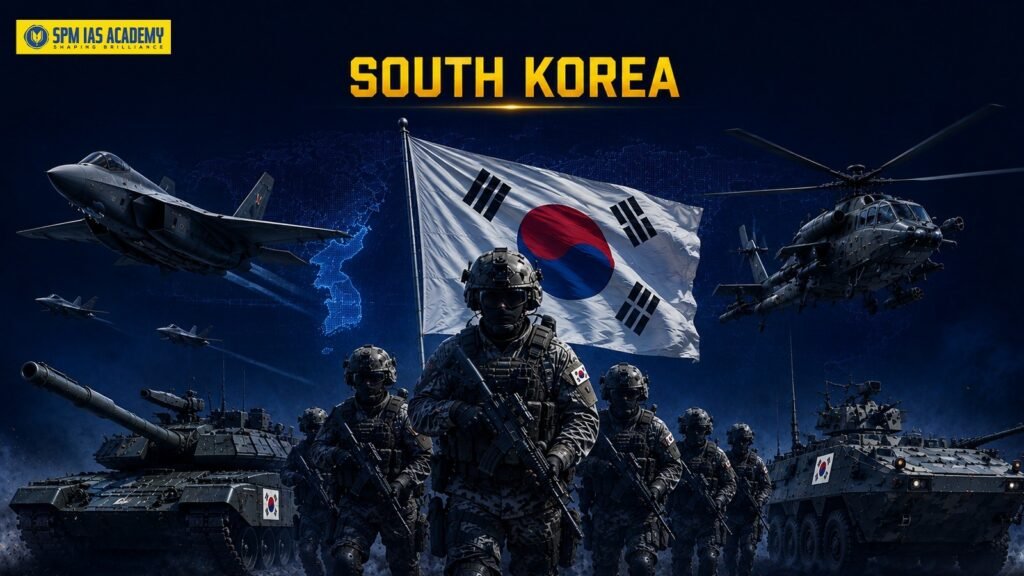
South Korea ranks fifth with a Power Index score of 0.1642. Its high position may surprise some readers. However, the country has modern weapons, trained personnel, and a high level of military readiness.
The continuing tension on the Korean Peninsula has shaped South Korea’s defence policy. The country must remain prepared to respond quickly. For this reason, it maintains compulsory military service and conducts regular training.
South Korea also has a strong domestic defence industry. It produces tanks, artillery systems, aircraft, missiles, ships, and armoured vehicles. In recent years, it has also become a major defence exporter.
Its strongest areas include:
- Modern artillery and missile systems
- Advanced fighter aircraft
- Strong air and missile defence
- A capable navy
- Fast military mobilisation
- A growing defence industry
France
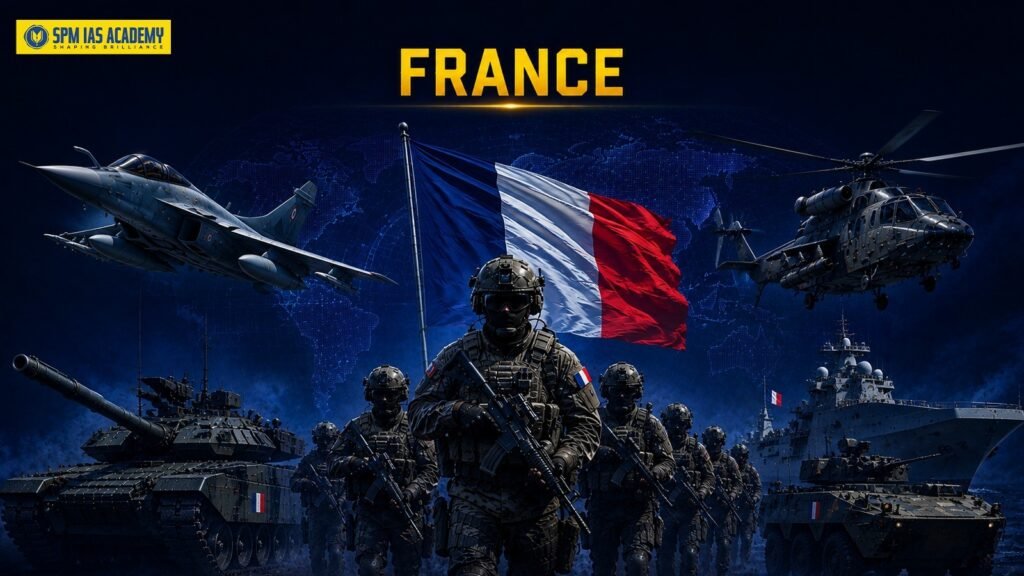
France holds sixth place among the Most Powerful Militaries, with a Power Index score of 0.1798. It is one of Europe’s leading military powers. It can also carry out operations beyond its own borders.
France has capable land, air, and naval forces. It operates modern fighter aircraft, nuclear-powered submarines, and an aircraft carrier. In addition, it has overseas territories and military facilities in different regions.
France is also a nuclear-armed country. Its nuclear force is based mainly on submarines and aircraft. This gives it an independent method of strategic defence.
France’s military strengths include:
- Nuclear deterrence
- Modern Rafale fighter aircraft
- A nuclear-powered aircraft carrier
- Advanced submarines
- Overseas military access
- A well-developed defence industry
Japan
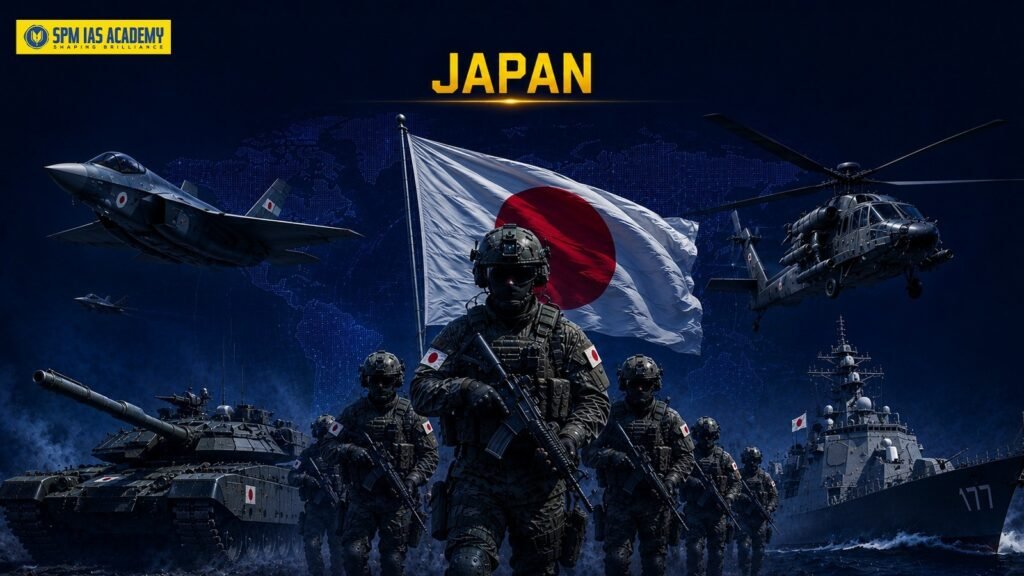
Japan ranks seventh with a Power Index score of 0.1876. Its armed forces are officially known as the Japan Self-Defense Forces. The country’s post-war Constitution places limits on the use of military force. Still, Japan has built highly modern defence capabilities.
Japan’s main security concerns come from the seas and airspace around it. Therefore, it has developed a strong navy and air force. Its ships and aircraft can track submarines, protect sea routes and respond to airborne threats.
Japan’s main advantages include:
- Advanced naval vessels
- Strong submarine-detection capability
- Modern fighter aircraft
- Air and missile defence systems
- High-quality training
- A powerful industrial and technological base
United Kingdom
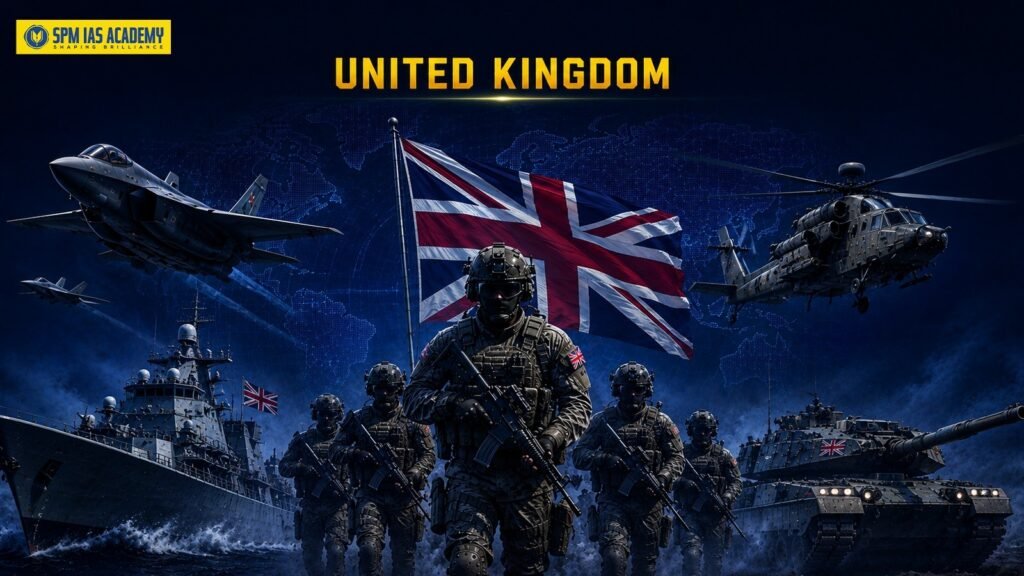
The United Kingdom holds eighth place with a Power Index score of 0.1881. It has a smaller military than several countries above it. However, it remains powerful because of its technology, nuclear weapons, and ability to operate abroad.
The Royal Navy operates aircraft carriers and nuclear-powered submarines. The Royal Air Force uses modern fighter, transport, and surveillance aircraft. Meanwhile, the British Army is trained for different types of missions.
The United Kingdom’s main strengths include:
- Nuclear-armed submarines
- Modern aircraft carriers
- Advanced fighter aircraft
- Strong intelligence networks
- Cyber and space capabilities
- Close cooperation with NATO allies
Türkiye
Türkiye ranks ninth with a Power Index score of 0.1975. Its location between Europe, Asia and the Middle East gives it great strategic importance.
The country has a large military and is an active member of NATO. It also has access to the Black Sea, the Aegean Sea, and the Mediterranean Sea. As a result, Türkiye plays a major role in regional security.
One of Türkiye’s biggest strengths is its growing defence industry. Turkish companies produce drones, armoured vehicles, missiles, helicopters and naval vessels. Turkish drones have attracted global attention because of their use in modern conflicts.
Its main advantages include:
- A large and experienced land force
- A growing drone industry
- Strong regional access
- Modern armoured vehicles
- Developing warships and aircraft
- Membership in NATO
Italy
Italy completes the top ten with a Power Index score of 0.2211. It has balanced land, air, and naval forces. Its central position in the Mediterranean also gives it strategic value.
The Italian Navy operates submarines, destroyers, frigates, and aircraft-carrying ships. The Italian Air Force uses modern fighter aircraft and transport planes. Meanwhile, the Italian Army maintains armoured, airborne, and specialised units.
Italy’s major strengths include:
- A capable Mediterranean navy
- Modern fighter aircraft
- Well-trained specialist units
- A developed defence industry
- NATO membership
- Access to important European and Mediterranean routes
How Is Military Power Measured?
Military power cannot be measured by counting soldiers alone. Global Firepower uses more than 60 factors to compare countries. These factors encompass a nation’s full ability to prepare, move, and support its forces.
The main factors include:
Military personnel
A country needs active soldiers, sailors, and air personnel. Reserve forces are also important because they can be called up during a crisis. However, a large force needs proper training, leadership, and equipment.
Land power
Land power includes tanks, artillery, rocket systems and armoured vehicles. Maintenance is equally important. Thousands of vehicles are not useful if many cannot operate.
Air power
Aircraft can protect airspace and support ground troops. Fighters, bombers, helicopters, transport planes and surveillance aircraft all perform different jobs.
Naval power
Naval strength includes submarines, aircraft carriers, destroyers, frigates and patrol vessels. Countries with long coastlines or overseas interests usually need larger naval forces.
Defence budget
Money helps a country pay personnel, purchase equipment and conduct training. It also supports research and repairs. Still, a large budget does not always lead to equal results.
Logistics
Logistics covers roads, ports, airports, fuel, transport and supply systems. A military needs these systems to move and continue operating.
Geography and resources
Mountains, rivers, coastlines and land size affect defence planning. Access to oil and other resources can also support military operations.
These points explain why searches for the top 10 powerful armies in the world should not rely only on troop numbers.
Largest Army and Most Powerful Military: Are They the Same?
No, they are not the same.
An army usually refers to the land force of a country. The military is a wider organisation. It can include the Army, Navy, Air Force, Marines, Coast Guard, and other services.
A country may have millions of personnel but limited transport, old equipment, or weak air support. Another country may have fewer soldiers but better aircraft, intelligence, and communication systems. The second country could perform more effectively.
In simple words:
- Military size tells us how many people serve.
- Military power shows what the complete force may be able to do.
- Readiness shows how quickly that force can respond.
- Logistics decides how long it can continue operating.
- Technology improves speed, accuracy and awareness.
Therefore, the Most Powerful Militaries are not always the largest.
Where Does India Stand in Global Military Power?
India is ranked fourth in 2026. It comes after the United States, Russia, and China. This makes India one of the highest-ranked military powers in Asia and the world.
India’s strength comes from its large armed forces, nuclear deterrent, missile programme and growing naval reach. It also has valuable experience in high-altitude and difficult terrain.
However, India still faces several tasks:
- Replace ageing equipment
- Speed up domestic defence production
- Improve coordination between services
- Strengthen cyber and space security
- Expand the submarine fleet
- Reduce dependence on imported components
India has made progress through local production and new defence projects. Still, modernisation is a long process. It requires steady funding, careful testing, and timely delivery.
Conclusion
The Most Powerful Militaries in 2026 combine people, technology, money, equipment, and strong supply systems. The United States leads the Global Firepower ranking. Russia ranks second, while China and India rank third and fourth.
Still, no ranking tells the complete story. A large army can provide manpower, but modern war also needs intelligence, air support, cyber defence, and reliable logistics. Training, leadership, and alliances matter as well.
Thus, the list should be used as a simple guide to conventional military strength. It helps readers compare national capabilities without assuming that a numerical position can decide the result of a real conflict.
Frequently Asked Questions
The United States ranks first in the Global Firepower Index 2026 with a Power Index score of 0.0741. Its strength comes from advanced technology, large defence spending, global bases, strong air and naval forces, modern weapons, and an extensive military transport network.
Global Firepower gives Russia a slightly better Power Index score for 2026. Russia benefits from large missile, artillery, armoured, and strategic forces. However, China leads in several other areas, including industrial capacity and active personnel. Different ranking methods may therefore produce different results.
India ranks fourth out of 145 countries in the Global Firepower Index 2026. It has large and experienced armed forces, nuclear weapons, modern missiles, and a growing navy. India is also expanding domestic defence production, although it still imports some important systems and components.
Source: https://www.globalfirepower.com/countries-listing.php
Also Read

Behind every article at SPM IAS Academy is a team of skilled content writers and subject experts committed to making preparation easier for aspirants. From answering common doubts to breaking down complex issues and current affairs, we create content that is accurate, easy to understand, and directly useful for UPSC, APSC, and other competitive exams.