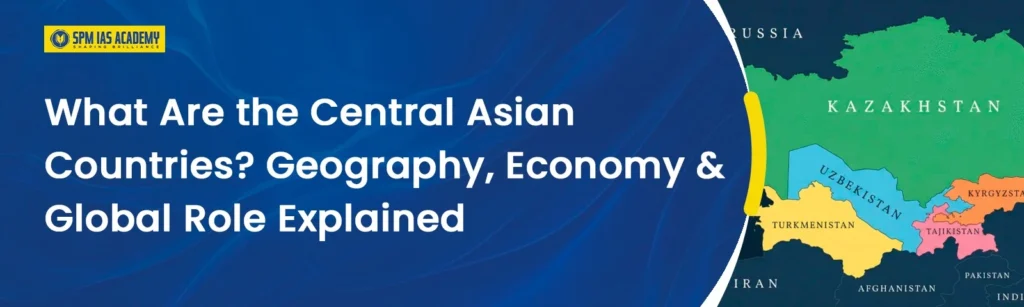
Central Asia is one of the most intriguing and widely discussed topics in current geopolitics. It is located in the middle of the Eurasian continent. Stretching from the Caspian Sea in the west to the borders of China in the east, and from Russia in the north to Afghanistan and Iran in the south, Central Asia comprises five sovereign nations: Kazakhstan, Uzbekistan, Tajikistan, Kyrgyzstan, and Turkmenistan. In this article, we will discuss the five Central Asian countries along with their geography, history, culture, economy, and travel highlights.
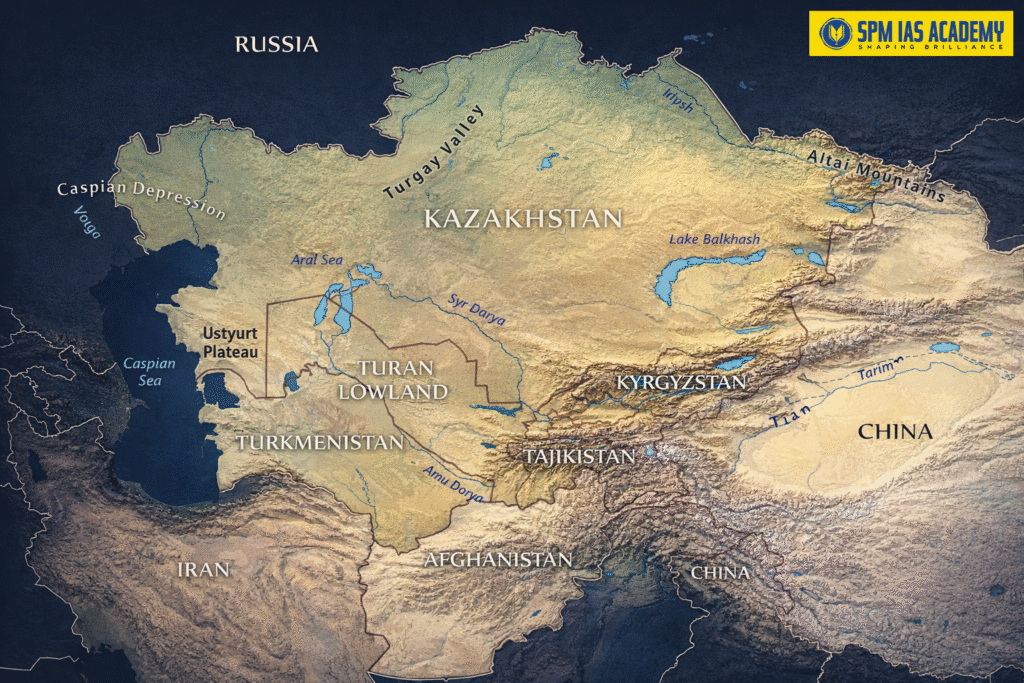
Once the beating heart of the ancient Silk Road—the vast trade network linking China, India, Persia, and Europe—Central Asia today sits at a fascinating crossroads of history, culture, and geopolitical importance. The region covers over 4 million square kilometers and has a population of more than 75 million people. It is known for its amazing natural diversity.
You can see the wide steppes of Kazakhstan, the high Pamir Mountains of Tajikistan, the golden deserts of Turkmenistan, and the fertile Fergana Valley.
Central Asian countries at a Glance: Quick Facts
| Country | Capital | Area (km²) | Population | Currency | Official Language |
|---|---|---|---|---|---|
| Kazakhstan | Astana | 2,724,900 | 19.2 million | Tenge | Kazakh & Russian |
| Uzbekistan | Tashkent | 448,978 | 36.9 million | Som | Uzbek |
| Tajikistan | Dushanbe | 143,100 | 10.1 million | Somoni | Tajik |
| Kyrgyzstan | Bishkek | 199,951 | 7.1 million | Som | Kyrgyz & Russian |
| Turkmenistan | Ashgabat | 488,100 | 6.1 million | Manat | Turkmen |
Central Asian Countries: Kazakhstan – Geography, Economy, and Culture
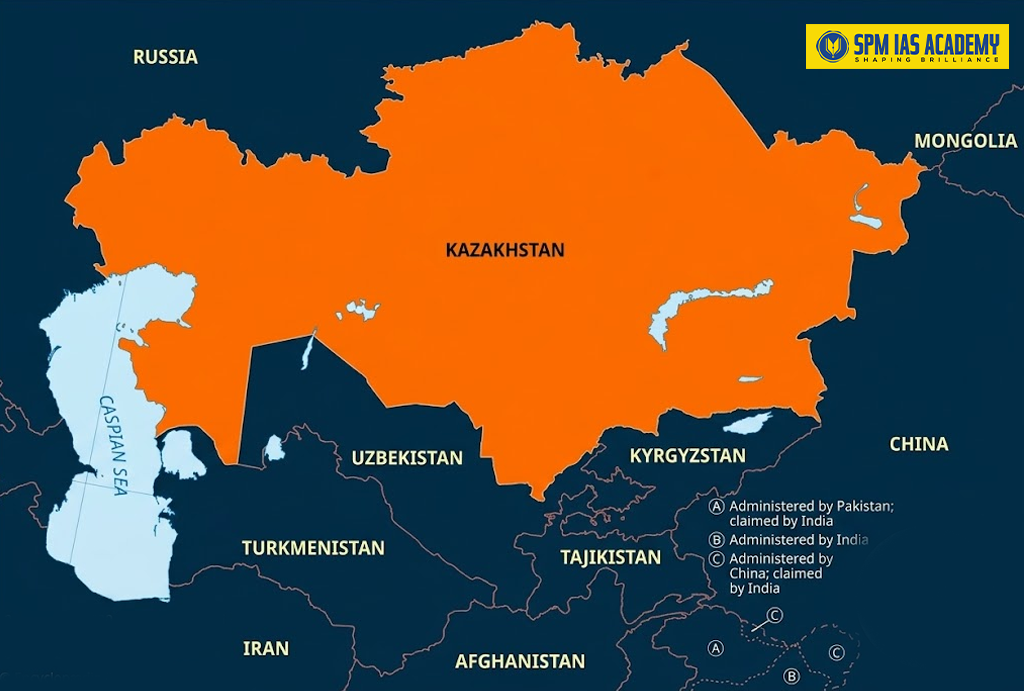
Kazakhstan is, by far, the largest country in Central Asia. It is also the world’s largest landlocked nation. It covers an enormous 2.72 million square kilometers—roughly the size of Western Europe. Yet despite its immense size, Kazakhstan is home to just 19 million people, giving it one of the lowest population densities on Earth. This region’s economy is the strongest in the world, with wide-open steppes, dramatic landscapes, and a rapidly modernizing economy.
Geography and Landscape – The Largest Among Central Asian Countries
Kazakhstan has many different types of landscapes. The famous Kazakh steppe, one of the largest grasslands in the world, covers the north and center of the country and stretches for thousands of kilometers under wide-open skies.
In the east, there are high mountain ranges like the Altai and Tian Shan, with snow, glaciers, alpine lakes, and untouched nature. In the south, the Syr Darya River and the shrinking Aral Sea (one of the world’s biggest environmental disasters) can be found. The Caspian Sea lies to the west, while the Betpak-Dala desert is in the east.
What makes Kazakhstan special is its great variety of landscapes. In one country, people can enjoy mountain trekking, desert trips, and horse riding on the steppe and visit places like the Charyn Canyon. It is often compared to the Grand Canyon in the USA.
History
People have lived in the land of modern Kazakhstan for thousands of years. Long ago, the Scythians and Saka people lived there as nomadic warriors and created beautiful gold work. Between the 6th and 10th centuries, the Turkic Khaganates ruled the region. In the 13th century, the Mongol Empire led by Genghis Khan took control. Later, in the 15th century, the Kazakh Khanate united the nomadic tribes and created a strong cultural identity that still exists today.
From the 18th century, Russia slowly took control of Kazakhstan, and after the Russian Revolution, it became part of the Soviet Union. The Soviet period brought development but also great suffering. In the 1930s, forced farming policies caused a terrible famine that killed about 1.5 million Kazakhs. Kazakhstan became independent on 16 December 1991, becoming the last Soviet republic to do so, under the leadership of Nursultan Nazarbayev.
Economy
Kazakhstan has a lot of natural resources. It has some of the world’s largest reserves of oil, natural gas, uranium, coal, and many metals like iron, copper, gold, and zinc. Oil and gas from the Tengiz and Kashagan fields near the Caspian Sea are very important for exports and government income. Kazakhstan is also the world’s biggest producer of uranium, supplying over 40% of the world’s total.
In recent years, the economy has started to grow in different areas. The financial sector is expanding, agriculture is strong (Kazakhstan is one of the top wheat exporters), and the technology sector is developing in cities like Almaty and Astana. The government’s “Kazakhstan 2050” plan aims to make the country one of the top 30 most developed nations in the world.
Capital: Astana
Astana, the capital of Kazakhstan (renamed from Nur-Sultan back to Astana in 2022), is one of the most unusual cities in the world. It is a modern, planned city that was built from scratch on empty steppe land starting in 1997. Designed by famous architects like Norman Foster, the city has a unique skyline with glass buildings, golden domes, and modern designs.
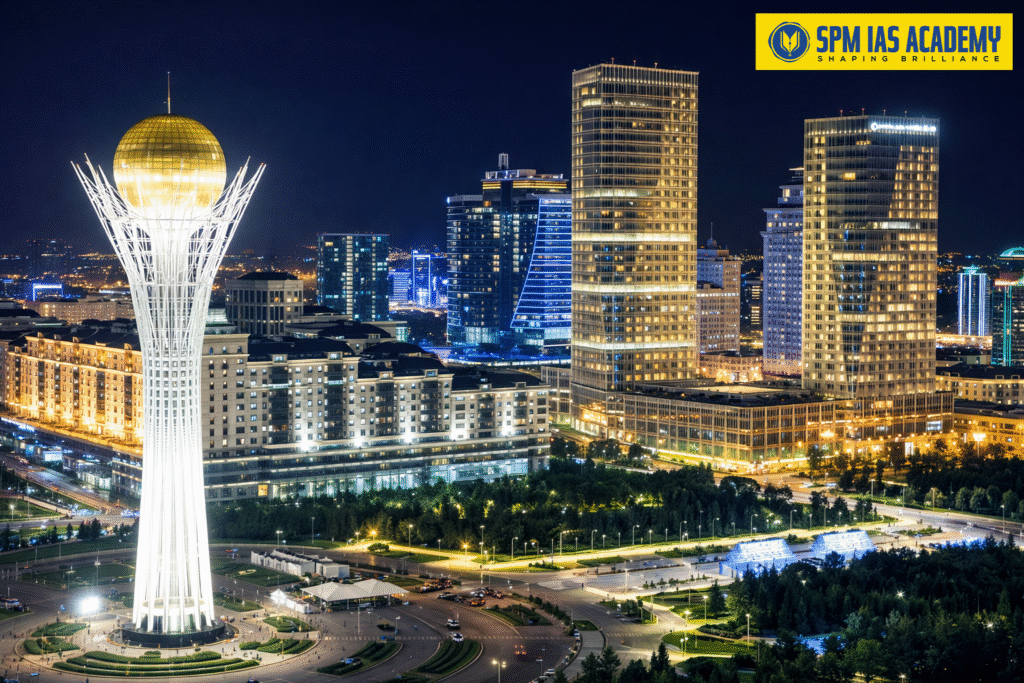
Some of its most famous landmarks include the Bayterek Tower, the Khan Shatyr entertainment center, and the Palace of Peace and Reconciliation.
Culture and Traditions
Kazakh culture comes from a nomadic way of life. The yurt, a portable tent made of felt, is an important symbol of their culture, and many tourists like to stay in yurts. Horses are very important in Kazakh life. The national dish, beshbarmak, is made from horse meat, and traditional games like kokpar (played on horseback using a goat carcass) are still popular. Eagle hunting, called berkutchi, is also a traditional practice and is recognized by UNESCO.
Nauryz, the Persian New Year celebrated on 21 March, is the most important festival in Kazakhstan. It is celebrated with food, music, and outdoor games. The dombra, a two-stringed musical instrument, is a key part of Kazakh culture.
Travel Highlights in Kazakhstan
Kazakhstan offers remarkable experiences for adventurous travelers. Charyn Canyon, with its dramatic red rock formations, is one of Central Asia’s most spectacular natural sites. The Altai Mountains in the east offer world-class trekking and skiing. Kolsai Lakes and Kaindy Lake in the Tian Shan offer stunning alpine scenery. The old Silk Road city of Turkestan, with its magnificent Mausoleum of Khoja Ahmed Yasawi (a UNESCO World Heritage site), is a historically unmissable destination.
Central Asian Countries: Uzbekistan – History, Cities, and Economy
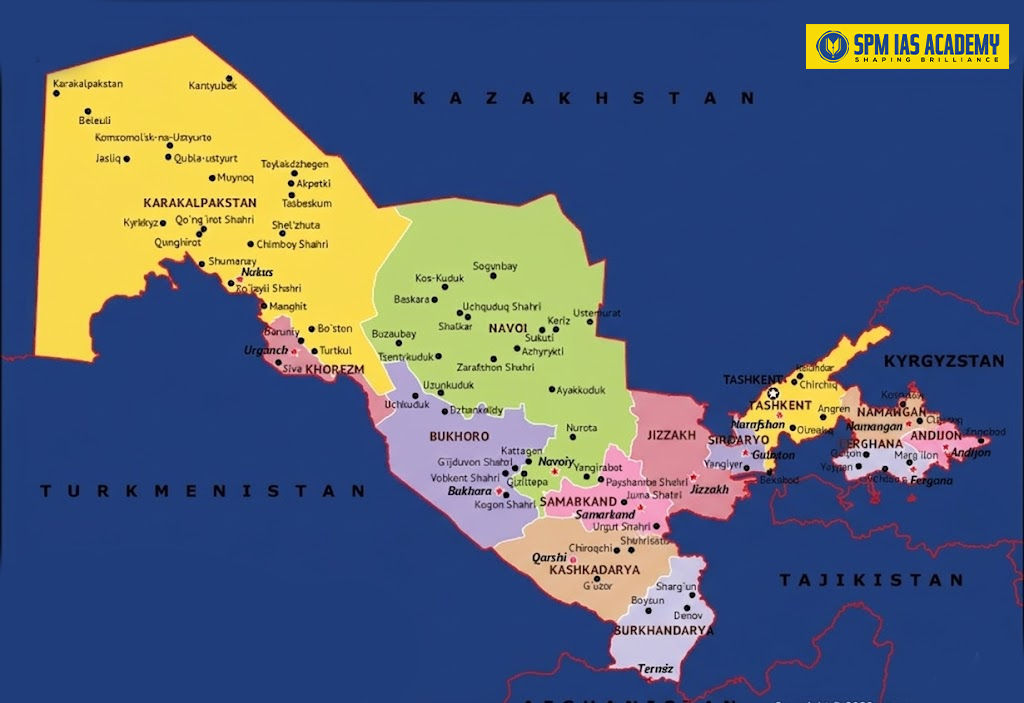
Uzbekistan is the cultural and historical heart of Central Asia. Home to some of the most magnificent Islamic architecture in the world, Uzbekistan’s legendary cities—Samarkand, Bukhara, and Khiva—were once the most important stops on the ancient Silk Road, connecting China with the Mediterranean. Today, Uzbekistan is the region’s most populous country, with around 37 million people, and is undergoing a remarkable period of economic reform and opening under its reformist president Shavkat Mirziyoyev.
Geography
Uzbekistan is a doubly landlocked country. It is surrounded only by other landlocked countries (only one other country like this exists—Liechtenstein). Most of Uzbekistan is dry, with the large Kyzylkum Desert covering much of the central area.
In the east, the Fergana Valley is very fertile. The valley shares its borders with Kyrgyzstan and Tajikistan. It is one of the most crowded and productive farming regions in Central Asia. The Amu Darya (also called the Oxus) River flows along parts of the southern and western borders of the country.
History – The Cultural Heart of Central Asian Countries
The land of modern Uzbekistan has a very long and rich history. Cities like Samarkand and Bukhara have been important centers of civilization for more than 2,500 years. Samarkand was once one of the most important cities in the world and a major center for trade and culture. Many empires ruled the region, including Alexander the Great in 329 BCE and the Persian empires. Later, the Islamic Caliphate took control in the 7th century.
In the 14th century, Uzbekistan became the center of a large empire under Timur (Tamerlane), who made Samarkand his capital and filled it with wealth from his conquests. This period saw enormous growth in art, architecture, science, and literature. Later, the region was divided into smaller states like Bukhara, Khiva, and Kokand, before being taken over by Russia in the late 1800s. Uzbekistan became independent in 1991 under Islam Karimov, who ruled until 2016.
Economy
Uzbekistan’s economy has long depended on cotton, and it is one of the world’s top cotton producers. It also has important resources like gold, natural gas, and uranium. Since 2016, under President Mirziyoyev, the country has made many changes to open up its economy. The currency can now be exchanged more freely, many government-owned companies have been privatized, people from over 90 countries can visit without a visa, and foreign investment has increased a lot. Tourism has also grown quickly, with many more visitors coming in recent years.
Other important industries include textiles, food processing, and a growing car industry, with Uzbekistan producing vehicles under the GM Uzbekistan brand.
The Silk Road Cities
Samarkand
Samarkand is one of the most famous and oldest cities in Central Asia. Its main attraction is the Registan, a beautiful square surrounded by three large madrasas (Islamic schools) with tall minarets, blue domes, and detailed designs. It is a UNESCO World Heritage Site. Other important places include the Gur-e-Amir (the tomb of Timur), Shah-i-Zinda, and the Bibi-Khanym Mosque.
Bukhara
Bukhara is one of the best-preserved old Islamic cities, and much of it still looks like it did in medieval times. Important places include the Ark Citadel, the Kalon Minaret (also called the “Tower of Death”), and the Lyab-i Hauz area. The city has been a center of Islamic learning for over 1,000 years and is often called “Bukhara the Noble.”
Khiva
Khiva is one of the most well-preserved Silk Road cities and feels like an open-air museum. Its inner city, called Itchan Kala, is surrounded by large mud walls and filled with old palaces, mosques, minarets, and madrasas. It is also a UNESCO World Heritage Site and is located near the Amu Darya river in a remote region.
Central Asian Countries: Tajikistan – Pamirs, Persian Heritage, and Economy
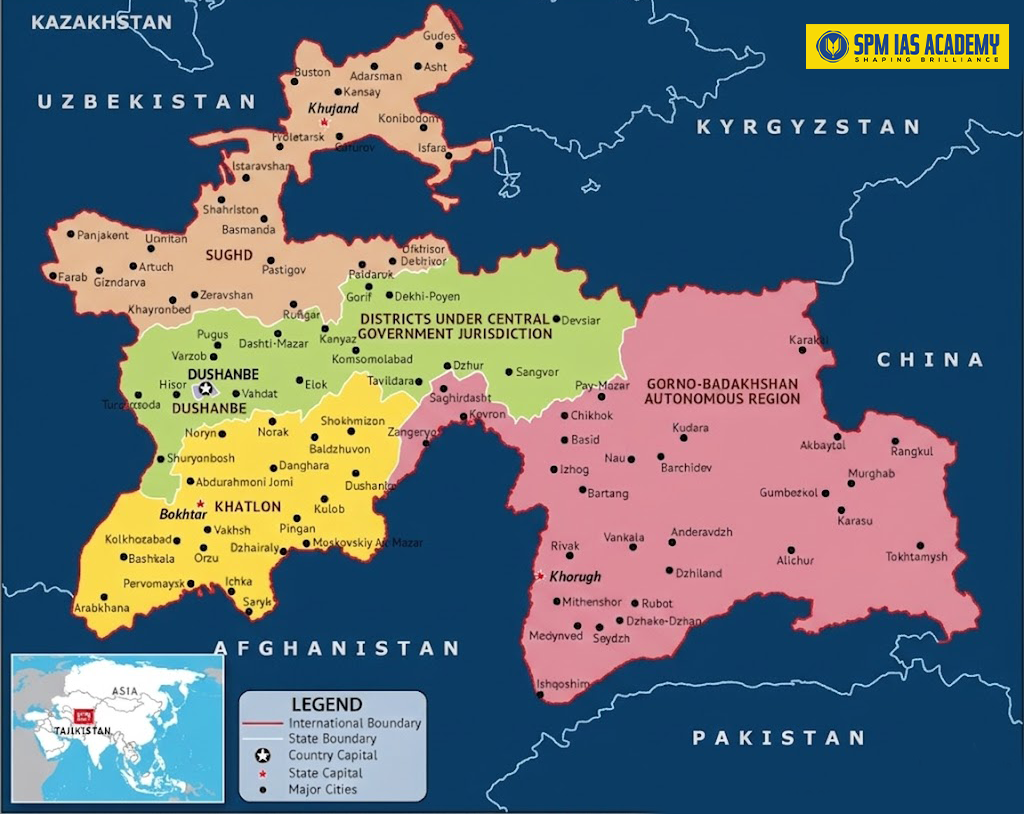
Tajikistan is the smallest and most mountainous country in Central Asia. It is a land of breathtaking high-altitude landscapes and ancient Persian heritage. More than 90% of Tajikistan’s territory is covered by mountains, including parts of the mighty Pamir range—the so-called ‘Roof of the World’—which contains some of the highest peaks on Earth outside the Himalayas. Despite being the poorest country in the former Soviet Union, Tajikistan is extraordinarily rich in natural beauty, history, and cultural authenticity.
Geography and Mountains
The Pamir Mountains cover eastern and southern Tajikistan. They have very high peaks, many above 7,000 meters, including Ismoil Somoni Peak (earlier called Communism Peak), which is 7,495 meters high and is the highest point in the former Soviet Union.
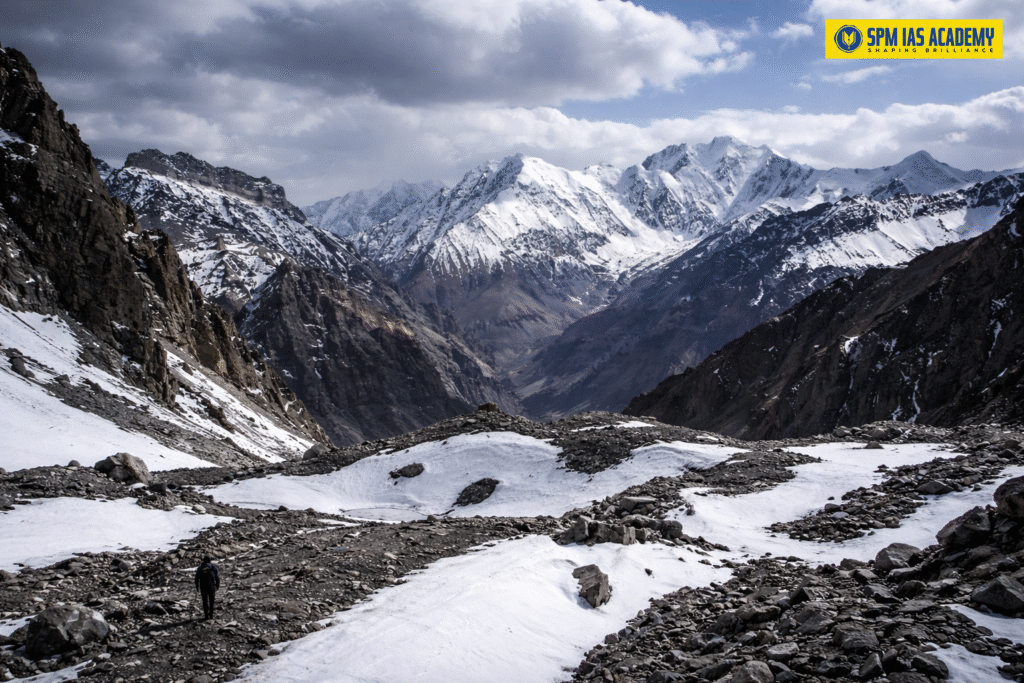
The Pamir Highway (M41) is one of the highest and most beautiful roads in the world. It passes through this region at heights above 4,000 meters and connects Dushanbe in Tajikistan to Osh in Kyrgyzstan, going through very remote and dramatic landscapes.
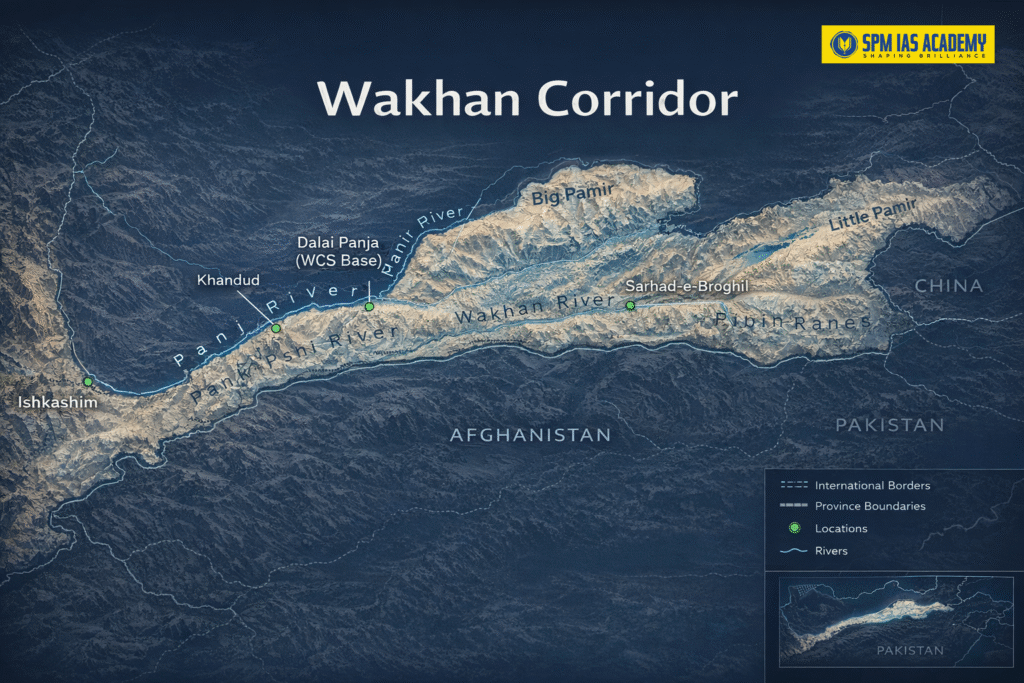
The Wakhan Corridor is a narrow strip of land that borders Afghanistan, China, and Pakistan. It is famous for amazing trekking routes, old Silk Road paths, Zoroastrian fire temples, and small communities where life has stayed almost the same for hundreds of years.
History and Culture – The Persian Legacy in Central Asian Countries
Unlike other Central Asian countries, where most people are Turkic, the people of Tajikistan are of Iranian (Persian) origin. They speak Tajik, which is a form of Persian (Farsi), and have strong cultural ties to Persian civilization. Tajik culture grew for many years in famous Silk Road cities like Samarkand and Bukhara (which later became part of Uzbekistan after Soviet borders were drawn). The famous poet Rudaki, known as the father of Persian literature, was from this region.
During the Soviet period, Tajikistan saw major development, such as large irrigation projects and a big aluminum industry, but this also caused environmental damage. After independence, a serious civil war (1992–1997) badly affected the country. Since then, under President Emomali Rahmon, who has been in power since 1992, Tajikistan has become relatively stable.
Economy
Tajikistan depends a lot on remittances, which is money sent back home by many Tajik workers living in Russia. This money makes up over 30% of the country’s GDP, which is one of the highest in the world. The main parts of its economy are aluminum production (the TALCO plant in Tursunzoda is one of the largest in the world), cotton farming, and hydropower.
Tajikistan has huge potential to produce electricity from water. The Nurek Dam is one of the tallest dams in the world, and the Rogun Dam, which is still being built, is expected to become the tallest dam in the world when it is finished.
Travel Highlights
Even though not many tourists visit Tajikistan, it offers some of the most beautiful and real travel experiences in Asia. The Pamir Highway is known as one of the best road trips in the world. The Fann Mountains in western Tajikistan have stunning blue glacial lakes, like the Seven Lakes and Iskanderkul, and are great for trekking.
The ancient city of Khujand, located in the Fergana Valley, is the second-largest city in Tajikistan and one of the most important historical places in Central Asia. It was founded by Alexander the Great and was called Alexandria Eschate, which means “Alexandria the Furthest.”
Central Asian Countries: Kyrgyzstan – Mountains, Nomadic Culture, and Politics
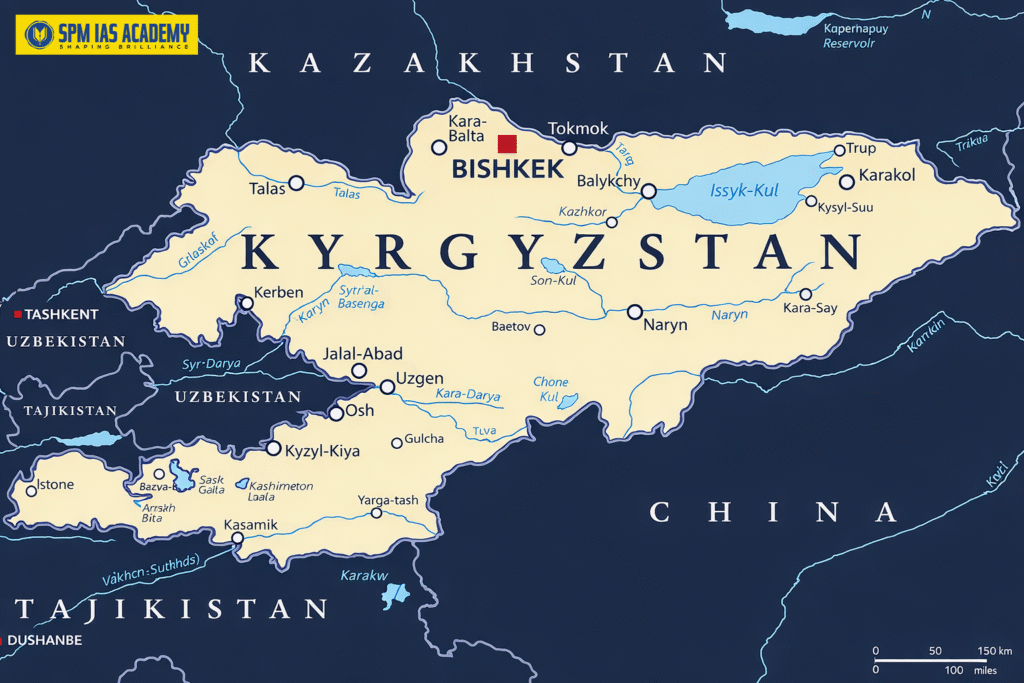
Kyrgyzstan is often called the ‘Switzerland of Asia’ or the ‘Pearl of the Silk Road. It is a small, mountainous nation of extraordinary natural beauty that is the most democratic and politically open country in Central Asia. Dominated by the Tian Shan (‘Heavenly Mountains’) mountain range, Kyrgyzstan offers world-class trekking, horse riding, and mountain adventures, along with a living nomadic culture and warm, welcoming people. It is a destination that punches far above its weight in terms of natural and cultural richness.
Geography – The Mountain Paradise of Central Asian Countries
Kyrgyzstan is mostly covered with mountains—about 94% of the country is mountainous. It has many very high peaks, with over 80 mountains taller than 5,000 meters. The Tian Shan mountains stretch across the country from east to west. Places like the Ak-Shyirak range and the beautiful Ala-Archa gorge near the capital city, Bishkek, are very famous.
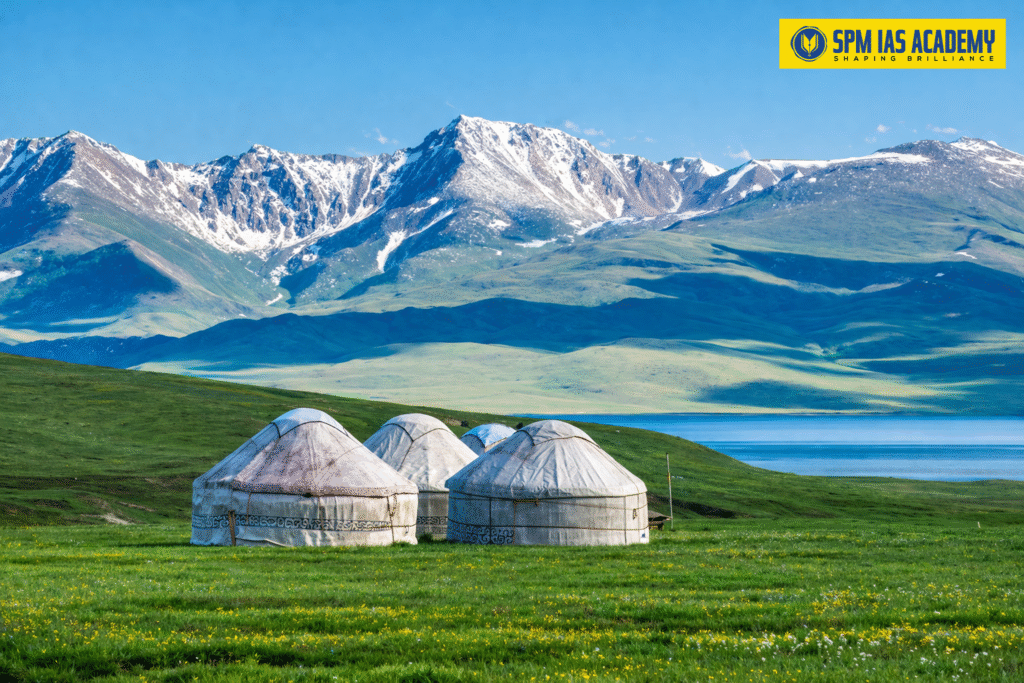
In the northeast, there is a big lake called Issyk-Kul. It is the second-largest mountain lake in the world and does not freeze in winter, even though it is very high up. Its name means “Warm Lake.” This lake is a popular place for tourists and was also an important stop on the Silk Road long ago
History and Nomadic Culture
The Kyrgyz people have a very old tradition of living a nomadic life, meaning they move from place to place. Their famous story, called the Manas, is the longest epic poem in the world and tells about a hero named Manas who united the Kyrgyz tribes. It is told by special storytellers called “manaschi” and is recognized by UNESCO as important cultural heritage.
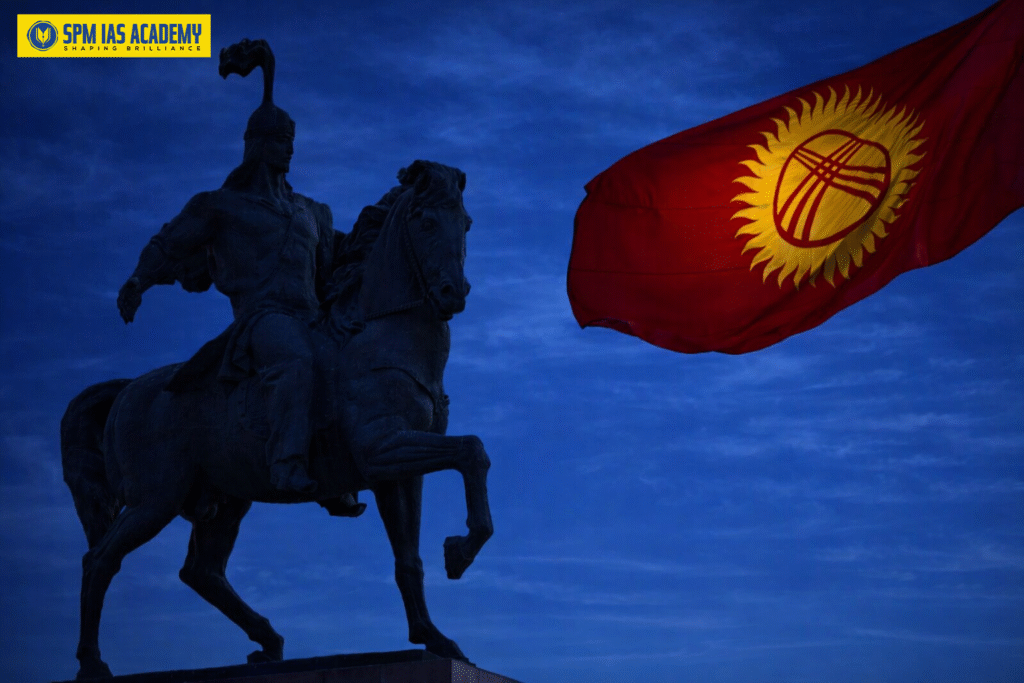
The yurt (called a boz-üy) is an important symbol of their culture. It is even shown on their national flag.
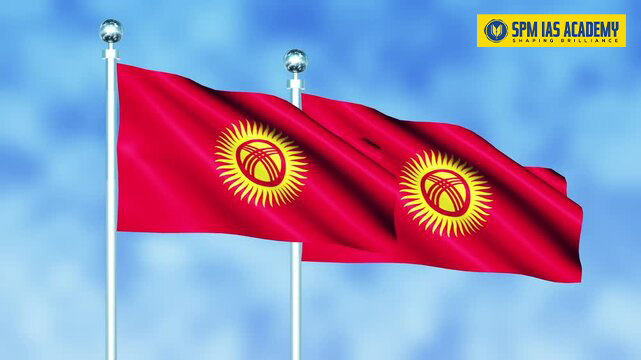
People still follow traditional practices like making felt, playing horse games, and hunting with eagles. Kyrgyzstan also hosts the World Nomad Games every two years near Issyk-Kul Lake, where people celebrate these traditional sports and culture.
Economy and Politics
Kyrgyzstan is one of the poorest countries among the former Soviet Union nations. Its economy depends heavily on gold mining (the Kumtor mine is one of the world’s largest gold mines by output), remittances (money sent by people working abroad), agriculture, and a growing tourism sector.
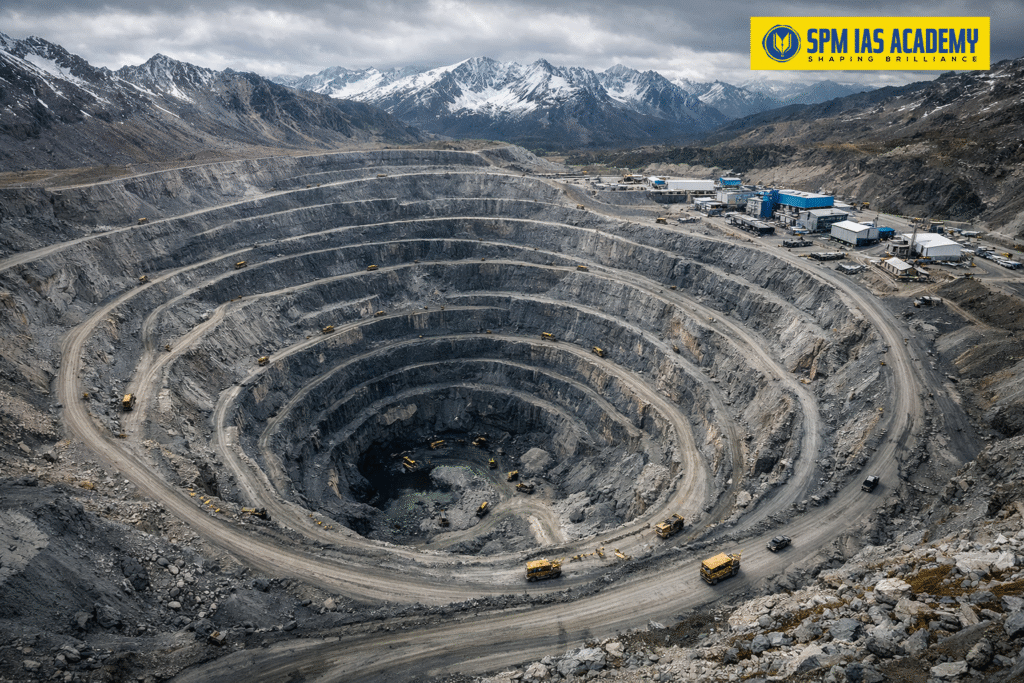
The country is different from others in Central Asia because it has a relatively open political culture. Three presidents were removed through popular uprisings (“revolutions”) in 2005, 2010, and 2020, making it the only country in the region with a real tradition of political change through mass protest.
Travel Highlights
Kyrgyzstan is an adventure travel paradise. Trekking in the Tian Shan, including the famous Ala-Kul and Son-Kul lake circuits, is world-class. Horseback riding tours with nomadic families, staying in yurt camps on the shores of Son-Kul (a high-altitude lake accessible only in summer), and skiing at Karakol in winter are among the country’s highlights. The Arslanbob walnut forest in the south, said to be the world’s largest natural walnut forest, and the ancient petroglyphs of Cholpon-Ata on the shores of Issyk-Kul are also remarkable.
Central Asian Countries: Turkmenistan – Gas Wealth, Isolation, and Unique Culture
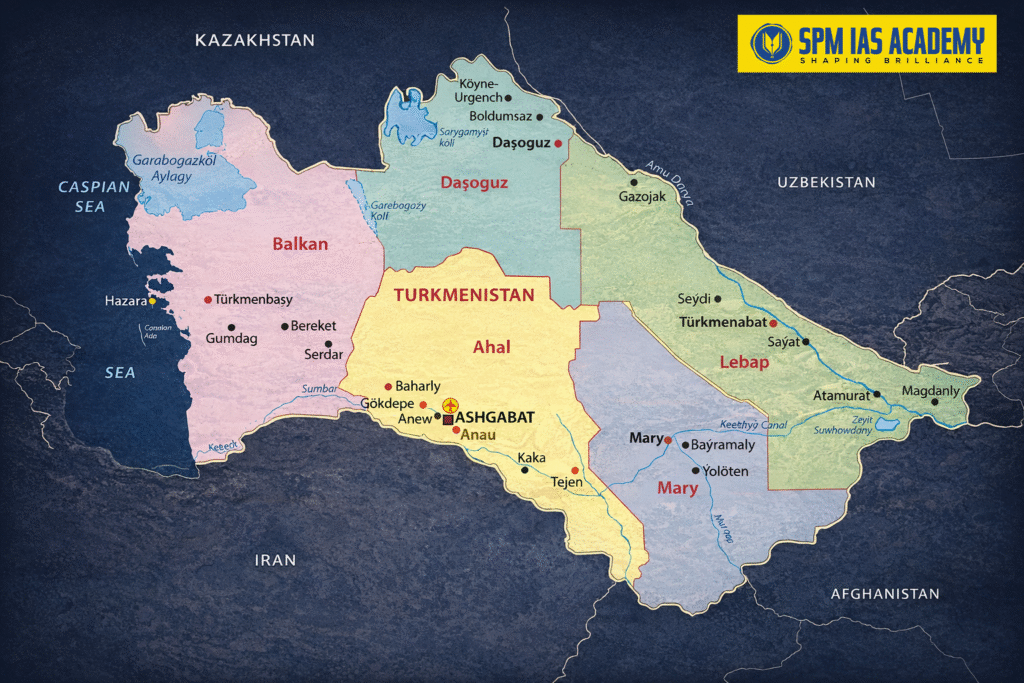
Turkmenistan is the most isolated and enigmatic country in Central Asia. It is a vast, desert nation built on almost incomprehensible natural gas wealth. It has strict government control, limited media freedom, and very few tourists compared to other countries. That’s why it feels mysterious . Geographically, most of Turkmenistan is desert (like the Karakum Desert). But underneath that desert, it has massive natural gas reserves, making it very rich in resources—even if that wealth isn’t equally visible in people’s daily lives.
Saparmurat Niyazov, Turkmenistan’s first president, ruled from 1991 to 2006. He was known for creating an extreme personality cult, calling himself “Turkmenbashi”. He introduced policies like renaming months after himself, building a rotating gold statue, and banning things like opera and beards. His rule made Turkmenistan one of the most controlled and unusual countries in the world.
Despite its many oddities and political restrictions, Turkmenistan contains remarkable ancient history. Its capital city, “Ashgabat,” is famous for its white marble buildings, making it look almost surreal or artificial. There is also a giant burning gas crater in the desert that has been on fire for decades, known as “‘Door to Hell.’
Geography – The Most Isolated of Central Asian Countries
Turkmenistan is dominated by the Karakum Desert (‘Black Sand Desert’). It covers nearly 80% of the country’s area and is one of the world’s largest sand deserts. The Caspian Sea forms its entire western border, and the country shares borders with Kazakhstan, Uzbekistan, Afghanistan, and Iran. The Kopet Dag mountain range runs along the southern border with Iran, and the Amu Darya River flows through the northeast of the country.
The Gas State: Economy
Turkmenistan has some of the world’s largest natural gas reserves. The South Yolotan-Osman field ranks as the second or third largest gas field in the world. The country uses its gas wealth to fund major construction in the capital, Ashgabat.
Since the early 2000s, it has rebuilt the city almost entirely with white marble. It even holds a Guinness World Record for having the highest number of white marble-covered buildings. However, the country does not distribute this wealth equally. Many people in Turkmenistan still live in poverty.
Ashgabat: The White Marble City
Ashgabat is one of the world’s most surreal capitals—a city of gleaming white marble palaces, golden domed buildings, immaculate empty boulevards, and enormous fountains, all under the blazing desert sun. Triumphal arches, colossal statues, and monumental buildings with names like the Palace of Knowledge and the Turkmenbashi Palace lend the city an otherworldly quality. The city’s Olympic complex, the Neutrality Monument, and the earthquake-proof National Museum are among the architectural spectacles.
The Door to Hell – Darvaza Gas Crater
Near the village of Derweze in the Karakum Desert is a very unusual place. It is called the Darvaza gas crater, also known as the “Door to Hell.” It is not completely natural, but man-made. In 1971, a Soviet drilling accident caused the ground to collapse into a gas cave. This created a large crater about 70 meters wide. The crater was set on fire to stop the spread of dangerous methane gas. It has been burning for more than 50 years. At night, the fire can be seen from many kilometers away in the dark desert.
Ancient History:
Turkmenistan has an important historical site. The ancient city of Merv, near the modern city of Mary, is very significant. Merv was once one of the greatest cities in the world and at times the largest. It was also an important center on the Silk Road. Today, its ruins are a UNESCO World Heritage Site.
They show over 4,000 years of history. These include remains from Achaemenid, Hellenistic, Parthian, Sassanid, and Islamic civilizations. Historians estimate that the Mongol invasion of 1221 devastated Merv, killing hundreds of thousands of people.
The Silk Road Legacy: Central Asia’s Historical Role
Central Asia’s place in world history is largely defined by the Silk Road. It is the ancient network of trade routes that connected China in the east with the Mediterranean in the west. It carried not just silk, spices, and precious goods, but also ideas, religions, technologies, art, and disease. From about the 2nd century BCE to the 15th century CE, Central Asia was not the remote backwater it is sometimes thought to be today. Instead, it was one of the most cosmopolitan and dynamic regions in the world.
Were Silk Road Cities Like Samarkand and Bukhara More Than Just Trade Stops?
The cities of Samarkand, Bukhara, Khiva, Merv, Khujand, and Balkh were not just simple stops on trade routes.
They were large and advanced cities with populations of hundreds of thousands.
They had busy markets where traders from China, India, Persia, Arabia, and Byzantium traded together.
These cities also became famous centers of Islamic learning.
They contributed to science, mathematics, astronomy, medicine, and philosophy.
How did the Silk Road help religions, disease, and knowledge spread from one continent to another?
The Silk Road saw the transmission of Buddhism from India to China through the Central Asian kingdoms of the Kushan Empire. It carried Islam from Arabia and Persia across the region from the 7th century onwards. Historians believe that the plague (Black Death) spread westward from Central Asia along Silk Road trade routes in the 14th century. Paper-making technology from China reached Europe via Central Asia. The spread of the numeral system we use today—Arabic-Hindu numerals—also passed through Central Asian scholars.
Is China’s Belt and Road Initiative Reviving the Legacy of the Ancient Silk Road?
Today, the legacy of the Silk Road is being actively revived through China’s Belt and Road Initiative, which is investing heavily in infrastructure across Central Asia, building railways, roads, pipelines, and industrial facilities. It positions the region once again as a conduit between the East and the West.
Travel Guide: Visiting Central Asia
Best Time to Visit
The ideal time to visit most of Central Asia is spring (April–June) or autumn (September–October). During these times, temperatures are moderate and landscapes are at their most beautiful. Summer (July–August) can be scorching in the lowland deserts of Uzbekistan, Turkmenistan, and southern Kazakhstan, with temperatures regularly exceeding 40°C. Winters can be harsh in the mountains of Tajikistan and Kyrgyzstan, but the latter offers winter sports opportunities. Kyrgyzstan and the high Pamirs are best visited June–September.
Visa Information
Visa requirements have changed dramatically in recent years, particularly for Uzbekistan and Kazakhstan, which have introduced extensive visa-free or visa-on-arrival access. Uzbekistan now offers visa-free access to citizens of over 90 countries for 30-day stays. Kazakhstan has visa-free agreements with many countries. Kyrgyzstan is visa-free for citizens of most developed nations. Tajikistan offers e-visas online. Turkmenistan remains the hardest to visit, generally requiring either a visa supported by a registered tour operator or transit visas.
Currency and Costs
Central Asia remains generally affordable for Western visitors, though costs vary. Uzbekistan and Kyrgyzstan offer excellent value, with comfortable guesthouses available for $15–30 per night and hearty meals for $3–8. Kazakhstan, particularly in Almaty and Astana, is more expensive and comparable to Eastern European capitals. Turkmenistan requires booking tours through registered agencies, making it more expensive than other destinations in the region. ATMs are widely available in capital cities and major towns, though carrying some cash is advisable in rural areas.
Getting Around
Internal transport varies by country. Uzbekistan has invested heavily in high-speed rail, with modern bullet trains connecting Tashkent, Samarkand, Bukhara, and Khiva, making intercity travel comfortable and efficient. Kazakhstan has a good domestic airline network and intercity rail. Shared taxis (marshrutkas) are the primary mode of transport between towns and cities in Kyrgyzstan and Tajikistan. The Pamir Highway requires either a hired 4WD vehicle or joining a group tour. Domestic flights connect major cities across the region.
Food and Cuisine
Central Asian cuisine is hearty, meat-centric, and deeply satisfying. Plov (pilaf—rice cooked with carrots, onions, and lamb) is the undisputed king of Central Asian food, with each region having its variation. Laghman (hand-pulled noodle soup with vegetables and meat), shashlik (skewered grilled meat), samsa (baked meat pastry), and manti (large steamed dumplings) are staples across the region. Non (flatbread baked in clay tandoor ovens) accompanies every meal. Tea culture is paramount—green tea (ko’k choy) in Uzbekistan, black tea in Kazakhstan, and kumiss (fermented mare’s milk) in Kyrgyzstan and Kazakhstan.
Why Are Central Asian Countries Gaining Global Attention Today?
To be precise, Central Asia is no longer just a “landlocked” region on the periphery. In 2026, it became a central pillar of global strategy. The surge in attention is driven by a unique convergence of geography, resource scarcity, and a shift in how these nations assert their power.
Here is why Central Asia is commanding the world’s focus today:
1. The “Middle Corridor” (Trade & Logistics)
With traditional trade routes through Russia (Northern Corridor) facing severe sanctions and maritime routes through the Red Sea experiencing heightened instability, Central Asia has emerged as the critical bridge between East and West.
- The Trans-Caspian Route: Also known as the Middle Corridor, this multi-modal route connects China to Europe via Kazakhstan, Uzbekistan, and the Caspian Sea.
- Speed & Safety: It is significantly shorter than the Northern route and bypasses sanctioned territories. Thus making it a primary focus for EU and Chinese investments.
2. The Critical Minerals Race
As the world transitions to green energy and AI-driven technology, Central Asia’s underground wealth has become a matter of national security for global powers.
- Uranium & Rare Earths: Kazakhstan alone produces roughly 43% of the world’s uranium. The region also holds massive, untapped deposits of lithium, cobalt, and rare earth elements (REEs). These are essential for EV batteries and semiconductors.
- Supply Chain Diversification: Western nations are actively partnering with Central Asian states to reduce their dependence on Chinese-dominated mineral processing.
3. Geopolitical “Multi-Vector” Diplomacy
The five Central Asian nations (Kazakhstan, Kyrgyzstan, Tajikistan, Turkmenistan, and Uzbekistan) have shifted from being passive players to strategic “Middle Powers.”
- Strategic Neutrality: Despite their historic ties to Russia and economic ties to China, these countries have maintained a neutral stance on major global conflicts (like the war in Ukraine). It allows them to court investment from the US, EU, India, and Turkey simultaneously.
- Regional Integration: For the first time in decades, the “New Central Asia” is working as a cohesive bloc. Border disputes—like the long-standing Tajik-Kyrgyz conflict—are being resolved, creating a more stable environment for foreign investors.
4. Energy Security
Beyond “new” minerals, the region remains a titan of traditional energy.
- Natural Gas & Oil: Turkmenistan holds some of the world’s largest natural gas reserves. As Europe seeks alternatives to Russian gas, Central Asia’s pipelines are becoming increasingly vital.
- Green Energy Potential: The vast steppes and high-altitude regions offer massive potential for wind and solar power. It draws interest from global green-tech firms looking to set up large-scale renewable hubs.
In short, Central Asia has transformed from a “buffer zone” between empires into a strategic hub that holds the keys to the world’s digital, green, and logistical future.
Conclusion: Why Central Asian Countries Deserve Your Attention
Central Asia is one of the last great undiscovered regions for tourism. It is also one of the richest regions in terms of history, culture, and nature. It may not have the same tourist facilities or global fame as Southeast Asia or Western Europe.
But this is also what makes it special. The cities are less crowded, the landscapes are more wild, and the hospitality feels more genuine. The sense of discovery here is also much stronger.
From the golden domes of Samarkand to the burning crater of Darvaza, Central Asia offers unique experiences. You can see nomadic yurt camps in Kyrgyzstan and the modern skyline of Astana. There are also silent ruins like ancient Merv and the high peaks of the Pamir Mountains. All these places offer deep and authentic experiences. Such experiences are becoming rare in today’s globalized world.
Whether you are drawn by history like the Silk Road, the Mongols, and Timur the Great, Central Asia has much to offer.
You can also explore adventure activities like the Pamir Highway, Tian Shan trekking, and eagle hunting. The region is rich in culture, including Islamic architecture, nomadic traditions, and Persian poetry. If you want to travel somewhere truly off the beaten path, Central Asia is a perfect choice. It will reward you beyond all expectations.
The five countries of Central Asia — Kazakhstan, Uzbekistan, Tajikistan, Kyrgyzstan, and Turkmenistan — together form one of the most fascinating and complex regions on Earth. As they continue to open up to the world, develop their economies, and welcome more visitors, now is the perfect time to explore this remarkable part of our shared human heritage.
Source – Central Asia: A Historical Overview