

Cyclone Ditwah has become one of the most discussed weather events of 2025. Formed over the Southwest Bay of Bengal, the cyclone surprised meteorologists because it originated in a region not commonly known for cyclone development. As the storm intensified, the India Meteorological Department (IMD) issued multiple alerts for Tamil Nadu, Puducherry, and South Andhra Pradesh. Moreover, Sri Lanka has already witnessed severe devastation due to the cyclone’s unusual movement along its coastline.
This article explains the origin of Cyclone Ditwah, the naming process, the IMD forecast, and the impact on India and Sri Lanka. It is highly useful for UPSC, APSC, SSC, and State PCS aspirants preparing current affairs.
What Is Cyclone Ditwah? — Latest Cyclone in the Bay of Bengal
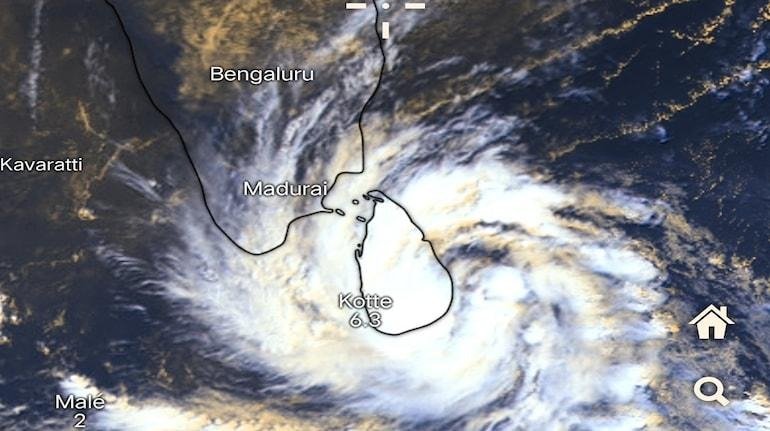
- Cyclone Ditwah is a tropical cyclone that formed in late November 2025 over the Southwest Bay of Bengal.
- The Southwest Bay of Bengal is a zone that usually witnesses fewer cyclonic developments compared to the North Bay.
- Despite this, two favourable environmental conditions aligned at the same time – warm sea surface temperatures and low vertical wind shear, making the formation of Ditwah possible.
- The IMD classified the system as a Cyclonic Storm after it intensified quickly within 24–36 hours.
Origin of Cyclone Ditwah:
Cyclone Ditwah originated from a well-marked low-pressure area over the Southwest Bay of Bengal on 26 November 2025. As the system gained strength, it moved through the typical stages of cyclogenesis.
Key Factors Behind Cyclone Ditwah’s Formation:
Several atmospheric and oceanic conditions supported its rapid development:
- Warm Sea Surface Temperatures (28–30°C): Provided abundant heat energy for cyclone formation.
- Low Vertical Wind Shear (10–15 knots): Allowed the storm clouds to grow vertically without disruption.
- Moisture-Rich Monsoonal Winds: Constantly supplied moisture to the developing system.
- Favourable Atmospheric Instability: Enabled rapid uplift and rotation.
Because all these factors acted together, the system intensified from a low-pressure area to a cyclonic storm in a remarkably short time.
Naming of Cyclone Ditwah:
Cyclones forming in the North Indian Ocean are named according to a list maintained by WMO–ESCAP (World Meteorological Organization and UN Economic and Social Commission for Asia-Pacific). The name “Ditwah” was contributed by Yemen.
Meaning Behind the Name:
- “Ditwah” refers to Detwah Lagoon, an ecologically sensitive coastal waterbody in the Socotra Archipelago of Yemen.
- The lagoon is famous for its biodiversity and pristine landscape.
How Cyclone Names Are Selected:
- The North Indian Ocean naming list includes 13 countries: India, Bangladesh, Iran, Maldives, Myanmar, Oman, Pakistan, Qatar, Saudi Arabia, Sri Lanka, Thailand, UAE and Yemen.
- Names are assigned sequentially whenever a new cyclone forms.
Why Cyclone Ditwah Caused Large-Scale Damage?
Cyclone Ditwah behaved differently from most of the Bay of Bengal cyclones. Instead of forming north of Sri Lanka, it developed south of the island, a region that rarely generates cyclones.
Key Reasons for Severe Damage:
- Sri Lanka is not cyclone-prone and lacks strong preparedness mechanisms.
- Cyclone Ditwah did not cross the landmass, unlike typical cyclones heading towards India.
- Instead, it moved parallel to the Sri Lankan coastline, allowing it to:
- Retain strength for a longer period
- Dump continuous heavy rainfall
- Intensify coastal flooding
- Increase the duration of destructive winds
As a result, the cyclone produced more damage than expected for its intensity.
India’s Humanitarian Response: Operation Sagar Bandhu:
India promptly expressed condolences to Sri Lanka after the devastating impact. Under Operation Sagar Bandhu, India delivered urgent Humanitarian Assistance and Disaster Relief (HADR) materials to support affected communities.
This assistance aligns with:
- Neighbourhood First Policy, and
- Vision MAHASAGAR, emphasizing India’s leadership in humanitarian maritime cooperation.
Impact of Cyclone Ditwah on Sri Lanka:
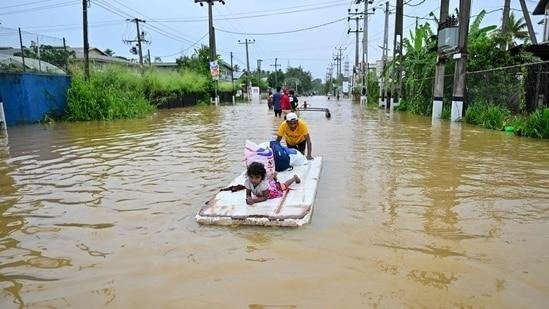
Sri Lanka has been the worst-affected country in this cyclone event. Heavy rainfall and storm conditions caused severe disruptions across multiple districts.
Major Impacts in Sri Lanka
- Widespread flooding across urban and rural areas
- Landslides in hilly regions
- Severe storm damage to houses and public infrastructure
- 120+ deaths reported, with dozens injured
- Large-scale displacement of families
- Disruption of transport networks, communication lines, bridges and road connectivity
Overall, Cyclone Ditwah has emerged as one of the deadliest storms to impact Sri Lanka in recent years.
IMD Forecast: Expected Impact of Cyclone Ditwah on India:
Although Sri Lanka faced the direct impact, India’s east coast is expected to receive significant rainfall and strong winds as the cyclone moves northwards.
Likely Effects in Tamil Nadu, Puducherry & Andhra Pradesh
- Heavy to extremely heavy rainfall in coastal districts
- Urban flooding in Chennai, Puducherry, and Cuddalore
- Strong winds capable of uprooting trees and damaging kutcha houses
- Power supply disruptions due to snapped lines
- Agricultural damage, especially:
- Paddy fields
- Banana plantations
- Coastal fisheries
- High waves and storm surge threatening:
- Low-lying coastal villages
- Fishing harbours
- Marina and port activities
Fishermen have been advised to avoid venturing into the sea until further notice.
Why Cyclone Ditwah Matters – Environmental & Policy Dimensions:
Cyclone Ditwah highlights several critical issues:
- Changing Cyclogenesis Patterns: Cyclones forming unusually southwards indicate shifting climate patterns in the Indian Ocean.
- Increased Vulnerability of Island Nations: Countries like Sri Lanka need stronger forecasting, infrastructure, and early-warning systems.
- Need for Enhanced Coastal Resilience in India: Urban centres like Chennai remain highly vulnerable to flooding and storm surge events.
- Regional Cooperation for Disaster Response: Operation Sagar Bandhu reinforces the importance of India – Sri Lanka cooperation in disaster relief.
Conclusion:
Cyclone Ditwah is a reminder that climate variability is reshaping the behaviour of tropical cyclones in the Indian Ocean. With its unusual origin, rapid intensification, and severe impact on Sri Lanka, the cyclone underscores the need for improved preparedness, coastal resilience, and regional collaboration.
As IMD continues to monitor the system, coastal populations in Tamil Nadu, Puducherry, and Andhra Pradesh must stay alert and follow official advisories.
Sources:
- https://www.thehindu.com/news/cities/chennai/after-pounding-north-tamil-nadu-remnant-of-cyclone-ditwah-drifts-inland-city-to-get-light-rain-today/article70353989.ece
- https://indianexpress.com/article/explained/explained-sci-tech/cyclone-ditwah-sri-lanka-10398601/
Cyclone Ditwah is a tropical cyclone that formed in November 2025 over the Southwest Bay of Bengal and rapidly intensified due to warm sea temperatures and low wind shear.
Cyclone Ditwah originated from a well-marked low-pressure area on 26 November 2025 and strengthened into a cyclonic storm within 24–36 hours.
The name “Ditwah” was contributed by Yemen under the WMO–ESCAP naming system and refers to the Detwah Lagoon in the Socotra Archipelago.
Cyclone Ditwah lingered along Sri Lanka’s coastline instead of crossing land, causing prolonged rainfall, flooding, and wind damage in a region not accustomed to cyclones.
IMD predicts heavy rainfall, strong winds, urban flooding, and high waves across Tamil Nadu, Puducherry, and South Andhra Pradesh as Cyclone Ditwah moves northward.