India’s freedom struggle was not an isolated movement. It drew inspiration from global revolutions, international leaders, and powerful ideological currents. These influences shaped India’s political thought, nationalist strategies, and social reforms. Therefore, understanding these global connections is crucial for UPSC, APSC, and State PSC aspirants. This article explains the influences of international events on India’s independence movement.
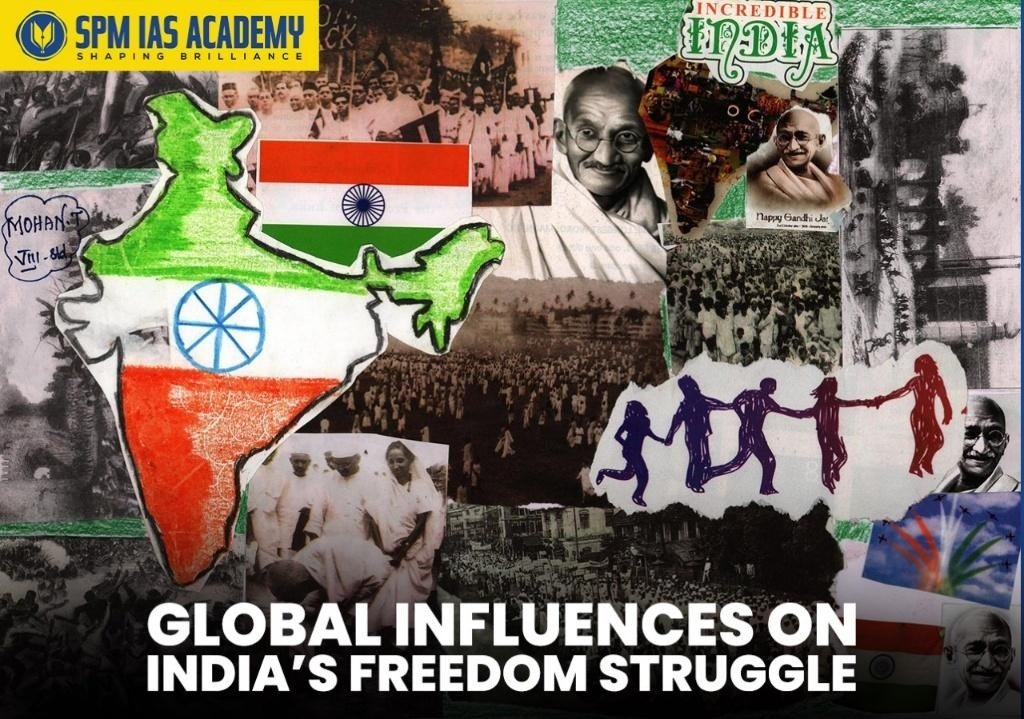
Why Global Influences Matter in India’s Freedom Struggle:
- India’s nationalist leaders carefully studied global events. They adapted international ideas to Indian realities.
- Moreover, foreign success stories motivated Indian revolutionaries to challenge British rule.
- Therefore, global influences significantly strengthened India’s anti-colonial movement.
Influence of the American Revolution (1776):
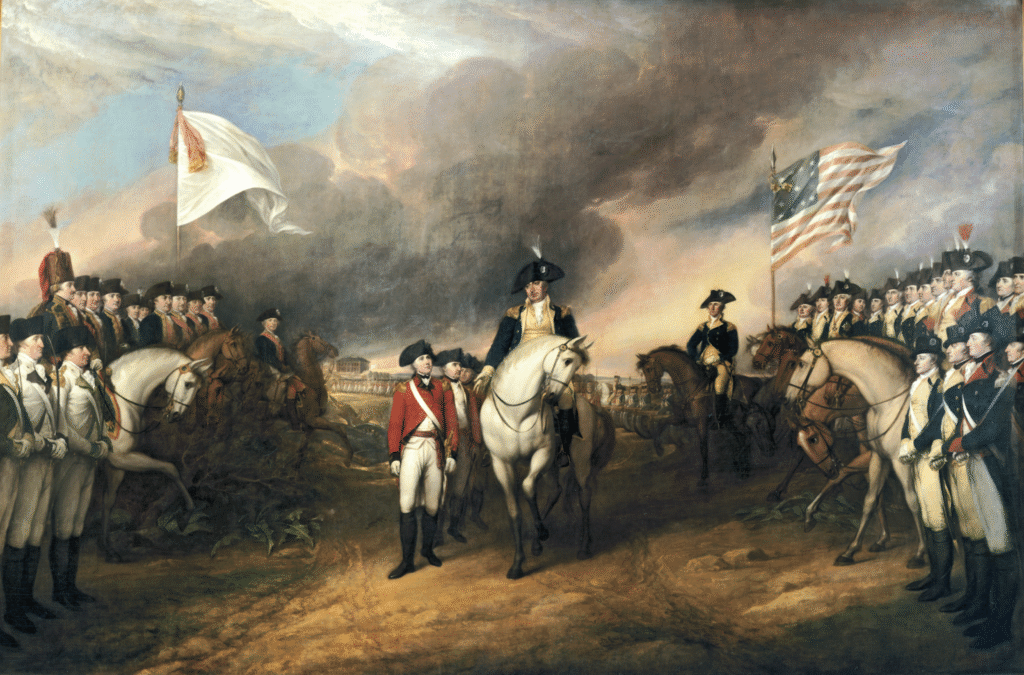
The American Revolution proved that colonial rule could be defeated.
Indian thinkers admired its focus on liberty, natural rights, and self-governance.
Key Influences:
- Dadabhai Naoroji referenced American ideas on economic freedom.
- Indian political associations adopted American organisational models.
- “No taxation without representation” strongly influenced early moderates.
Thus, America’s success encouraged Indian leaders to demand constitutional reforms.
Impact of the French Revolution (1789):
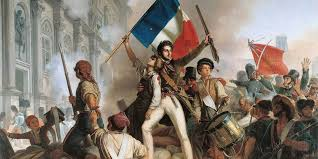
The French Revolution shook Europe and inspired oppressed societies worldwide.
Indian reformers adopted its ideals of liberty, equality, and fraternity.
Key Influences:
- Indian nationalists used the concept of equality to challenge discriminatory colonial laws.
- Revolutionary groups admired French courage against monarchy.
- The French revolutionary spirit encouraged Indians to demand sovereignty.
Consequently, the French Revolution provided ideological fuel for Indian nationalism.
Influence of the Irish National Movement (mid-19th century to early 20th century):
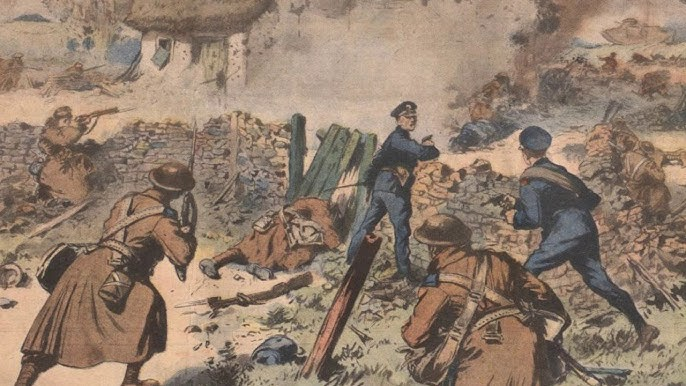
The Irish struggle against British rule deeply resonated with Indian leaders.
Both nations faced similar colonial oppression.
Important Links:
- Indian revolutionaries studied the Irish guerrilla strategy.
- Bal Gangadhar Tilak admired Ireland’s assertive nationalism.
- The Home Rule Movement in India drew inspiration from Irish Home Rule campaigns.
Therefore, Ireland’s resistance model played a vital role in Indian political agitation.
Russian Revolution (1917) and Its Deep Impact:
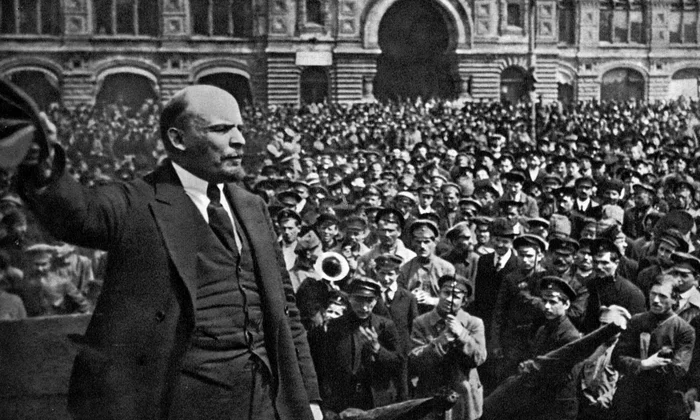
The Russian Revolution dramatically altered political thinking in Asia. It introduced ideas of socialism, workers’ rights, and anti-imperialism.
Key Influences on India:
- Indian youth embraced socialist principles.
- Leaders like M.N. Roy joined global communist networks.
- The Revolution inspired trade unions and peasant movements in India.
Thus, Russian events reshaped India’s social and economic vision.
Impact of World Wars on India’s Freedom Movement:
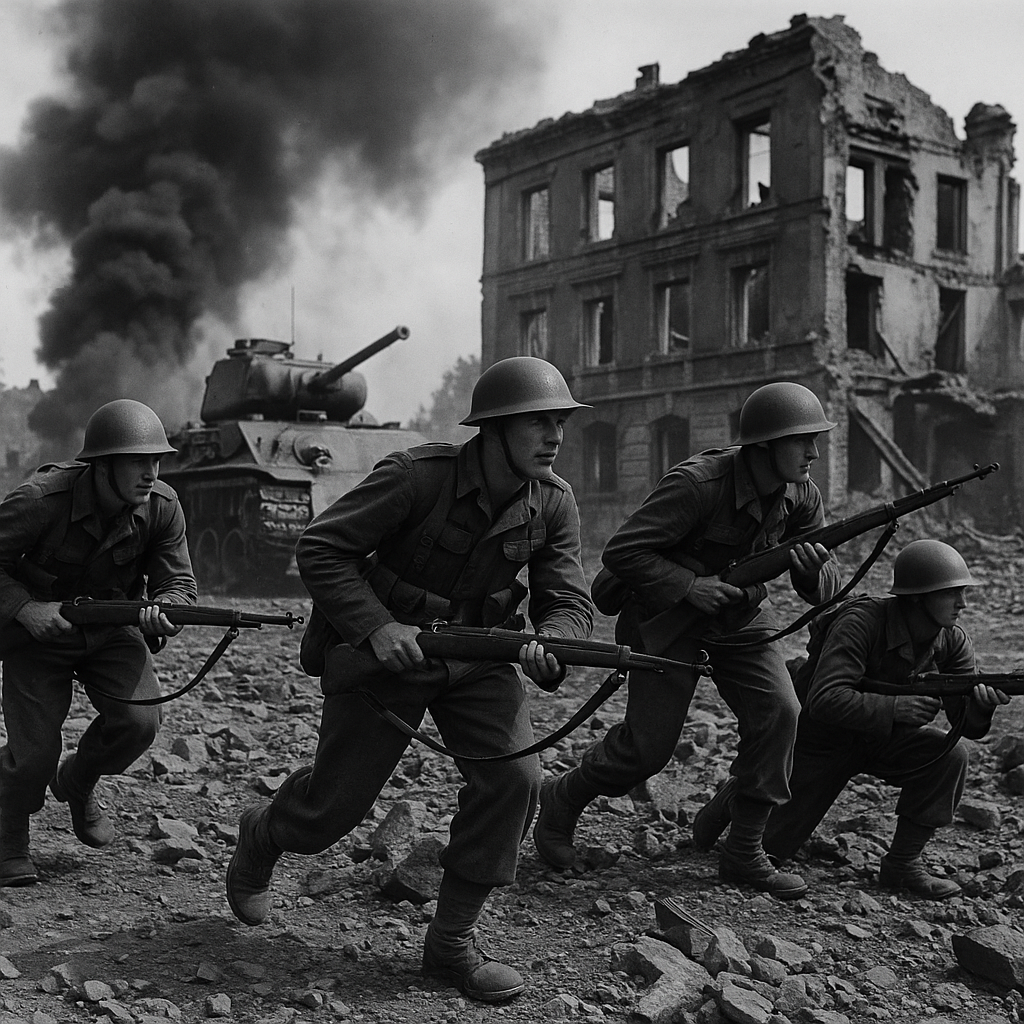
Both World Wars weakened Britain. This created opportunities for Indian nationalism.
Influences of WWI:
- Indian soldiers experienced global political ideas abroad.
- Nationalists realised Britain’s vulnerability.
- The post-war economic crisis triggered mass protests.
Influences of WWII:
- The Quit India Movement arose amid global instability.
- Bose expanded the INA using wartime geopolitics.
- Britain lost global power and accelerated India’s independence.
Therefore, global conflicts directly shaped India’s liberation.
Influence of Japan and Asian Nationalism:
Japan’s victory in the Russo-Japanese War (1904-05) shocked the world. It showed that an Asian nation could defeat a European power.
Key Impacts:
- Indian leaders gained confidence in Asian self-assertion.
- Japan supported Indian revolutionaries like Rashbehari Bose.
- Subhas Chandra Bose built the INA with Japanese assistance.
Thus, Asian nationalism strengthened India’s own anti-colonial resolve.
Role of International Leaders and Thinkers:
Several global leaders inspired Indian nationalists.
Important Influences:
- Giuseppe Mazzini: Influenced Lala Lajpat Rai and India’s revolutionary societies.
- Abraham Lincoln: Inspired ideas on democracy and equality.
- Karl Marx: Influenced labour movements and socialist thinkers.
- Sun Yat-sen: Inspired Asian anti-colonial ideas.
Consequently, international leadership shaped India’s intellectual landscape.
Global Anti-Colonial Movements:
India was part of a wider anti-colonial wave.
Influences:
- African liberation struggles shared ideas with Indian thinkers. For example, Ethiopia’s Resistance Against Italian Invasion (1935).
- Asian nationalist movements shared strategies with India. For example, Turkish National Movement (Khilafat & Atatürk’s Reforms), Chinese Nationalist Movement (1911 Revolution & Sun Yat-sen), Japanese Rise (Meiji Restoration & Victory in Russo-Japanese War, 1905).
- Anti-imperial ideas circulated through global forums.
Thus, India drew strength from global solidarity networks.
Impact of International Institutions:
India’s leaders used global platforms to expose British rule.
Important Platforms:
- The League of Nations
- International Labour Organization (ILO)
- Indian diaspora groups across Europe and America
These institutions amplified India’s freedom message worldwide.
Conclusion:
India’s freedom struggle was a powerful national movement, yet it carried deep global influences. Revolutions, wars, international thinkers, and foreign nationalist movements shaped India’s strategies and political imagination.
Therefore, understanding these global connections helps to understand the international dimension of India’s independence.
Sources:
- https://www.globalindian.com/story/cover-story/unsung-allies-abroad-how-the-indian-diaspora-fuelled-the-freedom-struggle/
- https://www.thecollector.com/india-independence-movement-6-key-moments/
India’s freedom struggle was shaped by global events such as the American Revolution, French Revolution, Irish National Movement, Russian Revolution, World Wars, and rising Asian nationalism, which inspired Indian leaders and movements.
The American Revolution inspired Indian leaders with ideas of liberty, natural rights, and “no taxation without representation,” motivating early political associations to demand constitutional reforms.
The French ideals of liberty, equality, and fraternity influenced Indian reformers and revolutionaries, strengthening their resolve to challenge discriminatory colonial policies and demand sovereignty.
The Russian Revolution introduced socialist ideas in India, inspiring leaders like M.N. Roy encouraged the rise of trade unions, workers’ movements, and peasant struggles against colonial exploitation.
World War II weakened Britain economically and politically, creating conditions for mass movements like Quit India and enabling Subhas Chandra Bose to mobilize the INA, ultimately pushing Britain toward granting independence.