

The Assam Cabinet has taken a significant step toward addressing one of the State’s most longstanding socio-political demands. It has approved the report of a Group of Ministers (GoM) recommending Scheduled Tribe (ST) status for six major communities. The six communities are Tai Ahom, Chutia, Koch-Rajbongshi, Matak, Moran, and the Tea Tribes (Adivasis).
This decision comes against the backdrop of decades of appeals and renewed public demonstrations by these groups. These six communities were seeking Scheduled Tribe (ST) status that would safeguard their identity, heritage, and access to protective provisions.
The GoM submitted an interim set of recommendations on how to grant Scheduled Tribe (ST) status to six communities. Moreover, while granting ST status to six communities, it also focused on protecting the socio-political, economic and also cultural rights of the existing ST groups in Assam.
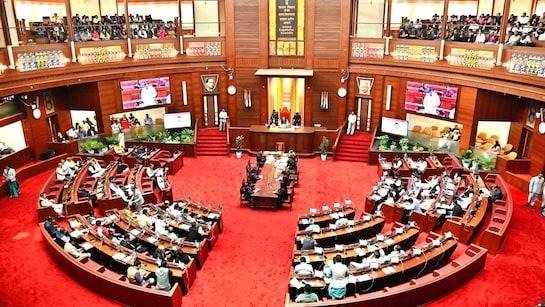
The recommendations of the committee of the Group of Ministers:
- There will be three-tier classification of Scheduled Tribes in Assam. These are:
- Firstly, ST (Plains) – Existing Scheduled Tribes of the plains.
- Secondly, ST (Hills) – Existing Scheduled Tribes of the hills.
- Thirdly, ST (Valley) – Proposed new category for the six communities.
- This structure will allow reorganization of reservations in the Parliament, the Legislative Assembly and Local Bodies without reducing the current entitlements of ST (P) and ST (H) communities.
- Parliament must enact special legislation to give statutory endorsement to the three-fold reservation policy.
- The GoM recommends creating a separate and distinct ST (Valley) category. This step will safeguard the interest of the existing ST communities.
- This category will include Ahom, Chutia and Tea Tribes & Adivasi Communities (recommended for inclusion in the list of Scheduled Tribes through a process of consensus), and Koch-Rajbongshi (excluding the undivided Goalpara district).
- This classification will apply to state-level employment and education. In addition, it will also apply to political representation including Parliament and Legislative Assembly through constitutional or statutory mechanisms.
- Moreover, the GoM also recommended to reserve permanently the Lok Sabha constituencies covering the Sixth Schedule areas for the existing ST communities.
- For ST (Valley), there will be additional reserved seats in Parliament. Because the number of reservations will automatically increase due to the recognition of large number of people as Scheduled Tribes in the state of Assam.
- The ST (Valley) category will have separate reservation quotas. As a result, there will be distinct rosters and vacancy registers for all State Government recruitments and educational institutions. Existing ST (P) and ST (H) quotas will remain fully protected.
- At the Central Government level, separate reservations for ST (P), ST (H) and ST (Valley) cannot be created.
- At present, there is a single national ST list and ST (H) and ST (P) candidates from Assam already compete as a single ST category in Central institutions.
- Furthermore, the GoM also recommends granting ST (Plains) status to the following communities:
- Moran
- Matak
- Koch Rajbongshi of the undivided Goalpara district. In respect of the BTC part of the undivided Goalpara district, people of this community will require NOC from the BTC.
- In relation to the Tea Garden Communities, the GoM highlighted that 35 communities so far not included in the state OBC list. Therefore, the GoM recommended for their immediate inclusion in the State OBC list. Moreover, it will enable to examine their cases for future categorisation as ST or SC groups.
- The GoM find justification for the inclusion of the six communities in the Scheduled Tribe list based on their socio-economic backwardness.
- Besides, the Registrar General of India, the National Commission for Scheduled Tribes and the Union Cabinet already recommended their inclusion.
- Until their recognition as Scheduled Tribe, the GoM recommended to classify the present OBC reservation quota into seven categories. As a result, the categories will be Ahom, Chutia, Moram, Matak, Koch Rajbongshi, Tea Garden & Adivasi and for OBCs that do not belong to the above categories.
- For State Government jobs and reservation in State Educational Institutions, all the above communities will be entitled to reservation as per their population on a pro-rata basis.
- The GoM recommends a comprehensive enumeration and socio-economic survey. As a consequence, it will enable sub-categorisation within the 27% OBC quota. Moreover, it will particularly benefit the Tea Garden and Adivasi groups. Overall, this will ensure equitable distribution of reservation benefits and reduce internal disparities.
- In addition, it recommends OBC reservation in Panchayati Raj Institutions and Urban Local Bodies. It will require amendment of the Assam Panchayati Raj Act and Municipal Act under Articles 243D and 243T of the constitution.
- The Government of Assam should request the Census of India to provide community-wise population data. Along with this, the government should initiate a State-level empirical survey to determine population and socio-economic indices of each community.
- In relation to land settlement in Assam, all six communities should have same privileges as extended to the present ST communities.
- Additionally, it advises the state government to enact a land protection law for them as well as existing ST communities. As a result, the law will prevent the transfer of land to persons outside of their communities.
- All the six communities along with the existing tribal communities should come within the ambit of the Department of Indigenous and Tribal Faith and Culture. As a result, it will preserve the heritage, language, culture, custom and religious beliefs of the six communities.
- The Education Department will undertake a special drive to promote the language of these six communities. It will be in line with the mandate of the National Education Policy, 2020.
Sources:
- https://www.hindustantimes.com/cities/others/assam-govt-table-report-on-st-status-for-six-communities-triggers-protest-101764433808779.html
- https://economictimes.indiatimes.com/news/india/gom-backs-st-status-for-six-assam-communities-cites-strong justification/articleshow/125660639.cms?from=mdr
- https://www.theweek.in/wire-updates/national/2025/11/29/cal39-as-assembly-st-status-ld-report.html
- https://theprint.in/india/interim-report-on-st-status-to-6-communities-of-assam-tabled-in-assembly/2794967/
The six communities recommended for Scheduled Tribe (ST) status in Assam are Tai Ahom, Chutia, Koch-Rajbongshi, Matak, Moran, and the Tea Tribes (Adivasis).
The Assam Cabinet approved the Group of Ministers (GoM) report that recommends granting ST status to the six communities. Moreover, it also emphasised on protecting the rights and existing quotas of current ST (Plains) and ST (Hills) groups.
The GoM proposed a three-tier ST category for Assam:
Firstly, ST (Plains) – Existing plains tribes
Secondly, ST (Hills) – Existing hill tribes
Thirdly, ST (Valley) – Newly proposed group including Tai Ahom, Chutia and Koch Rajbongshi (excluding undivided Goalpara)
No. The GoM clearly states that existing ST reservations will remain fully protected, with a separate reservation roster for the new ST (Valley) category.
The next steps are a special legislation by Parliament and a Constitutional Amendment to give statutory approval to the new reservation structure and officially grant ST status to the six communities.