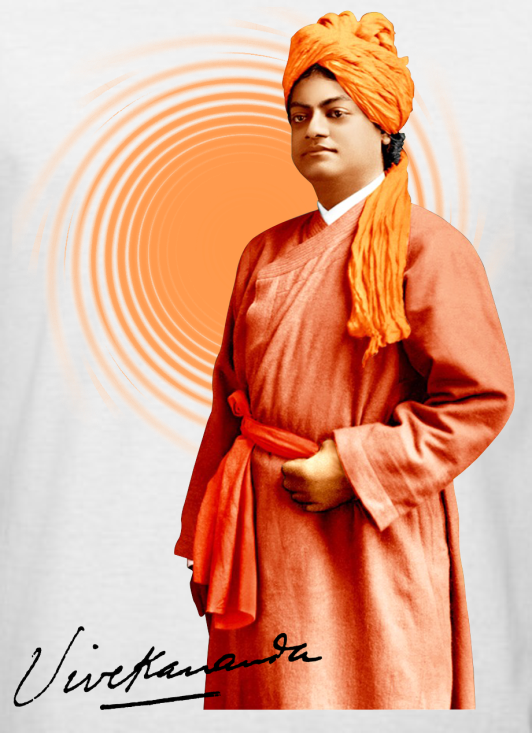
The Swami Vivekananda Chicago speech was delivered on September 11, 1893, which stands out as one of the most influential spiritual and cultural moments in world history. He addressed the first Parliament of the World’s Religions in Chicago, an event which was held during the World’s Columbian Exposition. As he rose and greeted the audience with “Sisters and Brothers of America,” after which he received a two-minute standing ovation. His words not only introduced India’s spiritual depth to the West but also emphasized harmony, tolerance, and the universal brotherhood of humankind. Moreover, the Swami Vivekananda Chicago speech marked a turning point in global interfaith dialogue.
Background Behind the Chicago Speech
The Swami Vivekananda Chicago speech was delivered at the Parliament of the World’s Religions (PWR), a platform created to promote understanding between global faiths. It originated from the 1893 World’s Columbian Exposition, the PWR which later evolved into a major international NGO based in Chicago and affiliated with the United Nations Department of Public Information. Due to this global nature, the stage gave Vivekananda the perfect opportunity to present India’s ancient wisdom to the world.
Swami Vivekananda, born as Narendranath Datta in Calcutta on 12 January 1863, carried the teachings of his guru, Ramakrishna Paramhansa, and actively spread the ideas of Advaita Vedanta and universal acceptance. He later founded the Ramakrishna Mission in 1897 to promote service, education, and spiritual upliftment. Furthermore, his work became so impactful that India celebrates National Youth Day every year on his birth anniversary.
What the Chicago Speech Aimed to Convey
The Swami Vivekananda Chicago speech centered on one major theme, the idea that all religions ultimately lead to the same truth. Rather than reading his words directly, it is important to understand the deeper message behind them.
1. He promoted universal tolerance
Firstly, Swami Vivekananda explained that Hinduism had always taught both tolerance and acceptance. He reminded the audience that India had welcomed persecuted Jews and Zoroastrians when other places had rejected them. According to him, this long tradition of sheltering others showcased India’s commitment to harmony.
2. He highlighted unity among all religions
Through his references to ancient hymns, he highlighted that different paths, whether straight or crooked, eventually flow into the same divine reality. Hence, due to this idea, the Swami Vivekananda Chicago speech became a powerful voice against religious conflict.
3. He condemned fanaticism
Moreover, Swami Vivekananda strongly criticized bigotry, sectarianism, and intolerance. He states that these forces had destroyed civilizations, created violence, and slowed human progress. However, he also expressed hope that the Parliament of Religions would mark the beginning of a new era where such divisions would slowly fade away.
4. He linked his message to the Bhagavad Gita
Additionally, for strengthening his argument, he cited the Gita: “Whosoever comes to Me, through whatsoever form, I reach him.” By doing so, the Swami Vivekananda Chicago speech established a clear connection between ancient Indian scriptures and modern ideas of global unity.
Impact of the Chicago Speech on the World
Swami Vivekananda Chicago speech carried a universal message, which changed the vision of the Western world towards Hinduism. It also opened new space for yoga, Vedanta, and Eastern philosophy to grow in Europe and America. In addition, the speech helped India regain global recognition during a period when the country was still under colonial rule.
Furthermore, Vivekananda’s ability to speak with humility, courage, and clarity made him a respected figure across continents. His message still remains relevant today as societies continue to struggle with issues of intolerance and religious conflict.
Legacy of Swami Vivekananda After the Chicago Speech
After delivering the Swami Vivekananda Chicago speech, he traveled across America and Europe, spreading the principles of Vedanta and spiritual strength. Later, he returned to India and strengthened the Ramakrishna Mission, focusing on education, health, relief work, and the idea of serving humanity as service to God. He established Belur Math in January 1897, which became the headquarters of Ramkrishna Mission.
He passed away in 1902 at Belur Math, yet his teachings continue to inspire millions. As a result, India proudly observes National Youth Day every year on 12 January to honor his vision for a stronger and more enlightened society.
Conclusion
The Swami Vivekananda Chicago speech remains one of the most powerful messages on religious harmony ever delivered. Because he spoke with simplicity and fearlessness, his words touched hearts across the world. In addition, his emphasis on acceptance, unity, and non-violence continues to guide global conversations even today. Ultimately, the speech stands as a reminder that humanity grows only when people respect different paths and walk together towards truth.
Citations
- Swami Vivekananda and His 1893 Speech
- Swami Vivekananda’s Speeches at the World’s Parliament of Religions, Chicago, 1893
The main purpose was to promote religious tolerance, universal acceptance, and harmony among all faiths.
The speech was delivered on September 11, 1893, at the first Parliament of the World’s Religions in Chicago.
His opening words “Sisters and Brothers of America” moved the audience, and his message of unity deeply touched everyone present.
He highlighted universal acceptance, ancient hospitality, the inclusiveness of Hindu philosophy, and the core message of the Bhagavad Gita.
The speech changed Western views on Hinduism, promoted interfaith dialogue worldwide, and established Vivekananda as a global spiritual icon.
It is celebrated on January 12 every year to honor the birth anniversary and teachings of Swami Vivekananda.