

Why was the Khiksaba festival in the news?
The Governor of Arunachal Pradesh has extended greetings to the people of the state on the occasion of Khiksaba festival. Khiksaba is an important traditional festival of the Sherdukpen community of Arunachal Pradesh. It is celebrated on an auspicious day according to the Buddhist calendar. In simple terms, the festival reflects the community’s religious beliefs, cultural traditions, and respect for nature. Overall, Khiksaba holds deep spiritual and cultural importance in the social life of the Sherdukpens.
What is the Khiksaba festival?
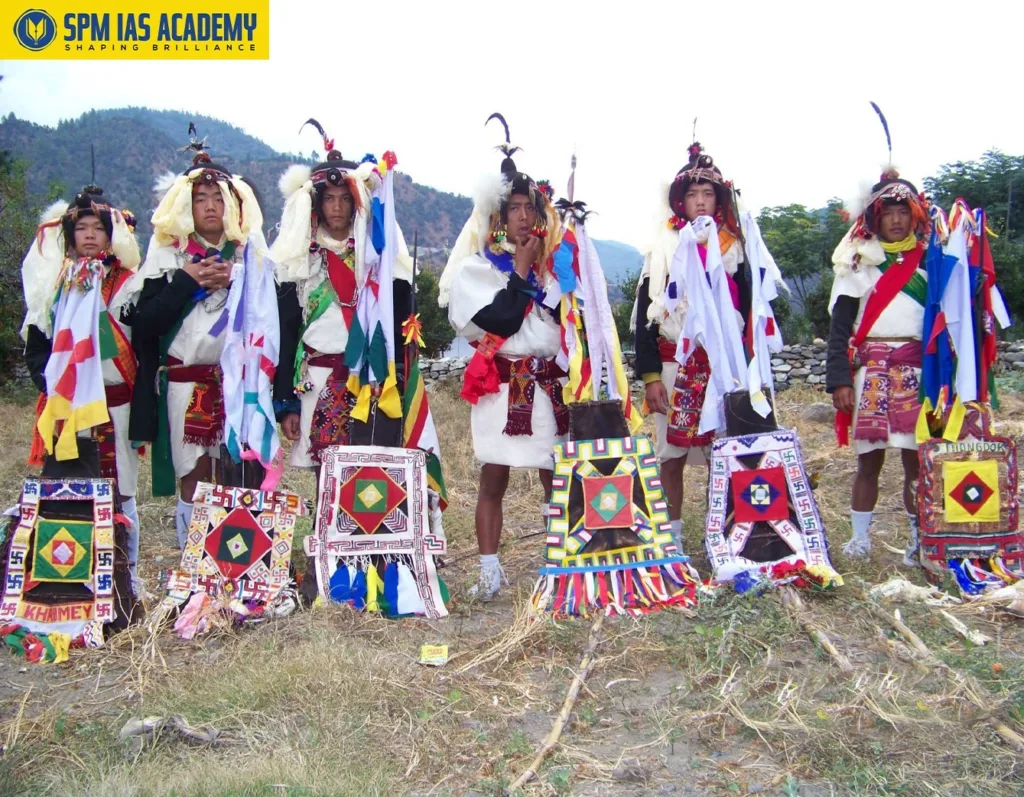
- Khiksaba is an important traditional festival of the Sherdukpen community of Arunachal Pradesh. It is considered an auspicious occasion according to the Buddhist calendar and holds deep religious and cultural significance for the community.
- To begin with, the festival is marked by the beating of a sacred drum from a small hillock located in Rupa village. This hillock is revered as Holy Kamcha Sree. At the same time, the drum is sounded amidst ritual chanting by specially ordained priests known as Khikzizis, creating a solemn spiritual atmosphere.
- Historically, Khiksaba has been celebrated since the time of the community’s progenitor Asu-Gyaptong (15th-16th century). According to local legends, the festival began after Asu-Gyaptong conquered Rupa, earlier known as Tukpen Lomekhar, by defeating the ruler Kelling Sowa Gangan. Over time, this historical event became closely linked with religious observance and community identity.
- Moreover, the festival is associated with the worship of mountain deities revered by the Sherdukpens, such as Sungkhits and Sorokhits. It is a week-long celebration, during which various rituals and ceremonies are performed.
- Most importantly, the third day of the festival, known as Tsok-Satpa, holds special significance. On this day, holy food is offered to the mountain deities at their sacred abode called Loblang (deity house). Overall, the Khiksaba festival reflects the deep connection of the Sherdukpen community with their history, spirituality, and natural surroundings.
Conclusion:
In conclusion, the Khiksaba festival is not merely a cultural celebration but a profound expression of the spiritual beliefs, historical legacy, and ecological values of the Sherdukpen community. By combining ritual practices, ancestral legends, and nature worship, the festival strengthens community identity and preserves intangible cultural heritage. Therefore, its continued observance highlights the importance of safeguarding indigenous traditions while promoting cultural awareness and social harmony in Arunachal Pradesh.
Prelims Practice MCQ:
Q. With reference to the Khiksaba Festival, consider the following statements:
- Khiksaba is a traditional festival of the Sherdukpen community of Arunachal Pradesh.
- The festival is celebrated according to the Buddhist calendar and involves ritual chanting by priests known as Khikzizis.
- Tsok-Satpa, the most significant day of the festival, involves offering holy food at the Loblang (deity house).
- Khiksaba is mainly a harvest festival associated with agricultural cycles.
Which of the statements given above are correct?
(a) 1, 2 and 3 only
(b) 1 and 4 only
(c) 2 and 4 only
(d) 1, 2, 3 and 4
Correct Answer: (a)
Source: Arunachal Times
FAQ:
Khiksaba is a traditional and religious festival of the Sherdukpen community. Celebrated on an auspicious day as per the Buddhist calendar, it involves sacred drum beating, ritual chanting by priests, and worship of mountain deities, symbolising harmony between humans, nature, and divine forces.
The Khiksaba Festival is unique due to the beating of a sacred drum from Holy Kamcha Sree in Rupa village, ritual chanting by ordained priests called Khikzizis, and the special ceremony on the third day known as Tsok-Satpa, when holy food is offered to mountain deities at Loblang (deity house).