
Conservation of biodiversity is essential for maintaining ecological balance, supporting livelihoods, and ensuring the sustainability of natural resources. With increasing threats like habitat destruction, climate change, and poaching, species face heightened risks of extinction. To address these challenges, conservation strategies are broadly categorized into in situ and ex situ conservation, both of which aim to safeguard biodiversity but through different approaches. Together, these methods form the backbone of global efforts to preserve natural heritage and ensure ecological resilience.
In Situ Conservation
- Definition: Protecting species in their natural habitats.
- Objective: Maintains ecosystems and allows species to adapt naturally to environmental changes.
- Examples:
- National Parks (e.g., Jim Corbett National Park).
- Wildlife Sanctuaries (e.g., Kaziranga Wildlife Sanctuary).
- Biosphere Reserves (e.g., Nilgiri Biosphere Reserve).
- Conservation of Sacred Groves in regions like Meghalaya.
Ex Situ Conservation
- Definition: Protecting species by removing part of the population from its natural habitat and conserving it elsewhere.
- Objective: Safeguards species that face immediate threats in their natural habitats.
- Examples:
- Zoos (e.g., Mysuru Zoo for captive breeding programs).
- Seed Banks (e.g., National Bureau of Plant Genetic Resources, New Delhi).
- Botanical Gardens (e.g., Indian Botanical Garden, Kolkata).
- Cryopreservation of genetic material like sperm, eggs, or seeds.
Comparative Importance of In Situ and Ex Situ Conservation
| Aspect | In Situ Conservation | Ex Situ Conservation |
| Natural Adaptation | Preserves species in their natural ecosystems. | Protects species in controlled environments. |
| Ecosystem Focus | Conserves entire ecosystems and interdependencies. | Focuses on individual species protection. |
| Cost Efficiency | Generally more cost-effective. | Expensive due to infrastructure and technology needs. |
| Emergency Conservation | Limited in rapid threats like habitat destruction. | Effective for critically endangered species. |
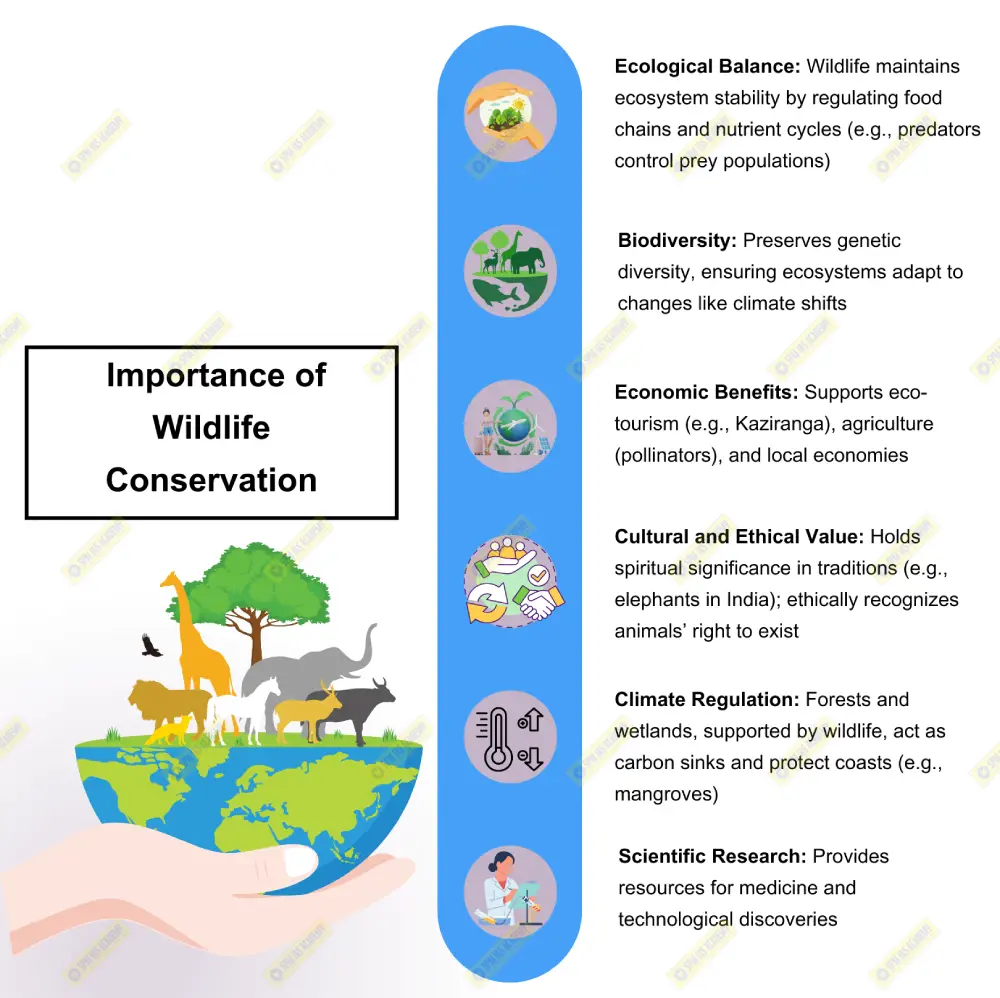
Which Initiative is More Important?
Both strategies are complementary and equally important. However, in situ conservation holds greater long-term importance because:
- Maintains Ecosystems: It conserves not just species but their entire ecosystems, ensuring biodiversity balance.
Example: Protecting tigers in forests helps maintain the food chain and forest health. - Adaptability: Species evolve in their natural environments, retaining their genetic resilience against changing climatic conditions.
- Sustainability: In situ efforts are generally less resource-intensive and more scalable.
Justification for Ex Situ Conservation
While in situ conservation is vital, ex situ methods are crucial for species on the brink of extinction, where natural habitats are destroyed or irreparably damaged.
Example: The captive breeding of the Great Indian Bustard has helped stabilize populations of this critically endangered species.
In situ conservation is foundational for sustainable biodiversity management, ensuring the health of ecosystems and their species. However, ex situ conservation is indispensable for addressing emergencies and complementing in situ efforts, making both strategies essential for a holistic conservation framework.