
Artificial Intelligence (AI) refers to the simulation of human intelligence in machines that are programmed to think, learn, and perform tasks autonomously or with minimal human intervention. By analyzing vast amounts of data and recognizing patterns, AI can optimize processes, predict outcomes, and even make decisions, impacting sectors ranging from healthcare and agriculture to transportation and finance. In India, AI holds immense promise for economic growth, public service delivery, and innovation. However, it also brings challenges, particularly regarding privacy, job displacement, and ethics.
AI as a Boon
1. Economic Growth and Efficiency
AI optimizes tasks across sectors, from healthcare to agriculture. NITI Aayog’s National Strategy for AI projects that AI could add $957 billion to India’s GDP by 2035, creating job opportunities in tech and skill-based roles. For example, precision agriculture through AI increases crop yield, while AI-driven diagnostics improve healthcare accessibility.
2. Enhanced Public Service Delivery
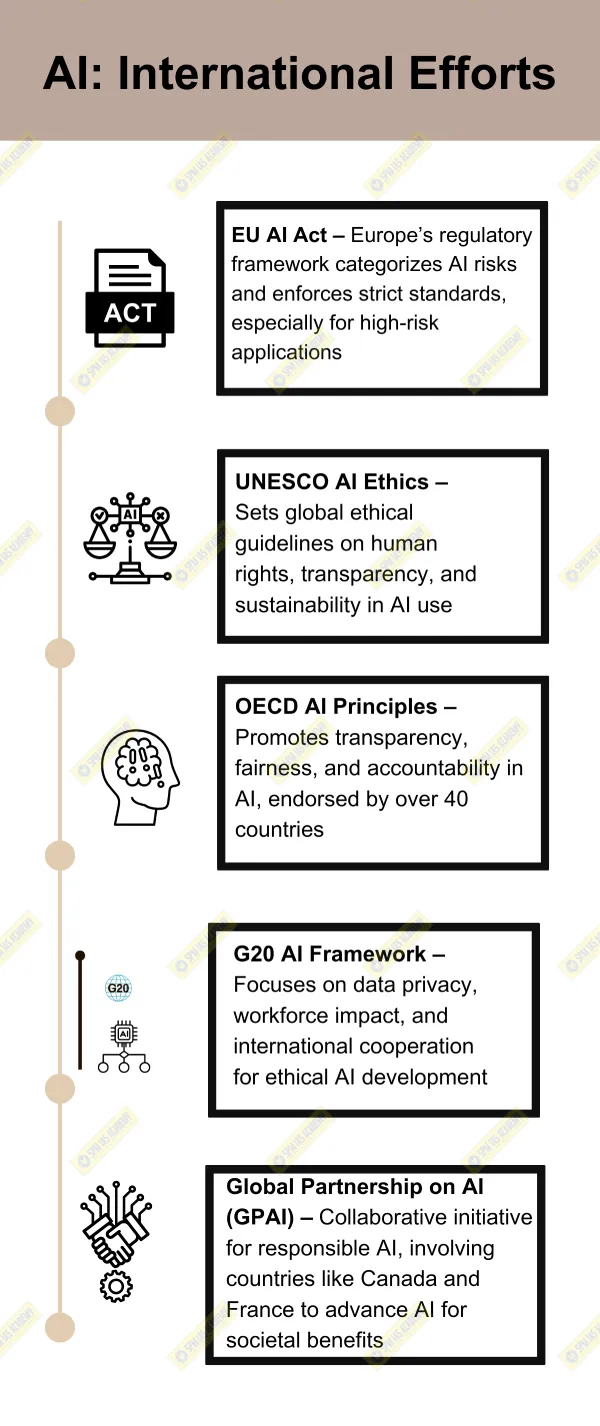
AI is central to the Digital India initiative, enabling efficient public service delivery. Chatbots for grievance redressal and AI-driven data analysis for welfare schemes enhance transparency and responsiveness, especially in rural and underserved areas.
3. Innovation and R&D
AI accelerates innovation in fields like pharmaceuticals and climate modeling, crucial for global and national challenges. In medicine, for instance, AI-driven R&D shortens drug discovery time, as seen during the COVID-19 pandemic. This aligns with the AI for All strategy, which aims to make India a global leader in AI innovation.
4. Enhanced Safety and Predictive Analysis
AI enables predictive analysis in fields like disaster management and cybersecurity. Systems can predict floods or earthquakes, allowing timely evacuation. The National Disaster Management Authority (NDMA) utilizes AI in real-time surveillance for disaster-prone areas.
AI as a Bane
1. Job Displacement and Inequality
Concerns arise over AI replacing low-skill jobs, potentially increasing unemployment. Studies by OECD and NASSCOM show that while AI creates high-skill jobs, it may displace routine jobs, necessitating significant upskilling efforts.
2. Ethical and Privacy Concerns
AI-driven surveillance raises ethical issues, particularly regarding data privacy. Justice B.N. Srikrishna Committee on Data Protection emphasized the need for robust data privacy laws to protect citizens, especially with AI’s potential to misuse personal information.
3. Bias and Accountability
AI algorithms can inherit human biases if not trained carefully, leading to unfair outcomes, such as in recruitment or credit scoring. Addressing these biases requires transparency, as recommended by NITI Aayog’s Responsible AI guidelines, which emphasize ethical AI development.
D. Cybersecurity Threats
AI can be exploited for cyber-attacks, such as automated phishing schemes and malware, posing risks to individuals and nations. Cybersecurity frameworks, including the National Cyber Security Policy, highlight the need to protect AI-driven systems from misuse.
AI has immense potential to drive progress, enhance public services, and solve complex problems, making it largely a boon. However, addressing challenges like job displacement, privacy, and security is critical. Initiatives like AI for All and data protection laws must ensure that AI’s benefits are maximized responsibly, positioning it as a force for inclusive and sustainable growth.