
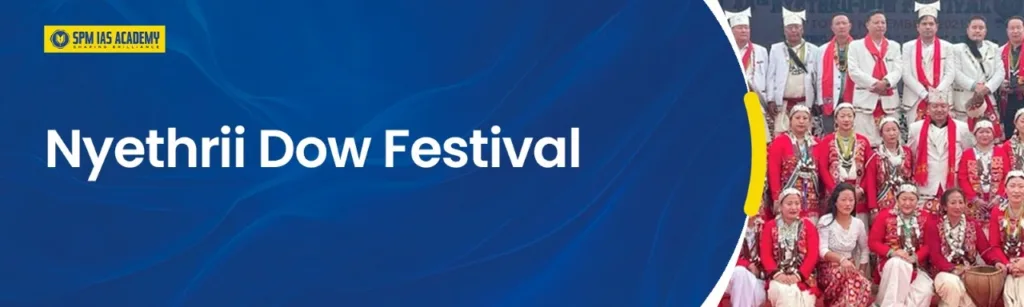
Why was the Nyethrii-Dow festival in the News?
Recently, the 52nd Central Nyethii Dow festival of the Aka tribe commenced at Thrizinio in West Kameng district of Arunachal Pradesh. In this context, the festival was celebrated with great cultural enthusiasm and active community participation. Moreover, community leaders highlighted the importance of preserving Aka culture, safeguarding tribal heritage, and passing on ancestral wisdom to future generations.
In this article, we will learn about the Nyethrii-Dow festival of Arunachal Pradesh. Also we will focus on the ritual practices, associated tribal groups and its significance.
What is Nyethrii- Dow?
Nyethrii-Dow is primarily a harvest festival celebrated by the Aka tribe. It expresses gratitude for agricultural abundance and marks a ritual of purification and renewal. In this context, the term Nyethrii refers to the village or inhabited place, while Dow means cleansing. During the festival, the first harvested grains are offered to ancestral spirits and deities as a symbol of thankfulness and hope for a prosperous future.
Moreover, the Nyethrii-dow festival features a wide range of cultural events. It includes traditional games, indigenous sports, folk dances, cultural performances, and ritual ceremonies. Notably, these activities showcase the tribe’s traditional attire, ornaments, and fine craftsmanship. Therefore, it promotes preservation of cultural expressions.
In addition, local cuisine plays an important role in the celebrations. Food stalls serve indigenous Aka dishes. It highlights the tribe’s unique culinary diversity and traditional food practices.
Finally, at a broader level, Nyethrii-Dow holds great significance for Arunachal Pradesh as a whole. It helps preserve tribal cultural diversity, strengthens community identity and cohesion. It also promotes eco-cultural tourism in the Northeast. At the same time, it highlights the state’s rich intangible cultural heritage and encourages the preservation of local arts, crafts, and food traditions.
What are the Significances of Nyethrii-dow festival?
- Cultural Preservation:
To begin with, the festival plays a vital role in preserving Aka traditions, including traditional dress, songs, dances, language, and food habits. Moreover, it helps safeguard traditional knowledge and ancestral wisdom. As a result, it strengthens intergenerational transmission of Aka culture while balancing modern education with cultural identity. - Identity and Roots:
In addition, the Nyethrii-Dow festival reminds the Aka community of their origins and their nature-based worldview. It reinforces a deep connection with the land, forests, rivers, and mountains, which form the foundation of their cultural identity. - Community Bonding:
Finally, the festival promotes strong community bonding by encouraging inter-tribal interaction and cross-cultural understanding. It also fosters social harmony among the diverse tribes of Arunachal Pradesh and promotes unity through shared rituals and festive celebrations.
What are the Religious & Ritual Importances of Nyethrii-dow festival?
- To begin with, the festival involves the worship of traditional deities associated with rivers, mountains, and forests. Through various rituals, the Aka community seeks blessings to prevent natural disasters, crop failures, and the spread of diseases.
- Moreover, Nyethrii-Dow reflects the animistic belief system of the Aka tribe, which places deep reverence on nature. The festival therefore promotes ecological respect and strong environmental ethics. Finally, it highlights the nature-centric worldview of Arunachal Pradesh’s tribal communities. Here harmony between humans and nature is considered essential for well-being and survival.
Who are the Aka Tribe?
The Aka tribe is also known as the Hrusso. They primarily reside in the East Kameng and West Kameng districts of Arunachal Pradesh. Moreover, the community is known for its colourful customs, rich cultural heritage, and distinctive ritual practices. Finally, the Aka people share a deep connection with nature, spiritual beliefs, and strong community life, which forms the foundation of their social and cultural identity.
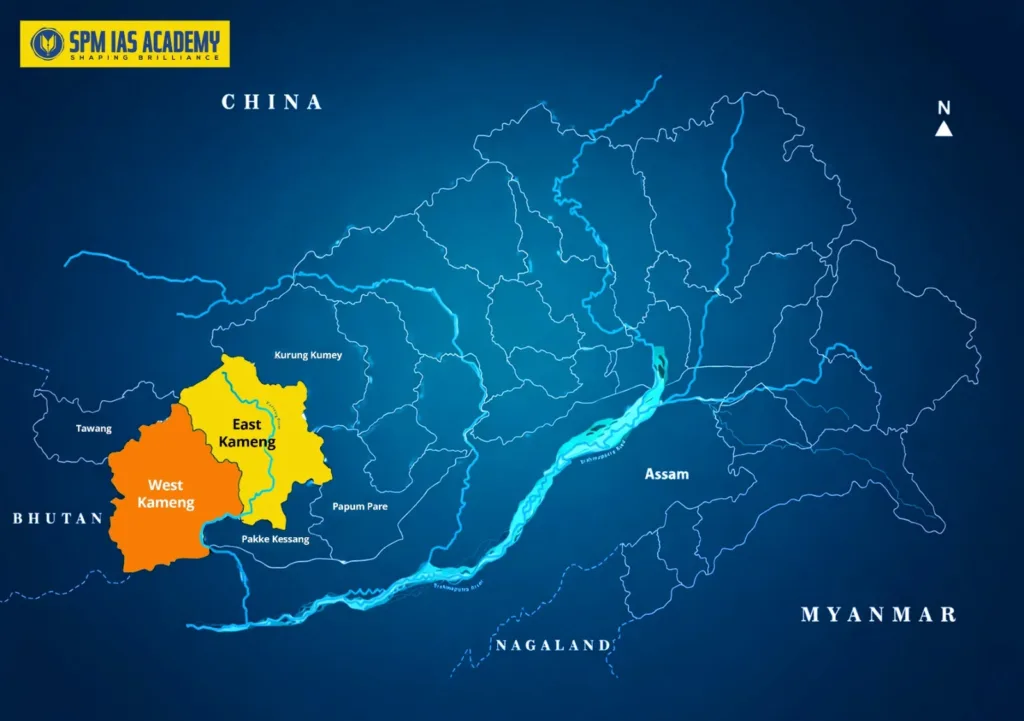
- Social life of Aka tribe:
- To begin with, the Aka tribe follows a traditional system of self-governance. In this system, a Chief is elected to act as the village headman.
- Moreover, Aka villages are generally located on hilltops as well as in the plains of river valleys. They reflect their close link with the natural landscape.
- In addition, the Bicho River, a major tributary of the Kameng River, holds great importance in the region. It plays a vital role in supporting the social and economic life of the Aka community.
- Culture of the Aka tribe:
- To begin with, the Aka tribe primarily speaks the ‘Hruso language’, which forms an important part of their cultural identity.
- In addition, a section of the Aka community speaks ‘Koro’, a language belonging to the Sino-Tibetan family, reflecting the tribe’s linguistic diversity and rich cultural heritage.
- Mixed belief system of the Aka tribe:
- To begin with, the Aka tribe follows an animistic belief system rooted in nature worship.
- In addition, their spiritual practices show elements of Buddhism, reflecting cultural interactions over time.
- Moreover, they worship indigenous deities and consider natural elements such as the sun, moon, rivers, mountains, and streams as sacred.
- As a result, their belief system strongly emphasises harmony between humans, nature, and the spiritual world.
- Religion of the Aka tribe:
- The Aka tribe worships Nyezino or Nyeziaou, regarded as the sky father, and No-ain, considered the earth mother.
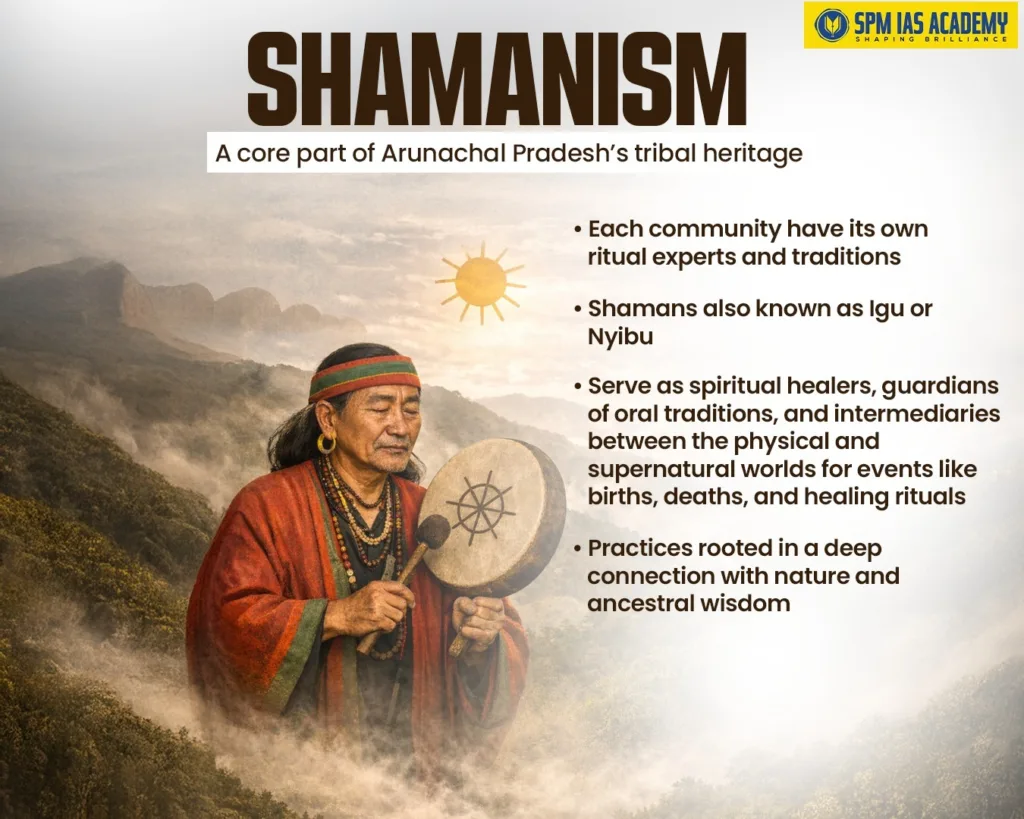
- In addition, they follow shamanistic practices, where rituals and spiritual guidance are performed by shamans.
- Moreover, their house altars are traditionally made using mithu bones, teeth of big cats, bamboo totems, and other natural elements, symbolising a deep link with nature.
- Finally, the Aka people revere forests as the primary feeder and the source of life for all human beings, reflecting their strong nature-centric religious worldview.
- Occupation & Lifestyle of the Aka tribe:
- To begin with, the Aka tribe largely depends on agriculture, shifting cultivation, forest produce, and weaving for their livelihood.
- In addition, men wear traditional attire along with a distinctive headgear known as Dompi, which reflects their cultural identity.
- Moreover, Aka women are skilled weavers and play a key role in sustaining traditional crafts. Forests and forest-based resources have a profound influence on their economy.
- Finally, their traditional economic system is centred on jhum (shifting) cultivation, along with hunting, fishing, and food gathering, highlighting their close relationship with nature.
Conclusion:
In conclusion, the Nyethrii-Dow festival reflects the deep cultural, spiritual, and ecological values of the Aka tribe of Arunachal Pradesh. While it celebrates agricultural abundance and community life, it also strengthens respect for nature, ancestral wisdom, and traditional knowledge systems. Therefore, by preserving cultural identity, strengthening social harmony, and promoting eco-cultural awareness, the festival plays a vital role in safeguarding the rich tribal heritage of the region for future generations.
FAQ:
Nyethrii-Dow is a traditional harvest festival of the Aka tribe in Arunachal Pradesh. It celebrates agricultural abundance, promotes village purification rituals, and helps preserve tribal culture, ancestral wisdom, and community identity.
The festival reflects the animistic and nature-centric belief system of the Aka tribe. Through rituals and worship of natural deities linked to forests, rivers, and mountains, it promotes harmony between humans and nature, ecological respect, and sustainable living.