
Syllabus: Prelims, GS – 1
Why in the news?
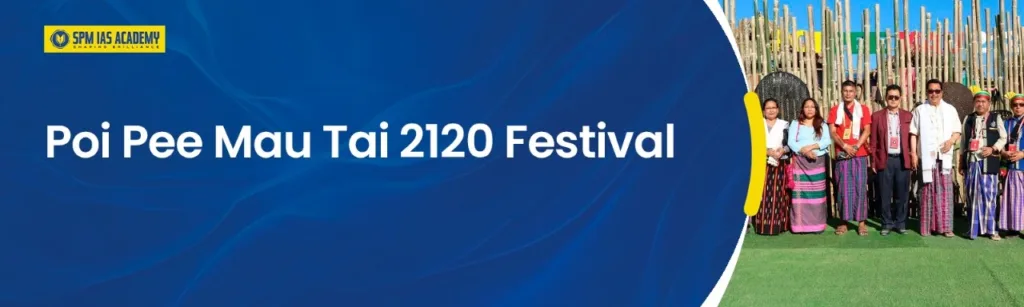
Namsai witnessed the grand commencement of Poi Pee Mau Tai 2120. It is the New Year celebration of the Tai Khamti community.
About Poi Pee Mau 2120 Festival:
- Agro-religious festival that celebrates renewal, peace and the rich cultural identity of the Tai Khamti community.
- Celebrated according to the Tai lunar calendar – the year 2120 corresponds to 2024–25 in the Gregorian calendar.
- It is a three-day festival marked by religious rituals, cultural programmes, and communal gatherings.
- Observed mainly in Namsai district, the cultural hub of the Tai Khamti group.
Key Features of Poi Pee Mau 2120:
Rituals & Spiritual Significance:
- Pagodas and monasteries (viharas) illuminated with lamps.
- Monks perform:
- Chanting of prayers
- Blessing ceremonies
- Offerings made for:
- Prosperity
- Purification
- Peace
Cultural Events:
- Folk dances and Tai Khamti traditional music.
- Exhibition of Tai art, handicrafts, traditional costumes
- Release of – Souvenirs, tai literature, traditional food stalls
Community Participation:
- Youth from 78 villages actively participated.
- Competitions included – Cultural performances, literary events, sports events, art showcases
Socio-Cultural Significance:
- Marks the end of harvest season → thanksgiving and community bonding.
- Symbolizes – Renewal, Peace and Cultural continuity
- Strengthens Tai identity, especially among younger generations.
- Promotes inter-village unity and inter-state harmony (Assam–Arunachal cultural link).
Significances:
Inter-State Cultural Relations:
- Presence of Assam delegates (Minister and MLAs). Their presence highlights:
- Cultural bonding between Assam and Arunachal Pradesh
- Shared heritage of Tai communities
Cultural Significance:
- Represents the living heritage of the Tai Khamti, a major Tai ethnic group in Arunachal.
- Reinforces:
- Community bonding
- Peace
- Post-harvest thanksgiving
- Syncretic Buddhist traditions (Theravada influence)
Socio-economic Importance:
- Boosts: Local tourism, Handicrafts and Rural economy
- Encourages: Cultural entrepreneurship, Youth involvement in heritage activities
Administrative and Political Significance:
- State leadership participating indicates Government support for tribal culture, promotion of cultural nationalism and strengthening of border district identity.
About the Tai Khamti Community:
- Indigenous Tai ethnic group living in:
- Arunachal Pradesh (Namsai, Changlang)
- Parts of Assam and Myanmar
- Follow Theravada Buddhism, similar to Southeast Asian countries.
- They are known for:
- Rich manuscript tradition
- Wooden architecture
- Bronze-casting
- Traditional script called “Lik Tai”
Prelims MCQ:
Q. With reference to the Poi Pee Mau Tai 2120 Festival, consider the following statements:
- It is an agro-religious New Year festival celebrated according to the Tai lunar calendar.
- The festival is primarily associated with the Tai Khamti community of Arunachal Pradesh.
- The rituals of the festival involve illumination of pagodas and monasteries and chanting by Theravada Buddhist monks.
- It is mainly celebrated in the Changlang district, the cultural centre of the Tai Khamti community.
How many of the statements given above are correct?
(a) Only one
(b) Only two
(c) Only three
(d) All four
Correct Answer: (c) Only three
Explanation:
- Statement 1 – Correct: It is an agro-religious New Year festival based on the Tai lunar calendar.
- Statement 2 – Correct: It is associated with the Tai Khamti community.
- Statement 3 – Correct: Rituals include lighting pagodas/viharas and chanting by monks.
- Statement 4 – Incorrect: The main centre of celebration is Namsai, not Changlang.
Sources: Arunachal Times