
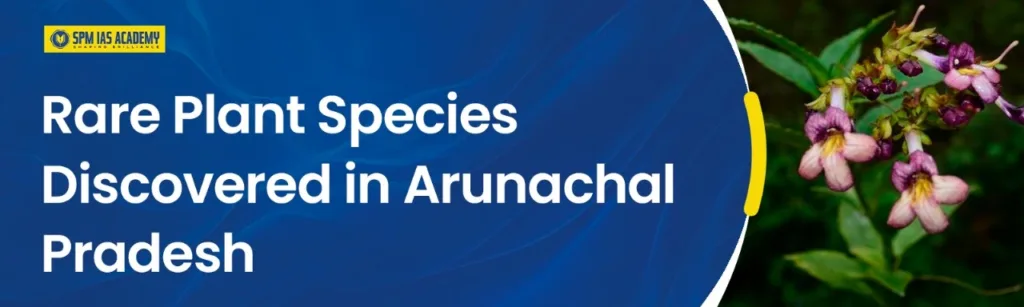
Why in the news?
Recently, during detailed floristic explorations in Arunachal Pradesh, scientists from the Botanical Survey of India (BSI), regional centre, made a significant botanical discovery. In this context, they identified two rare species of Hoya plants, highlighting the rich and largely unexplored plant diversity of the region.
Which are the Rare plants discovered?
To begin with, Hoya chinghungensis was discovered and reported for the first time in India. In addition, Hoya acuminata was recorded for the first time in Arunachal Pradesh. This highlights the region’s rich botanical diversity.
- Hoya chinghungensis – Reported for the first time in India.
- Hoya acuminata – Recorded for the first time in Arunachal Pradesh.
Areas of Exploration:
The discoveries were made during extensive floristic surveys conducted across several regions. Specifically, the explorations covered the districts of East Kameng, Pakke-Kessang, and Longding in Arunachal Pradesh.
What are the Significances?
- To begin with, the discovery marks an important milestone in documenting the rich floral diversity of Arunachal Pradesh.
- Moreover, it reinforces the state’s status as a global biodiversity hotspot and a crucial centre of plant endemism in the Eastern Himalayas.
- Finally, it highlights the immense ecological value of the region’s forests and their strong potential for future scientific research and conservation efforts.
About the Hoya Genus:
To begin with, Hoya plants are commonly known as “wax plants” due to their star-shaped flowers with a thick, waxy appearance and high ornamental value. In addition, these species play an important ecological role by supporting pollinators and helping maintain balance within forest ecosystems.
Conclusion:
In conclusion, the discovery of rare Hoya species in Arunachal Pradesh underscores the state’s exceptional botanical richness and scientific importance. While it expands India’s documented plant diversity, it also highlights the need for continued exploration, research, and conservation. Therefore, such findings strengthen our understanding of the Eastern Himalayan ecosystem. It also emphasises the importance of protecting these fragile forest habitats for future generations.
FAQ:
The discovery is important because it adds new scientific records to India’s plant biodiversity. Moreover, it highlights Arunachal Pradesh as a key biodiversity hotspot in the Eastern Himalayas and strengthens the need for conservation and further botanical research.
Hoya species are significant due to their role in supporting pollinators and maintaining forest ecosystem balance. In addition, their ornamental value and rarity make them important for scientific study, biodiversity documentation, and long-term conservation planning.