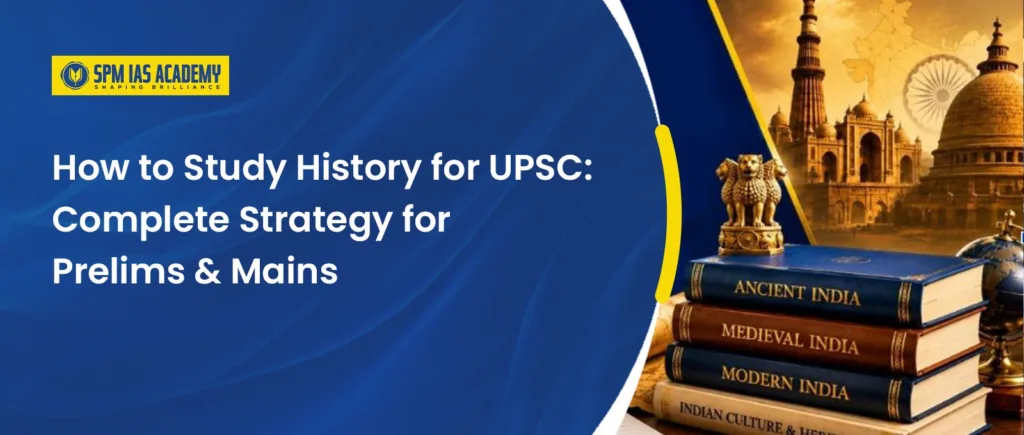
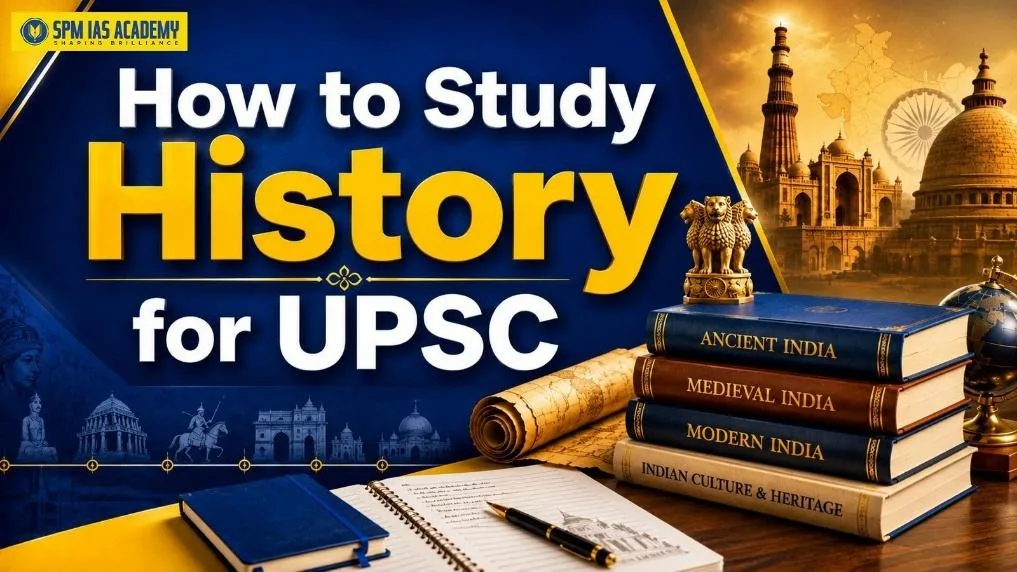
How to Study History for UPSC is one of the most common questions among civil services aspirants. History looks vast at the beginning because it includes Ancient India, Medieval India, Modern India, Art and Culture and World History. However, with the right strategy, it becomes one of the most scoring and interesting subjects in the UPSC CSE Examination.
History is not only about remembering dates and kings. It helps aspirants understand the evolution of society, polity, culture, reforms, freedom struggle and India’s civilisational journey. Therefore, students should study history with clarity, chronology and proper revision.
Aspirants can improve their civil services preparation with expert guidance and structured learning through UPSC coaching in Assam.
Why History is Important for UPSC
History plays an important role in both Prelims and Mains. In Prelims, UPSC asks direct and conceptual questions from Ancient, Medieval, Modern and Art and Culture. In Mains, History appears mainly in GS Paper 1. It also supports Essay, Ethics and Interview preparation.
For APSC and State PCS exams, history becomes even more important because state history and regional culture are also asked. Therefore, if you know How to Study History for UPSC, you can also build a strong base for State PCS exams.
Students from Northeast India can access focused preparation strategies and guidance through UPSC coaching in north east India.
Understand the UPSC History Syllabus First
Before opening any book, read the syllabus carefully. This is the first step in understanding How to Study History for UPSC.
The broad areas are:
- Ancient Indian History
- Medieval Indian History
- Modern Indian History
- Indian National Movement
- Post-Independence India
- World History
- Art and Culture
For Prelims, focus more on facts, terms, sites, personalities, movements and cultural features. For Mains, focus on causes, impact, continuity, change and analytical understanding.
Start with NCERTs for Basic Clarity
NCERTs are the best starting point for beginners. They explain history in simple language and build conceptual clarity.
Start with Class 6 to 12 NCERTs. Do not try to memorise every line in the first reading. First, understand the broad timeline. Then mark important events, terms and themes.
For Ancient and Medieval History, NCERTs help you understand basic developments. For Modern History, NCERTs give a good foundation before moving to standard books.
Understanding government initiatives like Pradhan Mantri Viksit Bharat Rozgar Yojana helps aspirants connect current affairs with UPSC preparation.
How to Study Ancient History for UPSC
Ancient History includes Indus Valley Civilisation, Vedic Age, Mahajanapadas, Buddhism, Jainism, Mauryan Empire, Gupta period, Sangam Age and early medieval developments.
While studying Ancient History, focus on sources, society, economy, religion, art, administration and cultural developments. Also, prepare tables for important dynasties, their founders and rulers, inscriptions highlighting their society. Moreover, make notes on accounts of foreign travellers.
Do not treat Ancient History as a list of facts. Instead, connect events with larger themes like urbanisation, trade, religion and state formation.
How to Study Medieval History for UPSC
Medieval History often confuses students because of many dynasties and rulers. There are a lot of facts and terms related to the administration of that time. So, study it through themes such as political developments, economy, society, culture, and administration. Similar to maintaining a strong Google My Business listing, where information should be organized and clear for users, a structured approach helps students understand historical topics better and improve their preparation.
Focus on the Delhi Sultanate, Mughal Empire, Vijayanagara Empire, Bhakti and Sufi movements, regional kingdoms, administration, economy and art forms.
For Prelims, remember important terms, monuments, travellers, books and rulers. For Mains, understand cultural synthesis, religious movements, administrative systems and economic changes.
How to Study Modern History for UPSC
Modern History is the most important part of History for UPSC. It covers British expansion, socio-religious reform movements, Revolt of 1857, tribal and peasant movements, Indian National Congress, Gandhian movements, revolutionary activities and constitutional developments.
While studying History for UPSC, give special attention to Modern History. UPSC frequently asks questions from this section.
Make short notes on causes, leaders, features and outcomes of movements. Also, compare different phases of the freedom struggle. This will help you write better Mains answers.
How to Study Art and Culture
Art and Culture overlaps with Ancient and Medieval History. It includes architecture, sculpture, painting, dance, music, literature, festivals, Buddhism, Jainism, temple architecture and UNESCO heritage sites.
Use visual learning for this section. Maps, images, charts and tables help a lot. For example, while studying temple architecture, compare Nagara, Dravida and Vesara styles in a table.
For Prelims, revise facts regularly. For Mains, connect art and culture with identity, heritage preservation and soft power.
Use Timelines and Mind Maps
Timelines are very useful in History. They help you place events in the correct order. This is especially useful for Modern History and national movement.
Mind maps also help you revise faster. For example, you can create one mind map on the Revolt of 1857 with causes, centres, leaders, nature and consequences.
This is a practical method for aspirants who want to know How to Study History for UPSC without feeling lost in too many details.
Practice PYQs and Mock Tests
Previous year questions are non-negotiable. They show what UPSC actually asks. Moreover, UPSC PYQs act as the navigation guide for your preparation. Through PYQs, it becomes easy to identify the high demand topics of history on which UPSC frequently asks questions.
For the beginners, they can start solving Prelims PYQs after completing each section. It will help to assess their preparation. At the same time, it will help them to identify the important areas of Indian history.
For Mains, read previous years questions from GS Paper 1. Practice writing answers on topics like nationalism, social reform, colonial economy, women in freedom struggle and world history events.
Make Short Notes for Revision
While preparing for UPSC CSE, it often comes into the mind of aspirants whether they should prepare notes or not? History either as a part of General Studies or Optional Subject, needs multiple revisions. At the same time, multiple revisions need time. Therefore, note making can help in the revision of the subject. It will help to save time. So, make short and crisp notes for quick revisions.
While making your notes, you should include:
- Important dates
- Key personalities
- Major movements
- Acts and reforms
- Cultural terms
- Important sites
- Causes and impact
While making notes, avoid writing full paragraphs in notes. Use bullets, flowcharts and tables. This will help you in quick revision before Prelims and Mains.
Common Mistakes to Avoid
Many aspirants make the mistake of reading too many books. Some spend too much time on Ancient and Medieval History and ignore Modern History. Others memorise dates but do not understand causes and impacts.
Avoid these mistakes. Follow a limited source strategy. Revise often. Solve PYQs. Write answers regularly.
If you understand How to Study History for UPSC, you will realise that smart preparation is more important than endless reading.
How to Study History for UPSC Mains?
- Focus on analytical understanding – UPSC Mains does not ask only facts. It asks why an event happened, how it changed society and what impact it created. For example, it may ask about why the Swadeshi movement was launched and why it was significant in Indian Modern History.
- Study facts with arguments – Mains answers need both facts and explanation. For example, while writing on the Revolt of 1857, mention key centres and leaders. Then, explain its causes, nature and limitations. Moreover, UPSC may ask whether it was really the first war of India’s independence. Here comes the importance of balanced arguments. A balanced answer will fetch good marks.
- Prepare contribution-based themes – UPSC often asks about the contribution of different sections in the national movement. Therefore, prepare themes like women, peasants, tribals, workers, students, press and revolutionaries.
- Use examples in every theme – For example, mention Rani Gaidinliu for tribal resistance, Sarojini Naidu for women’s participation and Champaran Satyagraha for peasant involvement.
- Link events with larger ideas – Do not study movements in isolation. Connect them with nationalism, colonial exploitation, social reform and mass mobilisation.
Conclusion
Preparing History for UPSC becomes easier when you follow a structured method. Start with the syllabus. Then read NCERTs for basics and then move to standard books. At the same time, you can consider materials from SPM IAS Academy for your UPSC CSE preparation.
Moreover, you should make short notes, use timelines and practice PYQs. Do not forget to revise your notes again and again.
History is not a burden if you study it with logic and continuity. It can improve your Prelims score, strengthen your Mains answers and give you a better understanding of India’s society and culture.
Frequently Asked Questions
Start with NCERTs, understand the syllabus, then move to standard books like Spectrum, R.S. Sharma and Satish Chandra.
Modern History and Indian National Movement are very important for both Prelims and Mains. At the same time, UPSC also asks questions on Buddhism and Jainism every year in Prelims. Here PYQs can help to identify the most important part of history for UPSC.

Behind every article at SPM IAS Academy is a team of skilled content writers and subject experts committed to making preparation easier for aspirants. From answering common doubts to breaking down complex issues and current affairs, we create content that is accurate, easy to understand, and directly useful for UPSC, APSC, and other competitive exams.