One of the most common questions among civil services aspirants is whether it is possible to become an IAS without UPSC. Some candidates ask this after multiple failed attempts. And a few ask simply because the UPSC examination feels overwhelming and they are looking for an alternative route.
The short answer is becoming a full IAS officer without UPSC is extremely difficult and largely not possible through a direct route. However, there are indirect pathways that a small number of candidates have used. In this blog, we break down every angle of the question, can you become an IAS without UPSC, what are the possible routes, and what are their real limitations? And what is the fastest and most reliable path to the IAS actually is.
Why Do People Say UPSC Is the Only Way to Become IAS?
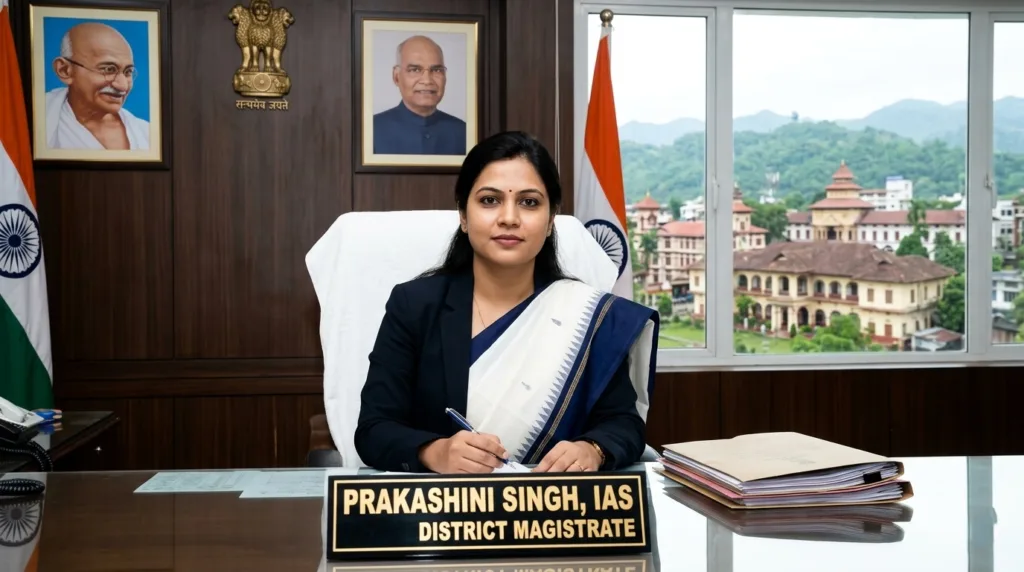
People say UPSC is the only way to become IAS without UPSC, because for the vast majority of aspirants, it genuinely is. The Indian Administrative Service is a Group A Central Service under the All India Services, and entry into it is governed by the Department of Personnel and Training (DoPT). The primary and most accessible path to becoming an IAS officer is clearing the UPSC Civil Services Examination (CSE), which involves three stages: Prelims, Mains, and Interview.
The UPSC CSE is specifically designed to recruit IAS, IPS, and IFS officers, along with other Central services. Because of how the recruitment rules are structured, there is no open examination or alternative direct entry that leads to the IAS in the way that the UPSC CSE does.
That said, there are two routes through which a person can technically become IAS without clearing the UPSC CSE directly, the State PCS to IAS promotion route and the Central Government Lateral Entry route. Both have very strict conditions and are not accessible to the general public in the way UPSC is.
For structured guidance, consider enrolling in a reputed ias coaching institute assam to strengthen your UPSC preparation strategy.
Is It Possible to Become an IAS Officer Without Clearing the UPSC CSE?
Yes, it is technically possible, but only through very specific and limited routes. Here is the full picture:
Route 1 – State PCS to IAS Through Promotion (Select List)
This is the most widely discussed path for becoming IAS without UPSC among State PCS officers. Every year, the UPSC prepares a Select List of State Civil Service (SCS) officers who are eligible for promotion to the IAS. This process is governed by the IAS (Appointment by Promotion) Regulations.
Here is how it works:
- An officer must first clear the State PSC examination (like UPPSC, MPPSC, KPSC, etc.) and work as a state civil service officer, typically in posts like Sub-Divisional Magistrate (SDM) or Deputy Collector
- After serving for a certain number of years (generally 8 to 10 years of confirmed service), officers become eligible for consideration under the SCS to IAS promotion quota
- Each state has a fixed quota of IAS posts that can be filled through SCS promotion, typically around 33% of the state’s IAS cadre strength
- The UPSC conducts a selection process for these promotions, which includes a review of service record, DPC (Departmental Promotion Committee) evaluation, and UPSC’s recommendations
- Only a small number of SCS officers actually make it through and this depends heavily on their annual confidential reports (ACRs), seniority, and the available quota in their state cadre
The bottom line: This route exists, but it is highly competitive, takes many years, and is not within the control of an individual officer. You cannot plan your career around it and it depends on your state cadre’s quota, your ACRs, and UPSC’s evaluation.
Route 2 – Lateral Entry into Central Government
The Government of India has a lateral entry scheme under which domain experts and professionals from outside the government are appointed to Joint Secretary, Director, and Deputy Secretary level posts in various central ministries on a contract basis.
This is sometimes confused with becoming an IAS without UPSC, but it is important to clarify: Lateral entry does not make you an IAS officer. Lateral entry appointments are to specific posts, not to the IAS cadre. A lateral entrant works in a Central Ministry at a particular pay level but does not get IAS designation, IAS benefits, or IAS cadre membership.
So while lateral entry allows domain experts to serve in senior government roles, it does not give anyone the status or career trajectory of an IAS officer.
If I Clear State PSC and Become Deputy Collector, Can I Later Become IAS Without UPSC?

This is one of the most frequently asked questions, and the answer is: yes, it is possible in theory, but unlikely in practice for most officers.
A Deputy Collector or SDM working under a State Government as a State Civil Service (SCS) officer can be considered for promotion to the IAS under the SCS to IAS Select List process. However, this depends on:
- Completing the required years of confirmed service (typically 8 to 10 years)
- Having excellent Annual Confidential Reports (ACRs) throughout your service career
- Your state cadre having available IAS vacancies under the promotion quota
- UPSC’s DPC approving your promotion after evaluating your service record
Many SCS officers serve their entire careers as Deputy Collectors or SDMs without ever getting promoted to the IAS because the quota is limited, competition among SCS officers is real, and the evaluation is strict. So while this path technically offers the possibility of becoming an IAS without UPSC, it is not something you can rely on or plan around from the start of your career.
Can a Deputy Collector Become IAS Through Promotion?
Yes, this is exactly the SCS to IAS promotion route described above. A Deputy Collector who serves consistently well, maintains excellent service records, and belongs to a state with an available IAS promotion quota can potentially be promoted to the IAS through the Select List process conducted by UPSC.
However, the reality is that most Deputy Collectors and SDMs do not eventually become IAS officers through this route. The percentage of SCS officers who make it to the IAS through promotion is small compared to the total number of SCS officers serving across states. The route exists but it is neither predictable nor guaranteed.
Can Someone Attempt UPSC While Already Working in State Civil Services?
Yes, absolutely, and this is actually the most practical advice for SCS officers who want a real shot at becoming IAS without UPSC being the only option but still want the IAS designation with certainty.
A candidate working as an SDM or in any other state civil service role can continue to appear for the UPSC CSE as long as they are within the age limit and have attempts remaining. Many candidates have cleared UPSC while working in state services as this is more common than most people realize.
The key is time management, reading the newspaper during commute, studying during early morning hours, taking strategic leave during revision-intensive phases, and joining an online or postal test series. Work experience in state administration also gives UPSC candidates a strong edge in the Mains GS papers and the interview stage, where real governance exposure is genuinely valuable.
Students who cannot attend offline classes can benefit from structured programs like UPSC online coaching Assam.
Is State PCS a Better Option if Someone Cannot Clear UPSC for IAS?
State PCS is a genuinely good option, and should not be seen purely as a consolation prize for those who could not clear UPSC. Here is why:
- State PCS officers like Deputy Collectors, SDMs, and Block Development Officers hold significant administrative authority at the ground level
- The work is meaningful and directly impacts people’s lives in the areas of law and order, revenue, and local governance
- Salary and benefits are good, with regular promotions and job security
- And as mentioned above, there remains the theoretical possibility of IAS promotion through the SCS Select List for those with outstanding service records
So if UPSC is not working out despite genuine effort, State PCS is not a lesser choice, it is a respected and impactful career in its own right. Many outstanding administrators across India are SCS officers who have never been IAS, and they make an enormous contribution to governance.
Is There Any Shortcut to Becoming an IAS Without UPSC?
No, there is no shortcut to becoming an IAS without UPSC. If someone is promising you a shortcut, they are misleading you. The only direct route to the IAS is clearing the UPSC CSE. The only indirect route is the SCS to IAS promotion, which takes over a decade of service and is not guaranteed. Lateral entry gives you a government post but not an IAS designation.
Anyone who asks, “What is the fastest way to become IAS” needs to hear the honest answer, the fastest way is to clear UPSC, and the fastest way to clear UPSC is to start preparing early with a structured plan, the right resources, and consistent daily effort. No faster route bypasses the examination.
Can Lateral Entry Make Someone an IAS Without UPSC?
No, lateral entry does not make you an IAS officer. This is a common misconception that needs to be cleared up directly.
The lateral entry scheme allows the central government to recruit domain experts from the private sector, academia, and other fields directly to Joint Secretary, Director, and Deputy Secretary level posts. These are important positions, but they are contract appointments to specific posts, not appointments to the IAS cadre.
A lateral entrant does not get IAS designation, does not become part of an IAS state cadre, does not get IAS allowances and perquisites, and does not have the career trajectory of an IAS officer. So while lateral entry gives you a role in central governance, it does not answer the question of how to become an IAS without UPSC.
Is Becoming IAS Worth It Considering the Difficulty of UPSC?
This is a question every serious aspirant asks at some point, and the answer is genuinely personal. But here are some perspectives that help:
The IAS gives you the authority, platform, and responsibility to work on issues that affect millions of people from infrastructure and public health to disaster management and policy implementation. The reach and impact of an IAS officer’s work is difficult to replicate in any other career.
At the same time, UPSC preparation demands years of focused effort, significant personal sacrifice, and emotional resilience through uncertainty and repeated attempts. For many candidates, it is a 2 to 4-year commitment that shapes their entire early adult life.
Whether it is worth it depends on how strongly you want the specific kind of impact that the IAS allows. If your goal is genuine public service at scale, the answer is yes the difficulty of UPSC is proportionate to the responsibility that comes with the role. If you are aiming for the IAS primarily for status or salary, the effort-to-reward equation might look different.
What Is the Fastest Way to Become IAS?
The fastest way to become an IAS is to clear the UPSC CSE in your first attempt and the fastest way to do that is to start preparing at least 2 to 2.5 years before your target attempt with a clear strategy.
Here is what first-attempt and early-attempt success looks like in practice:
- Start with the UPSC syllabus and read it end to end before touching any book
- Build your foundation with NCERTs from Class 6 to Class 12 across History, Geography, Polity, Science, and Economics
- Join a reputed coaching programme that gives you structured guidance, mentorship, and a test series
- Choose your optional subject early, ideally by Month 3 or 4 and go deep into it
- Read a national newspaper every day from day one and maintain current affairs notes
- Practise answer writing from the early stages of Mains preparation, not just in the final month
- Take Prelims mock tests regularly and analyse every mock test performance
- Go into the attempt well-revised, well-practised, and with strong exam temperament
The candidates who clear UPSC fastest are not necessarily the ones who studied the most hours and they are the ones who studied the right things, in the right order, with consistent revision and practice.
A strong preparation environment like UPSC coaching in north east India can significantly improve consistency and exam readiness.
Final Thoughts
The question of whether you can become IAS without UPSC has a clear and honest answer, not through any direct route and only theoretically through the SCS to IAS promotion path after a decade of state civil service. There is no shortcut, no lateral entry that gives you IAS status, and no alternative examination that leads there.
If the IAS is your goal, the UPSC Civil Services Examination is the path and the good news is that it is a well-defined, transparent, and fair examination that rewards consistent effort, the right preparation strategy, and genuine understanding of the subjects it covers.
Start early. Prepare with a clear plan. Use the right resources and guidance. And give the exam the time and effort it genuinely deserves and because the role it leads to is worth every bit of the preparation it demands.
Frequently Asked Questions (FAQs):
The best time to start preparing for UPSC is as early as possible ideally in the second or third year of your undergraduate degree. Starting this early gives you at least 2 to 2.5 years of preparation before your first attempt, which is the minimum time most candidates need to cover the full Prelims and Mains syllabus thoroughly. If you have already graduated, start now and do not wait for the next month or the next year. Every month you delay is one fewer month of preparation before your first serious attempt. Whether you are a college student, a working professional, or an SCS officer considering whether to attempt UPSC, the right time to start is today with a clear plan and the first step of reading the official UPSC syllabus from the website.
Preparing for UPSC requires a phased and subject-wise approach over at least 2 to 2.5 years. Start by downloading the complete UPSC Prelims and Mains syllabus and reading it thoroughly and this is your preparation map. Then build your foundation with NCERT books from Class 6 to Class 12 across history, geography, polity, science, and economics. After the foundation is set, move to standard reference books. Read a national newspaper like The Hindu or Indian Express daily from day one. Join a reputed coaching institute for structured guidance. Choose your optional subject early and go deep into it. Practice answer writing consistently from the start of mains preparation, not just in the last month. Take Prelims mock tests regularly and analyse every result. Revision across all subjects is what separates those who clear UPSC from those who don’t.
The UPSC CSAT (Civil Services Aptitude Test) is GS Paper II in the Prelims stage and is qualifying in nature—you need to score at least 33% to pass, but the marks do not count toward your prelims merit. However, do not make the mistake of neglecting CSAT. Many candidates especially those from non-engineering backgrounds, underestimate the difficulty of the CSAT paper until it is too late. Start CSAT preparation alongside your GS subjects from the early months. For Quantitative Aptitude and Analytical Reasoning, using standard books with class notes is widely recommended. For comprehension, practice with newspaper editorials and CSAT previous year papers daily, summarizing editorials in your words builds both reading speed and comprehension accuracy. Take at least 10 full-length CSAT mock tests before the actual exam and analyse your performance carefully after each one. The CSAT paper is very manageable with consistent practice but only if you start that practice early enough.