Imagine standing at the exact centre of the Earth, the point where north meets south, where the sun rises straight overhead twice a year, and where the world’s most extraordinary ecosystems converge. That’s the power of the Equator, the invisible line circling the globe at zero degrees latitude. It’s not just a geographic curiosity; it’s a living, breathing ribbon of rainforests, volcanic peaks, coral reefs, and ancient cultures.
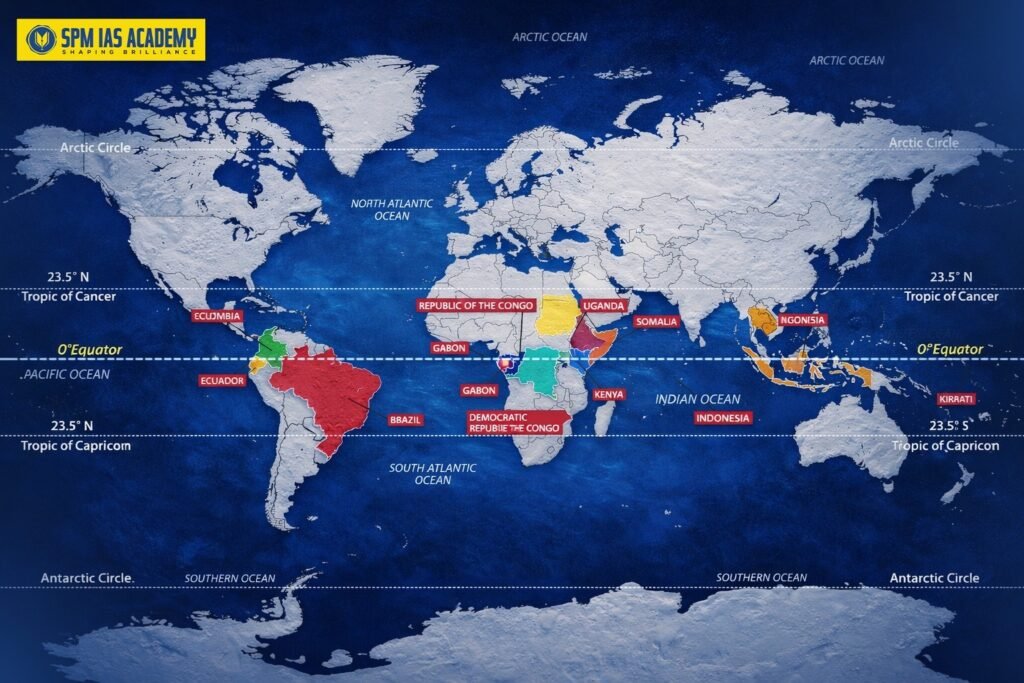
But which nations does this famous line actually cross? There are 13 countries on the equator, spanning three continents and two vast oceans. Whether you’re a geography enthusiast, a curious traveller, or an armchair explorer, this guide takes you on a journey across every one of them.
What is the Equator and Why Does It Matter?
The Equator is an imaginary circle drawn around the Earth at 0° latitude, exactly equidistant from the North and South Poles. It divides our planet into the Northern and Southern Hemispheres and stretches approximately 40,075 kilometres (24,901 miles) around the globe.
Its significance goes far beyond maps and textbooks. The Equator defines one of Earth’s most remarkable climate zones, the equatorial climate, characterised by intense solar radiation, high humidity, and rainfall distributed throughout the year. This climate sustains some of the planet’s most biodiverse environments, including the Amazon Rainforest and the Congo Basin.
It’s also a point of cultural fascination. Many countries on the equator have turned their position on the line into a tourism draw, complete with monuments, visitor centres, and the classic photo opportunity of standing in two hemispheres at once.
For aspirants exploring global geography, quality upsc coaching in assam helps build strong conceptual clarity and exam readiness.
The 13 Countries Through Which the Equator Passes
Here’s a breakdown of all 13 countries on the equator map, grouped by continent:
1. South America
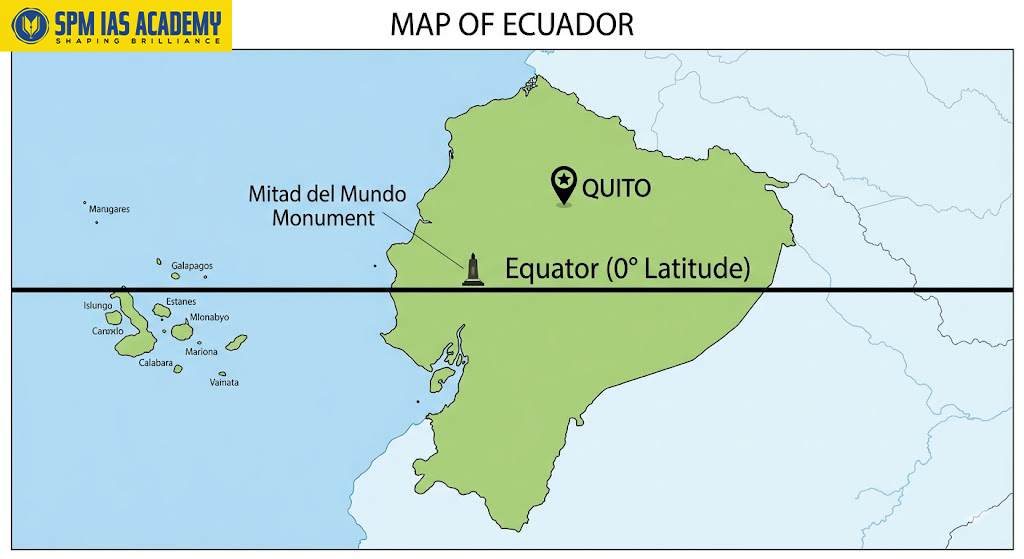
- Ecuador: The only country in the world named after the Equator itself. The line passes through the heart of the country, just north of the capital Quito. Here you’ll find the iconic Mitad del Mundo monument, a must-visit landmark for geography lovers.
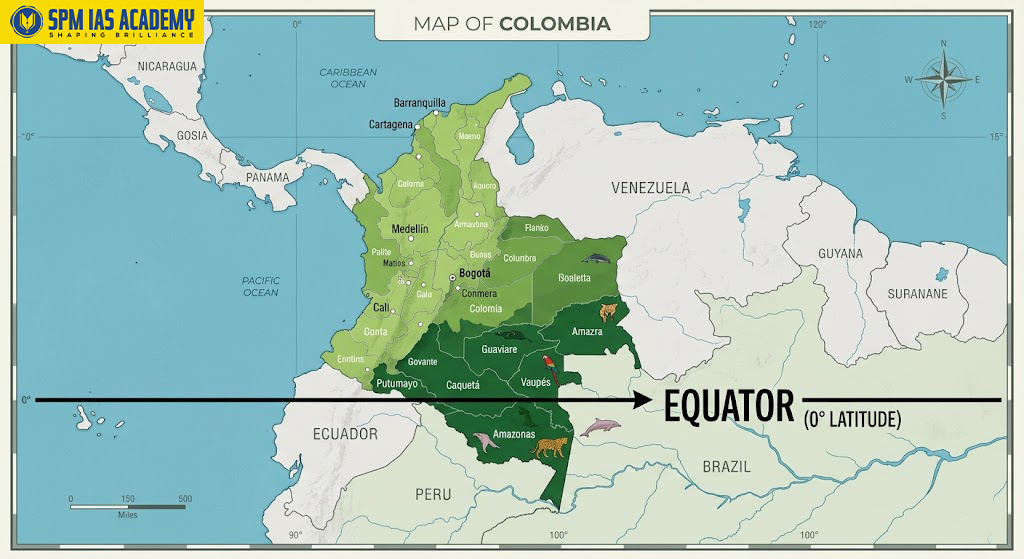
- Colombia: The Equator clips the southern edge of this megadiverse nation, which is home to an extraordinary range of wildlife, from jaguars to iridescent hummingbirds.
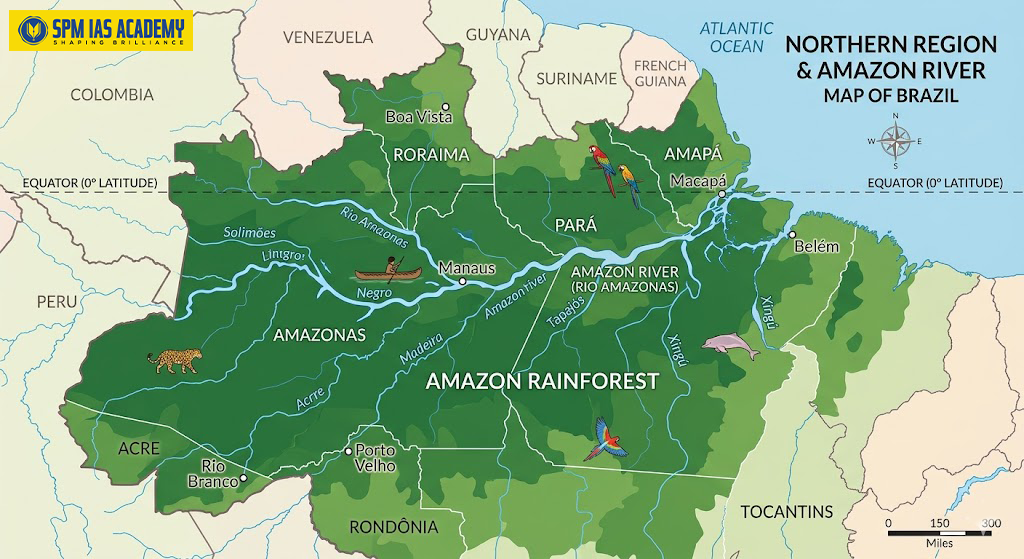
- Brazil: The largest country on the Equator by landmass. The line slices through the northern Amazon Basin, encompassing one of the most species-rich habitats on Earth.
2. Africa
Africa has the highest number of 13 countries on the equator, with the line cutting across seven nations:
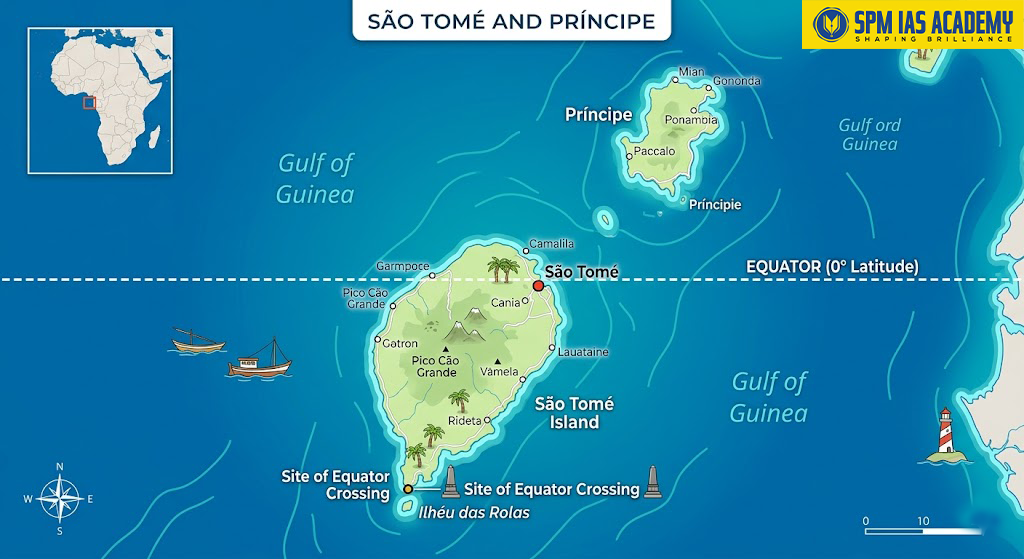
- São Tomé and Príncipe: This tiny island nation in the Gulf of Guinea sits almost exactly on the Equator and is one of the world’s smallest countries.
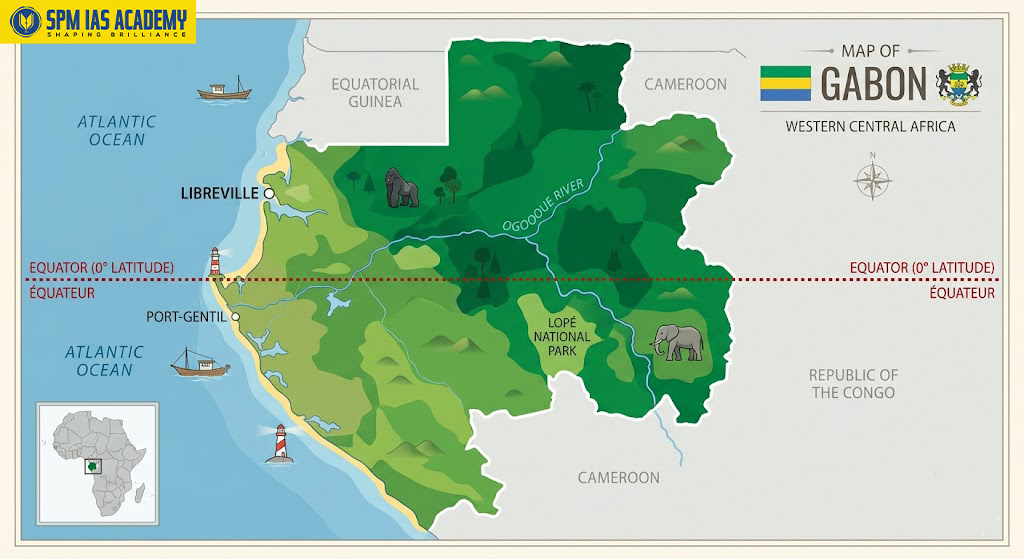
- Gabon: A country of dense equatorial rainforest and pristine Atlantic coastline, largely untouched by mass tourism.
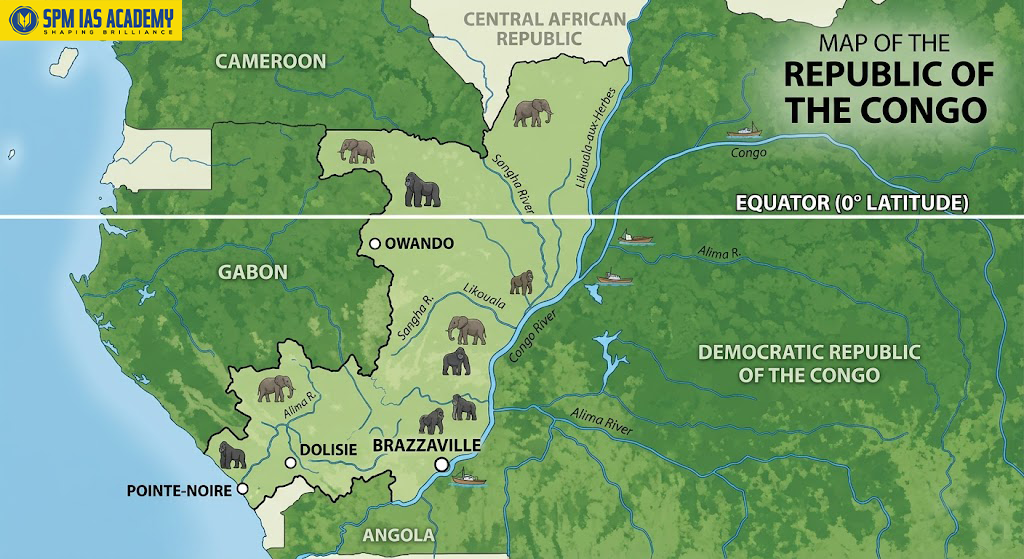
- Republic of the Congo: Straddles the Equator, with vast Congo River tributaries flowing through its jungle interior.
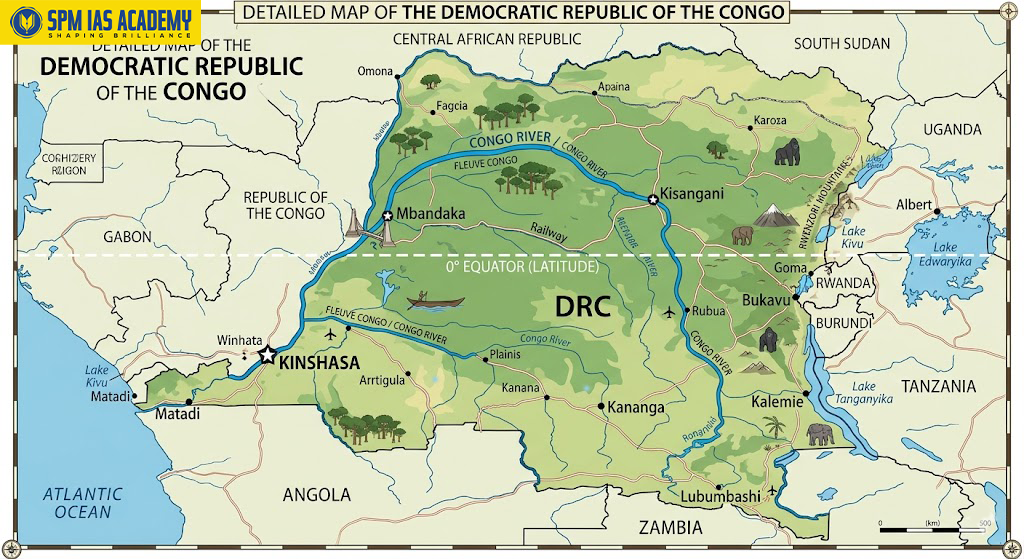
- Democratic Republic of the Congo: The world’s second-largest tropical rainforest sits within this country’s borders. The Congo River, the deepest in the world, crosses the Equator twice.
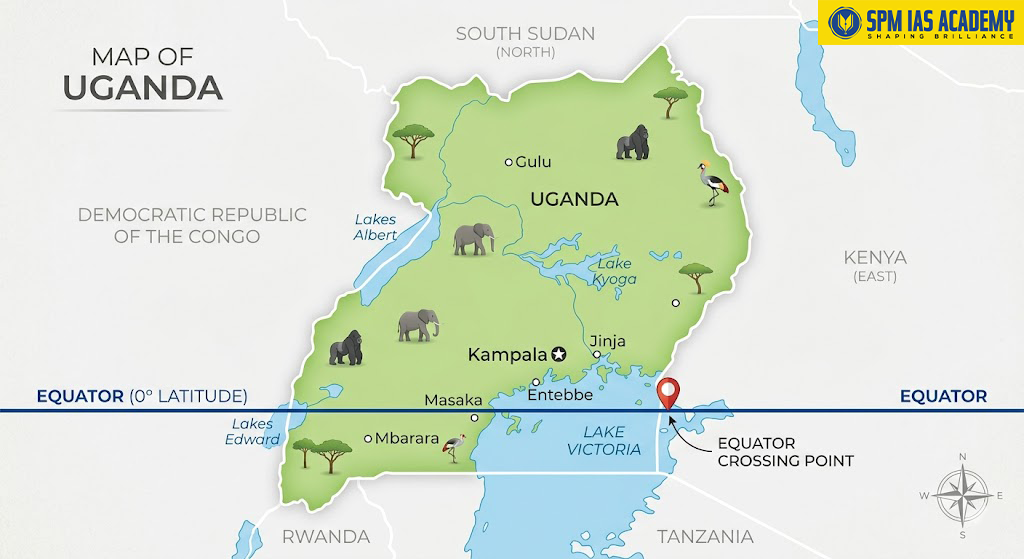
- Uganda: The Equator crosses the “Pearl of Africa,” passing near the town of Kayabwe, where a roadside monument marks the spot.
- Kenya: The line cuts through the Great Rift Valley, a region of volcanic lakes, world-class safaris, and dramatic highland scenery.
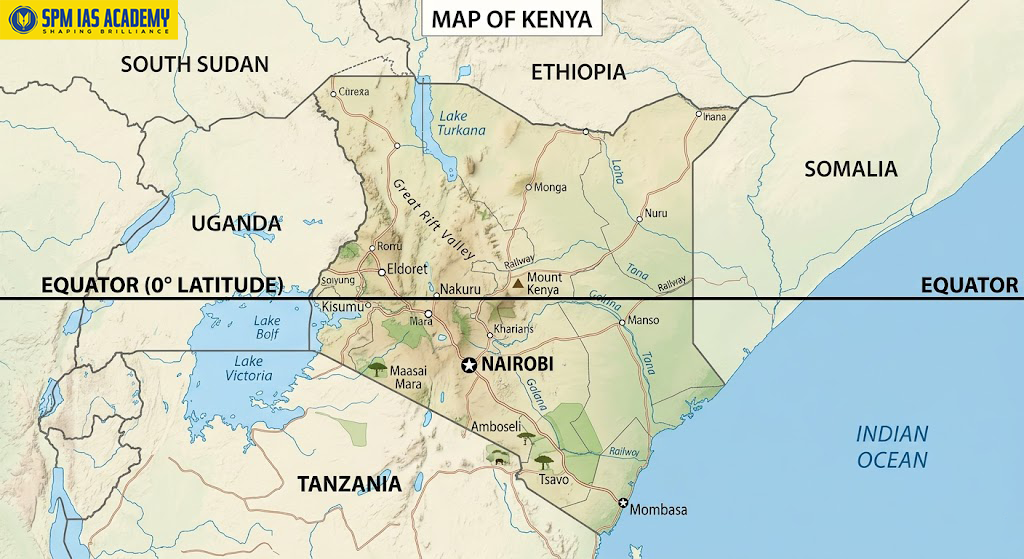
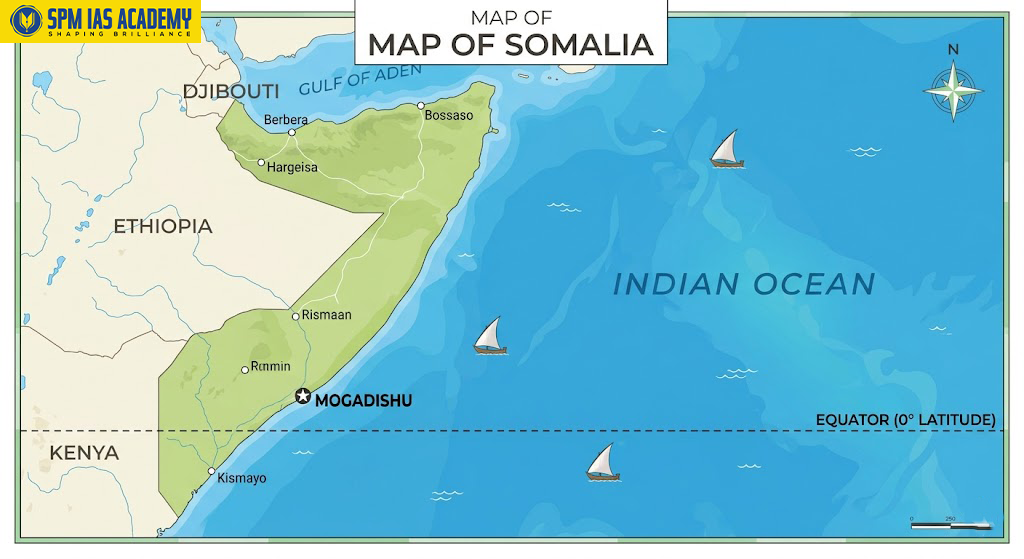
- Somalia: The Equator passes through the southern tip of this Horn of Africa nation, which has the longest coastline on mainland Africa.
3. Asia & Oceania
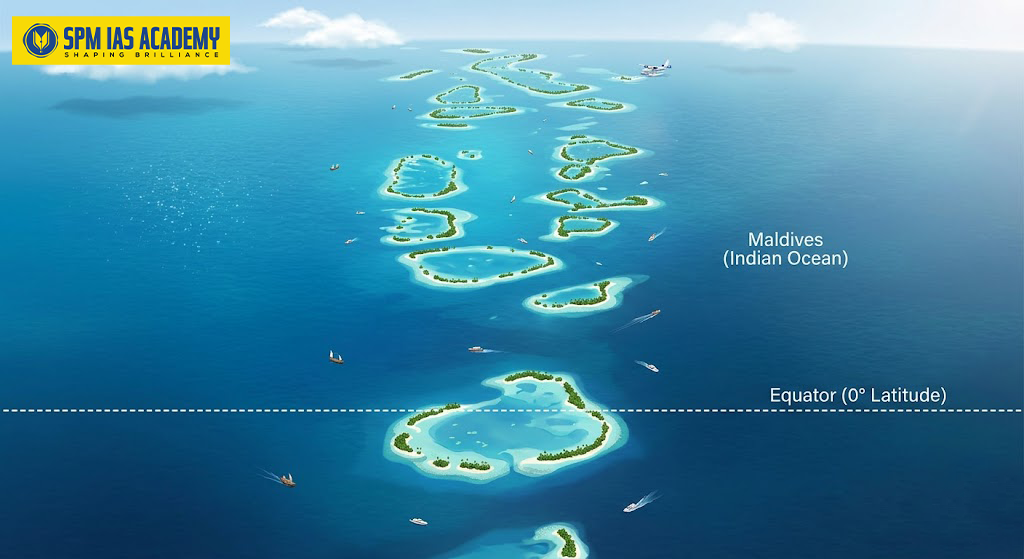
- Maldives: An archipelago of 1,200 coral islands in the Indian Ocean. The Equator passes through its southernmost atolls, making it one of the flattest and most climate-vulnerable nations on Earth.
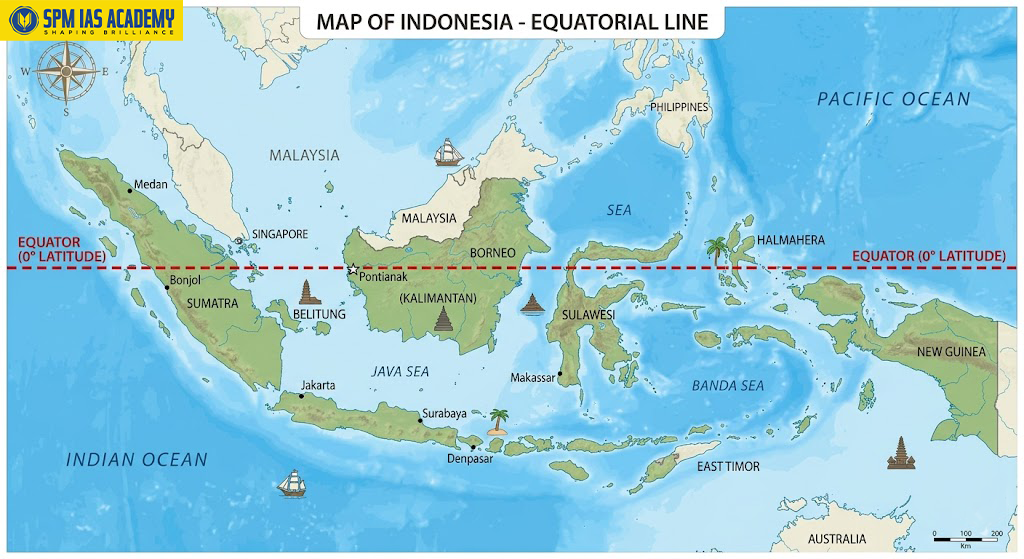
- Indonesia: The world’s largest archipelago nation straddles the Equator across several major islands, including Sumatra, Borneo, Sulawesi, and the Maluku Islands.
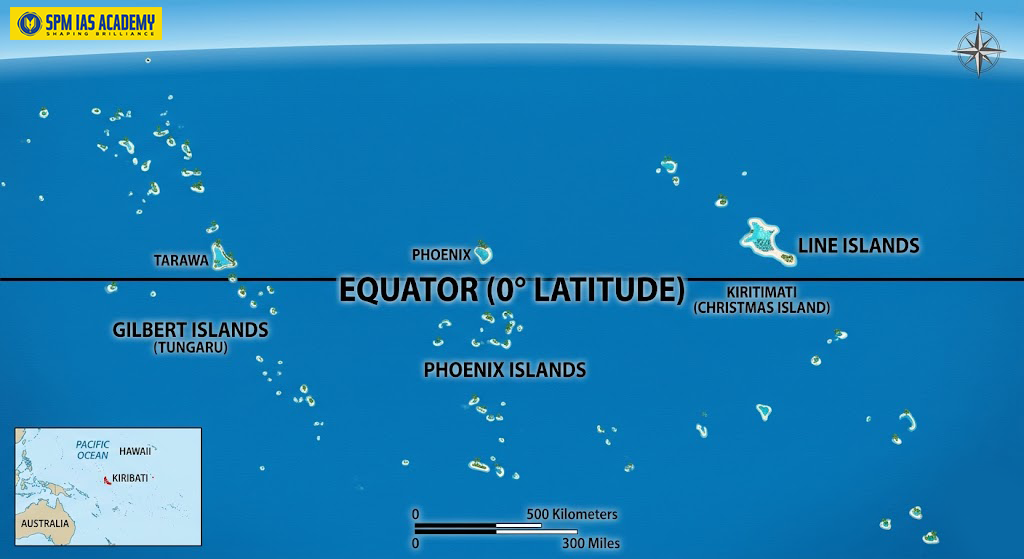
- Kiribati: A Pacific island nation whose Gilbert Islands chain sits directly on the Equator. Kiribati is also among the first countries to see each new day due to its position near the International Date Line.
Fast Facts About Life on the Centre Line
1. Snow on the Equator? Really. Volcán Cayambe in Ecuador stands at 5,790 metres and is the highest point on the Equator and the only place along the line where permanent snow exists year-round.
2. The “Corpse Flower” of the Tropics. Indonesia is home to Rafflesia arnoldii, the world’s largest individual flower, which can grow over one metre in diameter and smells of rotting flesh to attract pollinators.
3. The Congo River’s Double Crossing. The Congo River is the only major river in the world to cross the Equator twice, meaning parts of its basin always receive rainfall regardless of season, contributing to one of the most stable river flows on Earth.
4. Day and Night, Split Evenly. At 0 degrees latitude, every day of the year has almost exactly 12 hours of daylight and 12 hours of darkness. There are no long summer days or endless winter nights here.
The Myth of Equatorial Guinea
Here’s a question that trips up even seasoned geography fans: Does Equatorial Guinea lie on the Equator?
Despite its name, the answer is no. The Equator does pass through Equatorial Guinea’s exclusive maritime zone and comes close to its island of Annobón, which lies just south of the line at approximately 1.4°S. However, none of its landmass is actually crossed by the Equator. The country gets its name from its proximity to the line, a legacy of Spanish colonial geography, but it doesn’t make the official list of countries on the equator.
Stay updated with evolving global geography topics through reliable insights from current affairs resources and expert analysis.
Conclusion
The 13 countries on the equator collectively represent an astonishing cross-section of our planet. Together, they shelter the Amazon Rainforest, the Congo Basin, the Coral Triangle, and some of the most species-rich marine and terrestrial habitats on Earth. From the volcanic peaks of Ecuador to the turquoise atolls of Kiribati, life at 0 degrees latitude is anything but ordinary.
Whether you dream of standing at the Mitad del Mundo monument, tracking gorillas in Uganda, or watching the sun rise over the Pacific from a Kiribati beach, the Equator offers a lifetime of travel inspiration.
Frequently Asked Questions:
The Equator passes through 13 countries: Ecuador, Colombia, and Brazil in South America; São Tomé and Príncipe, Gabon, the Republic of the Congo, Democratic Republic of the Congo, Uganda, Kenya, and Somalia in Africa; and the Maldives, Indonesia, and Kiribati in Asia and Oceania.
The point where the Equator (0° latitude) and the Prime Meridian (0° longitude) intersect is located in the Atlantic Ocean, in the Gulf of Guinea off the west coast of Africa. This location is on the high seas and falls closest to the island nation of São Tomé and Príncipe. This oceanic coordinate, often called Null Island by cartographers, technically belongs to no country.
Broadly, yes. The equatorial climate is characterised by consistently high temperatures, typically between 25°C and 28°C (77°F–82°F) year-round. Instead of four seasons, many equatorial regions experience alternating wet and dry periods. The intense solar radiation means there’s little variation in temperature between months, though elevation can significantly cool things down. Quito, Ecuador, sits at over 2,800 metres and enjoys a pleasant spring-like climate all year, despite its equatorial location.
Yes, and it’s one of nature’s great surprises. Volcán Cayambe in Ecuador is the world’s only peak on the Equator with permanent glaciers. At nearly 5,790 metres above sea level, temperatures are cold enough to maintain a snowcap regardless of its tropical latitude.
Africa leads with seven equatorial countries: São Tomé and Príncipe, Gabon, the Republic of the Congo, the Democratic Republic of the Congo, Uganda, Kenya, and Somalia. South America has three (Ecuador, Colombia, Brazil), and Asia/Oceania contributes three more (the Maldives, Indonesia and Kiribati).

Behind every article at SPM IAS Academy is a team of skilled content writers and subject experts committed to making preparation easier for aspirants. From answering common doubts to breaking down complex issues and current affairs, we create content that is accurate, easy to understand, and directly useful for UPSC, APSC, and other competitive exams.