
Have you ever wondered which country has the largest population in the world? For decades, the debate primarily centered around just two superpowers: India and China. However, global demographic trends have shifted dramatically in recent years.
In this article, we will look into the latest global population rankings. Additionally, there is a clear list of countries by population. We will also provide explanations of why some nations grow faster than others.
Understanding Global Population Trends
In the past, China dominated global population charts. However, today, India has overtaken China and has the largest population in the world. This milestone has been confirmed by United Nations estimates and multiple population sources.
Furthermore, India’s young demographic, along with its higher birth rates and improving health outcomes, has contributed to this change. As a result, India’s population exceeded 1.47 billion people in 2026. Meanwhile, China’s population numbers are now declining slightly.
For serious aspirants, UPSC coaching in Assam provides expert guidance on population and governance topics.
Top Most Populated Countries in the World: 2026
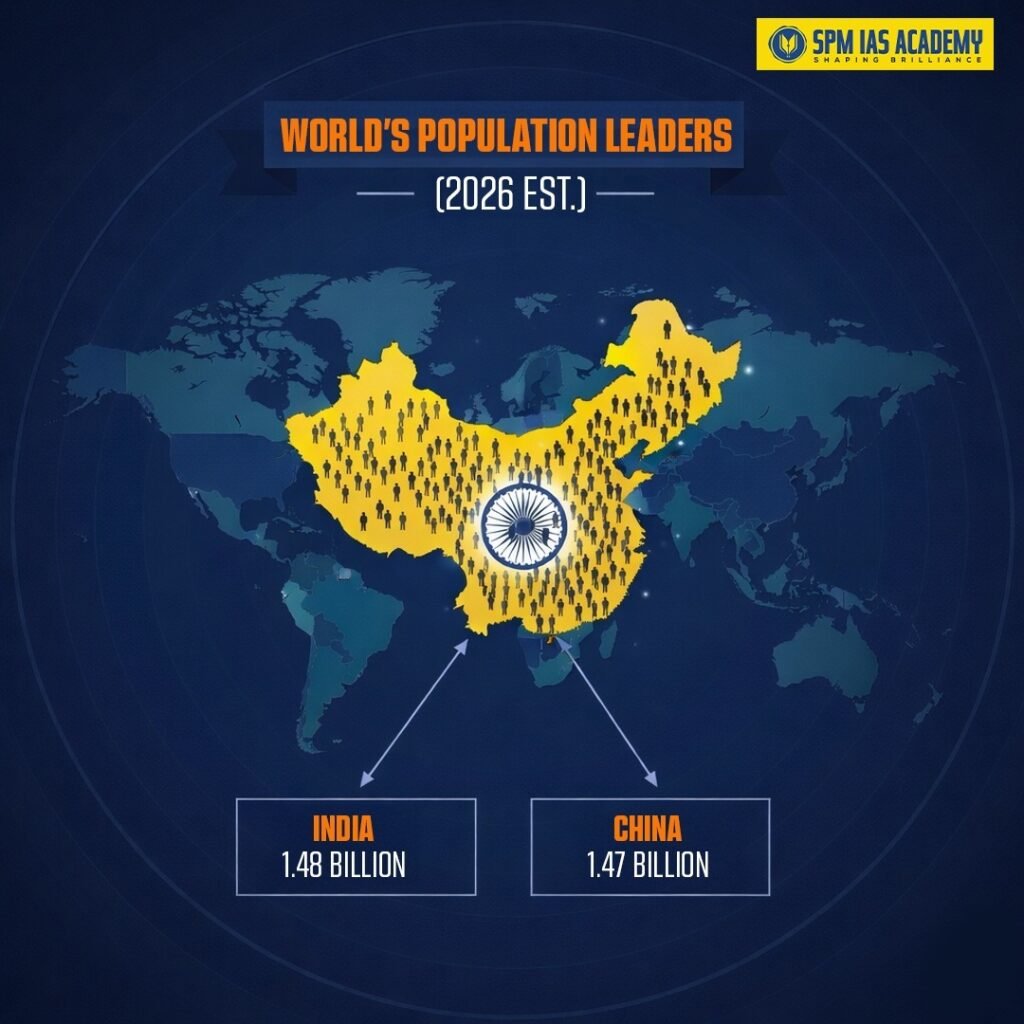
Below is a snapshot of the latest population ranking 2026 and estimates for the leading countries:
| Rank | Country | Estimated Population (2026) |
| 1 | India | 1,476,625,576 |
| 2 | China | 1,412,914,089 |
| 3 | United States | 349,035,494 |
| 4 | Indonesia | 287,886,782 |
| 5 | Pakistan | 259,299,791 |
| 6 | Nigeria | 242,431,832 |
| 7 | Brazil | 213,562,666 |
| 8 | Bangladesh | 177,818,044 |
| 9 | Russia | 143,394,458 |
| 10 | Ethiopia | 138,902,185 |
Source: Worldometer global population estimates for 2026
These ten countries alone account for a significant portion of the earth’s 8.2+ billion people, with India and China collectively representing nearly 35% of the total global population.
Why Do Population Sizes Differ?
Countries with aging populations or declining birth rates, such as China, may experience slower growth. Furthermore, they could potentially face eventual population declines. Nevertheless, these nations remain global economic and cultural powerhouses.
Population sizes are influenced by multiple factors. Below are some important factors that influence population:
1. Birth rates and fertility: Countries like India and Nigeria have high birth rates compared with ageing populations in China and Russia.
2. Healthcare improvements: Better child survival rates lead to larger youth populations.
3. Economic opportunities: Nations experiencing economic growth tend to retain younger working populations.
4. Migration patterns: Countries with high net migration, such as the United States, see ongoing population increases.
Population Growth Trends and Future Outlook
The global population continues to rise. However, growth rates are slowing down. Population projections suggest that the world may reach about 9 billion by the late 2030s. Additionally, some forecasts even indicate a potential population peak toward the end of the century. This could be followed by gradual declines as fertility rates fall worldwide.
Moreover, regions in Asia and Africa are expected to drive the majority of future growth. For example, Nigeria, which is already Africa’s most populous nation, could climb higher in global rankings by 2050.
Students preparing for civil services can choose UPSC coaching in north east India for structured exam preparation.
Conclusion
In conclusion, India holds the title for the largest population in the world. It has surpassed China with more than 1.47 billion people. While population figures may seem like mere numbers, they actually reflect deeper social, economic, and demographic changes shaping our world. Understanding these trends is important. In doing so, we can explain shifts in global power, workforce dynamics, urban growth, and future planning needs.
Frequently Asked Questions
India, with an estimated population of over 1.47 billion.
No. China is now second with about 1.41 billion people.
The global population is more than 8.2 billion and grows by tens of millions each year.
Projections suggest India will continue to lead population rankings for decades due to its young and growing demographic.
Africa, with nations like Nigeria and Ethiopia, is experiencing rapid increases.

Behind every article at SPM IAS Academy is a team of skilled content writers and subject experts committed to making preparation easier for aspirants. From answering common doubts to breaking down complex issues and current affairs, we create content that is accurate, easy to understand, and directly useful for UPSC, APSC, and other competitive exams.