
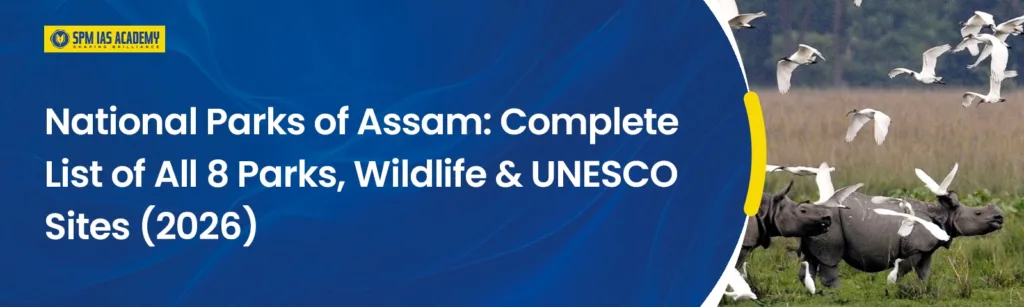
Assam is one of India’s most biodiversity-rich states. This richness is due to its unique geography, which ranges from the Brahmaputra floodplains to the Himalayan foothills. Its national parks are ecological gems, showcasing a diverse landscape that includes vast grasslands, riverine forests, and lush tropical rainforests. Additionally, these parks are known as birding hotspots.
As of 2026, Assam boasts eight officially notified national parks. Therefore, the state plays a central role in wildlife conservation, as well as in preserving global biodiversity heritage. It also contributes significantly to Assam eco-tourism parks.
In this article, we will look into all eight national parks of Assam. We will discuss Assam wildlife parks, UNESCO significance, conservation features, and what makes each one a must-visit for nature lovers.
National Parks of Assam 2026: Complete List
Assam has eight legally recognized National Parks, each protecting unique ecosystems, ranging from tropical rainforests to alluvial grasslands and Himalayan foothills.
| National Park | Location (Districts) | Year Declared | Area (approx.) | Highlights |
| Kaziranga National Park | Golaghat, Nagaon, Sonitpur | 1974 | 430 km² | One-horned Rhinoceros; UNESCO World Heritage Site |
| Manas National Park | Chirang, Baksa (BTR) | 1990 | 500 km² | UNESCO World Heritage Site; diverse mammals |
| Dibru-Saikhowa National Park | Dibrugarh, Tinsukia | 1999 | 340 km² | Wetland biodiversity, feral horses, and dolphins |
| Nameri National Park | Sonitpur | 1998 | 200 km² | Riverine forests, birdlife, adventure |
| Orang National Park | Darrang, Sonitpur | 1999 | 78 km² | Rhino habitat, birds & mini Kaziranga |
| Dehing Patkai National Park | Dibrugarh, Tinsukia | 2020 | 232 km² | Tropical rainforest biodiversity |
| Raimona National Park | Kokrajhar | 2021 | 422 km² | Golden langur habitat, diverse birds |
| Sikhna Jwhwlao National Park | Chirang, Kokrajhar | 2025 | 320 km² | Latest park; ecological corridor |
1. Kaziranga National Park: Rhino Capital of the World
Kaziranga National Park is an important part of the national parks of Assam. In fact, it is the most celebrated wildlife sanctuary in India. Furthermore, it was declared a UNESCO World Heritage Site in 1985. Kaziranga is located within the Eastern Himalayan biodiversity hotspot. As a result, it plays a crucial role in conservation. Notably, it protects the largest wild population of the Indian one-horned rhinoceros found anywhere on Earth.
Why Kaziranga is special:
a. Rich megafauna: Apart from rhinos, it shelters tigers, elephants, wild water buffalo and swamp deer, often called the “Big Five” of Kaziranga.
b. Birdlife treasure: Over 480 bird species have been recorded, making it a birder’s paradise.
c. Aquatic biodiversity: Numerous water bodies and floodplain marshes support fish, amphibians, and turtles.
d. Conservation success: Recent surveys show strong tiger population growth and rich herpetofauna, demonstrating effective protection efforts.
Kaziranga’s seasonal safaris (jeep, elephant) and scenic grasslands attract nature lovers from around the world.
2. Manas National Park: A UNESCO Treasure
National Parks of Assam: Complete List of All 8 Parks, Wildlife & UNESCO Sites (2026)
Manas National Park, situated along the foothills of the Himalayas near the Bhutan border, is a UNESCO World Heritage Site, a Biosphere Reserve, and a Tiger Reserve. Its lush forests, grasslands, and river systems create a hotspot for biodiversity.
Key features of Manas:
a. High biodiversity: Over 500 bird species and nearly 60 mammal species thrive here.
b. Endangered species haven: Pygmy hog, golden langur, hispid hare, and clouded leopard are among the rare mammals protected here.
c. Scenic landscapes: Manas River cutting through bhabar-terai terrain creates captivating natural vistas.
Manas is ideal for wildlife photography, birdwatching, and exploring remote forest trails.
3. Dibru-Saikhowa National Park: Riverine Wonderland
Dibru-Saikhowa National Park is one of the few riverine and wetland ecosystems among India’s national parks. Formed by tectonic changes after the 1950 earthquake, its landscape is characterized by an intricate network of rivers and wetlands.
Highlights:
a. Feral horses: A unique population of wild horses roams here, a legacy of British cavalry horses from World War II.
b. Birdlife diversity: Over 300 bird species, including rare waterfowl and migratory birds, use this wetland for breeding and wintering.
c. River dolphins: Gangetic river dolphins add to the park’s conservation importance.
This mesmerising blend of forests, grasslands, and river channels offers a unique wildlife experience.
4. Nameri National Park: Riverine Forest Paradise
Located on the Assam-Arunachal Pradesh border, Nameri National Park safeguards riverine forests along the Jia Bhoroli River and serves as the core of the Nameri Tiger Reserve.
What to know about Nameri:
a. Rich wildlife: Elephants, tigers, gaur, leopard, and hog deer roam freely.
b. Birdwatcher’s delight: Notable for white-winged wood duck and numerous raptors.
c. Adventure attractions: River rafting on the Jia Bhoroli is a popular eco-tourism activity.
Nameri’s landscapes combine untamed forests with riverine charm, ideal for nature walks and bird photography.
5. Orang National Park: Mini Kaziranga
Also known as Rajiv Gandhi Orang National Park, Orang lies on the northern bank of the Brahmaputra and is often called a “mini Kaziranga.”
Notable points:
a. Wildlife variety: Indian rhinos, Bengal tigers, elephants, and rare birds contribute to Orang’s appeal.
b. Grassland-forest mosaic: Floodplain grasslands, swamps, and moist forests create habitat complexity.
c. Bird species: Over 200 bird species, including Bengal florican, attract birdwatchers.
Orang’s compact area packs a lot of biodiversity, making it perfect for short wildlife excursions.
6. Dehing Patkai National Park: The “Amazon of the East”
Often dubbed the “Amazon of the East,” Dehing Patkai protects a significant stretch of lowland rainforests in Assam.
Key aspects:
a. Rainforest habitat: One of India’s largest wet evergreen forest areas, rich in flora and endemic species.
b. diversity: Hoolock gibbons, macaques, and rare birds like hornbills make this park unique.
c. Elephant reserve linkage: It’s part of a larger elephant conservation landscape.
Dehing Patkai’s dense canopy and labyrinth of trails offer a forest immersion experience rarely found elsewhere in Northeast India.
7. Raimona National Park: Transboundary Wilderness
Raimona lies along Assam’s western periphery, close to the Bhutan border, and connects forest corridors between West Bengal and international protected areas.
Why Raimona matters:
a. Habitat connectivity: Its forests serve as corridors for elephants, tigers, and other megafauna.
b. Birdlife and flora: From golden langurs to rare birds, Raimona enriches Assam’s ecological mosaic.
This park holds immense potential for transboundary conservation initiatives.
8. Sikhna Jwhwlao National Park: Assam’s Newest Jewel
In 2025, Sikhna Jwhwlao National Park was declared as the eighth national park in Assam, marking a significant achievement for conservation in the Bodoland Territorial Region (BTR). Spanning approximately 316 square kilometers across Kokrajhar and Chirang districts, this park was previously part of the Chirang-Ripu Elephant Reserve.
Its strategic location between Manas and Raimona National Parks of Assam, along the Indo-Bhutan border, makes it an important part of one of Northeast India’s largest contiguous wildlife landscapes, which improves connectivity for diverse species across protected areas.
Highlights:
a. Butterfly diversity: Over 460 butterfly species enrich its forests.
b. Flagship fauna: Tigers, elephants, rhinos, and golden langurs benefit from its protected status.
c. Ecological role: Adds critical forest coverage in Bodoland for connectivity and climate resilience.
UNESCO World Heritage Sites in Assam
Among Assam’s eight parks, two hold global recognition as UNESCO World Heritage Sites in Assam:
1. Kaziranga National Park (since 1985): Rhino stronghold.
2. Manas National Park (natural site): Exceptional biodiversity.
These designations affirm Assam’s global ecological significance and commitment to conservation.
Topics like national parks and biodiversity are core syllabus areas in UPSC coaching in north east India.
Why Assam National Parks Are Conservation Pillars?
National parks of Assam aren’t just tourist destinations; rather, they are critical Assam biodiversity hotspots. These parks play an important role in conserving endangered species, supporting complex ecosystems, and connecting landscapes across India’s northeast. Additionally, several parks have been designated as UNESCO World Heritage Sites or Biosphere Reserves. This recognition highlights Assam’s commitment to wildlife protection, which resonates globally.
Furthermore, whether you’re a wildlife enthusiast, birdwatcher, or eco-traveler, the national parks of Assam promise unforgettable experiences. You will find yourself amidst some of the most remarkable natural habitats on Earth.
Aspirants exploring Assam’s biodiversity can also prepare with UPSC coaching in Assam for environment and geography topics.
Tips for Visitors & Eco-Tourists
1. Best time to visit: Nov-Apr (dry winter season) for sightings & birdwatching.
2. Safaris: Available in Kaziranga, Manas, Orang and other parks (jeep/elephant).
3. Birdwatching: Best in Nameri, Dibru-Saikhowa and Kaziranga.
4. Wildlife photography: UNESCO sites are top for rare mammal sightings.
Conclusion
In conclusion, the National Parks of Assam highlight the state’s rich biodiversity. They protect rare species, riverine grasslands, wetlands, and tropical rainforests. Kaziranga National Park is famous for the Indian one-horned rhinoceros, while Manas National Park is known for its unique wildlife. Dehing Patkai National Park features lush forests that enhance the area’s natural beauty.
Together, these eight Assam wildlife parks play an important role in wildlife conservation in Northeast India. They make Assam biodiversity a significant hotspot and a must-visit destination for nature lovers.
Frequently Asked Questions:
As of 2026, there are eight National Parks of Assam: Kaziranga, Manas, Nameri, Orang, Dibru-Saikhowa, Dehing Patkai, Raimona, and Sikhna Jwhwlao National Park.
Two parks have UNESCO status:
Kaziranga National Park
Manas National Park
Both are globally recognized for exceptional biodiversity and conservation success.
Kaziranga National Park is world-famous for hosting more than two-thirds of the global population of the Indian one-horned rhinoceros. Orang National Park also has a significant rhino population.
Sikhna Jwhwlao National Park is the newest addition, declared in 2025. It is located in the Bodoland region along the Indo-Bhutan border.
Dehing Patkai National Park is popularly called the “Amazon of the East” due to its dense lowland rainforest ecosystem and rich biodiversity.
Nameri National Park and Dibru-Saikhowa National Park are particularly famous for birdwatching, with numerous migratory and endemic species.
Both Kaziranga National Park and Manas National Park are designated Tiger Reserves under Project Tiger.
The National Parks of Assam protect endangered species such as the Indian rhinoceros, golden langur, pygmy hog, hoolock gibbon, and Bengal tiger. They preserve floodplain grasslands, rainforests, and wetland ecosystems, making Assam one of India’s richest biodiversity regions.