
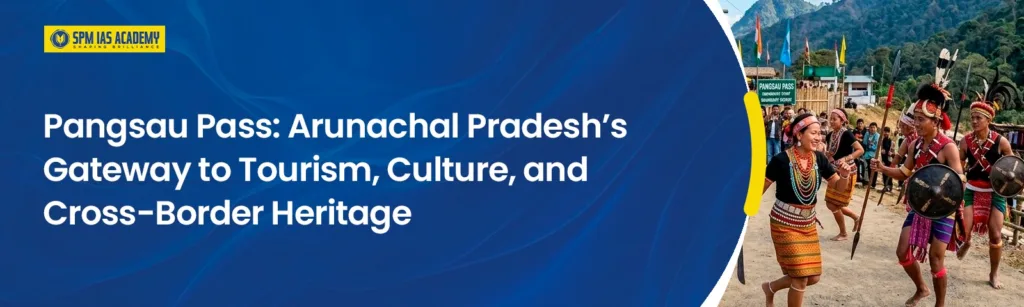
Pangsau Pass lies on the India–Myanmar border in Arunachal Pradesh. Historically, it is linked to the Stilwell Road and wartime connectivity. Strategically, it holds importance for border security and cross-border interaction. Culturally, it reflects shared indigenous heritage and traditions. Moreover, its scenic landscape offers strong eco-tourism and border tourism potential.
The Education Minister of Arunachal Pradesh, has highlighted the tourism, cultural, and strategic potential of Pangsau Pass. Pangsau Pass can emerge as a major hub for border tourism and cultural exchange. This topic holds high relevance for UPSC and APPSC especially under geography, culture, international relations, and regional development.
Students preparing for civil services can explore UPSC coaching in Assam for structured guidance and expert mentorship.
What Is Pangsau Pass?
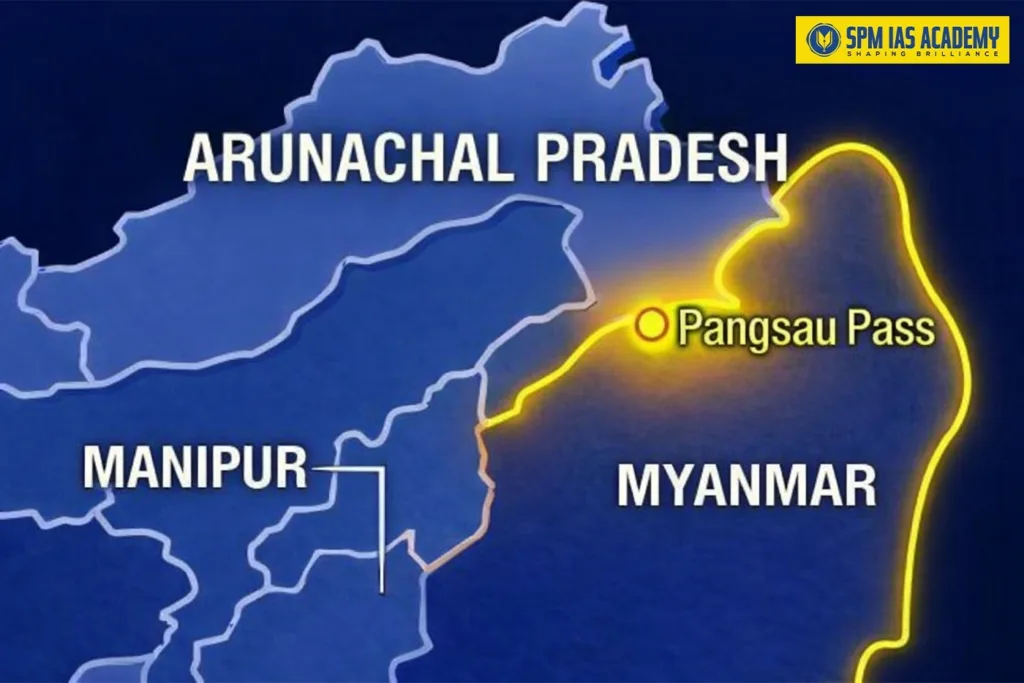
Pangsau Pass is a high-altitude mountain pass located on the India–Myanmar border, in Changlang district of Arunachal Pradesh. Often referred to as the “Gateway to India and Myanmar”, the pass has historically served as a vital corridor connecting India with Southeast Asia.
Historical and Strategic Significance of Pangsau Pass
Legacy of the Stilwell Road:
Pangsau Pass is closely associated with the historic Stilwell Road, constructed during the Second World War. The road symbolised:
- Firstly, allied cooperation during wartime.
- Secondly, strategic connectivity between India, Myanmar, and China.
- At the same time, it showed resilience and frontier diplomacy.
Even today, the legacy of the Stilwell Road gives Pangsau Pass strategic and symbolic importance.
Strategic Location of Pangsau Pass:
Due to its strategic border location, Pangsau Pass has long held multifaceted significance.
- Firstly, it plays an important role in border security and strategic depth along the India–Myanmar frontier.
- Secondly, it has facilitated cross-border interaction, enabling movement, communication, and cooperation across the region.
- Moreover, the pass has historically supported trade and cultural contact, reflecting enduring ties between communities on both sides of the border.
- Thus, Pangsau Pass represents a unique convergence of strategic importance and cultural continuity.
Tourism Potential of Pangsau Pass:
The tourism potential of Pangsau Pass lies primarily in its exceptional natural setting. Nestled amid dense forests, mist-covered hills, and rugged landscapes, the pass offers pristine natural beauty and panoramic mountain views. As a result, it provides ample opportunities for eco-tourism and adventure tourism. Furthermore, with improved infrastructure and supportive policy measures, Pangsau Pass has the potential to emerge as a prominent border tourism destination, capable of attracting both domestic and international visitors.
Cultural Importance and Indigenous Heritage:
The cultural importance of Pangsau Pass is reflected in its role as a zone of cultural confluence. Situated along the India–Myanmar border, the region showcases a rich blending of traditions from both sides. Indigenous communities share common customs, languages, and festivals, rooted in long-standing historical ties. Consequently, Pangsau Pass stands as a living symbol of cultural exchange and harmony, highlighting the continuity of shared heritage across borders.
Pangsau Pass International Festival:
Showcasing Cultural Diversity:
- Firstly, the festival celebrates the cultural diversity of Arunachal Pradesh.
- Additionally, it highlights indigenous traditions and local heritage.
- Moreover, it showcases music, dance, and traditional attire, thereby strengthening unity, promoting local identity, and enhancing tourism.
Strengthening Cross-Border Ties:
- Furthermore, by celebrating shared heritage, the festival reinforces people-to-people contact.
- At the same time, it promotes cultural diplomacy between border regions.
- Ultimately, it fosters cross-border goodwill and mutual understanding.
Economic and Developmental Prospects:
The economic and developmental prospects of Pangsau Pass are closely linked to its potential as a tourism hub.
- Firstly, tourism development can generate local employment opportunities.
- Secondly, it can boost small businesses, local markets, and indigenous handicrafts.
- Moreover, improved tourist inflow often leads to better infrastructure development in border areas.
- Consequently, such tourism-led growth can promote inclusive regional development and gradually transform the socio-economic profile of the region.
Conclusion:
In conclusion, Pangsau Pass in Arunachal Pradesh stands out as a unique blend of strategic location, historical legacy, cultural heritage, and tourism potential. It has a connection with the Stilwell Road and India–Myanmar border. All these highlight its importance in border connectivity, cross-border interaction, and regional integration. Moreover, the indigenous culture celebrated through the Pangsau Pass International Festival, reinforces its role as a centre of cultural exchange and people-to-people ties. There is a growing emphasis on eco-tourism, border tourism, and infrastructure development. Therefore, Pangsau Pass has the potential to drive inclusive regional development and transform the socio-economic landscape of eastern Arunachal Pradesh, while strengthening India’s engagement with Southeast Asia.
Aspirants studying regional topics like Arunachal Pradesh can benefit from UPSC coaching in north east India.
Source: Arunachal Times
Frequently Asked Questions:
Pangsau Pass is a high-altitude mountain pass in Changlang district of Arunachal Pradesh. It is located on the India–Myanmar border. It historically served as a key corridor connecting India with Southeast Asia.
Pangsau Pass is associated with the Stilwell Road of World War II. It symbolises wartime connectivity, frontier diplomacy, and strategic cooperation. At the same time, it also holds importance for border security and cross-border interaction.
Pangsau Pass offers strong eco-tourism and adventure tourism potential due to its pristine landscapes, dense forests, and misty hills, with scope to develop into a major border tourism destination.
The Pangsau Pass International Festival promotes indigenous culture, music, dance, and traditions. Therefore, it strengthens people-to-people contact, cultural exchange, and cross-border goodwill between India and Myanmar.

Behind every article at SPM IAS Academy is a team of skilled content writers and subject experts committed to making preparation easier for aspirants. From answering common doubts to breaking down complex issues and current affairs, we create content that is accurate, easy to understand, and directly useful for UPSC, APSC, and other competitive exams.