
Every year, thousands of aspirants from Assam, Meghalaya, Manipur, Tripura, Nagaland, Arunachal Pradesh, Mizoram, and Sikkim dream of cracking the UPSC Civil Services Examination. The dream is genuine. The ambition is real. But the path is long, the competition is national, and the support system that most Northeast aspirants have access to has historically been far inferior to what candidates in Delhi, Hyderabad, or Pune enjoy.
This is the mentorship gap — and it has quietly cost the Northeast some of its most talented potential civil servants. In this article, we will discuss what genuine UPSC mentorship looks like, why it matters so critically for aspirants from the Northeast, and why thousands of students across the region have placed their trust in these three mentors.
What does the mentorship gap really mean?
Good mentorship for UPSC is not simply about having access to notes or video lectures. It is about having someone who understands your background, your academic journey, your language, your regional context, and your specific challenges — and who then guides you with the precision and personal investment of a teacher who genuinely wants to see you succeed.
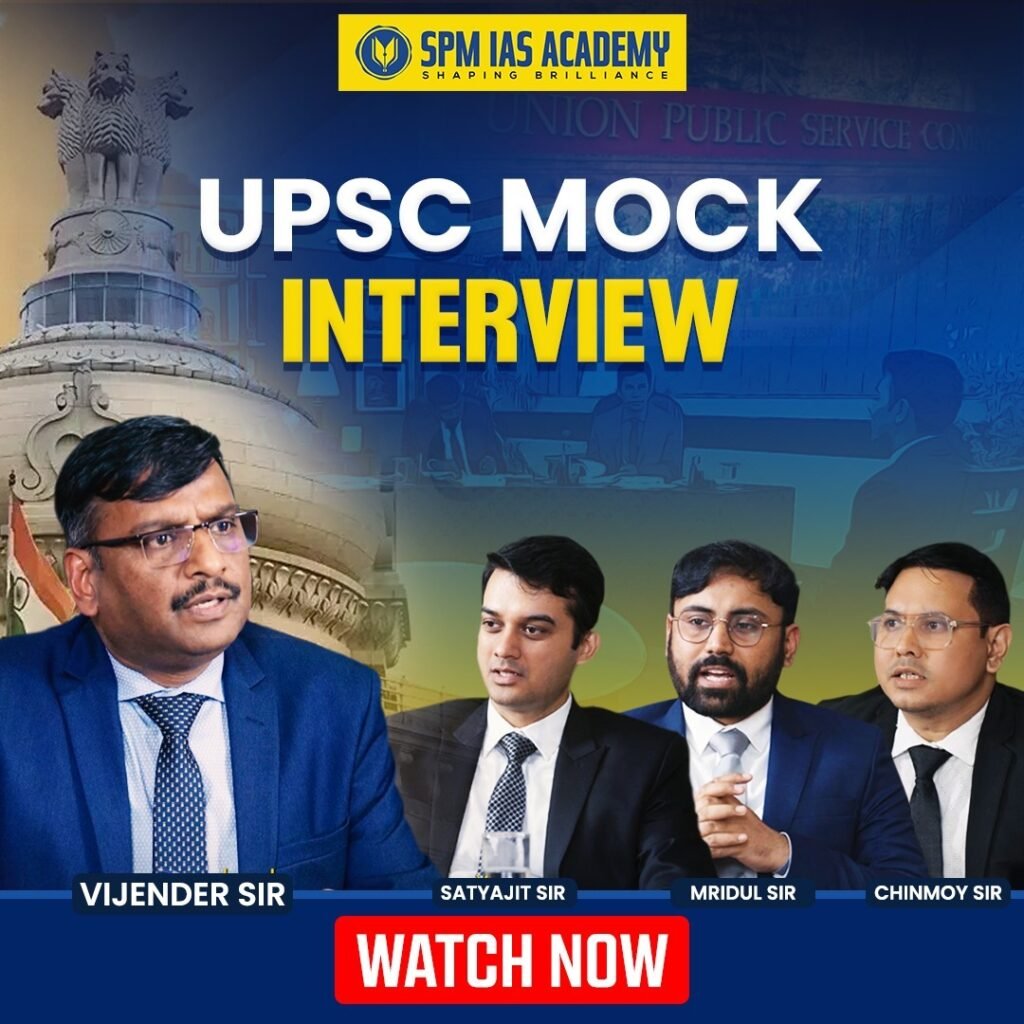
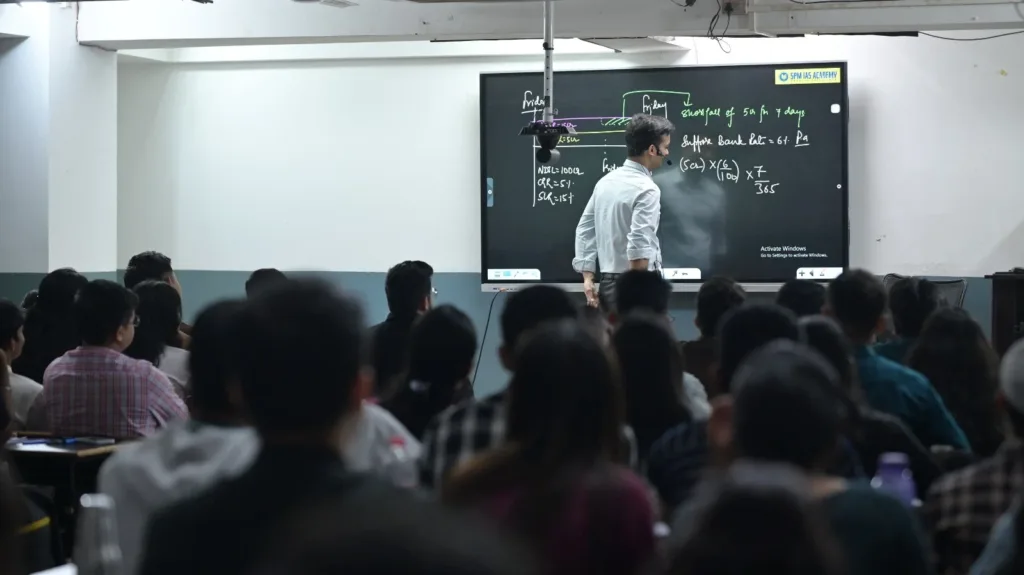
At SPM IAS Academy in Guwahati, that kind of mentorship is not an aspiration. It is the standard. Three faculty members in particular — Satyajit Sir, Mridul Sir, and Chinmoy Sir — have become synonymous with the very best that UPSC guidance in Assam and the Northeast has to offer.
Why UPSC Mentorship Is Different from Regular Coaching
Before understanding what makes SPM IAS Academy’s mentorship exceptional, it helps to understand what genuine UPSC mentorship actually means—and how it differs from routine coaching.
Aspirants looking for a structured answer-writing framework and personalized guidance can explore SPM IAS Academy’s UPSC Mains Mentorship Program, designed specifically for UPSC CSE Mains 2026 preparation.
Coaching vs Mentorship
Regular coaching delivers content. A teacher explains a topic, students take notes, and the chapter is marked complete. This model works reasonably well for board examinations or even state-level competitive exams. But UPSC is a different beast entirely.
UPSC mentorship is something fundamentally deeper. It involves understanding each aspirant’s strengths, weaknesses, and thinking patterns. It requires guiding the aspirant not just on what to study, but also on how to think, how to structure arguments, how to approach uncertain questions under time pressure, and how to maintain psychological resilience through what is often a two- to four-year preparation journey filled with setbacks.
The best UPSC mentors do several things that coaches alone cannot:
The Role of a UPSC Mentor
Mentors evaluate answers and explain not only the mistakes but also the reasoning behind them, along with ways to correct them at the root. They track progress over time and refine their guidance as understanding improves. Mentors guide aspirants in choosing an optional subject based on academic strengths rather than trends. They also support interview preparation by helping build clarity around opinions, values, and intellectual identity.
And most importantly, they stay with you—through failed attempts, missed cutoffs, and the self-doubt that every serious UPSC aspirant faces at some point.
This is the kind of mentorship that SPM IAS Academy offers through Satyajit Sir, Mridul Sir, and Chinmoy Sir.
The Mentors of SPM IAS Academy
Satyajit Sir: The Strategic Mind Behind UPSC Preparation
Many aspirants regard Satyajit Sir as one of the most analytically rigorous UPSC mentors. He approaches civil services preparation with a strong focus on strategy. He emphasizes that UPSC tests not just knowledge, but the ability to apply, connect, and articulate it effectively under time-bound conditions.
Strength in Strategy and Analysis
What sets Satyajit Sir apart is his ability to pinpoint exactly where an aspirant’s preparation is going wrong and provide precise course correction. Instead of offering generic feedback, he dives deeper into the root cause. He identifies whether the issue lies in conceptual clarity, answer structure, or time management. Accordingly, he guides in source selection, or the overall approach to revision.
Excellence in Economy, Ethics, and Newspaper Analysis
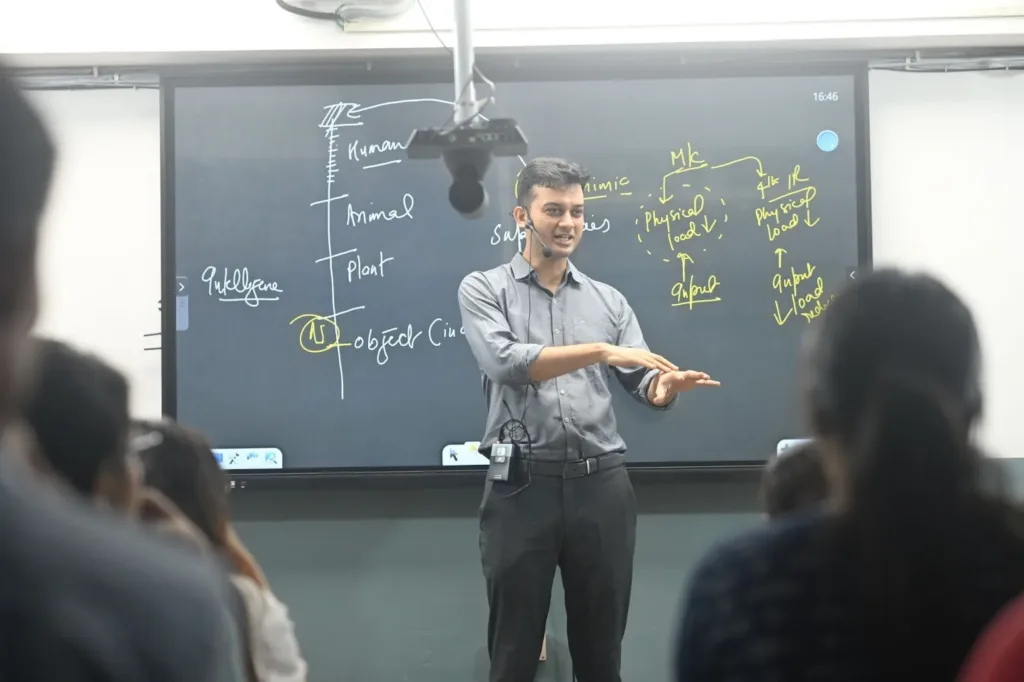
His sessions on General Studies Paper III (Economy) are widely appreciated by students for their clarity and depth. His expertise on economic concepts, government policies, budgeting, and the dynamic nature of India’s economy—and more importantly. He explains them in a way that helps aspirants develop true conceptual understanding and analytical thinking, rather than just memorizing facts.
His newspaper analysis classes are another standout feature. They are highly structured, exam-oriented, and consistently relevant. In fact, more than 60 questions in UPSC CSE 2025 were directly or indirectly linked to themes he had already covered in his analysis. It is a testament to his ability to filter important issues and present them with precision.
When it comes to Ethics (GS Paper IV), he is often regarded by students as one of the best ethics teachers. His classes go beyond theory — he focuses on real-life application, answer writing, case study approach, and value-based thinking. He simplifies complex ethical concepts, making them relatable and easy to apply in the exam, while also helping students build a strong moral and philosophical foundation essential for scoring high in ethics.
Personalized Feedback and Guidance
Satyajit Sir also mentors aspirants through the optional subject selection process. It is arguably one of the most consequential decisions any UPSC aspirant makes. His guidance here is methodical, honest, and tailored to the individual student’s academic background and interests. He never encourages being swayed by popular choices or market trends.
Students who have been mentored by Satyajit Sir consistently describe his feedback on Mains answer writing as transformative. He does not simply correct—he teaches aspirants how to think about UPSC questions differently, how to identify the multi-dimensional demands of a question, and how to deliver a structured, balanced, and original answer within the constraints of an examination.
Mentorship Beyond Academics
Beyond academics, Satyajit Sir is known for his mentorship of aspirants through difficult periods—failed attempts, declining motivation, and the psychological pressure that accumulates over years of preparation. His approach is grounded, realistic, and deeply encouraging without being falsely reassuring.
Mridul Sir: The Scholar Who Makes Complexity Accessible
Mridul Sir brings to SPM IAS Academy a rare combination of scholarly depth and extraordinary clarity of explanation. Among aspirants from Assam and the Northeast, he has earned a reputation as the teacher who can make even the most complex topics feel logical, structured, and learnable.
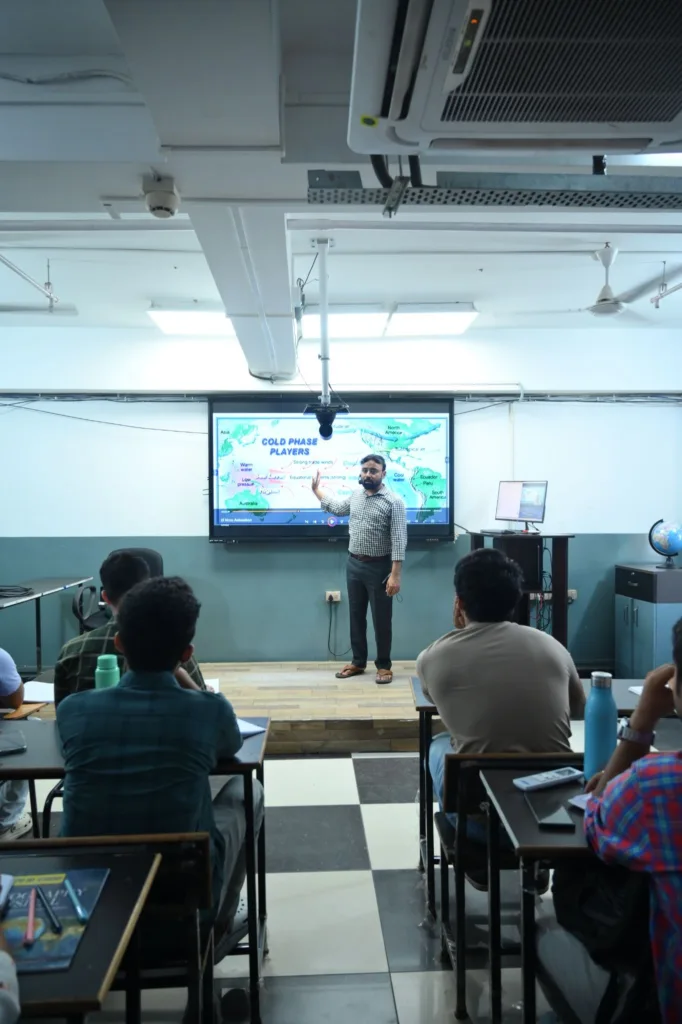
His expertise in geography is often described as nothing short of legendary — a subject that plays a crucial role across APSC, APPSC, and UPSC examinations in both Prelims and Mains. Mridul Sir’s command over physical, Indian, and world geography is exceptionally deep, and his ability to connect concepts with current affairs and real-world applications gives aspirants a level of clarity and contextual understanding that truly stands out.
He is also widely regarded as one of the best teachers for the Geography Optional in UPSC. Aspirants respect him for simplifying even the most complex topics, refining answer-writing skills, and helping students develop strong conceptual clarity along with advanced analytical depth.
Structured Teaching Style
Mridul Sir’s teaching style is methodical and patient. He builds concepts layer by layer, never assuming prior knowledge and never leaving gaps in a student’s understanding before moving forward. His notes and study materials are known for their precision—every line is purposeful, and every example is chosen to reinforce a specific conceptual point.
His personal accessibility and willingness to engage with students’ doubts — whether in scheduled sessions or through ongoing communication — make him one of the most trusted mentors among the SPM IAS Academy community.
Chinmoy Sir: The Current Affairs and GS Specialist with Ground-Level Understanding
Chinmoy Sir occupies a uniquely important role in SPM IAS Academy’s mentorship framework, especially for aspirants preparing from an Assam-specific perspective. In an examination where current affairs permeate every stage—from Prelims to Essay to the Personality Test—having a mentor who can help navigate the overwhelming flow of daily news, filter what truly matters, and connect it with both national and Assam-oriented issues is invaluable.
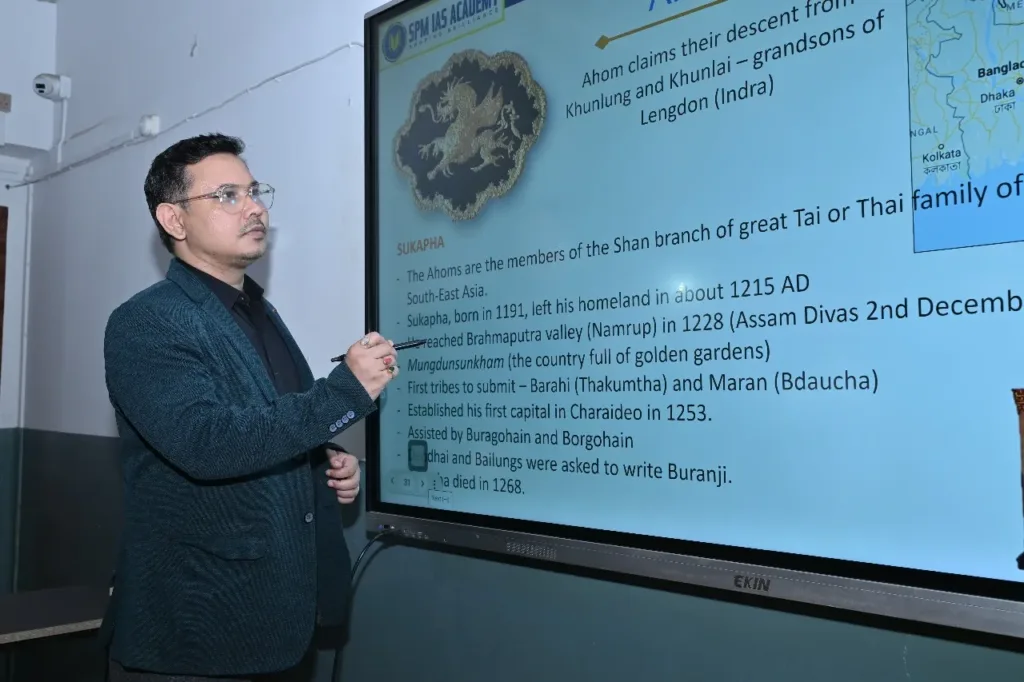
A standout feature of his mentorship is “Assampedia”—a highly curated and structured resource that covers Assam-related current affairs, history, culture, geography, and governance in a way that is directly usable for the exam. It helps aspirants systematically prepare state-specific content without feeling overwhelmed, making it one of the most valuable tools for APSC and UPSC aspirants from the region.
In addition, he is also known as one of the best teachers for history, covering ancient, medieval, and modern India with depth and clarity. Moreover, his ability to connect historical developments with present-day governance and society helps aspirants build a multidimensional understanding, which is exactly what UPSC and APSC demand.
Ground-Level Northeast Understanding
His understanding of the Northeast’s ground-level social and economic realities gives his mentorship a particular relevance for aspirants from the region. When discussing issues of tribal welfare, border governance, environmental challenges in the Brahmaputra basin, or the socio-economic development of Assam’s districts, Chinmoy Sir brings a contextual depth that aspirants from the region find both authentic and deeply useful for examination purposes.
Chinmoy Sir guides aspirants to construct a coherent personal and intellectual narrative before the UPSC Personality Test, anticipating questions based on their detailed application form, and building the kind of confident, reflective communication that the board looks for.
What Makes SPM IAS Academy’s Mentorship Model Unique in the UPSC Preparation?
The combined presence of Satyajit Sir, Mridul Sir, and Chinmoy Sir at SPM IAS Academy creates a mentorship ecosystem that is genuinely rare outside of India’s major metropolitan coaching centers—and in several respects, more relevant and more effective for aspirants from Assam and the Northeast.
Regional relevance built into every session –
The mentors have a deep understanding of the region—its history, challenges, political landscape, and cultural context. They also recognize the academic backgrounds most students bring to their preparation. This insight is built into the mentorship itself, not treated as an afterthought.
Answer writing as the central practice—
All three mentors believe that UPSC Mains is ultimately decided by answer writing. They place regular, evaluated practice at the core of preparation. They do not treat it as an add-on, but as the main way to test, improve, and refine understanding.
This answer-writing philosophy is also at the core of the UPSC Mains Mentorship Program, where aspirants receive topper-evaluated answer copies, essay feedback, and personalized guidance for continuous improvement.
Long-term mentorship relationships—
UPSC preparation is rarely a one-year journey. However, SPM IAS Academy’s mentors build relationships with aspirants over multiple years and multiple attempts. The team tracks their progress, adjusting guidance, and maintaining the kind of sustained engagement that genuinely changes preparation trajectories.
Accessible to aspirants across the Northeast –
Through online mentorship programs, aspirants from Manipur, Meghalaya, Tripura, Nagaland, Mizoram, Arunachal Pradesh, and Sikkim can access the same quality of guidance as students sitting in Guwahati. The Northeast’s geography has always been a barrier to quality coaching. SPM IAS Academy’s mentorship model actively works to eliminate it.
Honest guidance over false motivation –
The three mentors are known for their directness. They do not tell aspirants what they want to hear — they tell them what they need to hear. Honest assessment of preparation gaps, realistic timelines, and frank conversations about an aspirant’s strengths and limitations are hallmarks of the mentorship at SPM IAS Academy.
Why do Northeast Aspirants Need Region-Specific UPSC Mentorship?
A broader issue exists beyond any single institute. Aspirants face specific challenges in UPSC preparation that generic coaching models often fail to address. These gaps require more contextual and tailored guidance.
Optional Subject Confusion?
The first challenge is choosing the optional subject. Many aspirants select optionals based on trends in Delhi coaching circles. They often do this without proper guidance on whether the subject suits their academic background or available resources.
Current Affairs Gap
The second is the current affairs disadvantage. National coaching institutes naturally focus on issues that dominate the national discourse. They often neglect the Northeast’s developmental story, its border dynamics, its unique tribal governance structures, and its environmental significance. But these are highly relevant to the UPSC examination and particularly relevant to a candidate from the region.
Interview Preparation Challenges
The third challenge is the interview stage gap. Many aspirants find the personality test intimidating due to limited exposure to guided self-reflection and structured communication practice. Experienced mentors help bridge this gap. They train aspirants to present themselves with clarity, authenticity, and confidence before the UPSC board.
Psychological Distance from UPSC
The fourth challenge is the psychological distance from the examination system. For many students, UPSC feels remote and almost unattainable. It often seems like something meant for others, not them.
Good mentors help bridge this gap. They build confidence and shift the aspirant’s mindset. Over time, students begin to see themselves as serious contenders rather than outsiders.
Who Should Seek Mentorship at SPM IAS Academy
The mentorship offered at SPM IAS Academy is relevant across a wide range of aspirant profiles.
Fresh Graduates
Fresh graduates beginning their UPSC journey often need structured guidance from day one. These mentors offer a balanced combination of patience, expertise, and clarity in direction. Their long-term involvement ensures that aspirants build a strong and consistent foundation for success.
Working Professionals
Working professionals preparing alongside their jobs need efficient and focused guidance that respects their limited time. However, a targeted, outcome-oriented mentorship approach helps them maximize productivity and stay consistent. Accordingly, this ensures steady progress without overwhelming their schedule.
Repeat Aspirants
Repeat aspirants who have attempted UPSC one or more times often need a clear diagnosis of where they are going wrong. These mentors provide honest, experience-driven insights along with a concrete improvement plan. Their deep understanding of aspirant preparation patterns makes their guidance both practical and highly effective
Aspirants Across Northeast India
Aspirants from Meghalaya, Manipur, Nagaland, Tripura, Mizoram, Arunachal Pradesh, and Sikkim can equally benefit from quality mentorship. Those who value guidance grounded in real preparation needs will find SPM IAS Academy’s approach highly effective. Coupled with its online mentorship programs, this support is accessible regardless of location.
Final Thoughts: Mentorship Is the Difference Between Preparation and Success
There are many ways to prepare for UPSC. There are books, online courses, YouTube channels, test series, and study groups. All of these have value. But none of them replace the impact of a mentor—someone who knows the examination deeply, knows you as an aspirant. They bring both forms of knowledge together to guide your preparation with intelligence, honesty, and genuine care.
Beyond Books and Courses
Satyajit Sir, Mridul Sir, and Chinmoy Sir at SPM IAS Academy represent exactly this kind of mentorship. They have earned their reputation not through marketing but through the quality of guidance. Furthermore, they deliver to every aspirant who walks through their door—or connects with them from across the Northeast.
A Path Forward for Northeast Aspirants
At last, for UPSC aspirants from Assam and the broader Northeast — We hear your willingness to commit. We hear your search for guidance, to write and rewrite, and write again. This is where the best mentorship in the region resides.
The best mentorship for UPSC goes beyond classroom teaching. At SPM IAS Academy, it includes personalized guidance, answer writing evaluation, strategic planning, and continuous feedback. Since UPSC is a long and unpredictable exam, this mentorship helps aspirants stay focused, avoid common mistakes, and improve consistently over time.
The best mentorship for UPSC focuses on individual progress rather than just syllabus completion. At SPM IAS Academy, mentors provide one-on-one guidance, track performance, and design customized strategies based on each aspirant’s strengths and weaknesses, ensuring preparation is both efficient and exam-oriented.
SPM IAS Academy stands out for offering the best mentorship for UPSC through its focused, student-centric approach. Mentors provide honest feedback, long-term guidance, and a strong emphasis on answer writing and conceptual clarity. This ensures aspirants are not just prepared, but truly exam-ready across all stages of UPSC.

Behind every article at SPM IAS Academy is a team of skilled content writers and subject experts committed to making preparation easier for aspirants. From answering common doubts to breaking down complex issues and current affairs, we create content that is accurate, easy to understand, and directly useful for UPSC, APSC, and other competitive exams.