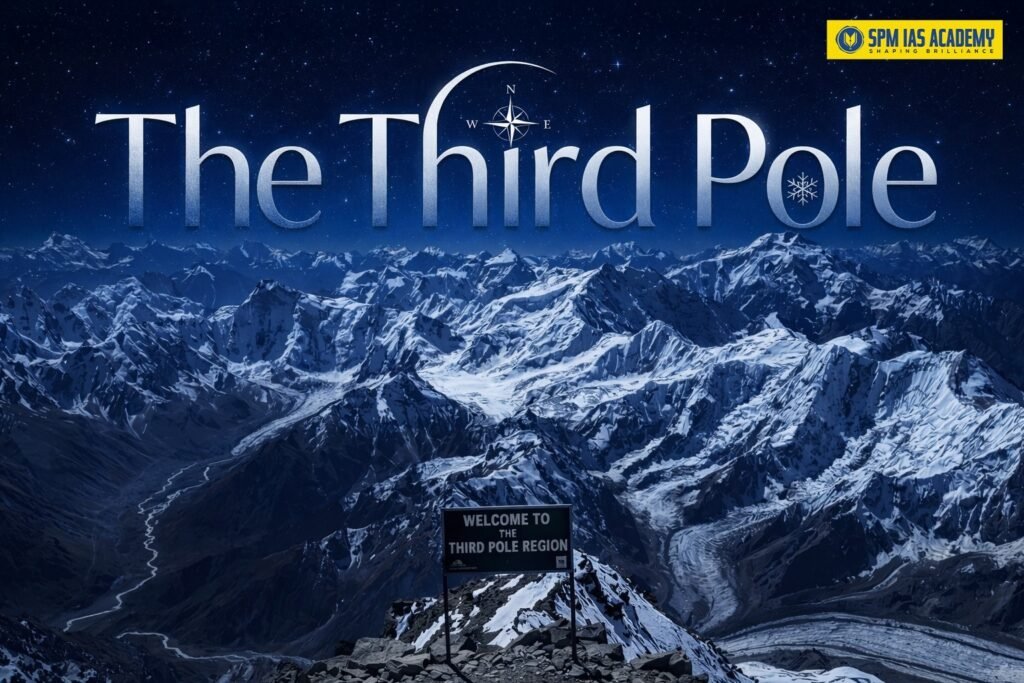
When we think of the Earth’s poles, we often picture the North and South Poles. However, there’s also a region known as the Third Pole. This term refers to High-Mountain Asia, which contains a significant concentration of ice and snow.
In this article, we will look at which mountain is called the third pole, why it relates to Mount Everest, and its importance to billions of people across Asia.
Which Mountain is Called the Third Pole?
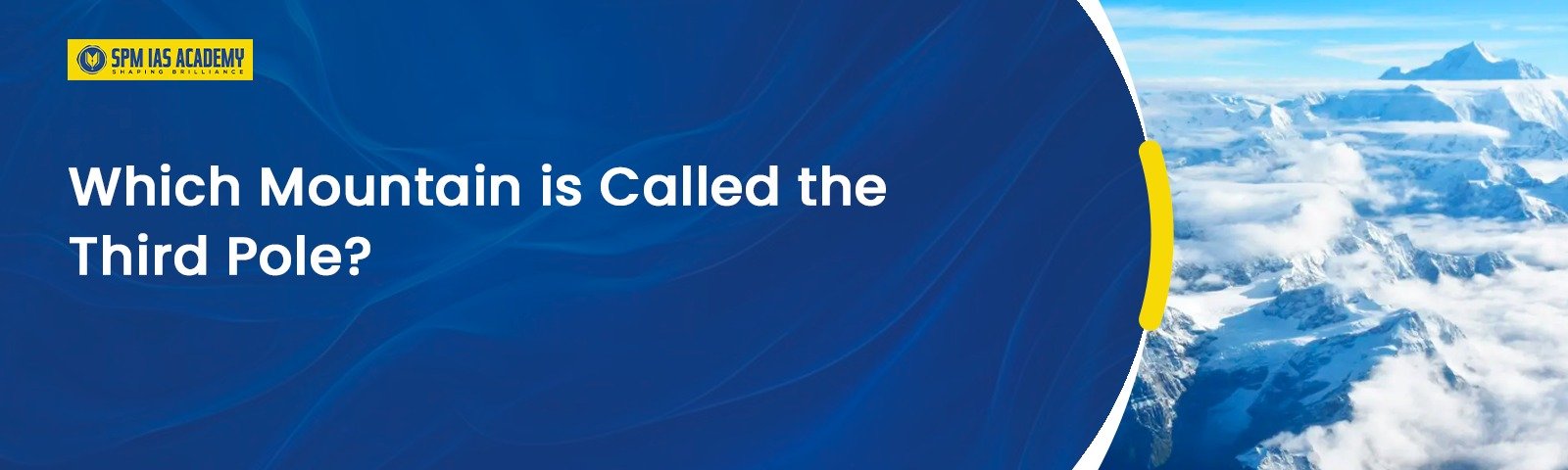
The Third Pole is a nickname given to the mountainous region of High-Mountain Asia. This region includes the Hindu Kush Karakoram Himalayan mountain ranges. Additionally, it encompasses the Tibetan Plateau.
Furthermore, this area holds the largest reserve of glaciers and perennial snow outside the Arctic and Antarctic polar caps. As a result of its massive ice reserves, scientists refer to this region as the Third Pole. This designation highlights its significance as a vital storehouse of freshwater in the form of ice and snow. Ultimately, this freshwater feeds many of Asia’s major rivers.
Why is Mount Everest Associated with the Third Pole?
The Third Pole describes a broad glaciated region. However, Mount Everest is often mentioned as the mountain most closely linked with this term. It is located on the border of Nepal and China. Moreover, Everest sits within the Himalayan range, which serves as the centerpiece of the Third Pole’s vast ice network.
Furthermore, Mount Everest’s glaciers and surrounding snowfields play an importantrole in feeding major rivers. These rivers include the Ganges, Brahmaputra, and Indus. They, in turn, support agriculture, drinking water, and power generation for hundreds of millions of people. Although this term refers to the entire region rather than one specific peak, Everest remains symbolic of the region’s importance. This significance is due to its height and expansive ice cover.
Key Facts
1. Largest Ice Reserve Outside Polar Regions
The Third Pole holds the largest concentration of ice and snow outside the Arctic and Antarctic, making it critical for global freshwater storage.
2. Source of Asia’s Lifeline Rivers
Most of Asia’s major rivers originate in the Third Pole region, supplying water to some of the world’s most densely populated areas.
3. Highest Mountain System on Earth
The Himalayas contain all fourteen mountains that rise above 8000 metres, making it the highest mountain system globally.
4. Climate Change Hotspot
This mountain is warming faster than many other regions, making it one of the most vulnerable areas to climate change.
5. Natural Water Tower of Asia
The Himalayan glaciers are often called the Water Tower of Asia because they regulate river flow throughout the year.
6. Cultural and Spiritual Importance
This region is home to ancient cultures, sacred sites and spiritual traditions that have existed for thousands of years.
What is the Importance of the Third Pole?
Often called the “Water Tower of Asia,” the importance of the Third Pole’s network of glaciers lies in regulating the climate. Additionally, it helps sustain water flows across the continent. The meltwater from these glaciers forms the headwaters of some of Asia’s most important rivers. As a result, this meltwater supports agriculture, energy, and drinking water supplies for billions of people.
However, this icy reservoir is highly sensitive to climate change. Rising global temperatures are accelerating glacier melt. Consequently, this threatens long-term water availability. Furthermore, it increases risks such as glacial lake outburst floods and droughts downstream.
Conclusion
The Third Pole is not a single mountain. Instead, it is a vast network of glaciated mountain ranges in High-Mountain Asia. Furthermore, it holds the largest amount of frozen freshwater outside the North and South Poles. This makes it an important natural reservoir for the continent.
Notably, Mount Everest, the world’s highest peak, is often identified with this term. This is because it sits at the heart of this icy expanse. As climate change accelerates, it becomes increasingly important to protect this mountain. Additionally, understanding its impact on water resources and ecosystems is essential now more than ever.
Frequently Asked Questions
The Third Pole is the glaciated mountainous region of High-Mountain Asia that stores the largest amount of snow and ice outside the polar regions. It includes the Himalayan, Karakoram, and Hindu Kush ranges.
Mount Everest is one of the highest and most iconic peaks in the Himalayan system, which is central to the Third Pole’s ice reserves. While the Third Pole describes a broad region, Everest represents its most famous and significant peak.
The Third Pole’s glaciers feed many of Asia’s major rivers, impacting water supply, agriculture, and ecosystems. Melting glaciers due to climate change can disrupt water patterns and increase disaster risks.

Behind every article at SPM IAS Academy is a team of skilled content writers and subject experts committed to making preparation easier for aspirants. From answering common doubts to breaking down complex issues and current affairs, we create content that is accurate, easy to understand, and directly useful for UPSC, APSC, and other competitive exams.