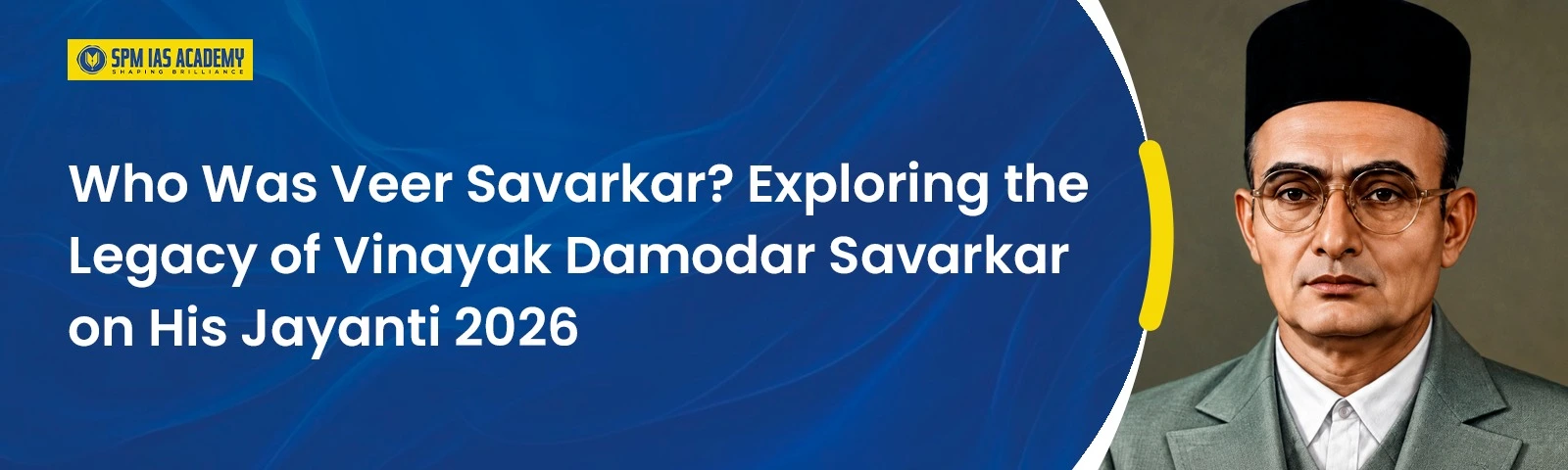
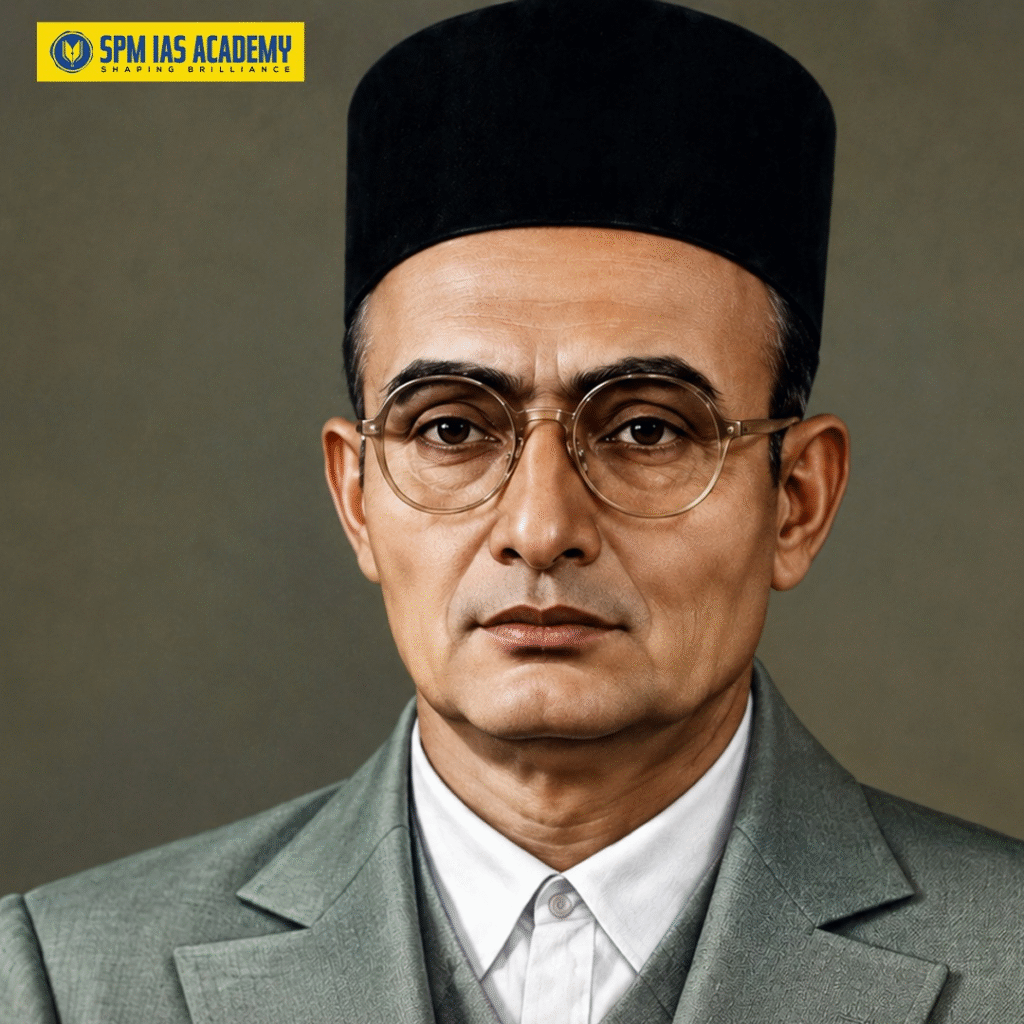
Every year on May 28, India remembers one of the most powerful and debated figures of its freedom struggle — Vinayak Damodar Savarkar, widely known as Veer Savarkar. He was born in 1883 in Bhagur, a small town near Nashik in Maharashtra. Savarkar was far more than just a freedom fighter. He was a revolutionary thinker, a fearless nationalist, a poet, a writer, and a social reformer whose ideas left a deep mark on India’s political and cultural history.
Remembering Savarkar is not only about celebrating his birth anniversary. It is also about understanding the intense journey of India’s freedom movement. Let’s understand about a time filled with sacrifice, courage, imprisonment, ideology, and debate. His life continues to spark conversations about nationalism, patriotism, and the vision of India that emerged during the struggle against British rule.
Early Life: The Birth of a Revolutionary
Vinayak was born into a Chitpavan Brahmin family and was the second among three brothers. His father, Damodar Savarkar, was a well-respected figure in Bhagur. But life tested him very early. When Vinayak was just nine years old, he lost his mother, Radhabai, to cholera. The tragedy could have broken a child—instead, it seemed to strengthen his determination. Further, it shaped the fearless personality he would later become.
Even as a young boy, signs of leadership and rebellion were visible in him. At the age of eleven, he formed a small group of friends called the “Vanarsena” or Monkey Brigade—a childhood version of the revolutionary networks he would later lead. He grew up reading stories of Maratha warriors, Hindu resistance, and powerful nationalist writings. Among the thinkers who deeply influenced him was Italian revolutionary Giuseppe Mazzini, whose passionate ideas about freedom and nationhood ignited a fierce sense of patriotism in young Vinayak’s mind.
“Shall I be born again in this country so as to serve my motherland? If God gives me another birth, I shall be born in Bharat and shall serve Bharat till my last breath.”
— Vinayak Damodar Savarkar
When communal tensions broke out in Bhagur in 1899, Vinayak was just sixteen years old. Even at such a young age, he took the lead among local Hindu youths during the unrest. The incident showed Savarkar’s strong conviction early in life. He believed communities should stay united and organised. He also felt they must be ready to resist fear and oppression. Though history debates his ideas, his determination remains undeniable.
London and the Crucible of Abhinav Bharat
In 1906, Savarkar traveled to London on a scholarship to study law at Gray’s Inn. What was expected to be a journey toward a respectable legal career soon turned into something far more revolutionary. Instead of quietly adapting to British institutions, Savarkar transformed his stay in London into a center of anti-colonial activism and nationalist resistance.
At India House in London, he connected with some of the most passionate Indian revolutionaries of the time, including V.V.S. Aiyar, Madame Cama, and Har Dayal. Even before leaving India, he had founded the secret revolutionary organization Abhinav Bharat in Pune in 1904, and in London he expanded its influence internationally.
Savarkar immersed himself in revolutionary literature and political action. He translated Giuseppe Mazzini’s autobiography into Marathi to inspire Indian youth with ideas of nationalism and sacrifice. He was also linked to efforts that secretly sent weapons to Indian revolutionaries by hiding them inside books.
One of his most influential works was The History of the War of Indian Independence. In it, he called the 1857 uprising India’s First War of Independence. The British viewed the book as powerful and dangerous. It was banned even before publication
The Double Life Sentence: A Punishment Unprecedented
Savarkar’s revolutionary activities eventually drew the full attention of the British government. In 1910, British officials arrested him in London over allegations linked to the assassination of a British official by revolutionary Anant Kanhere. Soon after, they brought him back to India for trial under heavy security.
During the journey aboard the SS Morea, near the French port of Marseilles, Savarkar made a daring escape attempt that later became legendary. He jumped into the sea from the ship and swam toward the French shore, hoping to seek political asylum. For a brief moment, it seemed as though he might succeed. But he was soon captured again and brought back into British custody.
After returning to India, Savarkar faced trial, and the punishment was unprecedented. He was sentenced to two consecutive life terms of 25 years each, totaling 50 years, and was sent to the infamous Cellular Jail in Port Blair. It remains one of the harshest punishments given to any Indian freedom fighter under British rule.
INSIDE THE CELLULAR JAIL — KALA PANI
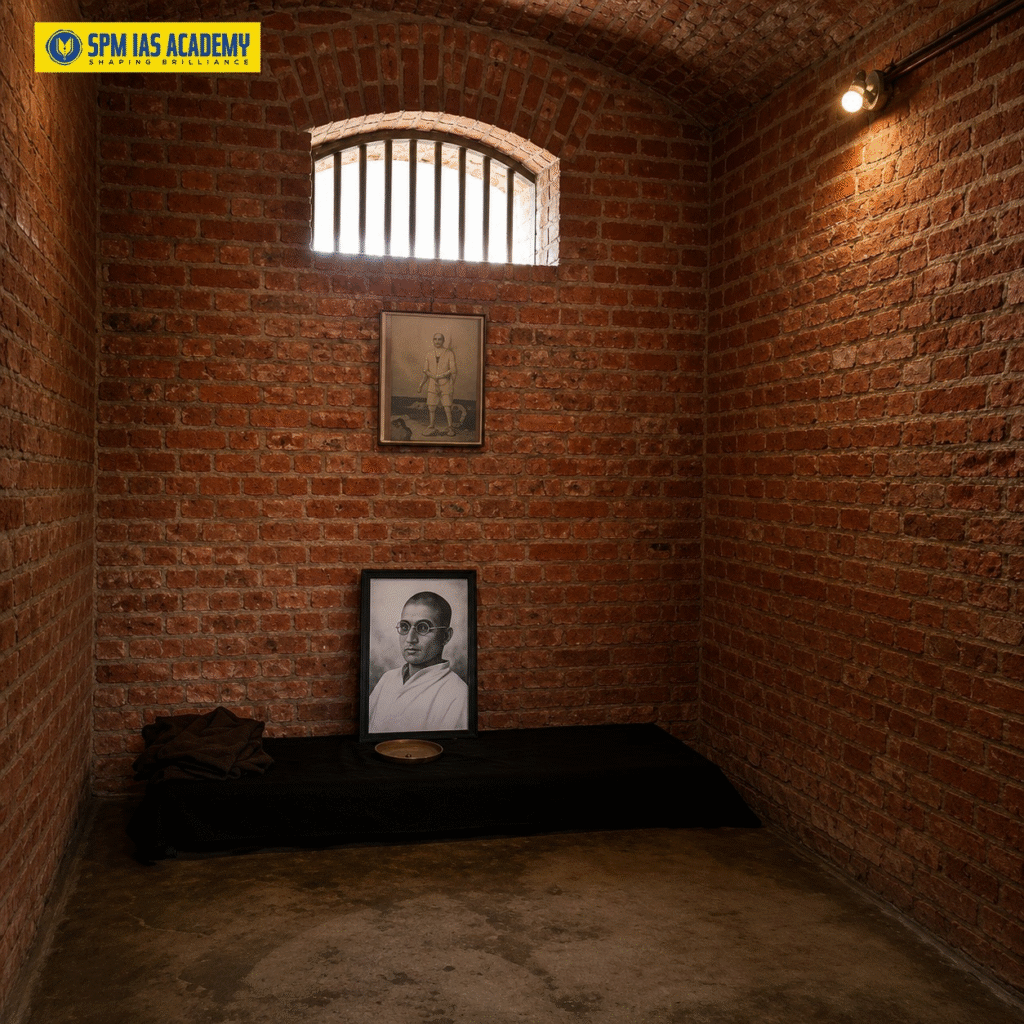
The British did not treat the Cellular Jail as merely a prison—they designed it as a machine to break human beings. The authorities isolated prisoners in individual cells, denied them communication, forced them to work in oil-pressing mills like oxen under the tropical sun, and whipped them for the smallest infractions. The sea surrounding the Andamans made escape virtually impossible. The British deliberately chose this location: they intended to send revolutionaries there to achieve psychological as well as physical annihilation
And yet, inside those walls, Savarkar wrote. Unable to obtain paper or pen, he composed poetry on the whitewashed walls of his cell using thorns and pebbles and memorised thousands of lines before anyone could wipe them away. He composed over ten thousand lines of Marathi poetry in this way and later reconstructed them from memory after his release. Among these works, he wrote the celebrated Kamala and the magnificent Saptarshi.
The Poet Who Wrote with Thorns
One of the less discussed sides of Savarkar’s personality was his extraordinary talent as a poet. Beyond politics and revolution, he possessed a deeply emotional and creative mind. His Marathi poetry carried themes of patriotism, sacrifice, courage, pain, and longing for the motherland. Filled with powerful imagery and emotion, his writings earned him recognition as one of the important literary voices of his time.
Among his most celebrated works is the poem ‘Ne Majasi Ne Parat Mathrubhumila’ (“Take Me Back to My Motherland”), written while he was being taken to the Andaman Cellular Jail. The poem beautifully captures the sorrow of exile and the intense longing to return home. In it, the vast ocean becomes more than just water — it turns into a painful symbol of separation between a patriot and the land he loved deeply.
“Ne majasi ne parat mathrubhumila, sagar prana takalatil ka?”
— Opening lines of Savarkar’s famous poem — written mid-voyage to Kala Pani
Savarkar was also a prolific prose writer who authored novels, plays, historical essays, and political works that reflected both his intellect and experiences. Among his most important writings is ‘Mazi Janmathep’ (“My Transportation for Life”), written after his release from prison, where he vividly described the brutal realities of the Cellular Jail. The work remains one of the most powerful autobiographical accounts in Indian literature for its honesty, clarity, and emotional depth.
A Life in Milestones: Timeline of Savarkar
| 1883 | Born on 28 May in Bhagur, Nashik District, Maharashtra |
| 1899 | Leads local Hindu youth during communal riots; early signs of activism |
| 1904 | Founds Abhinav Bharat Society (Young India Society) in Pune |
| 1906 | Sails to London on a Shivaji Scholarship; joins India House |
| 1908 | Translates Mazzini’s Autobiography into Marathi; writes revolutionary tracts |
| 1909 | Writes ‘The Indian War of Independence’ — banned before publication |
| 1910 | Arrested in London; dramatic escape attempt at Marseilles |
| 1911 | Sentenced to two consecutive life terms; transported to Cellular Jail, Andamans |
| 1921 | Transferred to Ratnagiri Jail, Maharashtra; continues writing |
| 1924 | Released under restrictions to Ratnagiri; begins social reform work |
| 1937 | Publishes ‘Hindutva’ and ‘Hindu Rashtra Darshan’; full restrictions lifted |
| 1942 | Opposes Quit India Movement; advocates Indian military participation in WWII |
| 1948 | Arrested following Gandhi assassination; acquitted in 1949 |
| 1966 | Passes away on 26 February through deliberate fasting (Prayopavesa) |
The Social Reformer the Textbooks Often Miss
One of the lesser-known parts of Savarkar’s legacy was his work as a social reformer, especially during his restricted stay in Ratnagiri from 1924 to 1937. During this time, he strongly spoke against caste discrimination and untouchability, which was considered a bold step in that period.
He organized inter-caste community meals called Saha-bhojan and supported temple entry for people from all castes at a time when many were still denied access because of untouchability. He personally campaigned against the idea that some people were “impure” and should be kept away from temples.
Savarkar also gave the slogan, “Jati bhedo na karo, jaatibhed bhedo”—meaning, “Do not create caste divisions; destroy caste divisions.” He openly criticized untouchability, superstition, and outdated social customs and believed society needed reform and equality.
He also encouraged Indians to trust science, technology, and logical thinking instead of blind beliefs. His support for rational thinking often brought him into disagreement with traditional and conservative sections of society.
“Rationalism is the greatest gift a man can offer to God, for God gave Man a brain — and to use it well is the highest form of worship.”
— Vinayak Damodar Savarkar
Hindutva: The Philosophy and Its Controversies
No discussion about Savarkar is complete without mentioning the term “Hindutva,” which he introduced and explained in 1923. In his writings, Savarkar described Hindutva not simply as a religion, but as a cultural and civilisational identity connected to the land of India. According to him, a Hindu was someone who saw India as both their Pitribhumi (Fatherland) and Punyabhumi (Holy Land).
This idea had a major impact on Indian politics and identity. By this definition, Hindus, Sikhs, Jains, and Buddhists were included within the idea of Hindutva, while Muslims and Christians were excluded because their holy lands were outside India, even if they were born in the country. Critics believe this created an exclusionary idea of Indian identity, while supporters argue that Savarkar was trying to build cultural and civilisational unity rather than making a purely religious argument.
What remains undeniable is that Hindutva became one of the most influential and debated ideas in modern Indian political history. Even today, Savarkar’s interpretation of nationalism and identity continues to spark strong discussions, making him a central figure in ongoing debates about India’s past, present, and future.
The Mercy Petitions: History’s Most Debated Documents
One of the most discussed and debated aspects of Savarkar’s life was the mercy petitions he submitted to the British authorities during his imprisonment in the Cellular Jail. Over the years, these petitions have been interpreted in different ways by historians, political thinkers, and the public, making them an important part of conversations surrounding his legacy.
Many view the petitions as a strategic step taken by Savarkar, believing that he wanted to continue contributing to India’s freedom movement outside prison rather than remain confined in the harsh conditions of the Andamans. Others see them differently, which is why the subject continues to spark discussion even today. The debate reflects the complexity of revolutionary politics during colonial rule, where decisions were often shaped by difficult and extraordinary circumstances.
Savarkar and Gandhi: Two Visions of India
The relationship between Savarkar and Gandhi remains one of the most significant ideological contrasts in India’s freedom movement. Both were educated in England, both were deeply devoted to India’s independence, and both left a lasting impact on the nation’s history. Yet, despite sharing the same larger goal of freedom, they held very different views on nationalism, resistance, society, and the path India should follow in shaping its future.
| Dimension | Savarkar | Gandhi |
| Method | Armed resistance & revolutionary action | Non-violence (Ahimsa) & civil disobedience |
| Religion in politics | Civilisational Hinduism as political identity | Religion as personal faith; inclusive pluralism |
| Caste | Attacked caste discrimination; advocated inter-dining | Supported varna system in early career; evolved later |
| Science & modernity | Enthusiastic moderniser; pro-technology | Critical of industrial modernity; preferred village life |
| Military service | Encouraged Indians to join British Army in WWII | Opposed unconditional military service to empire |
| Partition | Prophetically opposed partition; warned of consequences | Accepted partition as painful necessity for peace |
The Final Act: Prayopavesa
On 1 February 1966, Savarkar, then 82 years old and in declining health, made the decision to stop taking food and water, stating that he had fulfilled his purpose in life. He described this act as “Atmaarpan” or self-offering, drawing from the ancient Hindu concept of Prayopavesa, where a person voluntarily embraces death after completing their life’s duties and responsibilities.
Savarkar passed away on 26 February 1966. Even in his final days, he approached death with the same sense of conviction and personal philosophy that had shaped much of his life. In his final essay, ‘Atmahatya ki Atmaarpan?’ (“Suicide or Self-Offering?”), he explained his views on the decision with detailed philosophical reasoning.
“I have accomplished what I could. India is independent. I have no further work. It is better now to offer this body to the motherland.”
— Savarkar, shortly before his death (paraphrased from last writings)
Importance of Veer Savarkar’s Life for UPSC GS 1 and Ethics
Veer Savarkar’s life is important for UPSC GS Paper 1 as it helps understand India’s freedom struggle, revolutionary nationalism, colonial repression, and the role of ideological movements in modern Indian history. For the Ethics paper, his life offers examples of courage, resilience, patriotism, sacrifice, leadership, and commitment to a cause. At the same time, the debates around his ideas make him useful for discussing ethical dilemmas, ideological differences, and the complexities of nation-building.
Legacy: A Mirror Held Up to the Nation
The Legacy of Veer Savarkar
Few personalities in Indian history continue to inspire as much debate and discussion as Veer Savarkar. To many, he remains a fearless revolutionary who endured the harsh conditions of the Cellular Jail without losing his determination and spirit. Admirers remember him not only as a freedom fighter, but also as a poet, writer, social reformer, and political thinker whose ideas deeply influenced conversations around nationalism, social reform, and India’s future. His supporters often highlight his contributions against caste discrimination, his advocacy for scientific thinking, and his warnings about the challenges India could face during Partition and beyond.
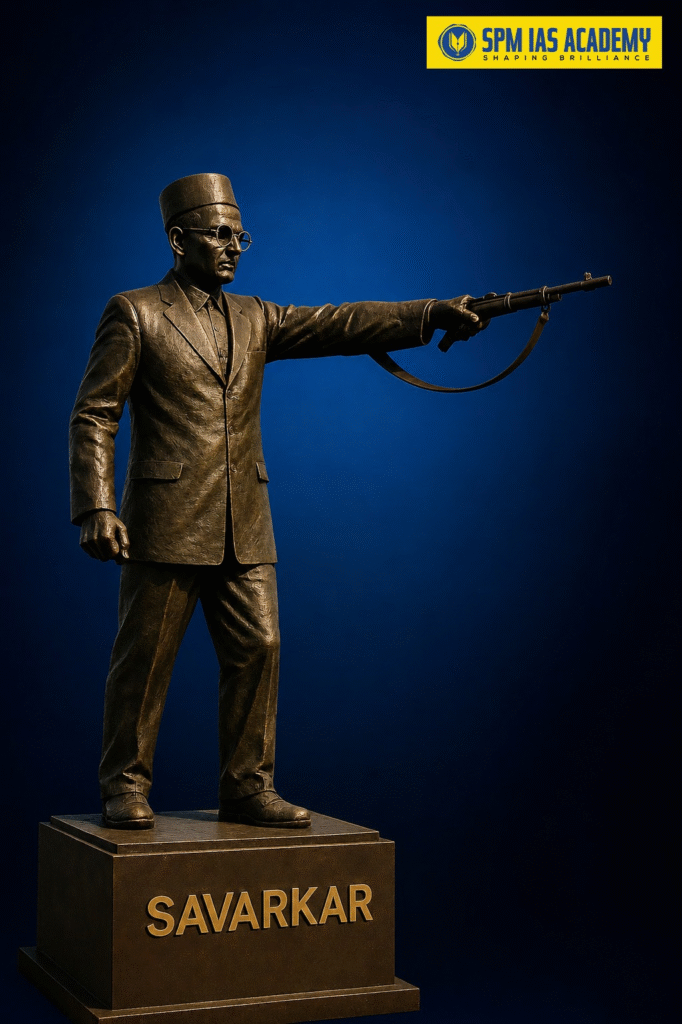
At the same time, Savarkar’s life and ideology continue to be viewed differently by many historians and political thinkers. Debates around Hindutva, his political beliefs, his criticism of Gandhi’s methods, and the mercy petitions written during his imprisonment remain important parts of how his legacy is discussed today. Yet, regardless of differing opinions, Savarkar continues to hold a powerful place in India’s historical and political imagination because of the scale of the questions he raised about nationhood, identity, freedom, and patriotism.
Conclusion
Savarkar Jayanti is not only a remembrance of a birth anniversary; it is also a moment to reflect on a life that continues to shape public debate even decades after his death. His journey — from revolutionary activism and imprisonment to literature, social reform, and political thought — remains one of the most complex chapters of India’s freedom movement.
Even today, India continues to discuss, reinterpret, and debate Savarkar’s ideas and legacy. Perhaps that is what makes him such an enduring figure in Indian history — not because everyone agrees about him, but because his life continues to provoke thought, conversation, and reflection across generations.
Also read :

Behind every article at SPM IAS Academy is a team of skilled content writers and subject experts committed to making preparation easier for aspirants. From answering common doubts to breaking down complex issues and current affairs, we create content that is accurate, easy to understand, and directly useful for UPSC, APSC, and other competitive exams.