
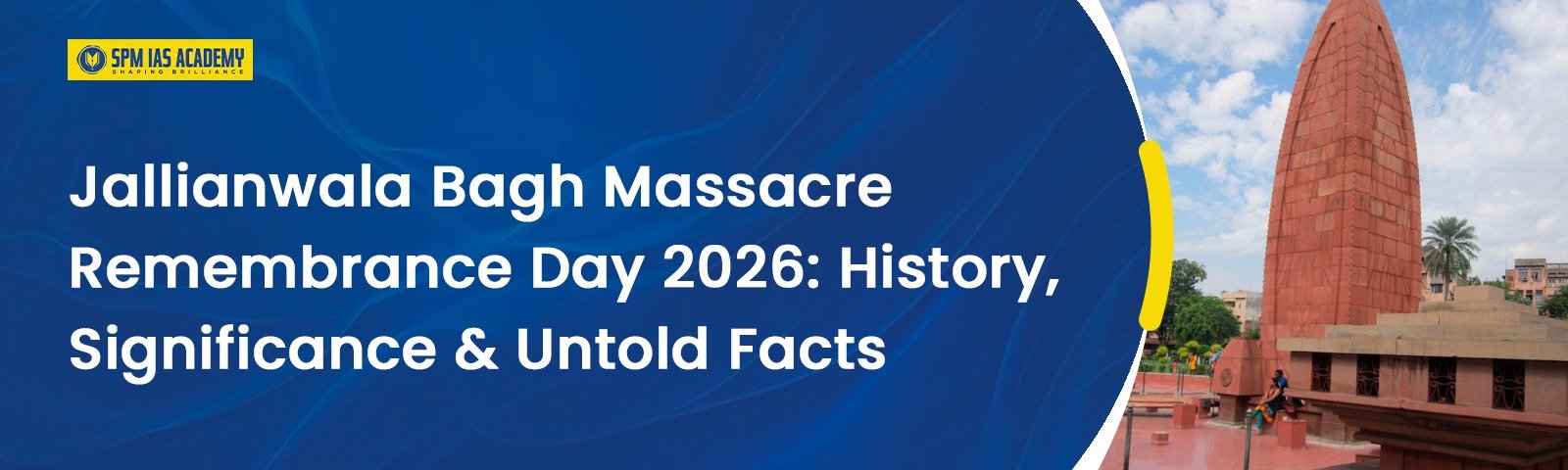
Jallianwala Bagh Massacre Remembrance Day is observed every year on April 13. On this date in 1919, British Indian Army troops opened fire on a large, peaceful gathering of unarmed men, women, and children at Jallianwala Bagh in Amritsar, Punjab. Hundreds of innocent lives were lost within minutes. The massacre shocked the world, galvanised India’s freedom movement, and left a permanent scar on the history of British colonial rule. In 2026, the world marks 107 years since this tragic event.
What Is Jallianwala Bagh Massacre Remembrance Day?
Jallianwala Bagh Massacre Remembrance Day, also known as Baisakhi Massacre Day, falls every year on April 13. On this day, people across India, particularly in Punjab, gather at the Jallianwala Bagh memorial in Amritsar to pay their respects to the victims. Candle-lighting ceremonies, prayer meetings, floral tributes, and cultural programmes mark the occasion.
The day serves as both a memorial and a reminder. It reminds present and future generations of the human cost of colonial oppression and the price that ordinary Indians paid for the country’s freedom. It also carries a message of resilience, because out of the horror of Jallianwala Bagh rose one of the most powerful surges of nationalist feeling that India had ever seen.
The Historical Background: India Under British Rule in 1919
To understand the Jallianwala Bagh massacre, one must first understand the political scenario of India in 1919. The First World War had just ended. India had contributed more than one million soldiers to the British war effort, and Indians broadly expected political reforms and greater self-governance in return. Instead, the British government introduced the Rowlatt Act in March 1919.
The Rowlatt Act: The Spark That Lit the Fire
The Rowlatt Act, officially known as the Anarchical and Revolutionary Crimes Act of 1919, gave the British colonial government sweeping powers. Under this law, authorities could arrest and imprison any Indian suspected of sedition without trial and without any right to appeal. The Act was widely seen as a direct attack on civil liberties and a betrayal of India’s wartime loyalty.
Mahatma Gandhi and other nationalist leaders called the Rowlatt Act a black law and organised a nationwide hartal, or general strike, on April 6, 1919. Protests erupted across the country. In Amritsar, tensions ran particularly high. British authorities responded harshly, arresting local leaders and placing the city under military control.
Amritsar in Early April 1919: A City on Edge
Following the arrest of prominent local leaders Dr. Saifuddin Kitchlew and Dr. Satyapal on April 10, 1919, angry crowds gathered in Amritsar. Violence broke out in some parts of the city. The British placed Brigadier General Reginald Dyer in command of the Amritsar garrison. He imposed a ban on all public gatherings and warned that any assembly of people would be treated as an act of rebellion.
What Happened at Jallianwala Bagh on April 13, 1919?
April 13, 1919 was Baisakhi, one of the most important harvest festivals in Punjab and a sacred day for the Sikh community. Thousands of people had come to Amritsar from surrounding villages to celebrate the festival, visit the Golden Temple, and attend a public gathering at Jallianwala Bagh, a walled public garden in the heart of the city.
Many in the crowd were simply pilgrims and festival-goers who had no knowledge of the British ban on public meetings. The gathering included men, women, children, and elderly people. Estimates of the crowd size range from ten thousand to twenty thousand people. The event was peaceful. There was no evidence of violence or threat.
General Dyer Orders the Shooting
At around 5:30 in the afternoon, Brigadier General Reginald Dyer arrived at Jallianwala Bagh with approximately ninety soldiers, including Gurkha and Baloch troops. Without any warning, without ordering the crowd to disperse, and without giving anyone time to leave, Dyer commanded his troops to open fire directly into the densest parts of the crowd.
The soldiers fired approximately 1,650 rounds of ammunition over a period of about ten minutes. Jallianwala Bagh had very few exits. The main entrance was blocked by Dyer’s troops. People desperately tried to escape by climbing the walls or jumping into a well located inside the garden. Many people, including children, drowned in the well while trying to flee the bullets.
The shooting stopped only when the soldiers ran out of ammunition. Dyer then ordered his troops to leave without providing any medical assistance to the wounded. The dead and injured were left where they had fallen. A curfew prevented families from recovering their loved ones for many hours.
The Death Toll: A Number Shrouded in Controversy
The official British inquiry, the Hunter Commission, later reported 379 deaths and over 1,200 wounded. However, Indian National Congress investigations estimated that more than 1,000 people were killed. Many historians and scholars believe the actual death toll was significantly higher than what British authorities ever acknowledged. The true number of lives lost that day may never be known with certainty.
The Jallianwala Bagh Site: What Remains Today
Today, Jallianwala Bagh is a national memorial managed by the Jallianwala Bagh National Memorial Trust. The site has been carefully preserved to honour the memory of those who died there. Visitors can still see the bullet marks on the walls of the garden, which stand as silent witnesses to the horror of April 13, 1919.
The memorial includes the Martyrs’ Well, where many people drowned while trying to escape the firing. A flame of liberty burns continuously at the site. A gallery and museum display historical photographs, documents, and artefacts that tell the story of the massacre and its aftermath. Millions of visitors, including heads of state, come to Jallianwala Bagh every year to pay their respects.
The Martyrs’ Well: A Haunting Reminder
The well inside Jallianwala Bagh is perhaps the most haunting part of the memorial. On the day of the massacre, terrified men and women jumped into the well to escape the bullets. Many did not survive. The well was later sealed, and it now stands as a powerful symbol of the desperation and terror that gripped the crowd on that fateful afternoon.
The Impact of the Jallianwala Bagh Massacre on India’s Freedom Movement
The Jallianwala Bagh massacre had a profound and lasting impact on the Indian independence movement. It changed the nature and scale of resistance against British colonial rule in ways that shaped the next three decades of Indian history.
Students preparing modern Indian history for civil services can strengthen their concepts through expert-guided UPSC coaching in Assam.
Rabindranath Tagore Renounces His Knighthood
One of the most powerful immediate responses to the massacre came from Rabindranath Tagore, India’s first Nobel laureate. Deeply shaken and outraged by the killings, Tagore wrote a letter to the British Viceroy and renounced his knighthood. He described the massacre as without parallel in the history of civilised governments. His act of protest resonated deeply across India and around the world.
Gandhi and the Non-Cooperation Movement
For Mahatma Gandhi, Jallianwala Bagh was a turning point. Until this event, Gandhi had maintained some degree of faith in the possibility of reform within the British colonial framework. After the massacre and the government’s failure to adequately punish those responsible, Gandhi concluded that British rule was morally incompatible with Indian dignity.
The massacre therefore directly contributed to Gandhi’s launch of the Non-Cooperation Movement in 1920. Millions of Indians withdrew from British institutions, returned honours, and boycotted British goods. The mass mobilisation that followed Jallianwala Bagh transformed the Indian National Congress from an elite political organisation into a true mass movement.
Bhagat Singh: From Witness to Revolutionary
A young boy named Bhagat Singh was twelve years old when the massacre took place. He reportedly walked miles to Jallianwala Bagh after hearing about the killings and collected soil soaked in the blood of the martyrs. That experience marked him for life. Bhagat Singh grew up to become one of India’s most celebrated revolutionary freedom fighters, and the memory of Jallianwala Bagh fuelled his burning desire to end British rule.
The Hunter Commission and General Dyer’s Fate
Following the massacre, the British government faced enormous pressure both in India and in Britain to hold an inquiry. The Hunter Commission, formally known as the Disorders Inquiry Committee, was set up in October 1919 to investigate the events in Punjab.
The Commission concluded that Dyer had made a grave mistake. However, his punishment was remarkably mild. He was removed from his command and retired from the army, but he faced no criminal charges and no trial. Back in Britain, a section of the British public treated Dyer as a hero who had protected the empire. A fund was raised in his honour, collecting a substantial sum of money. This reaction caused enormous outrage in India and further hardened nationalist sentiment.
Udham Singh: The Long Shadow of Revenge
The failure of British justice had consequences that stretched across decades and continents. Udham Singh, a survivor of the Jallianwala Bagh massacre, carried the memory of that day with him for over twenty years. On March 13, 1940, in London, Udham Singh shot and killed Michael O’Dwyer, the former Lieutenant Governor of Punjab who had approved Dyer’s actions. Singh was arrested, tried, and hanged in July 1940. He is remembered in India as Shaheed-i-Azam, or the Great Martyr, a symbol of the depth of grief and anger that the massacre had created.
British Apologies and the Ongoing Demand for Justice
The question of a formal British apology for the Jallianwala Bagh massacre has remained a sensitive and debated issue for over a century. Several British leaders have expressed regret, but India and many historians have argued that these statements fall short of a full, unambiguous apology.
In 1997, Queen Elizabeth II visited Jallianwala Bagh and observed a moment of silence. Prime Minister Tony Blair, who accompanied her, described the event as a great tragedy. In 2019, on the centenary of the massacre, British Prime Minister Theresa May expressed deep regret in the House of Commons, calling it a shameful scar on British Indian history. However, she stopped short of a formal apology.
Many descendants of the victims and Indian political leaders continue to call for a full and unconditional apology from the British government. They argue that true reconciliation requires an honest acknowledgement of the crime, not merely an expression of sorrow.
The Jallianwala Bagh National Memorial: A Place of Pilgrimage and Reflection
The Indian Parliament passed the Jallianwala Bagh National Memorial Act in 1951. The act formally established the Jallianwala Bagh National Memorial Trust to maintain and develop the site. The memorial was inaugurated by President Rajendra Prasad on April 13, 1961, exactly 42 years after the massacre.
In recent years, the memorial complex has been expanded and modernised. A sound and light show now runs in the evenings, telling the story of the massacre and the freedom struggle. A gallery of paintings and sculptures depicts key figures and events from India’s independence movement. The eternal flame, or jyoti, burns at the memorial as a symbol of the undying spirit of those who sacrificed their lives.
Lessons from Jallianwala Bagh for the Modern World
The Jallianwala Bagh massacre is not just a chapter in Indian history. It holds lessons that remain relevant to the entire world in 2026 and beyond.
The Danger of Unchecked Power
Jallianwala Bagh shows what happens when military authority operates without accountability. General Dyer acted unilaterally, without orders and without legal justification. The massacre is a stark reminder of why democratic oversight, the rule of law, and respect for human rights must always constrain military and state power.
The Power of Peaceful Protest
The crowd at Jallianwala Bagh on April 13, 1919 was peaceful. They gathered to listen, to celebrate, and to speak out against unjust laws. Their peaceful presence was met with deadly violence. Yet the courage of those who continued to protest non-violently after the massacre eventually achieved what no armed rebellion could have alone. India won its independence in 1947, and the spirit of Jallianwala Bagh was one of the forces that made it possible.
The Importance of Remembrance
Societies that forget their darkest moments risk repeating them. Remembrance days like April 13 ensure that future generations understand the cost of oppression, the value of freedom, and the importance of standing up for human dignity. History must be taught honestly, including its most painful chapters, so that the mistakes of the past are never made again.
Historical events like Jallianwala Bagh frequently appear in UPSC history topics and modern current affairs discussions.
Conclusion:
As India and the world observe Jallianwala Bagh Massacre Remembrance Day on April 13, 2026, the events of 1919 feel as vivid and important as ever. The massacre was not simply a historical incident. It was a turning point that exposed the brutality of colonial rule, united a divided nation, and set India firmly on the path to independence.
The bullet marks on the walls of Jallianwala Bagh, the silent Martyrs’ Well, and the eternal flame that burns at the memorial all tell a story that must never be silenced. Every April 13, Indians reaffirm their commitment to freedom, justice, and human dignity. They remember not only those who died, but also those who survived and went on to fight for a free India.
The Jallianwala Bagh massacre teaches the world that peaceful people must never be silenced by violence, that unchecked power is always dangerous, and that the memory of injustice is itself a form of resistance. In 2026, as we mark 107 years since that dark Baisakhi afternoon, let us honour the martyrs of Jallianwala Bagh not only with flowers and prayers, but with a renewed dedication to the values of democracy, freedom, and human rights for which they unknowingly gave their lives.
Source:
Frequently Asked Questions:
The Jallianwala Bagh massacre took place on April 13, 1919, which was the day of Baisakhi, a major Punjabi harvest festival. In 2026, India observes the 107th remembrance of this tragic event.
Brigadier General Reginald Dyer of the British Indian Army ordered the troops to open fire on the crowd without any prior warning. He later justified his actions before the Hunter Commission, stating that he intended to produce a moral and wide effect across Punjab.
British official records reported 379 deaths. However, the Indian National Congress estimated over 1,000 deaths. Many historians believe the actual figure was considerably higher than the official British count. Additionally, more than 1,200 people were wounded.
Jallianwala Bagh is a public garden located in Amritsar, Punjab, India. It sits very close to the Harmandir Sahib, also known as the Golden Temple, which is the holiest shrine in Sikhism. Today, the site is a national memorial and a major historical landmark.
Britain has expressed regret but has not issued a full, formal apology. In 2019, Prime Minister Theresa May called the massacre a shameful scar on British Indian history during the centenary commemorations. However, many victims’ families, Indian politicians, and historians continue to demand a complete and unconditional apology from the British government.
The Rowlatt Act of 1919 allowed British authorities to arrest and detain Indians without trial. Widespread protests against this law brought thousands of people onto the streets across India. In Amritsar, the arrest of local leaders triggered unrest that ultimately led to the gathering at Jallianwala Bagh on April 13 and the subsequent massacre.

Behind every article at SPM IAS Academy is a team of skilled content writers and subject experts committed to making preparation easier for aspirants. From answering common doubts to breaking down complex issues and current affairs, we create content that is accurate, easy to understand, and directly useful for UPSC, APSC, and other competitive exams.