
When people talk about peaceful evening spots in Nagpur, Futala Lake Nagpur often comes to mind. The calm water, cool breeze, and sunset views make this place special. Families, students, and tourists visit the lake to relax after a busy day.
The lake is also known for its food stalls and lively evening atmosphere. However, ongoing repair and cleaning work may affect the visitor experience. Therefore, checking the latest local update before visiting is always a good idea.
Why Is Futala Lake Nagpur Famous?
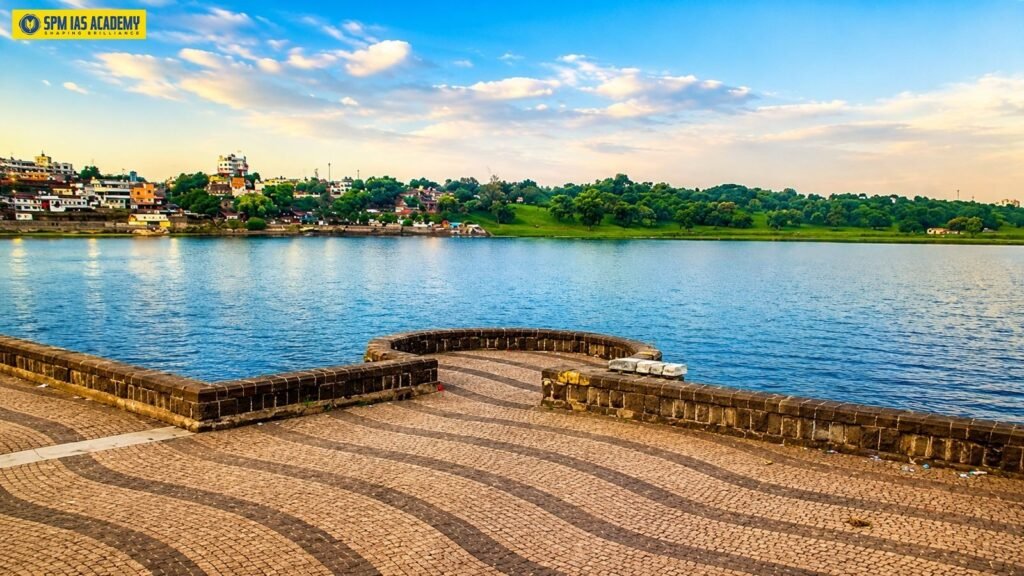
Futala Lake Nagpur, is one of the city’s best-known landmarks. It covers an area of around 60 acres. Forest and green spaces surround the lake on three sides. A paved lakeside area lies on the remaining side.
The lake becomes more active in the evening. Visitors come here to walk, watch the sunset or enjoy snacks with friends. The colourful lights around the lake also add to its charm.
Futala Lake History
Futala Lake’s history goes back more than 200 years. The Bhosle rulers of Nagpur built the lake. It was originally created to supply water to nearby areas.
Over time, poor maintenance diminished the lake’s beauty. In 2003, the authorities began a major beautification project. They removed waste, repaired the boundary wall, and improved the walking path. They also added benches, lights, parking areas, and fountains.
As a result, Futala Lake Nagpur, slowly became a popular public space. Today, it holds both historical and recreational value for the city.
Where Is the Lake Located?
The Futala Lake location is in Vayusena Nagar, in the western part of Nagpur, Maharashtra. It is close to Telankhedi Hanuman Temple and Seminary Hills.
Visitors can reach the lake by car, taxi, private car, or two-wheeler. Public transport is also available from several parts of Nagpur. However, parking can become difficult on weekends. So, try to arrive before sunset.
Best Time to Visit Futala Lake Nagpur
The best months to visit are from October to February. During this period, the weather remains pleasant. An evening visit is usually the best choice because the air feels cooler and the sunset looks beautiful.
You can also visit early in the morning for a quiet walk. However, if you enjoy street food and a livelier atmosphere, plan your visit after 5:00 PM.
Futala Lake UPSC Relevance: Why Is This Lake Important?
Prelims: History, Location and Environmental Laws
- Location: Futala Lake is a man-made waterbody located in Nagpur, Maharashtra.
- Historical background: The Bhosle rulers constructed the lake more than 200 years ago, mainly to supply water to nearby areas.
- Wetland status: In 2025, the Supreme Court upheld the finding that Futala Lake does not meet the legal definition of a wetland under the Wetlands (Conservation and Management) Rules, 2017.
GS Paper I: Urbanisation and Historical Heritage
- Urbanisation: Futala Lake can be a good example to write as an example in Urbanisation questions. It shows how rapid urban growth can place pressure on traditional waterbodies through construction, pollution, waste generation and increased human activity.
- Historical heritage: Since the lake dates back to the period of the Bhosle rulers, its conservation is also connected with the protection of Nagpur’s local history.
- Useful Mains example: You can mention Futala Lake while answering questions about urbanisation, heritage conservation and the decline of traditional water systems.
GS Paper III: Environment and Sustainable Development
- Water pollution: Untreated sewage, plastic waste, food wrappers and other pollutants can reduce the lake’s water quality.
- Eutrophication: Excess nutrients in the water may encourage the rapid growth of algae and aquatic weeds. Consequently, oxygen levels may fall and aquatic life may suffer.
- Sustainable cities: Futala Lake can be used as an example of why growing cities must protect their waterbodies while building new infrastructure.
What Is Special About the Musical Fountain?
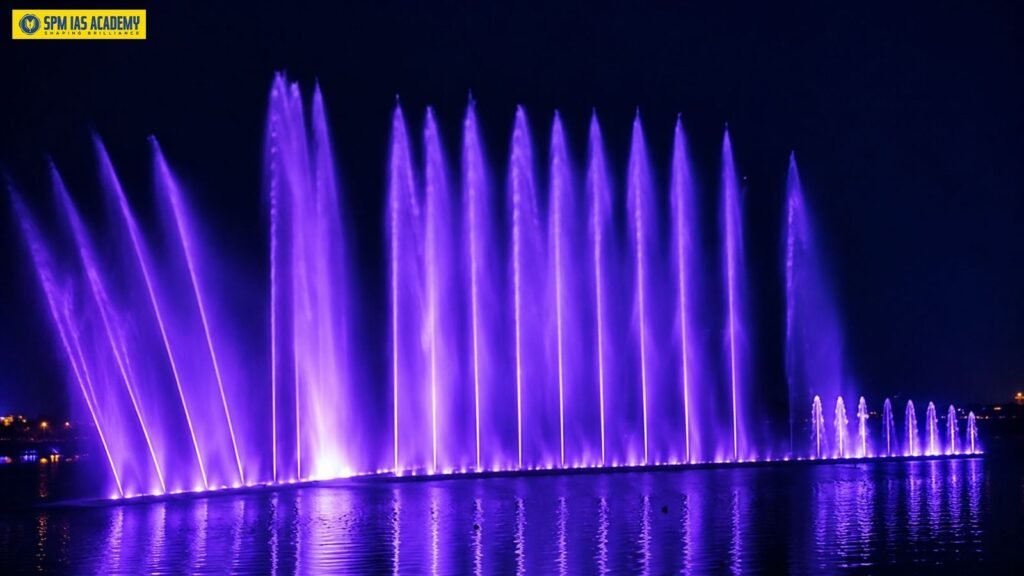
The musical fountain is one of the most discussed attractions at Futala Lake Nagpur. The project combines moving water jets, LED lights, music, and visual effects. A large viewing gallery has also been developed near the lake.
However, the project has faced legal, environmental, and technical delays. Repair work continued during 2026, and the authorities tested parts of the lighting system. The Independence Day display on August 15, 2026, was a technical preview rather than a public fountain show. So, visitors should not plan their entire trip around the fountain unless an official public opening has been announced.
Things to Do at Futala Lake Nagpur
A visit does not have to be limited to the fountain. You can:
- Watch the sunset over the water.
- Walk along the lakeside path.
- Try local snacks from nearby food stalls.
- Take photographs with friends and family.
- Visit the nearby Telankhedi Hanuman Temple.
- Explore Seminary Hills and other nearby attractions.
Even a simple lakeside walk can feel refreshing. Most visitors can spend around one hour here comfortably.
.
Conclusion
Futala Lake Nagpur , offers history, open views, and a relaxed city atmosphere. It may not always provide a working fountain show, but the lake remains a familiar evening spot for local people. If you enjoy sunsets, casual walks, and local food, Futala Lake Nagpur, is worth adding to your travel plan. Just check current conditions before leaving, especially if you want to see the musical fountain. A little planning will help you enjoy a smoother and more pleasant visit.
Frequently Asked Questions
Q1. Why is Futala Lake important for UPSC preparation?
Futala Lake is useful for UPSC preparation because it connects history, urbanisation, environmental law and sustainable development. Aspirants can use it as a local case study in GS Papers I and III, particularly for questions on urban waterbodies, heritage conservation, pollution and responsible development planning.
Q2. What should UPSC aspirants remember about Futala Lake for Prelims?
UPSC aspirants should remember that Futala Lake is a man-made waterbody in Nagpur, Maharashtra, built by the Bhosle rulers more than 200 years ago. In 2025, the Supreme Court upheld that it does not meet the legal definition of a wetland under the Wetlands Rules, 2017.
READ MORE

Behind every article at SPM IAS Academy is a team of skilled content writers and subject experts committed to making preparation easier for aspirants. From answering common doubts to breaking down complex issues and current affairs, we create content that is accurate, easy to understand, and directly useful for UPSC, APSC, and other competitive exams.