There have been rapid changes in digital adoption across India. More and more small businesses are establishing their online presence, making competition increasingly intense across almost every industry. Just as businesses must adapt to changing market trends, aspirants preparing with the best APSC online coaching in Assam benefit from updated study material, expert guidance, and current affairs coverage to stay ahead in the highly competitive APSC examination.
| Rank | Island | Area (km²) | Area (sq mi) | Country/Countries |
| 1 | Greenland | 2,130,800 | 822,700 | Denmark—autonomous territory of Greenland |
| 2 | New Guinea | 785,753 | 303,381 | Indonesia and Papua New Guinea |
| 3 | Borneo | 748,168 | 288,869 | Indonesia, Malaysia and Brunei |
| 4 | Madagascar | 587,041 | 226,658 | Madagascar |
| 5 | Baffin Island | 507,451 | 195,928 | Canada |
| 6 | Sumatra | 443,065 | 171,068 | Indonesia |
| 7 | Honshu | 227,938 | 88,007 | Japan |
| 8 | Great Britain | 218,634 | 84,415 | United Kingdom |
| 9 | Victoria Island | 217,291 | 83,897 | Canada |
| 10 | Ellesmere Island | 196,236 | 75,767 | Canada |
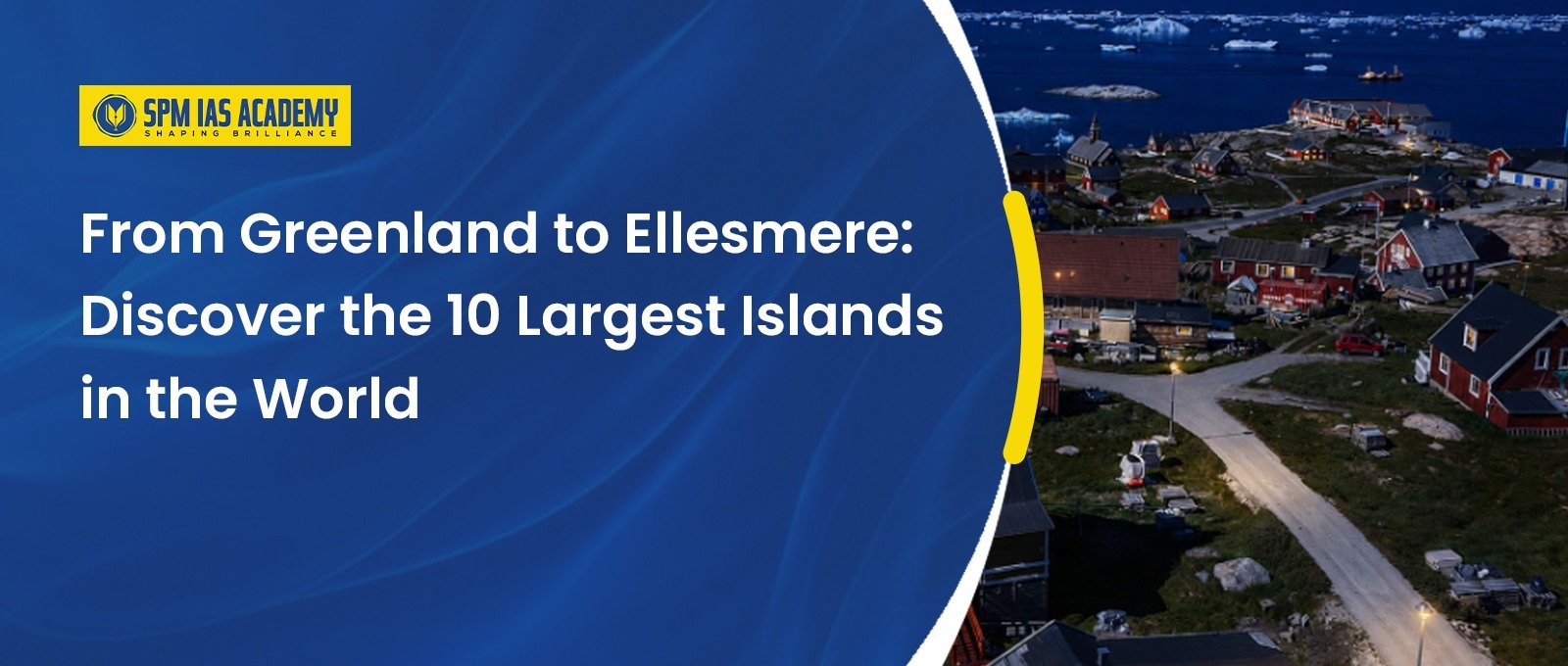
Greenland – The Largest Island in the World
- Geographically, it lies between the Arctic Ocean and the North Atlantic Ocean, northeast of Canada. Although it is geographically part of North America, Greenland maintains strong political and historical ties with Europe
- Politically, Greenland is an Autonomous Territory of the Kingdom of Denmark. It manages most of the domestic functions while Denmark maintains control over key areas like Defense and foreign policy.
- Among the largest islands in the world, Greenland is especially remarkable because a vast ice sheet covers most of its surface, giving the island its spectacular landscape of glaciers, icebergs, mountains, and deep fjords.
- Despite its enormous size, Greenland has a very small and widely dispersed population. Most settlements are located along the ice-free coastline, particularly on the western side
- Moreover, Nuuk is the capital of Greenland and also happens to be the largest city in Greenland, an important administrative and economic center
New Guinea- The Second Largest Island In The World
- To begin with, New Guinea is the second-largest island in the world, covering approximately 785,753 square kilometres. It is located in the southwestern Pacific Ocean, just north of Australia.
- Geographically, it is a part of a region known as Malenesia. Its landscape is wonderfully diverse, featuring some of the world’s most towering mountains and dense tropical forest.
- Politically, New Guinea is divided between two countries. The western half belongs to Indonesia, while the eastern half forms the mainland of the independent country of Papua New Guinea.
- Interestingly, New Guinea is home to the highest mountains found on any island in the world. Puncak Jaya, located in the Indonesian part of the island, rises to approximately 4,884 metres above sea level, making it the highest island peak on Earth. This geographical fact is important for competitive examinations, and students enrolled in an apsc course online should remember it for questions related to World Geography, Physical Geography, and important geographical landmarks in UPSC and APSC examinations.
- Moreover, New Guinea is one of the most biologically diverse places among the largest islands in the world. Its forests shelter remarkable wildlife, including birds-of-paradise, tree kangaroos, cassowaries and many species found nowhere else
Borneo – The Largest Island in Asia
- To begin with, Borneo is the third-largest island in the world. It covers an area of approximately 748,168 square kilometres.
- Geographically, it is located in Southeast Asia’s Malay Archipelago. Moreover, it is surrounded by the South China Sea, Sulu Sea, Celebes Sea and Java Sea.
- Interestingly, Borneo is politically divided among three countries. Indonesia controls the largest portion, known as Kalimantan, while Malaysia administers Sabah and Sarawak in the north. The small nation of Brunei is also situated along the island’s northern coast.
- Moreover, Borneo is famous for its ancient tropical rainforest, some of which are among the World’s Oldest.
- Further, it is also home to some of World’s Oldest tribe, such as the Dayak People.
Madagascar
- To start with, Madagascar is the world’s fourth-largest Island as well as the largest on the African Continent
- Geographically, it covers an area of approximately 587,041 square kilometres and lies on the Indian Ocean off the southeastern coast of mainland Africa.
- Politically, Madagascar is an Island and an Independent Country, Antananarivo serving as its capital and largest city.
- Among the largest islands in the world, Madagascar is globally famous for its unparalleled biodiversity and distinctive wildlife, with over 90% of the diversity found nowhere in the World. Moreover, the distinct primate Lemur is found only in Madagascar.
- Further, it hosts towering Boabab trees, spiny forests, tropical rainforests, and dry deciduous woodlands. The famous Avenue of the Baobabs has become one of the country’s most recognisable landscapes.
Baffin Island- Canada’s Largest Island
- To begin with, Baffin Island is the fifth-largest island in the world and the largest island in Canada. It covers approximately 507,451 square kilometres, making it larger than many countries.
- Geographically, the island lies in the Canadian territory of Nunavut, within the Arctic Archipelago. It is positioned between mainland Canada and Greenland, while Baffin Bay and Davis Strait border its eastern side.
- Despite its enormous size, Baffin Island has a small and widely scattered population. Most residents live in coastal communities because the island’s interior is mountainous, icy and difficult to access
- Most importantly, the island has been home to Inuit communities for thousands of years. Their culture, language and traditional knowledge remain deeply connected to the Arctic landscape, wildlife and changing seasons.
- At the same time, Iqaluit, located on the island’s southern coast, serves as the capital of Nunavut. It is also the island’s largest settlement and an important centre for administration, transport and Inuit culture
Sumatra – One of Indonesia’s Largest Islands
- To begin with, Sumatra is the sixth-largest island in the world and one of Indonesia’s largest islands. It covers approximately 443,065 square kilometres.
- Geographically, the Island is located in Western Indonesia, near the Malay Peninsula. It is known for its mountains, tropical rainforests, active volcanoes, and beautiful lakes.
- Moreover, the enormous Volcanic Lake, Lake Toba, is one of the major natural attractions.
- Culturally, it hosts communities such as Acehnese, Batak, Minangkabau, and Malay peoples. Each community has its own traditions, cuisine and architectural styles.
- Economically, Sumatra is known for its products such as coffee, rubber, and palm oil. Agriculture and Natural resources support many livelihoods in the region
Honshu – The Largest Island of Japan
- To begin with, Honshu is the largest island in Japan and the seventh-largest island in the world. It covers approximately 227,938 square kilometres.
- Geographically, Honshu lies between Hokkaido in the north and Shikoku and Kyushu in the south. Its landscape includes mountains, forests, fertile plains and a long coastline.
- Most importantly, Honshu is Japan’s main political, economic and cultural centre. Major cities such as Tokyo, Kyoto, Osaka, Hiroshima, Yokohama and Nagoya are located on the island.
- In addition, Honshu is home to Mount Fuji, Japan’s highest mountain and one of the country’s most recognisable landmarks. Its snow-covered peak holds deep cultural and spiritual significance
- Economically, Honshu contains Japan’s largest industrial and commercial regions. Manufacturing, technology, finance, trade and tourism are among its major economic activities.
Great Britain – The Largest Island in Europe
- To begin with, Great Britain is the eighth-largest island in the world and the largest Island in Europe, with an area of approximately 218,634 Square km.
- Politically, it is composed of three countries: England, Scotland, and Wales. Together with Northern Ireland, they form the United Kingdom.
- Geographically, Great Britain features a varied landscape—from the mountains and lochs of Scotland to the rolling countryside of England and the rugged valleys and coastline of Wales
- Moreover, the island has played a significant role in World History, particularly in Politics, industry, and Science. Major cities include London, Edinburgh, Cardiff, Birmingham, and Manchester
- Overall, Great Britain combines centuries of history with modern cities, celebrated landmarks, and striking natural scenery, making it one of the most recognisable among the largest islands in the world
Victoria- One of Canada’s Largest Arctic Islands
- To begin with, Victoria Island is the ninth-largest island in the world and is the second-largest in Canada after Baffin Island
- Geographically, it forms part of the Canadian Arctic Archipelago and is divided between the territories of Nunavut and the Northwest Territories.
- Despite its vast size, Victoria Island has a very small population. Its main settlements are Cambridge Bay and Ulukhaktok, where Inuit culture continues to shape community life.
- Naturally, the island is characterised by Arctic tundra, rocky coastlines, lakes and long, cold winters. It also provides habitats for wildlife such as caribou, Arctic foxes, polar bears and migratory birds.
- Overall, Victoria Island stands out for its immense Arctic wilderness, remote communities and peaceful landscapes, making it a remarkable entry among the largest islands in the world.
Ellesmere Island – A Remote Arctic Wilderness
- To begin with, Ellesmere Island is the tenth-largest island in the world, covering approximately 196,236 square kilometres. It is also Canada’s third-largest island.
- Geographically, it lies in Nunavut within the Canadian Arctic Archipelago, close to Greenland.
- Despite its huge size, Ellesmere Island has very few residents. Grise Fiord, its main civilian settlement, is a small Inuit community shaped by Arctic traditions and conditions.
- Moreover, the island supports cold-adapted wildlife such as muskoxen, Arctic hares, Arctic wolves, polar bears and migratory birds.
- Finally, Ellesmere Island is home to Quttinirpaaq National Park, one of the world’s northernmost national parks. Its frozen landscapes and remarkable isolation bring our exploration of the largest islands in the world to a fitting conclusion.
Conclusion
In conclusion, the largest islands in the world are remarkable not only for their immense size but also for their diverse landscapes, wildlife and cultures. From Greenland’s frozen wilderness to Borneo’s ancient rainforests, each island has a unique identity. Moreover, these islands support valuable ecosystems and communities. Therefore, protecting their natural and cultural heritage is essential. Ultimately, they remind us of the extraordinary geographical diversity and beauty found across our planet.
Frequently Asked Questions
Q1. Which is the largest island in the world?
Greenland is the largest island in the world, covering approximately 2.13 million square kilometres. Located between the Arctic and Atlantic oceans, it is an autonomous territory within the Kingdom of Denmark. Most of its surface is covered by a massive ice sheet, while settlements are concentrated along the coastline.
Q2. Why is Australia not considered the world’s largest island?
Although Australia is surrounded by water, geographers generally classify it as a continent rather than an island. It has its own continental landmass and tectonic plate. Therefore, Australia is excluded from standard island rankings, allowing Greenland to be recognised as the largest island in the world.

Behind every article at SPM IAS Academy is a team of skilled content writers and subject experts committed to making preparation easier for aspirants. From answering common doubts to breaking down complex issues and current affairs, we create content that is accurate, easy to understand, and directly useful for UPSC, APSC, and other competitive exams.