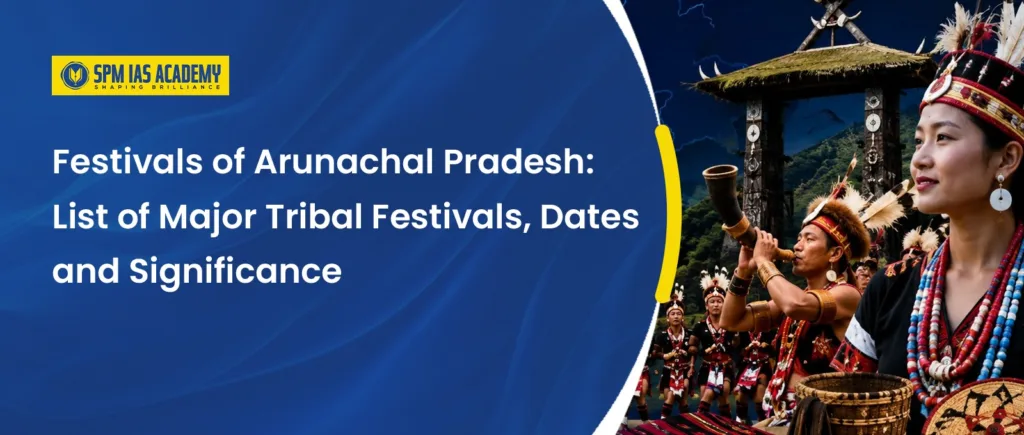
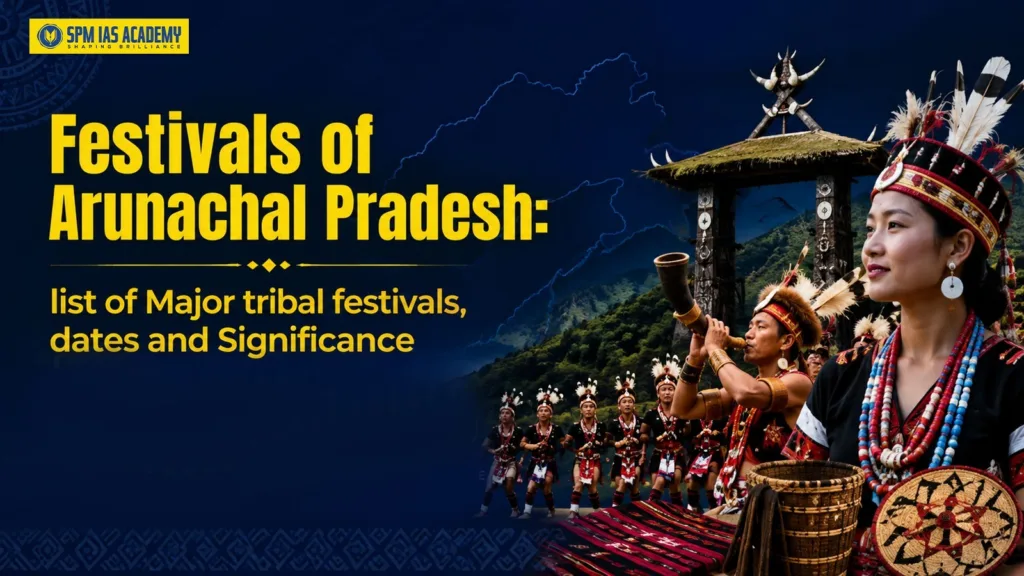
Arunachal Pradesh is home to many indigenous tribes, each with its own customs, beliefs, and traditions. Therefore, the festivals of Arunachal Pradesh beautifully reflect the region’s cultural diversity and close relationship with nature. Some of the most important and popular festivals include Losar, Mopin, Solung, Dree, Nyokum, Si-Donyi, and Boori Boot. Many of these festivals are connected with agriculture, community well-being, harvests, religious beliefs, and prayers for prosperity. Understanding these festivals is important for aspirants studying the culture and heritage of Northeast India through online UPSC coaching in Assam.festivals are observed to welcome the new year, pray for a good harvest, and promote community well-being. This article explores the major festivals, their associated tribes, dates, and cultural significance.
An Overview of the Festivals of Arunachal Pradesh
The festivals of Arunachal Pradesh reflect the state’s rich tribal diversity and traditional way of life. Communities such as the Nyishi, Adi, Galo, Apatani, Monpa, Tagin, and Idu Mishmi celebrate distinct festivals rooted in agriculture, nature, community traditions, and religious beliefs. These celebrations often include traditional rituals, dances, music, local food, and prayers for prosperity and well-being. Together, they showcase the cultural heritage of Arunachal Pradesh and highlight the close connection between its indigenous communities and their natural surroundings. This makes the topic particularly relevant for aspirants preparing for competitive examinations through UPSC coaching in the Northeast.
For example, Dree, Mopin, and Solung include prayers for a good harvest and community prosperity. Meanwhile, Losar, Torgya, and Sangken highlight the Buddhist traditions of the region. Through rituals, folk dances, traditional songs, and shared meals, these celebrations bring people together. Moreover, they help preserve the customs and cultural heritage of Arunachal Pradesh.
List of Major Festivals of Arunachal Pradesh
The following table highlights the major festivals of Arunachal Pradesh, along with their associated communities, usual months of celebration, and cultural significance. Understanding these festivals helps aspirants connect different tribal communities with their traditional practices, agricultural cycles, religious beliefs, and cultural heritage. This information is particularly useful for APSC exam preparation, as questions related to the tribes, festivals, and cultural traditions of Northeast India can be important for General Studies and regional awareness.
| Festival | Tribe/Community | Usual Month | Significance |
| Si-Donyi | Tagin | January | Worship of the Earth and Sun for peace and prosperity |
| Torgya | Monpa Buddhist community | January | Prayers for protection from harmful forces |
| Reh | Idu Mishmi | February | Community welfare, prosperity and social unity |
| Nyokum | Nyishi | February | Nature worship and prayers for a good harvest |
| Losar | Monpa | February–March | Celebration of the Buddhist New Year |
| Myoko | Apatani | March | Friendship, fertility and community prosperity |
| Mopin | Galo | April | Prayers for a good harvest and prosperity |
| Sangken | Tai Khamti and Singpho | April | Traditional New Year marked by water rituals |
| Dree | Apatani | July | Prayers for agricultural prosperity and crop protection |
| Solung | Adi | September | Harvest celebration for prosperity and well-being |
Famous Festivals of Arunachal Pradesh and Their Significance
Losar Festival
- Losar is the traditional New Year festival of the Monpa Buddhist community.
- It is usually celebrated in February or March
- Traditionally, before the festival, families clean their houses, prepare traditional food, and offer prayers.
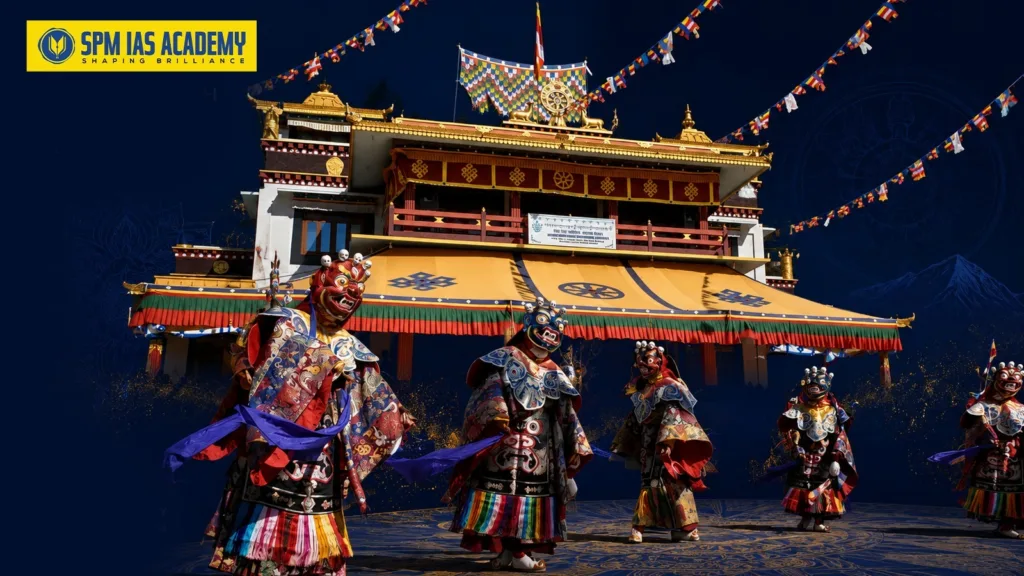
- Moreover, monasteries organise religious ceremonies and colourful masked dances called Cham.
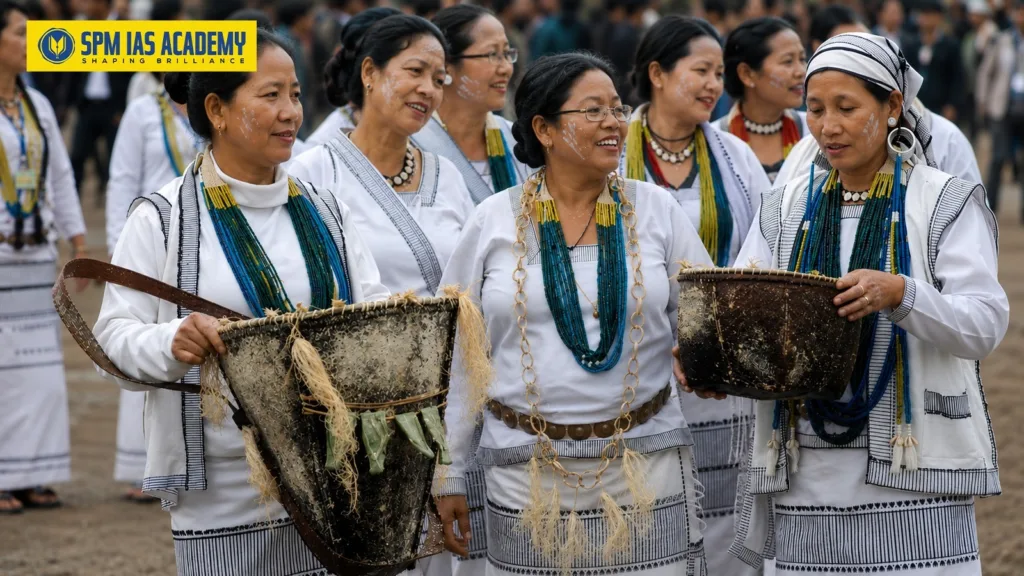
Mopin Festival
- It is a major Agricultural festival of the Galo community.
- It is commonly celebrated in April, especially in Aalo, Basar, and other Galo-inhabited areas.
- One of the special features of this festival is that people apply white rice powder called et-te to one another.
- Moreover, women perform the traditional Popir dance in colourful attire.
Solung Festival
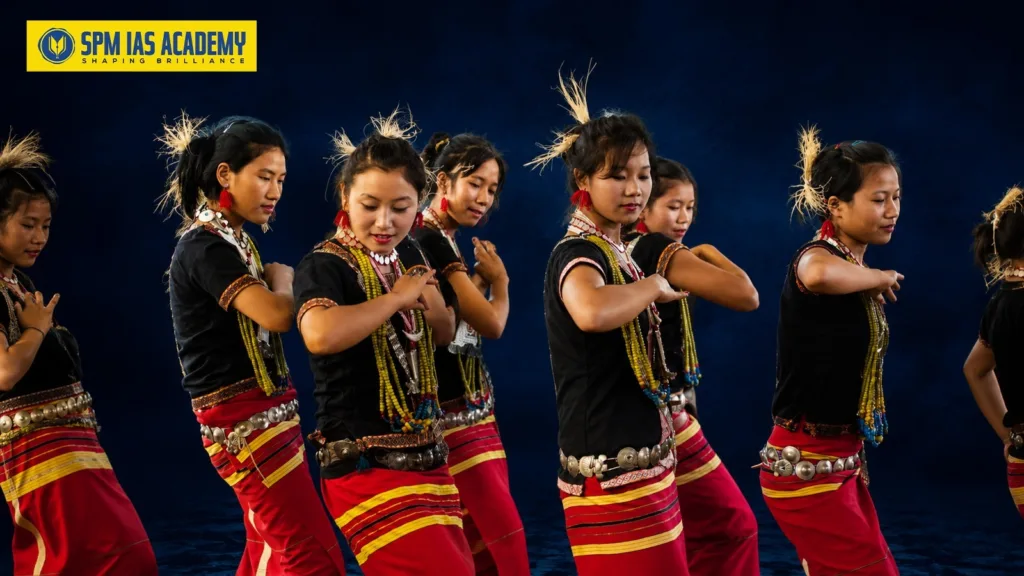
- Solung is one of the main agricultural festivals of the Adi Community.
- It is generally celebrated in September, but local dates may differ
- During its rituals, people seek blessings for healthy crops, livestock, and community prosperity.
- In addition, traditional Ponung dances, ritual songs, and shared feasts form an important part of the celebration.
Nyokum Yullo Festival
- It is one of the most important festivals of the Nyishi community and is usually celebrated on February 26th every year.
- During the festival, people pray for fertile land, a good harvest, and social harmony.
- Meanwhile, a traditional priest called the Nyubu conducts the main rituals.
- Therefore, Nyokum Yullo reflects the Nyishis’ close relationship with nature and agriculture.
Dree Festival
- It is an agricultural festival celebrated by the Apatani Community, mainly in Ziro Valley
- It is celebrated on July 5 every year.
- Traditional priests offer prayers for healthy crops and protection from pests, diseases, and famine.
- Besides its rituals, the festival includes folk dances, songs, sports, and community feasts.
- Therefore, Dree highlights the Apatanis’ close connection with farming and community life.
Si-Donyi Festival
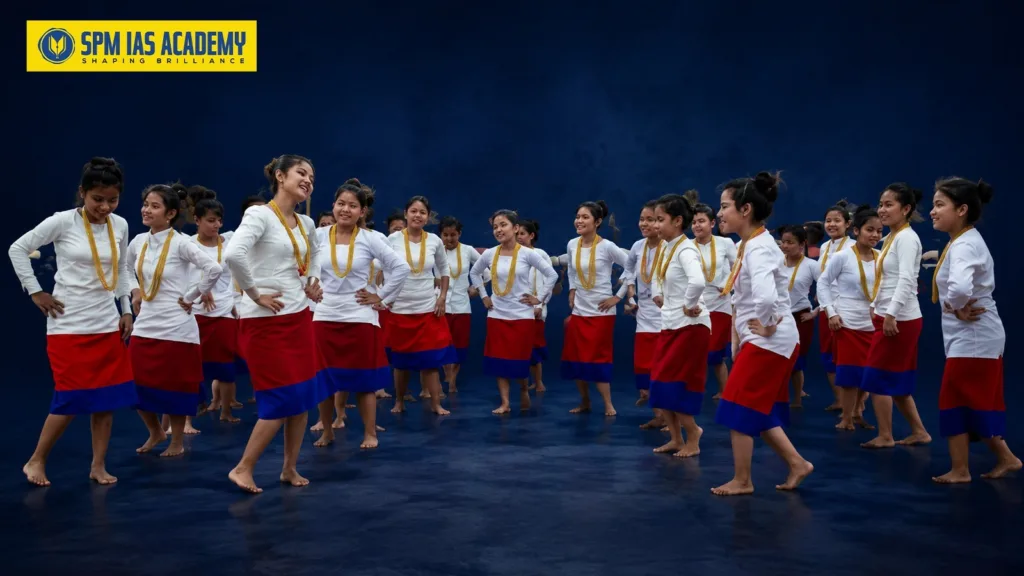
- Si-Donyi is a major festival of the Tagin community, celebrated in early January.
- The main celebration is commonly held on 6 January.
- The word “Si” refers to the Earth, while “Donyi” represents the Sun
- During the festival, the Nyibu, or traditional priest, conducts rituals for peace, health, and prosperity.
Reh Festival
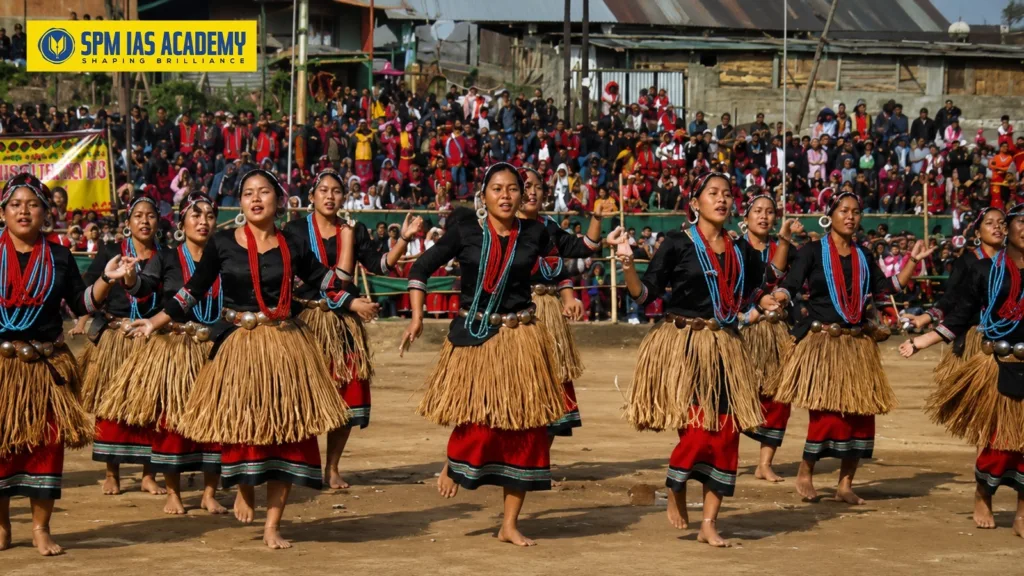
- Reh is the main festival of the Idu Mishmi Community
- It is generally celebrated from 1 to 3 February in Dibang Valley and nearby areas.
- The festival is associated with Nani Intaya, regarded in the Idu Mishmi tradition as a creator deity.
- During the celebration, people perform rituals and ceremonial chants for family welfare and prosperity
- Furthermore, traditional clothing and shared feasts strengthen community identity.
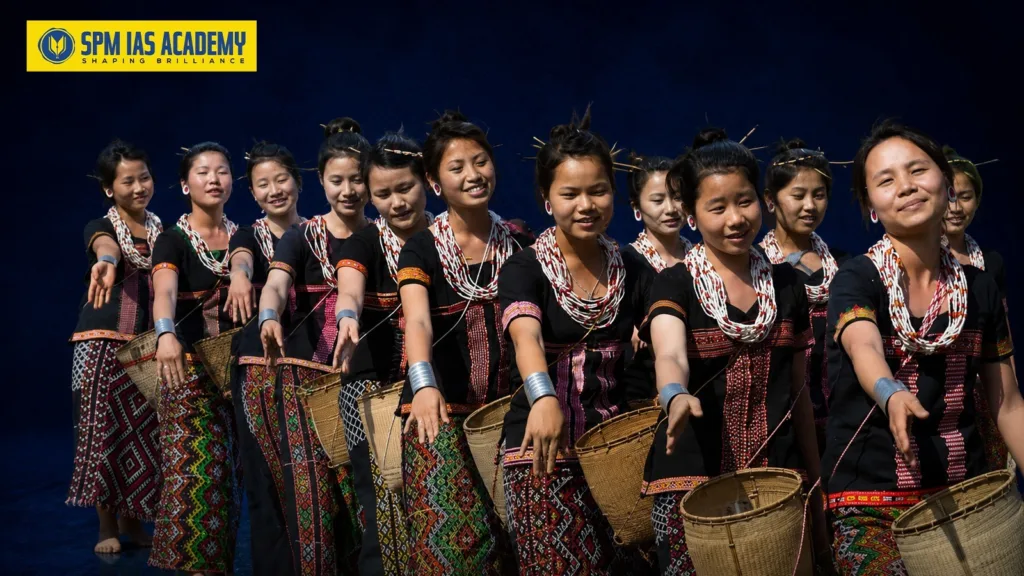
Myoko Festival
- Myoko is a traditional festival of the Apatani community of Ziro Valley.
- It usually begins in March and continues for several weeks.
- The responsibility for hosting the festival rotates among different groups of Apatani villages.
- During Myoko, families renew friendships and pray for fertility, prosperity, and protection.
- More importantly, the festival strengthens cooperation between clans and villages.
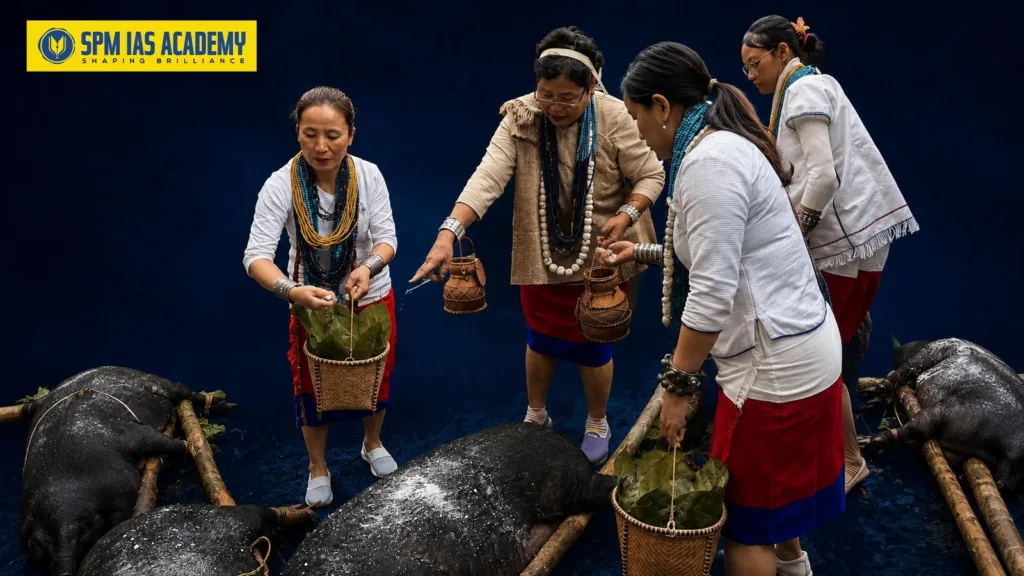
Sangken Festival
- Sangken is the traditional New Year festival of the Tai Khamti and Singpho communities.
- It is generally celebrated in mid-April.
- During the festival, images of the Buddha are ceremonially bathed with clean water.
- Similarly, people sprinkle water on one another as a symbol of purification and renewal.
- Therefore, Sangken represents the washing away of past misfortunes and the beginning of a peaceful year.
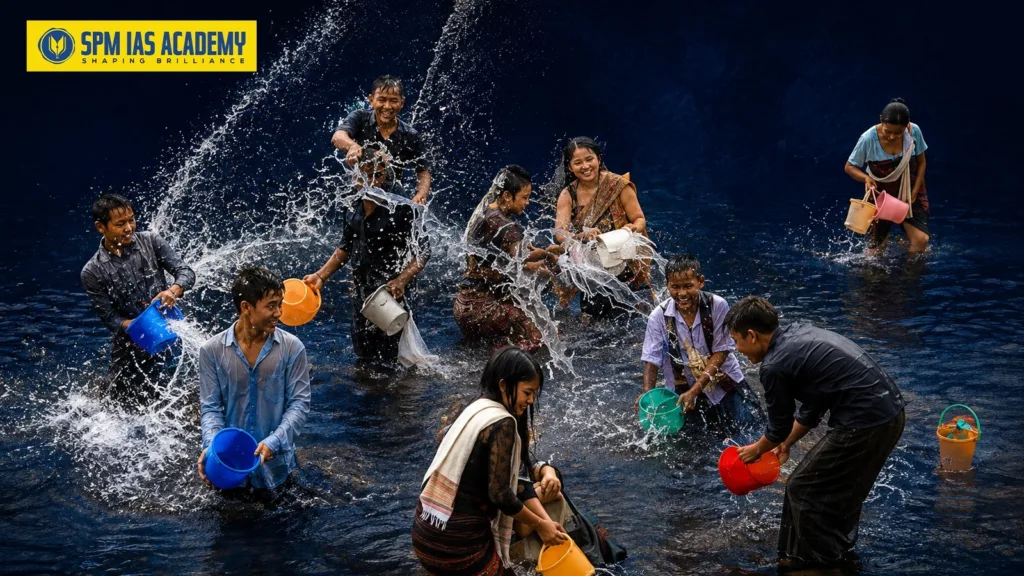
Torgya Festival
- Torgya is an important Buddhist festival held at Tawang Monastery.
- It is generally celebrated in January and continues for three days.
- Monks perform sacred rituals and offer prayers to remove negative forces.
- Moreover, the festival features Cham, a masked monastic dance performed in colourful costumes.
- As a result, Torgya holds both religious and cultural importance for the Monpa community
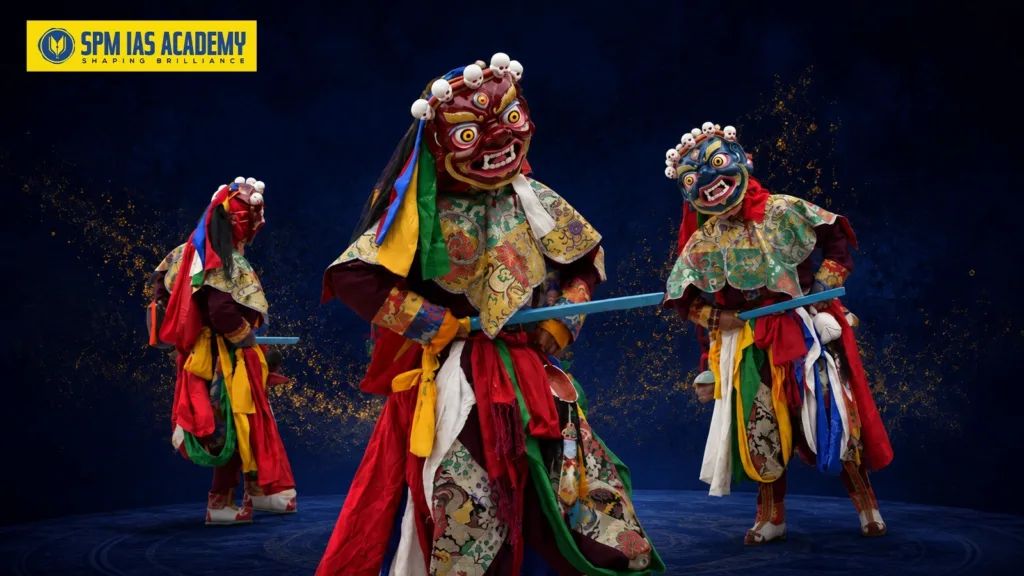
Oriah Festival
- Oriah is a major festival of the Wancho community of Longding district.
- The main public celebration takes place on 16 February every year.
- During the festival, people seek the blessings of Almighty Rangwa for a plentiful harvest.
- In addition, traditional songs, dances, ritual offerings, and community feasts are organised.
- Above all, Oriah promotes unity among Wancho villages and preserves their cultural heritage.
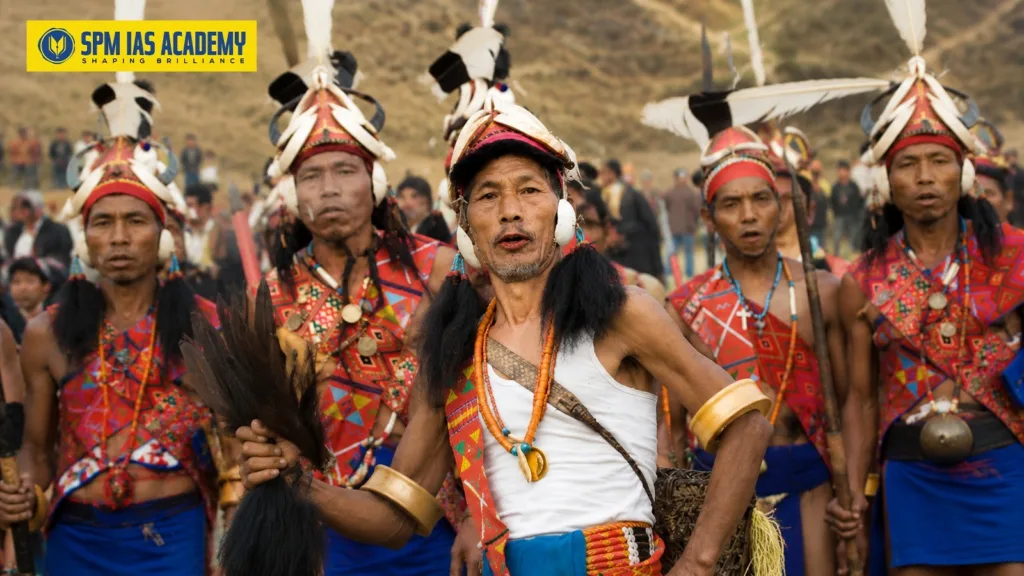
Chalo Loku Festival
- Chalo Loku is the principal harvest festival of the Nocte community of Tirap district.
- It is generally celebrated in November after the harvest season.
- The term “Loku” is associated with driving out the old season.
- Traditionally, the festival includes rituals, community dancing, and the recognition of young men as responsible community members.
- Thus, Chalo Loku connects agricultural life with Nocte social traditions.
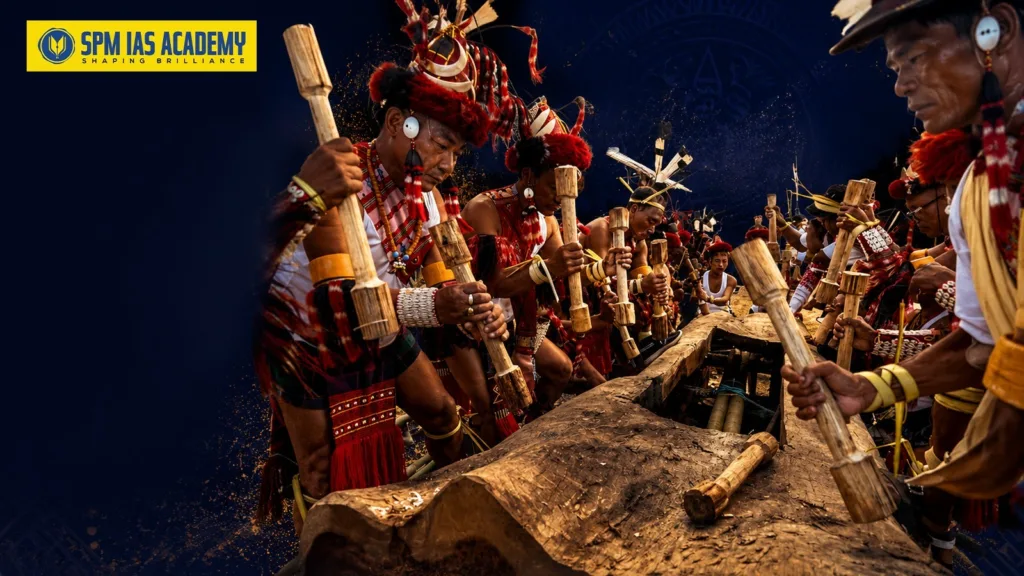
Boori Boot Yullo
- The Miri Hill Community of Subansiri District celebrates Bori Boot Yullo.
- It is generally observed from February 4 to 6
- The festival encourages people to come together without distinctions based on age, gender, or social position.
- Meanwhile, a traditional priest called the Nyibu conducts prayers for prosperity and protection from disease.
- In addition, communal dances and cultural programmes welcome the arrival of spring
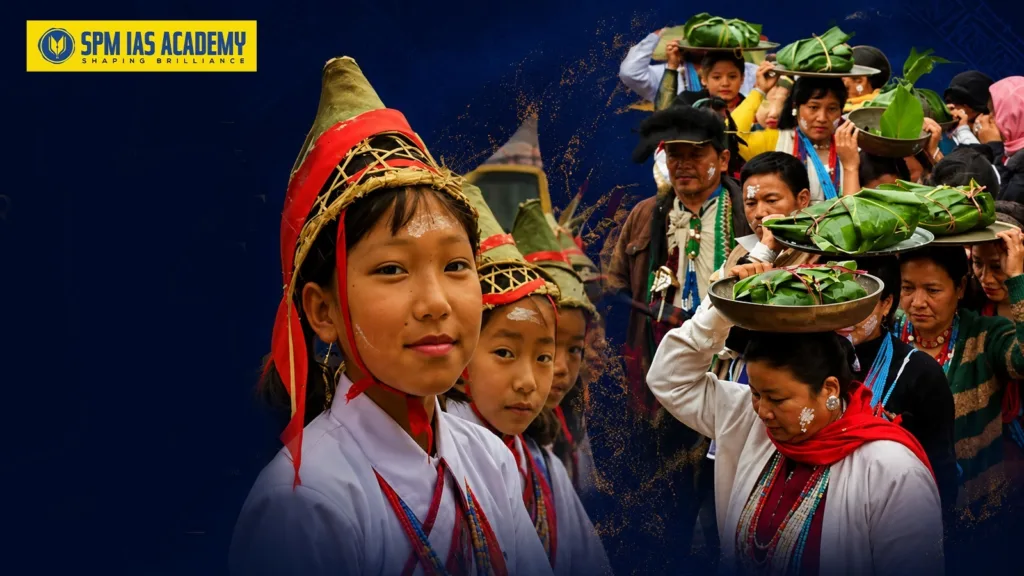
Harvest Festivals of Arunachal Pradesh
Agriculture shapes the traditional lifestyle of many communities in Arunachal Pradesh. Therefore, harvest festivals are closely connected with fertile land, healthy crops, and collective prosperity. These celebrations often mark important stages of the agricultural cycle and include traditional rituals, community feasts, music, dances, and prayers for a successful harvest. Festivals such as Solung, Mopin, and Dree reflect the deep relationship between farming, nature, and community life in the state. Aspirants preparing at an APSC training centre should study these festivals as part of the cultural heritage and tribal traditions of Northeast India.
- Dree Festival: Celebrated by the Apatani community, Dree includes prayers for healthy crops and protection from pests, diseases, and famine. Moreover, it reflects the Apatanis’ close connection with wet-rice cultivation.
- Solung Festival: The Adi community celebrates Solung to seek blessings for crops, livestock, and household prosperity. In addition, traditional songs, dances, and shared feasts bring families and villages together.
- Mopin Festival: Observed by the Galo community, Mopin focuses on a productive harvest and freedom from misfortune. Meanwhile, the application of white rice powder represents peace, purity, and prosperity.
- Nyokum Yullo: Celebrated by the Nyishi community, Nyokum Yullo honours nature and the land. During the festival, people pray for fertile fields, a good harvest, and protection from natural disasters.
Buddhist Festivals of Arunachal Pradesh
Buddhism has a strong cultural presence in several parts of Arunachal Pradesh. However, Buddhist communities in the state follow different traditions. The Monpas mainly practise Tibetan Buddhism, while the Tai Khamti and Singpho communities follow Theravada Buddhism.
- Losar Festival: Losar marks the New Year according to the Tibetan lunar calendar. It is mainly celebrated by the Monpa community in Tawang and West Kameng. Before the festival, families clean their homes, prepare traditional food, and visit monasteries. Moreover, prayers are offered for peace, happiness, and a positive beginning to the year.
- Torgya Festival: Torgya is a three-day monastic festival held at Tawang Monastery, generally in January. Buddhist monks perform religious rituals and masked dances known as Cham. Through these ceremonies, the community prays for peace and protection from negative forces. Like Losar, Torgya belongs to the Tibetan Buddhist tradition.
- Sangken Festival: In contrast, Sangken follows the Theravada Buddhist tradition. It is celebrated mainly by the Tai Khamti and Singpho communities in mid-April. During the festival, images of the Buddha are ceremonially bathed with water. People also sprinkle clean water on one another. This simple act represents purification, renewal, and the beginning of a new year
Role of Festivals in Arunachal Pradesh’s Tribal Culture
The festivals of Arunachal Pradesh are more than occasions of celebration. They help indigenous communities protect their cultural identity, strengthen social ties, and pass traditional knowledge to younger generations.
- Preservation of Indigenous beliefs: Many festivals include prayers to the sun, earth, ancestral spirits, and local deities. Therefore, celebrations such as Nyokum, Si-Donyi, and Dree help communities preserve their traditional beliefs and nature-based practices.
- Community bonding: Festivals bring families, clans, and villages together. People prepare food, perform rituals, and join community feasts. As a result, these shared activities create a strong sense of unity and mutual support.
- Traditional songs and dances: Folk performances are central to many tribal festivals. For example, the Popir dance is associated with Mopin, while Ponung is performed during Solung celebrations. Moreover, these performances keep local music, stories, and dance forms alive.
- Agricultural Practice: Several tribal festivals follow the farming calendar. Communities pray for fertile soil, healthy crops, livestock, and a good harvest. Thus, festivals also reflect the close relationship between agriculture and daily life in Arunachal Pradesh.
- Indigenous food and clothing: During festivals, people prepare traditional dishes and wear handwoven garments, ornaments, and ceremonial accessories. In addition, community feasts introduce younger generations and visitors to the food traditions of different tribes.
- Transfer of oral traditions: Elders and traditional priests share myths, ritual chants, and stories during celebrations. Since many traditions were historically passed down orally, festivals continue to serve as living spaces for cultural learning.
Festivals of Arunachal Pradesh for Competitive Exams
The festivals of Arunachal Pradesh are important for APPSC and other competitive examinations. Questions often ask candidates to match a festival with its tribe, month, district or cultural significance. Therefore, aspirants should revise these facts in a simple table.
| Festival | Tribe/Community | Usual Month | Key Exam Fact |
| Si-Donyi | Tagin | January | Worship of the Earth and Sun |
| Torgya | Monpa | January | Buddhist festival held at Tawang Monastery |
| Sarok | Aka/Hrusso | January | Seeks peace, prosperity and protection |
| Reh | Idu Mishmi | February | Associated with Nani Intaya |
| Boori Boot Yullo | Nyishi | February | Welcomes spring and promotes unity |
| Oriah | Wancho | February | Prayers for a productive harvest |
| Nyokum Yullo | Nyishi | February | Nature worship and agricultural prosperity |
| Losar | Monpa | February–March | Tibetan Buddhist New Year |
| Myoko | Apatani | March | Friendship, fertility and community welfare |
| Unying-Aaran | Adi | March | Connected with hunting and community traditions |
| Mopin | Galo | April | Features the Popir dance |
| Pongtu Kuh | Tutsa | April | Agricultural festival held before the rainy season |
| Sangken | Tai Khamti and Singpho | April | Theravada Buddhist New Year and water festival |
| Longte | Nyishi | April | Nature-based festival without animal sacrifice |
| Moh-Mol | Tangsa | April | Marks a change in the agricultural cycle |
| Dree | Apatani | July | Agricultural festival associated with Ziro Valley |
| Solung | Adi | September | Features the traditional Ponung dance |
| Pham-Kho-Sowai | Bugun | September | Important festival of the Bugun community |
| Chindang | Sajolang/Miji | October | Celebrated for prosperity and community welfare |
| Chalo Loku | Nocte | November | Principal harvest festival of the Nocte community |
| Podi-Barbi | Ramo, Pai-Libo and Bokar | December | Harvest festival of the Mechukha region |
Quick Revision by Tribe
| Tribe/Community | Important Festivals |
| Adi | Solung, Unying-Aaran and Donggin |
| Apatani | Dree and Myoko |
| Nyishi | Nyokum Yullo, Longte and Boori Boot Yullo |
| Monpa | Losar and Torgya |
| Idu Mishmi | Reh and Keh-Meh-Haa |
| Galo | Mopin and Donyi Mari |
| Tagin | Si-Donyi |
| Wancho | Oriah |
| Nocte | Chalo Loku |
| Tangsa | Moh-Mol and Harong |
| Tutsa | Pongtu Kuh |
| Tai Khamti and Singpho | Sangken |
| Bugun | Pham-Kho-Sowai |
Conclusion
The festivals of Arunachal Pradesh reflect the state’s deep connection with nature, agriculture, faith, and community life. From Losar and Sangken to Dree, Mopin, and Solung, each celebration preserves a distinct cultural tradition. Moreover, these festivals strengthen social bonds, support oral heritage, and help younger generations understand the remarkable diversity of Arunachal Pradesh with pride.
Frequently Asked Questions
Q1. Which is the most famous festival of Arunachal Pradesh?
Arunachal Pradesh has several famous festivals rather than a single state festival. Losar is widely known in Tawang, while Nyokum, Mopin, Dree, and Solung hold great importance among the Nyishi, Galo, Apatani, and Adi communities. Each festival represents the customs and beliefs of its celebrating community.
Q2. Why are festivals important to the tribes of Arunachal Pradesh?
Festivals help tribal communities preserve indigenous beliefs, farming practices, traditional clothing, music, and dance. Moreover, they bring families and villages together through rituals and shared meals. Elders also use these occasions to pass stories, chants, and cultural knowledge to younger generations, keeping their heritage alive.
Q3. Which are the major harvest festivals of Arunachal Pradesh?
Dree, Solung, Mopin, Nyokum Yullo, and Chalo Loku are among the important agricultural and harvest-related festivals of Arunachal Pradesh. These celebrations include prayers for fertile land, healthy crops, livestock, and prosperity. In addition, community feasts, traditional dances, and rituals strengthen cooperation among families and villages.
Also Read

Behind every article at SPM IAS Academy is a team of skilled content writers and subject experts committed to making preparation easier for aspirants. From answering common doubts to breaking down complex issues and current affairs, we create content that is accurate, easy to understand, and directly useful for UPSC, APSC, and other competitive exams.