
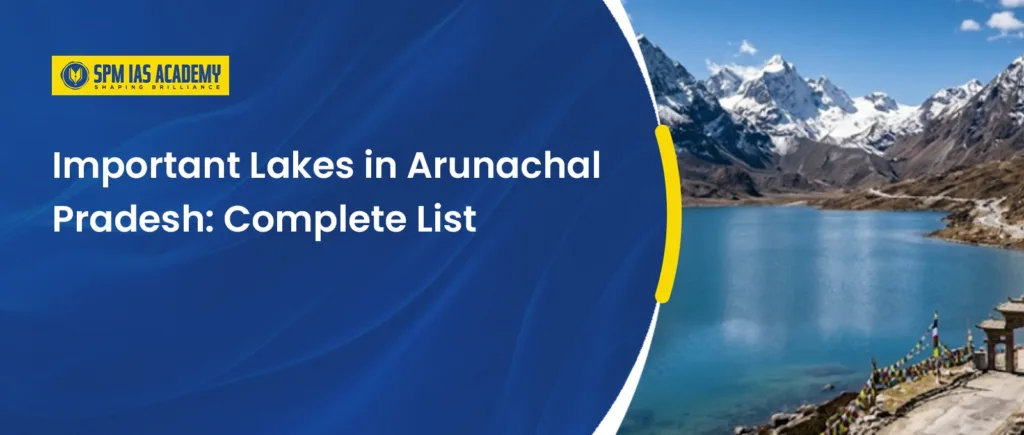
A lake is a large inland body of standing water surrounded by land. Arunachal Pradesh is home to numerous freshwater and high-altitude lakes that are known for their scenic beauty and ecological significance. Sela Lake, Sangetsar Lake, Pankang Teng Tso, Mehao Lake, and Ganga Lake are among the most important lakes in Arunachal Pradesh. This topic is highly relevant for aspirants preparing through IAS coaching in Assam, as questions on the geography of Northeast India frequently appear in UPSC and APSC examinations under Physical Geography, Environment, and General Studies.
List of Important Lakes in Arunachal Pradesh
The lakes in Arunachal Pradesh include natural freshwater lakes and high-altitude wetlands. Most of the high-altitude lakes are found in Tawang district.
| Name of lake | District | Type | Major significance |
| Sela Lake | Tawang | High-altitude natural lake | It is located near Sela Pass. The lake is considered sacred in Tibetan Buddhism. |
| Sangetsar Lake | Tawang | High-altitude natural lake | The lake was formed after an earthquake in 1950. It is popularly called Madhuri Lake because the Hindi film Koyla was filmed here. |
| Pankang Teng Tso Lake | Tawang | High-altitude natural lake | Also called P.T. Tso, it is surrounded by mountains and is an important tourist attraction near Tawang. |
| Nagula Lake | Tawang | High-altitude wetland | Nagula is part of an important high-altitude wetland complex. A scientific study recorded rich plant diversity around it. |
| Mehao Lake | Lower Dibang Valley | Natural oligotrophic lake | It lies inside Mehao Wildlife Sanctuary |
| Sally Lake | Lower Dibang Valley | Natural freshwater lake | It is located near Roing. It is an important picnic and tourism site. |
| Ganga Lake or Gyakar Sinyi | Itanagar Capital Region | Natural lake | It is located about 6 kilometres from Itanagar. It is a popular place for boating, recreation, and picnics. |
| Glow Lake | Lohit | Natural lake | It is located in Wakro Circle. The lake and its surrounding area support Himalayan plants and animals. It is also an adventure tourism site. |
Major Lakes in Arunachal Pradesh
The major lakes of Arunachal Pradesh are distributed across Tawang, Lower Dibang Valley, Lohit, Namsai, and the Itanagar Capital Region, contributing significantly to the state’s natural beauty, biodiversity, and tourism potential. These lakes are also important from a geographical and environmental perspective, making them a frequently asked topic in competitive examinations. Aspirants preparing through mock test APSC series should pay special attention to their locations and key features, as questions related to the geography of Arunachal Pradesh are commonly asked in APSC and UPSC examinations.
Sela Lake
Sela Lake lies beside Sela Pass in Tawang district, near the road connecting Tawang with West Kameng. It is surrounded by snow-covered mountains and remains fully or partly frozen during winter. Moreover, it is considered sacred in Tibetan Buddhism. Because of its location near the 4,170-metre-high pass, the lake is an important natural landmark and a popular stop for travellers visiting Tawang.
Sangetsar or Madhuri Lake
It is located at a high altitude, approximately 28 kilometres from Tawang. The lake was formed after the 1950 Assam–Tibet earthquake, which dramatically altered the landscape. It later became popularly known as Madhuri Lake after scenes from the Hindi film Koyla were filmed there. Surrounded by majestic mountains and scenic landscapes, the lake is now one of Tawang’s most famous tourist attractions. This location is also important for aspirants preparing through UPSC coaching in North East India, as questions related to the geography and tourism of Arunachal Pradesh are frequently asked in UPSC and APSC examinations.
Pankang Teng Tso Lake
This lake is also located in Tawang district. It is commonly known as P.T Tso Lake. Moreover, it lies among mountain slopes and is surrounded by snow-covered peaks and green forests. During winter, heavy snowfall can make the surrounding roads difficult to use.
Nagula Lake
Nagula Lake is a high-altitude wetland located in the Tawang district of Arunachal Pradesh and forms part of the Nagula Wetland Complex. A scientific survey has recorded 148 plant species in the surrounding area, highlighting its rich ecological diversity. As a result, Nagula Lake is an important site for the study of alpine vegetation, wetland ecosystems, and biodiversity in the Eastern Himalayas. This topic is especially useful for aspirants enrolled in the best online coaching for APSC, as questions related to the geography, environment, and biodiversity of Northeast India frequently appear in APSC and UPSC examinations.
Mehao Lake
Mehao Lake is a natural lake inside Mehao Wildlife Sanctuary in Lower Dibang Valley district. It is located about 14 kilometres from Roing at nearly 3,000 feet above sea level. The lake covers around four square kilometres. Moreover, it is an oligotrophic lake, which means its water contains very few nutrients. Its surrounding forests support many plants, animals, and seasonal birds
Sally Lake
Sally Lake is a natural lake located about 3.8 kilometres from Roing in Lower Dibang Valley district. Thick green forest surrounds the lake. Its clear water also supports fish. Moreover, visitors can see the Dibang Valley and branches of the Dibang River from the surrounding area. The lake is mainly used for boating, picnics, and local tourism.
Ganga Lake or Gyakar Sinyi
Ganga Lake, also known as Gyakar Sinyi, is located about six kilometres from Itanagar. The lake has no direct connection with moving rivers or streams. Therefore, its water often appears green. Dense vegetation and large trees surround the lake. Moreover, it is a popular recreation site where visitors come for boating, picnics and short visits near the state capital.
Glow Lake
Glow Lake is located in Wakro Circle of Lohit district. It covers an area of about eight square kilometres. Many Himalayan plants and animals are found in and around the lake. However, reaching it involves travelling through hilly land. Therefore, Glow Lake is mainly known for its natural environment, trekking route, and importance to local tourism
Lake of No Return
It lies across the international border in Myanmar. However, people can view it from Pangsau Pass near Nampong in Changlang district. The lake is linked with the history of Allied aircraft during the Second World War. Therefore, it is an important historical attraction on the India–Myanmar border route.
Nongsaya Lake
Nongsaya Lake is located at Jona in Namsai district, around nine kilometres from Namsai town. In 2025, a two-day survey by the Arunachal Pradesh Birding Club and the Public Works Department recorded 89 bird species around the lake. Moreover, butterflies were also observed in the area. Therefore, the lake is important for bird conservation, nature education, and responsible tourism.
Ecological Importance of Lakes in Arunachal Pradesh
- Freshwater Storage: The lakes store rainwater, snowmelt, and water from nearby streams. This water supports plants, animals, and nearby settlements. High-altitude lakes also release water slowly into streams and rivers.
- Himalayan Biodiversity: These lakes provide habitats for many Himalayan plants and animals. The forests and wetlands around Mehao, Nagula and Glow lakes support birds, butterflies, fish and other wildlife.
- Migratory Birds: Several lakes provide food, water and resting places for migratory birds. For example, Mehao Lake attracts seasonal birds. A 2025 survey also recorded 89 bird species around Nongsaya Lake.
- Support for Local Ecosystems: Lakes support connected ecosystems such as forests, grasslands, streams and wetlands. Insects, birds, amphibians and aquatic plants depend on these habitats for food, water, shelter and breeding.
Strategic Importance of High-Altitude Lakes
Many high-altitude lakes in Arunachal Pradesh are located in Tawang district, close to the India–China border. Their importance comes mainly from their location and surrounding terrain.
- Border-area geography: Lakes such as Sangetsar, Nagula and P.T. Tso are located in sensitive mountain areas. They help in understanding and mapping the difficult border terrain.
- Natural landmarks: These lakes act as visible landmarks in areas where roads and settlements are few. Therefore, they can support route identification and local navigation.
- Support for border personnel: Lakes and nearby streams may provide water in remote areas. However, the water must be tested or treated before drinking.
- Infrastructure planning: Information about lakes, slopes and drainage channels helps authorities plan roads, bridges, tunnels and border posts safely.
- Disaster monitoring: Scientific study of high-altitude lakes helps identify risks from landslides, earthquakes and glacial lake outburst floods.
- Weather and environmental information: Changes in lake water, ice cover and nearby vegetation can provide information about temperature and climate conditions.
Conclusion
Overall, the lakes in Arunachal Pradesh are important for the state’s geography, biodiversity, tourism and border regions. They store freshwater and provide habitats for many plants, birds and animals. Moreover, several lakes hold cultural and scientific value. Therefore, careful conservation, regular monitoring and responsible tourism are necessary to protect these lakes for future generations.
Frequently Asked Questions
Sangetsar Lake, popularly known as Madhuri Lake, is one of the most famous lakes in Arunachal Pradesh. It is located about 28 kilometres from Tawang. The lake formed after an earthquake in 1950. It later gained wider recognition after scenes from the Hindi film Koyla were filmed there.
Sela Lake is located beside Sela Pass in Tawang district of Arunachal Pradesh, along the road connecting Tawang with West Kameng.

Behind every article at SPM IAS Academy is a team of skilled content writers and subject experts committed to making preparation easier for aspirants. From answering common doubts to breaking down complex issues and current affairs, we create content that is accurate, easy to understand, and directly useful for UPSC, APSC, and other competitive exams.