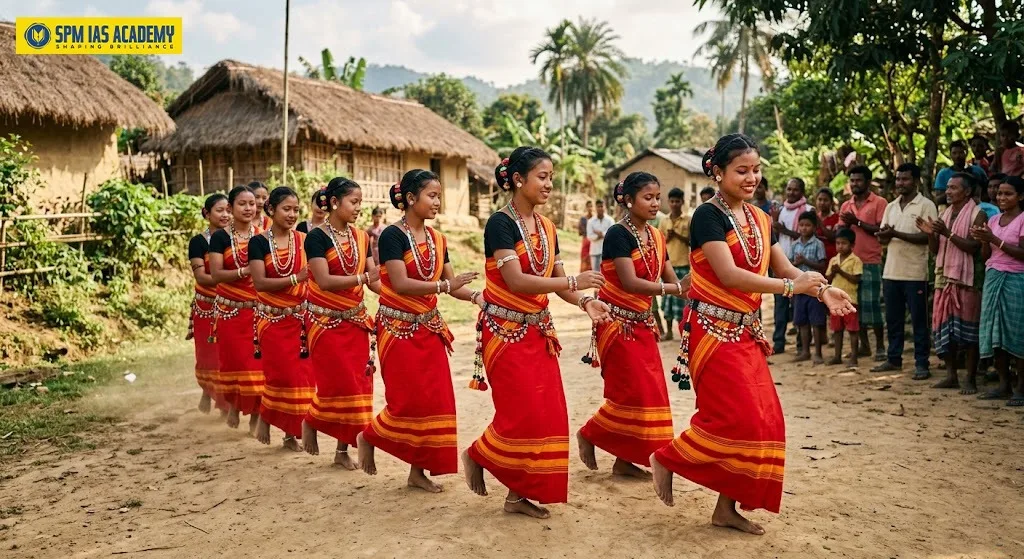
The famous traditional dances of Arunachal Pradesh reflect the cultural richness, tribal identity, and festive spirit of the state. These dances are not just performances. They also preserve stories of bravery, faith, community life, and agricultural traditions that have passed from one generation to another. Arunachal Pradesh’s tribes come together during festivals to showcase their traditional dress, jewellery, music, and dance, and that these performances offer a glimpse into their rich cultural past.
For UPSC and Arunachal Pradesh Public Service Commission exams, this topic is highly relevant under Art and Culture, Northeast India, and Arunachal Pradesh Current Affairs. Therefore, a clear understanding of the major folk dances of Arunachal Pradesh can help in both prelims and mains examination.
For structured preparation, a reliable upsc coaching centre guwahati can strengthen your foundation in Art and Culture topics.
What Makes the Traditional Dances of Arunachal Pradesh Special?
The traditional dances of Arunachal Pradesh are deeply connected with tribal customs and festivals. They are performed during important community celebrations and often carry historical, spiritual, or agricultural meaning. According to the source, these dances tell tales of bravery passed down orally over the ages and add joy to festive occasions. Moreover, they serve as a cultural window into the traditions of Arunachal Pradesh.
As a result, learning about these dances is not only useful for exam preparation but also essential for understanding the cultural diversity of Northeast India.
Choosing UPSC coaching in north east India helps aspirants gain regional insights and better contextual understanding.
Traditional Dances of Arunachal Pradesh
Rikhampada Dance of Arunachal Pradesh
Tribe and Region
The Rikhampada Dance is associated with the Nyishi tribe, which is the largest tribe in the state.
Festival Association
The Nyishi people perform this dance during the Nyokum festival, which is one of their important celebrations.
Cultural Importance
Rikhampada is one of the merriest and most revered folk dances of Arunachal Pradesh. According to tradition, the dance was introduced by the Abotanis to the Nyishis. Over time, it became an intrinsic part of Nyishi cultural heritage.
Therefore, Rikhampada is important both as a tribal identity marker and as a festival dance.
Khampti Dance of Arunachal Pradesh
Community Background
The Khampti community, which follows Buddhism, has a rich heritage of dance performances that narrate history and many tales.
Festival Link
These dance plays are closely linked with festivals such as Khamsang, Sankian, and Potwah.
Performance Style
The performance takes place in an open courtyard, accompanied by instruments such as gongs and cymbals. Women are rarely seen in the theatre acts, so men wear female clothing to perform female roles.
Thus, the Khampti dance tradition stands out for its dramatic storytelling and religious-cultural setting.
Idu Mishmi Ritual Dance
Ritual and Fertility Significance
The Idu Mishmi people perform both ritual and reproductive dances. This fertility dance is usually performed on the last day of the Rren ceremony. It also refers to the Mesalah, Rren, Aihim, and Aihm rites, which are conducted by the priest and priestesses with drums accompanying the dances.
Costume and Performance
During the performance of this dance form, horn bugles and drums are frequently played. Moreover, the dance is performed alternately by the priest and priestess, and sometimes dancers are selected from the crowd as well.
Daminda Dance
Tribe and Festival
The Daminda Dance belongs to the Apatani tribe and is closely associated with the Dree festival. Dree is celebrated with excitement in every home and festive exchanges of rice beer, bacon, or roasted meat form part of the social tradition.
Bardo Chham Dance
Meaning of the Name
The term ‘Bardo Chham’ stands for ‘Dance of the Zodiacs’. This dance belongs to the Sherdukpen community. The source states that the Sherdukpens believe that there are twelve evils, one for every month of the year, and these appear in the form of different animals.
Symbolic Importance
Members of both sexes perform the Bardo Chham dance during local festivities. It symbolizes the victory of good over evil. As a result, this dance has strong symbolic and spiritual importance.
Popir Dance
Tribe and Belief
The Popir Dance is performed by the Galo tribe of Arunachal Pradesh. According to sources, the dance may be a homage to Mopin Ape, who is considered the goddess of abundance and procreation and one of the tribe’s most beloved goddesses.
Ponung Dance
Religious Importance
The Ponung Dance is described as a major religious event for the Adi tribe. It is performed by girls and women who form a circle and pray to God before the harvest season. A male Miri sings a folk song and plays the Yoksha instrument.
Here, the song narrates the history of the Adis, the roots of their crops, and other aspects of their heritage. It also notes that the Yoksha has a sword-like form and is shaken by the Miri while singing. Therefore, Ponung is both a harvest-related and religious-cultural dance.
Pasi Kongki Dance
The Pasi Kongki is another well-known traditional dance of the Adi tribe. It honours the courageous Pasi, who risked their lives to bring necessary supplies to villages. This traditional dance form of Arunachal Pradesh celebrates bravery through song and dance.
Wancho Dance
The Wancho Dance forms a key part of the Oriah celebration, which the Wancho tribe observes during the spring months of March and April. According to the source, the dance unites members of the tribe and fosters a sense of camaraderie. Thus, this dance reflects social bonding and seasonal celebration.
Chalo Dance
The Nocte tribe celebrates the Chalo Loku festival in October and November to say goodbye to the previous season and welcome the new season of paddy farming. The source identifies the Chalo Dance as a major part of this festival. Therefore, Chalo Dance is closely linked with agriculture and seasonal transition.
Buiya Dance
The cheerful Buiya Dance is performed by Digaru Mishmi men and women during festivals such as Tazampu, Duiya, and Tanuya. It is also commonly performed after large feasts or family gatherings. This makes Buiya an important social and festive dance form.
Conclusion:
In conclusion, the famous traditional folk dances of Arunachal Pradesh are an important part of the state’s cultural heritage and a valuable topic for competitive exams. These dance forms reflect tribal identity, ritual traditions, agricultural life, and social unity. Moreover, they help aspirants understand the deeper cultural diversity of Northeast India.
Therefore, candidates preparing for UPSC and APPSC exams should revise key topics such as folk dances of Arunachal Pradesh, tribe-wise dances of Arunachal Pradesh, festivals of Arunachal Pradesh, and traditional culture of Arunachal Pradesh. A strong grip on these Arunachal Pradesh folk dance facts can improve both prelims preparation and descriptive cultural answers.
Many aspirants now prefer to prepare for upsc online for flexible and comprehensive cultural studies coverage.
Source:
Frequently Asked Questions:
The famous traditional dances of Arunachal Pradesh include Rikhampada, Bardo Chham, Ponung, Popir, and Chalo Dance. Moreover, each dance represents a specific tribe and festival.
Folk dances of Arunachal Pradesh are important because they preserve tribal culture, traditions, and history. Therefore, they reflect the cultural identity of the state.
The Adi tribe performs the Ponung dance. Furthermore, it is a religious and harvest-related dance performed before the farming season.
The Bardo Chham dance symbolizes the victory of good over evil. Additionally, it reflects the spiritual beliefs of the Sherdukpen community.
Traditional dances are performed during festivals, rituals, and agricultural seasons. As a result, they celebrate community life and seasonal changes.

Behind every article at SPM IAS Academy is a team of skilled content writers and subject experts committed to making preparation easier for aspirants. From answering common doubts to breaking down complex issues and current affairs, we create content that is accurate, easy to understand, and directly useful for UPSC, APSC, and other competitive exams.