
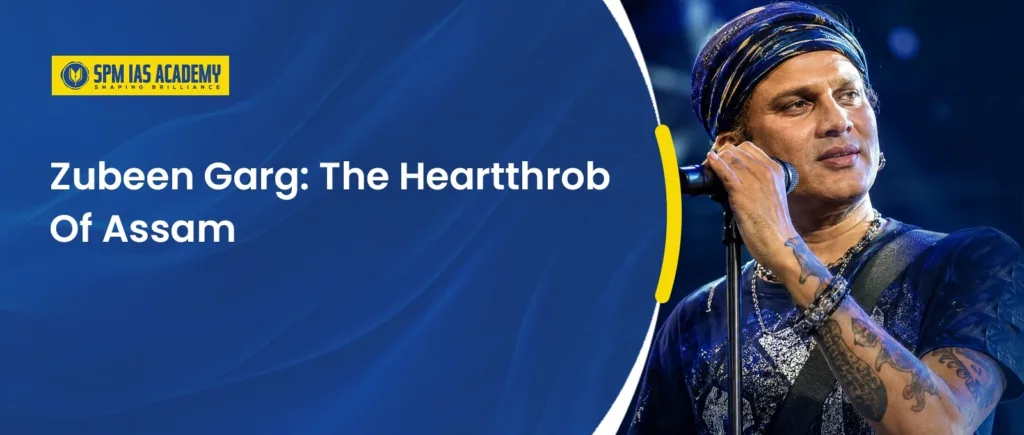
“Mayabini ratir bukut, dekha palu tumar sobi”—for a week, the song seemed to echo across the skies of Assam, from homes and streets to the hills and valleys, carrying a grief shared by millions. That is the place Zubeen Garg held in Assam’s heart—not merely as a singer, but as a voice woven into its memories, emotions, and identity. His music became the soundtrack of generations, and his absence has left behind a silence that feels deeply personal.
This is the story of that extraordinary life, from his childhood to the millions who lined the streets of Guwahati to say goodbye.
The Sound of a New Generation: Zubeen Garg and the Rise of Assamese Music
The late 1980s had brought a fresh energy to Assamese music. Keyboards and drums began aligning with the tabla and harmonium on stage, while acoustic guitars gave way to electric sounds. But by the early 1990s, that momentum was beginning to fade. New releases became fewer, and many musicians left for Mumbai in search of opportunities in Bollywood. Then came “Hahile Tumi Mukuta Moni Sare,” a song that travelled across Assam and found its way into homes, streets and hearts. In 1993, Zubeen Garg released his debut album Anamika, marking a turning point in Assamese music. His sound was young, experimental and unmistakably rooted in Assam. What followed was more than the rise of a singer—it was the awakening of a new musical generation.
Where Was Zubeen Garg Born, and What Was His Childhood Like?
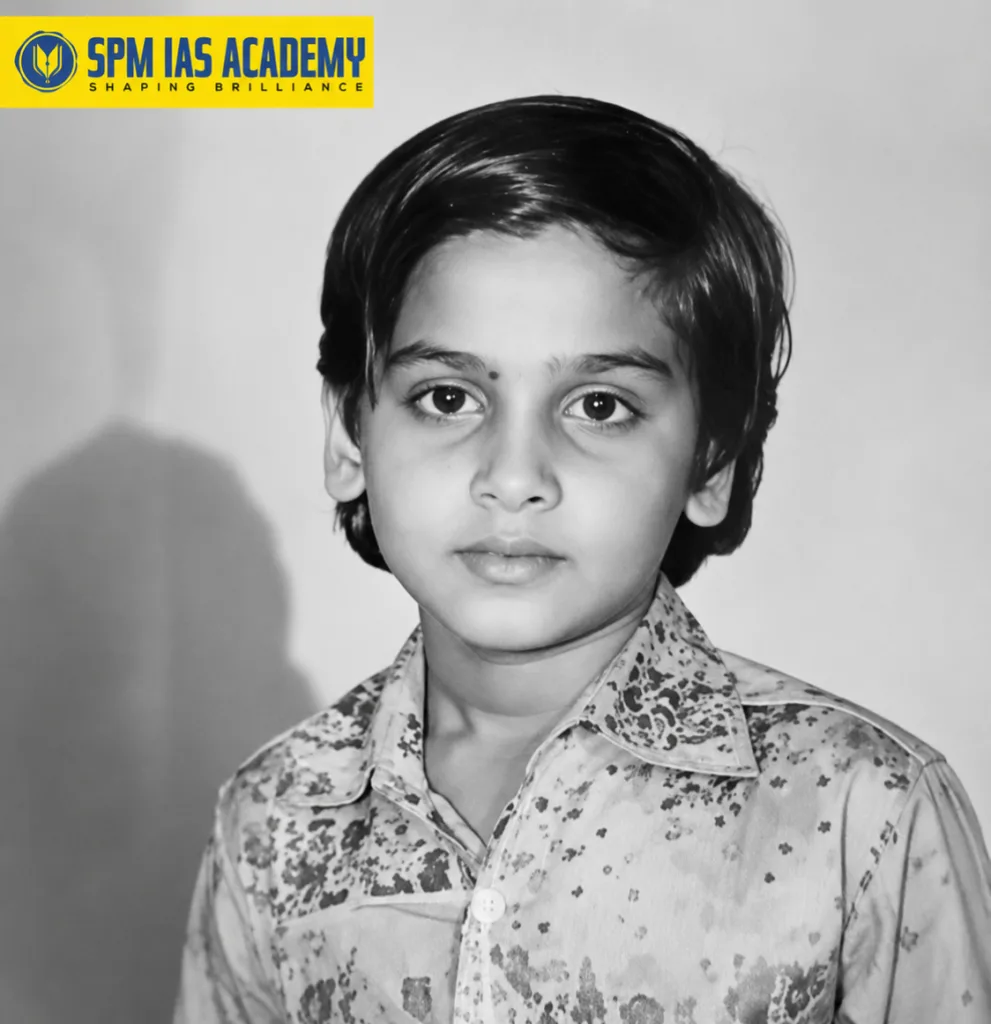
Zubeen Garg was born on 18 November 1972 in Tura, Meghalaya, into a culturally active family that later settled in Assam. His father, Mohini Mohon Borthakur, was a magistrate and a poet-lyricist who wrote under the pen name Kapil Thakur, while his mother, Ily Borthakur, was a singer. Named after the renowned composer Zubin Mehta, Zubeen was exposed to music from an early age. His mother introduced him to music, while later teachers guided him in classical and folk traditions. His guru, Kalinath Sharma, gave him the surname “Garg,” which became an important part of his artistic identity.
Zubeen completed his matriculation from Tamulpur Higher Secondary School and later enrolled at B. Borooah College in Guwahati. However, he eventually left college to pursue music as a full-time career, marking the beginning of his journey as one of Assam’s most influential musical figures.
Where did Zubeen Garg Started his Educational Journey and How was his College Days Like?
Zubeen began his school life at Carmel School in Jorhat. He completed his high school final exams from Tamulpur Higher Secondary School. After that, he joined the science stream at Jagannath Barooah College in Jorhat, now a university, for his higher secondary studies.
During his time at J.B. College, Zubeen became increasingly involved with music. He started playing the keyboard at various events and quickly became recognized more as a musician and instrumentalist than anything else. He collaborated during this period with popular Assamese artists, including Jitul Sonowal and Luna Sonowal. Beyond the keyboard, Zubeen also played the tabla, guitar, and the khol with considerable skill.
In 1991, he performed three songs at Akashvani’s Jorhat station, his first significant public performance on record. In 1992, he won a gold medal at the Inter-College Youth Festival of Gauhati University’s Western song competition.
After J.B. College, he enrolled in the chemistry department at B. Barooah College in Guwahati to pursue his bachelor’s degree. However, midway through his college exams, Zubeen made a decision that changed the course, he left academics entirely and dedicated himself fully to music. That was the moment everything began.
How Did Zubeen Garg’s Musical Career Begin and Grow?

Zubeen Garg’s journey into music began at a very young age. He started singing at three, with his mother, Ily Borthakur, as his first teacher. He later trained in tabla under Pandit Robin Banerjee for nearly eleven years and learned Assamese folk music from Guru Ramani Rai. While still in school, he also began composing his own songs.
In the early 1990s, Zubeen initially performed as an instrumentalist at various events alongside established Assamese musicians. One of his early notable performances was at a Bihu programme in Duliajan, where he reportedly earned his first performance fee of ₹6,000.
A major milestone came in 1991, when he performed three songs at Akashvani Jorhat. In 1992, he won a gold medal in the Western Song competition at Gauhati University’s Inter-College Youth Festival, strengthening his decision to pursue music professionally.
His early recorded songs included Tumi Junu Pariba Hun and Tumi Junaki Hubakh, featured in the album Ritu. His major breakthrough came with Anamika, released in November 1992 when he was 19.
Anamika introduced a fresh musical style by combining rock influences from his early band Boom Boom with Assamese folk elements. Its popularity among young listeners established Zubeen as a rising force in Assamese music.
He followed it with albums such as Xopunor Xur, Junaki Mon, Maya and Asha. His growing popularity eventually led him to move to Mumbai in 1995, marking the next phase of his musical career.
Anamika and the Rise of Zubeen Garg
Released in November 1992, Anamika was Zubeen Garg’s debut Assamese album and marked the beginning of his rise as a major voice in Assamese popular music.
What made Anamika distinctive was its fresh blend of rock, modern instrumentation and Assamese musical traditions. At a time when Assamese popular music was evolving, Zubeen introduced a sound that felt contemporary while remaining rooted in the region’s musical identity.
The album connected particularly well with young listeners, who found its energetic sound and modern approach different from the established musical styles of the time. Its success quickly established Zubeen as a prominent new artist in Assam.
Anamika therefore represented more than a successful debut. It helped open a new phase in Assamese popular music, while giving Zubeen Garg the platform from which he would go on to become one of Assam’s most influential musicians.
How Did Zubeen Garg Transform Assamese Music?
Zubeen Garg brought a fresh energy to Assamese popular music by combining traditional Assamese sounds with rock, pop and contemporary musical arrangements. His approach made Assamese music feel more relevant to a younger generation without losing its regional character.
He also embraced modern instruments and performance styles, moving beyond conventional arrangements. This helped strengthen the Assamese album culture of the 1990s, when music albums became an important medium for emerging artists.
Zubeen’s popularity among young listeners encouraged other musicians to experiment with new sounds and formats. His success also demonstrated that Assamese-language music could achieve wide commercial and cultural appeal, making him an important figure in the evolution of contemporary Assamese music.
Zubeen Garg’s Career in Bollywood
Zubeen Garg expanded his musical career beyond Assam after moving to Mumbai in 1995. He gradually established himself in the Hindi music industry while continuing to work extensively in Assamese and other regional languages.
His versatility as a singer and composer allowed him to work across Assamese, Hindi, Bengali and several other Indian languages. His Bollywood work introduced his distinctive voice to audiences who may not previously have been familiar with Assamese music.
Although he worked on several Hindi projects, one song in particular would transform his national profile.
How Was Zubeen Garg’s Journey in Bollywood?
In the middle of 1995, Zubeen Garg moved to Mumbai to enter the Bollywood music industry. His first Hindi indie-pop solo album there was titled “Chandni Raat.”
Toward the end of 1995, he met singer Mahalaxmi Iyer. Together they recorded the song “Ujagari Nishar Utala Mon” for Zubeen’s album, which was released in January 1996 as Mahalaxmi Iyer’s first album, a milestone in both their careers.
Between 1996 and 1997, Zubeen released several Hindi cover and remix albums that gained considerable public attention:
- Tere Mere Beach Mein (1996)
- Chanda (1996)
- Shraddhanjali Vol. 1 (1997)
- Shraddhanjali Vol. 2 (1997)
In August 1996, Bollywood actress-turned-singer Rageshwari released an album called “Maine Dekha Hai Sabhi Rang Duniya Ke”, where Zubeen played the first introductory guitar section. It was an album where he just worked as a musician.
At the beginning of 1998, Zubeen Garg made his debut as a Bollywood playback singer, recording the songs “Kuch To Kaho” and “Dil Mera Churaya Ek Haseena.” A few months later, he also sang his first Assamese film song, “Buku Duru Duru,” in the movie “Joubone Amoni Kore.” In November 1998, his second Hindi indie-pop album, “Yuhi Kavi,” was released, featuring actress Bhumiqa Shawl, and this became his first music video to be aired on Channel V and MTV.
In November 2000, Zubeen participated in the debut album of music directors Salim-Suleiman, where he recorded the Assamese Borgeet song “Khuno Khuno Re”, which became Bollywood’s first album to feature an Assamese song, a historic moment for both Zubeen and Assamese music.
Zubeen Garg Ya Ali
Zubeen Garg achieved widespread recognition in Hindi cinema with “Ya Ali,” featured in the 2006 Bollywood film Gangster. The song became a major popular hit and introduced his voice to a much larger audience across India.
The success of “Ya Ali” marked an important turning point in his career. While Zubeen was already a major name in Assam, the song established him as a recognised playback singer beyond the Northeast.
For Assam, his Bollywood success was significant because it brought national attention to an artist who had built his identity largely through regional music. It demonstrated how artists from Northeast India could carry their distinctive musical identities into the national mainstream.
In February 2007, he collaborated with the legendary Ustad Sultan Khan to sing “Jag Lal Lal Lal” for the film Big Brother. Later that year, on August 29, 2007, his Hindi album “Zindagi” was released, continuing his presence in the Hindi music industry long after the Ya Ali breakthrough had established him nationally.
Despite his national popularity, Zubeen remained deeply connected to Assamese music, language and culture. He continued creating Assamese albums, composing music for regional films and incorporating Bihu, folk traditions and contemporary musical influences into his work. His career demonstrated how regional music could reach wider audiences without losing its cultural identity.
What Was Zubeen Garg’s Contribution to Assamese Cinema?

Zubeen Garg‘s passion for Assamese cinema went far beyond singing film songs. He wanted to make films that genuinely represented Assam.
In the early 2000s, under NK Productions, he released his first Assamese film “Tumi Mor Matho Mur”, making his debut simultaneously as music director, singer, actor, and director in the same project. In the same year, he worked with renowned Assamese director Munin Barua on the film “Hiya Diya Niya,” which was Zubeen’s first Assamese film as a music director.
In 2002, his second film, “Prem Aru Prem,” was released, in which he acted. In 2004, he acted in another Munin Barua’s film “Dinabandhu,” which won the Best Feature Film in Assamese at the 52nd National Film Awards in 2005. In 2008, Zubeen acted in the film “Monjai,” which won the National Film Award twice. In 2009, he also connected with television audiences through the Assamese TV serial “Anuradha.”
In 2017, Zubeen launched a new wave in Assamese cinema by producing. He was the producer, director, music arranger and also lead actor of the film. “Mission China”, the most expensive Assamese film of that time. He traveled to schools, colleges, and universities across Assam, personally encouraging the younger generation to watch the film. With his direct support, several previously closed Cinema halls reopened. Interestingly, the camera used in the film was first purchased by Zubeen in India.
Additionally, Zubeen acted in numerous other Assamese films across the years:
- Bhal Pablo Najanilo (2012)
- Rodar Chithi (2014)
- Gaane Ki Aane (2016)
- Priyar Priya (2017)
- The Underworld (2018)
- Kanchanjungha (2019)
- Rajniti (2022)
- Wide Angle (2022)
- Dr. Bezbaruah 2 (2023)
- Sikar (2024)
In 2025, his dream project “Roi Roi Binale” was produced and released, earning the highest profit in the history of Assamese cinema. Tragically, it was released after his passing.
Mission China and Zubeen Garg’s Contribution to Assamese Cinema
Zubeen Garg’s contribution to Assamese cinema extended beyond playback singing. He worked as an actor, composer, director, and producer, using cinema as another medium to connect with Assamese audiences.
His 2017 film Mission China was particularly significant. Directed by Zubeen Garg, the action drama became one of the most talked-about Assamese films of its time and attracted audiences across Assam. Its commercial success demonstrated the potential of Assamese cinema to reach wider audiences through contemporary storytelling, music, and production.
Mission China also reflected Zubeen’s ability to bring together music, performance, and filmmaking. His work helped strengthen the connection between Assamese popular music and cinema, contributing to a more commercially oriented Assamese film culture.
Zubeen Garg as a Cultural Icon of Assam
Zubeen Garg’s influence goes beyond his achievements as a musician or filmmaker. For many people in Assam, his music became closely associated with Assamese identity, language and everyday cultural life.
For many people, Zubeen Garg’s music became closely associated with Assamese identity and contemporary Assamese culture. His songs explored themes ranging from love and relationships to nature, social concerns, human emotions and regional identity.
His contribution also extended beyond music. Through his films, public appearances and humanitarian activities, Zubeen maintained a strong connection with the people of Assam. His involvement in flood relief, charitable initiatives and community causes further strengthened his image as an artist deeply connected with society.
His ability to combine Assamese folk traditions with modern music helped bridge the gap between generations. For younger audiences, his work offered a contemporary way of engaging with Assamese language and cultural traditions.
Zubeen Garg: Major Works and Contributions
| Area | Major Works/Contribution | Significance |
| Assamese Music | Anamika and numerous Assamese albums | Helped shape modern Assamese popular music |
| Playback Singing | Assamese films and regional productions | Became one of the prominent voices of Assamese cinema |
| Bollywood Music | “Ya Ali” from Gangster (2006) | Gave him widespread national recognition |
| Film Direction | Mission China, Kanchanjangha and other projects | Expanded his role from musician to filmmaker |
| Music Direction | Echoes of Silence and Assamese films | Established his versatility as a composer and music director |
| Multilingual Singing | Assamese, Hindi, Bengali and other Indian languages | Expanded the reach of his musical career beyond Assam |
| Social Contribution | Flood relief, COVID-19 assistance and charitable initiatives | Demonstrated his engagement with humanitarian causes |
Zubeen Garg’s Social and Public Contributions
Zubeen Garg’s influence extended beyond music and cinema. He frequently used his public platform to support social causes and humanitarian initiatives, particularly during difficult periods in Assam.
He was associated with relief efforts during natural disasters, including floods, and his public presence often helped draw attention to the needs of affected communities. His involvement reflected his close connection with Assam and its people.
Zubeen also participated in public campaigns and initiatives that addressed social and cultural issues. His willingness to speak on matters affecting ordinary people strengthened his image as an artist who remained closely connected to society.
For many in Assam, this connection was an important part of his appeal. He was not seen only as a successful musician but as a public figure who remained engaged with the concerns, emotions and aspirations of the people around him.
Zubeen Garg’s Death and Public Mourning
Zubeen Garg died on 19 September 2025 in Singapore at the age of 52. His death came as a profound shock to Assam and triggered an unprecedented wave of public grief.
His mortal remains were brought back to Assam, where thousands of people gathered to pay their final respects. The scale of the public response reflected the extraordinary place he occupied in the emotional and cultural life of the state.
The Assam government and public institutions paid tribute to him, while artists, musicians, political leaders and admirers across the country expressed their condolences. His funeral became a major moment of collective mourning in Assam.
The response to his death demonstrated that Zubeen Garg’s influence extended far beyond entertainment. For a generation of Assamese people, his music had become part of their memories, celebrations, struggles and sense of cultural identity. His death therefore marked not only the loss of a celebrated artist but also the end of an important chapter in contemporary Assamese popular culture.
A high-level investigation panel formed under the Commissions of Enquiry Act 1952 was initially set up as a single-member body under Justice Soumitra Saikia of the Guwahati High Court. It was later expanded to include legal and public trial representatives. As of the latest available information, this case continues in the judicial process.
Social Contribution, Philanthropy and Literacy Work
Zubeen Garg used his popularity and public influence to support humanitarian causes, education, disaster relief and sports in Assam.
- Kalaguru Artiste Foundation: Mobilised relief materials, medicines, clothing and financial assistance during floods and other crises in Assam.
- COVID-19 Relief: Offered his two-storeyed house in Guwahati to be used as a COVID care centre during the pandemic.
- Disaster Relief: Organised and participated in benefit concerts and charity football matches to raise funds for flood victims and communities affected by natural disasters.
- Literacy and Education: Supported schools, donated books and assisted students affected by floods and other disasters.
- Youth Development: Used his public platform to encourage young people to participate in sports and other creative activities.
- Sports Promotion: Supported sporting initiatives and encouraged athletes such as Shiva Thapa and Hima Das.
- Community Engagement: Maintained a strong connection with ordinary people and regularly participated in initiatives addressing social and humanitarian concerns.
Institutes and Legacy Projects
Zubeen Garg’s legacy extends beyond his music and films through institutions, cultural initiatives and the generation of artists influenced by his work.
- Kalaguru Artiste Foundation: Served as an important platform for his humanitarian and cultural activities, including relief work and community initiatives.
- Cultural Initiatives: His involvement in music, cinema and social causes contributed to the wider promotion of Assamese culture and artistic expression.
- Influence on New Artists: His distinctive musical style inspired a generation of Assamese singers, composers and performers.
- Assamese Music on National Platforms: His success in Bollywood and other Indian-language music helped bring greater national visibility to Assamese artists and music.
- Musical and Cinematic Legacy: His extensive catalogue of songs, albums and films continues to remain an important part of contemporary Assamese popular culture.
- Inspiration for Future Generations: His journey from a regional artist to a nationally recognised musician demonstrated the possibilities for artists from Northeast India to reach wider audiences while retaining their cultural identity.
Awards, Honours and Recognitions
- National Film Award: Received the National Film Award for Best Music Direction for the non-feature film Echoes of Silence.
- Film and Regional Awards: Ya Ali brought him nominations and recognition at major film award ceremonies, while he also received several honours for his contribution to Assamese music and cinema.
- Honorary D.Litt. from USTM: In 2024, the University of Science and Technology Meghalaya (USTM) conferred an Honorary Doctor of Letters (D.Litt.) on Zubeen Garg for his contributions to art, culture, social outreach, peace and harmony.
- Posthumous Honorary D.Litt.: In 2025, Cotton University posthumously conferred an Honorary D.Litt. on Zubeen Garg in recognition of his contribution to Assamese culture and society. His sister, Palme Borthakur, received the honour on his behalf.
- Civic and Cultural Honours: He received numerous recognitions from institutions across Assam for his contribution to music, cinema and the cultural life of the state.
- Sangeet Sudhakar: Posthumously conferred the title “Sangeet Sudhakar” by the Asam Sahitya Sabha in recognition of his immense contribution to Assamese music and cultural life.
Zubeen Garg: Life at a Glance
| Particular | Details |
| Full Name | Zubeen Borthakur |
| Popularly Known As | Zubeen Garg, Zubeen Da |
| Born | 18 November 1972 |
| Birthplace | Tura, Meghalaya |
| Profession | Singer, Composer, Actor, Director, Producer |
| Debut Album | Anamika (1992) |
| Bollywood Breakthrough | “Ya Ali” – Gangster (2006) |
| Major Contribution | Assamese music, cinema and cultural identity |
| National Recognition | National Film Award |
| Honorary D.Litt. | USTM (2024); Cotton University (posthumously, 2025) |
| Cultural Title | Sangeet Sudhakar |
| Died | 19 September 2025, Singapore |
| Legacy | Icon of Assamese music, cinema and culture |
Why Was Zubeen Garg Considered as the Inspiration for Many Assamese Youth ?
After the era of Srimanta Sankardeva, Jyotiprasad Agarwala, Kalaguru Bishnu Prasad Rabha, and Dr. Bhupen Hazarika, Zubeen emerged as the one who tried to unite the people of Assam across generations and communities. He believed in universal values, where humanity always came before differences of religion, caste, or community. For him, every community and every faith was equal, and this belief was reflected in both his life and his work. Through his music, words, and actions, he carried a vision of a united and golden Assam that inspired millions.
A compassionate humanitarian and generous philanthropist, Zubeen dedicated himself to the welfare of the people of Assam. He was deeply involved in social causes, from campaigns to protect trees to public movements for justice. He also actively participated in the different movements alongside students across Assam. People from every corner of society came to his home day and night seeking help, and he never turned anyone away. Here is a look at how his humanitarian work and social activism touched Assam far beyond the stage.
- Mobilised donations of clothes, medicines, and food whenever devastating floods hit Assam
- He Travelled across Assam, from one end to the other, playing friendly football matches to raise funds for flood-affected families
- In May 2021, offered one of his two-storey houses in Guwahati to be converted into a COVID care centre during the surge of COVID-19 cases
He directed his own hard-earned money toward helping people in genuine need, a habit that never stopped, no matter how big his name grew.
Zubeen Garg for APSC and UPSC Preparation
Zubeen Garg is relevant to competitive examinations through topics related to Assamese culture, contemporary personalities and Northeast India’s cultural identity.
- Awards and Honours: National Film Award, honorary D.Litt. degrees, and the posthumous “Sangeet Sudhakar” title conferred by the Asam Sahitya Sabha.
- Assamese Culture: His contribution to Assamese music, folk traditions, and popular culture.
- Music and Cinema: His role as a singer, composer, actor, director, and producer in Assamese and Indian cinema.
- Important Personality: His life and achievements as a prominent cultural figure from Assam.
- Contemporary Culture: His role in shaping modern Assamese music and connecting traditional sounds with contemporary forms.
- Northeast India: His national recognition highlights the contribution of Northeast Indian artists to India’s cultural landscape.
- Social Contribution: His involvement in humanitarian activities, disaster relief, education and sports.
Conclusion
The sudden departure of Zubeen Garg created a void in Northeast India that cannot be filled. As the national voice of Assam, Zubeen was more than a musician, he was a living emotion, a unifier of communities, a fearless cultural warrior who gave the Assamese identity a permanent, renewed shape. His music ran through over 40 languages. His films revived Assamese cinema. His activism touched lives across every district of the state. His generosity asked nothing in return. And his courage to speak truth, whether through a song, a film, or a public platform, never wavered. The Assam government’s education department has since integrated his musical journey into the school curriculum, ensuring that even as years pass, the cultural revolution that Zubeen started in 1993 continues to reach new generations. His dream project was released after his death and broke every box office record Assam had ever seen. His museum in Guwahati stands open.
It is now our responsibility to preserve his extraordinary legacy, carry forward the values and ideals he stood for, and keep alive the spirit of courage, unity, and love for Assam that Zubeen Garg inspired in millions.
FAQs on Zubeen Garg
Zubeen was born on November 18, 1972. His father named him after the famous Indian conductor Zubin Mehta, the name “Zubeen” means “sword.” He was born in Tura, Meghalaya, where his father Mohini Mohan Barthakur was posted as an administrative officer at the time.
Zubeen Garg‘s first official Assamese album was “Anamika,” released in 1993 under N.K. Productions using his own savings. While he had previously lent his voice to the albums “Soponar Sur” and “Ritu,” Anamika was the first project where he handled everything himself, the music composition, lyrics, and tunes, which is why it is officially recognized as his debut album.
Zubeen was born in Tura, Meghalaya. His father was an administrative officer posted there at the time of his birth. Though Zubeen later grew up and built his life and career connected deeply to Assam, studying in Jorhat and Guwahati and becoming the defining cultural voice of the state, his birth took place in Tura in the neighboring state of Meghalaya.

Written by SPM IAS Academy Content Team
We don’t create content to fill pages; we create content that fills the gaps in your preparation. Every article is researched, refined, and designed with one goal — to make your journey towards success a little sharper.
No unnecessary noise. No recycled information. Just focused insights, exam-oriented guidance, and content that actually helps aspirants move forward.
Because when the competition is tough, average preparation doesn’t make the cut.