
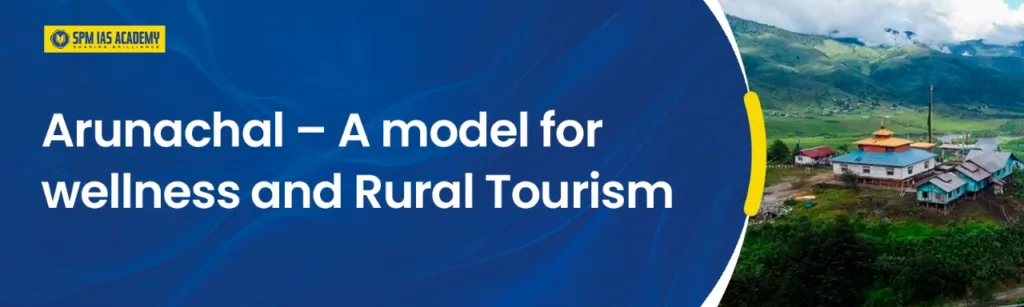
Wellness and rural tourism in Arunachal Pradesh is emerging as a model state in India. It is leveraging its rich natural, cultural, and traditional heritage. Consequently, the state aims to promote holistic well-being. Additionally, it focuses on local empowerment and sustainable rural development.
In this article, we will understand how Arunachal Pradesh emerged as a model state for wellness and rural tourism.
What is Wellness and Rural Tourism in Arunachal Pradesh?
Wellness and rural tourism in Arunachal Pradesh focus on improving physical, mental, and spiritual well-being. It emphasizes proactive activities rather than just treating illness. For example, it includes experiences such as yoga retreats, meditation, and spa therapies. Additionally, healthy food and digital detoxes in peaceful environments are also part of this tourism trend.
Furthermore, this form of tourism is closely linked to rural tourism. Rural areas provide not only natural settings but also cultural depth and economic benefits. For instance, in Arunachal Pradesh, hot springs at Dirang, Thingbu, and Anini illustrate this connection. They combine natural healing with village life, creating unique experiences for visitors.
Moreover, homestays, traditional healing practices, and farm-based lifestyles further strengthen this holistic approach. As a result, travelers can enjoy a culture-driven wellness experience that enhances their overall well-being.
What is Wellness Tourism in Arunachal Pradesh?
Wellness tourism involves travel aimed at enhancing health and well-being through various physical, psychological, and spiritual activities. Unlike medical tourism, which reacts to illnesses, wellness tourism takes a proactive stance by focusing on prevention and self-care.
Common activities include yoga and meditation for mental clarity, spa and healing therapies for physical rejuvenation, and healthy eating retreats that promote overall wellness. Ultimately, wellness tourism nurtures the mind, body, and spirit for a more balanced life.
Below are some significance of wellness tourism in Arunachal Pradesh:
1. Natural Environment for Rejuvenation
The air is unpolluted. Additionally, the dense forests create a serene environment. The flowing rivers enhance the natural beauty. Moreover, the snow-capped mountains provide a stunning backdrop. Together, these elements create an ideal setting for meditation, yoga, and nature-based therapies.
Destinations: Tawang, Mechuka, Ziro, Bomdila, and Dirang offer scenic and peaceful surroundings.
2. Traditional Healing Practices
Arunachal’s indigenous communities, such as the Nyishi, Apatani, and Adi tribes, possess a rich knowledge of ethnomedicine and herbal healing. Furthermore, integrating traditional healing practices with modern wellness tourism can enhance the state’s appeal.
This collaboration positions Arunachal Pradesh as a prime destination for natural therapies and traditional medicine. As a result, visitors can experience both the cultural heritage and the health benefits of these age-old practices.
3. Potential for Eco-Wellness Infrastructure
Eco-resorts, yoga centers, and Ayurvedic wellness hubs can play a significant role in promoting sustainable tourism. Not only do they offer unique experiences, but they also help preserve ecological balance. Additionally, hot springs can be promoted as natural wellness attractions, providing both relaxation and health benefits. By integrating these elements, we can foster a more sustainable approach to tourism.
4. Employment and Skill Development
The program encourages local youth to participate as guides, therapists, or hospitality workers. Additionally, it promotes women’s entrepreneurship. For instance, women are supported in making herbal products, creating local cuisine, and establishing wellness homestays.
5. Alignment with National Priorities
The wellness tourism in Arunachal Pradesh supports India’s initiatives such as “Dekho Apna Desh,” “Incredible India 2.0,” and “Ayush-based Wellness Tourism.” Moreover, the Ministry of Tourism has identified the Northeast as a key zone for wellness and spiritual tourism. This region holds great potential for attracting tourists seeking health and spiritual experiences.
Rural Tourism in Arunachal Pradesh
Rural tourism in Arunachal Pradesh provides travelers with an immersive experience of nature and tradition, showcasing remote villages, indigenous cultures, and sustainable lifestyles while going beyond typical sightseeing activities.
Below are some significant aspects of rural tourism in Arunachal Pradesh:
1. Preservation of Indigenous Culture
Arunachal Pradesh is home to 26 major tribes and over 100 sub-tribes. Each of these tribes has unique festivals, crafts, and traditions. Furthermore, rural tourism provides an excellent avenue to showcase these traditional lifestyles. It also highlights the art of weaving, various handicrafts, and local cuisines.
2. Inclusive Economic Development
Arunachal Pradesh promotes community-led growth in remote areas where industrialization is limited. Homestay tourism, supported by government initiatives, provides direct income to local families.
Example: The Department of Tourism’s Rural Homestay Scheme in Ziro Valley and Mechuka.
3. Strengthening Infrastructure
Roads, digital connectivity, sanitation, and power supply in rural areas are improving. This progress is largely due to the growing demand for tourism. As a result, local infrastructure is benefiting from these enhancements. Consequently, the quality of life for local people is improving. Furthermore, access to important services is becoming more reliable for residents.
4. Promotion of Agro-Tourism and Eco-Tourism
Visitors can experience organic farming. In addition, they can enjoy orchard visits and traditional fish farming. This initiative encourages sustainable practices. For instance, it promotes zero-waste tourism, organic food, and renewable energy use in rural settings.
5. Social Empowerment
The initiative enhances women’s participation in tourism enterprises. It spans various areas, from craft production to hospitality. Additionally, it strengthens youth engagement. This engagement focuses on preserving cultural heritage and promoting environmental conservation.
What are the Challenges of Wellness and Rural Tourism in Arunachal Pradesh?
Insufficient connectivity and infrastructure exist in many remote rural regions. This hampers development and access for both residents and tourists. Additionally, there is a pressing need for trained manpower in hospitality and wellness management. Without skilled professionals, the potential for growth in these sectors remains limited.
Furthermore, balancing environmental sustainability with wellness and rural tourism in Arunachal Pradesh is necessary. It’s important to ensure that increased visitor numbers do not harm natural resources. Lastly, there is a lack of institutional promotion and branding in these areas. This absence hinders visibility and can prevent potential opportunities for growth and economic benefit.
Overall, addressing these challenges is essential for fostering sustainable tourism development.
Conclusion
In conclusion, to enhance wellness and rural tourism in Arunachal Pradesh, we should create Wellness Clusters in Tawang, Mechuka, and Ziro. We need to train local youth in hospitality and eco-tourism while promoting indigenous herbal knowledge through AYUSH. Additionally, we should leverage digital marketing and develop sustainable, eco-friendly infrastructure. Finally, public–private partnerships can attract investment for wellness resorts and cultural villages.
Frequently Asked Questions
Its pristine nature, strong cultural traditions, and peaceful rural settings support holistic wellbeing.
It creates livelihoods through homestays, traditional healing, and local enterprise development.
The blend of hot springs, indigenous healing, spiritual practices, and untouched rural landscapes.

Behind every article at SPM IAS Academy is a team of skilled content writers and subject experts committed to making preparation easier for aspirants. From answering common doubts to breaking down complex issues and current affairs, we create content that is accurate, easy to understand, and directly useful for UPSC, APSC, and other competitive exams.