
Why Was the Global Hunger Index 2026 in the News?
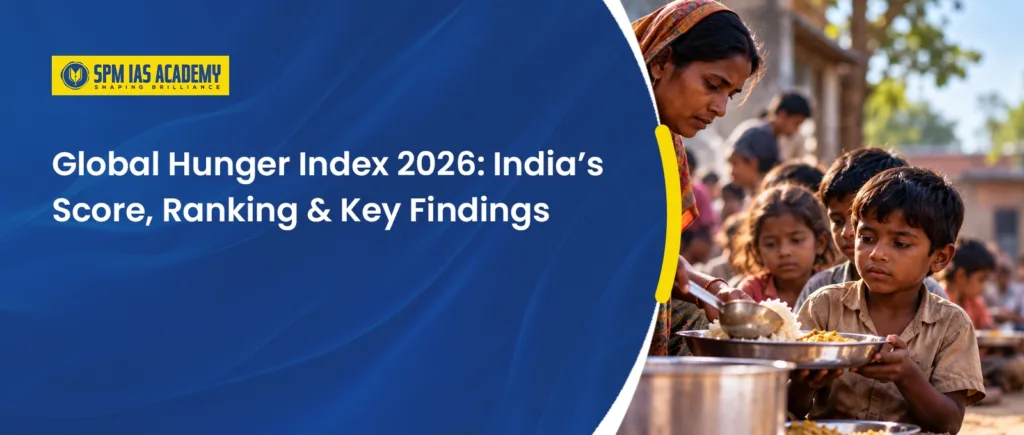
The Global Hunger Index 2026 (GHI 2026) was in the news following the release of the annual assessment of hunger and undernutrition across countries. India ranks at 100th with a score of 24.1, placing it in the serious hunger category. The report highlights continuing challenges related to child nutrition, food access and public health.
The Global Hunger Index is a multidimensional tool that measures and tracks hunger at global, regional, and national levels. Moreover, it helps policymakers understand nutritional challenges and identify areas requiring stronger interventions. For India, the findings are particularly relevant to food security, child development, and inclusive growth. Aspirants can explore these topics in greater depth through online UPSC coaching in Assam, which supports current affairs preparation and understanding of important issues in governance and social development.
This article discusses Global Hunger Index 2026 and the related aspects significant for UPSC, APSC and other State PCS examinations.
What Is the Global Hunger Index?
- The Global Hunger Index (GHI) is an annual, peer-reviewed report jointly published by Concern Worldwide, Welthungerhilfe and the Institute for International Law of Peace and Armed Conflict (IFHV).
- It measures hunger using indicators related to inadequate food intake, child undernutrition and child mortality.
- Moreover, the index assigns countries scores on a 100-point scale. A lower score indicates a better hunger situation, while a higher score reflects more severe hunger. Understanding such indicators is important for aspirants preparing for competitive examinations through UPSC coaching in the Northeast, as they help build knowledge of social issues, development challenges, and government policies.
Global Hunger Index 2026: India’s Score and Key Findings
India ranks 100th in the Global Hunger Index 2026. India scored 24.1 and placed in the serious hunger category. Moreover, the findings highlight persistent nutritional challenges despite progress in certain indicators.
Key findings for India include:
- India’s GHI Rank: 100th
- GHI score: 24.1 out of 100.
- Hunger category: Serious.
- Child stunting: 29.3% of children under five have low height for their age.
- Child wasting: 19.0% of children under five have low weight for their height.
- Undernourishment: 9.8% of the population does not receive sufficient dietary energy.
- Under-five mortality: 2.7% of children die before reaching five years of age.
India’s child stunting rate declined from 50% in 2000 to 29.3% in 2026. However, the high prevalence of child wasting remains a significant concern.
India’s Rank in Global Hunger Index 2026
According to the 2026 GHI, India ranks 100th among 122 countries. India’s performance reflects continuing challenges in tackling malnutrition. Notably, India recorded a GHI score of 24.1, placing it in the “serious” hunger category. Understanding such reports, rankings, and development indicators is important for APSC exam preparation, particularly for current affairs, social issues, and government policy-related topics.
The index assesses hunger using four key indicators. These are undernourishment, child stunting, child wasting and under-five mortality. Although India has reduced child stunting over time, child wasting remains a major concern. Therefore, improving nutrition, healthcare and food security is essential to achieving Sustainable Development Goal 2: Zero Hunger.
What Are the Four Indicators of the Global Hunger Index?
The Global Hunger Index 2026 combines four indicators to assess the multidimensional nature of hunger.
- Undernourishment: Undernourishment measures the proportion of the population whose regular food intake fails to provide sufficient dietary energy. It reflects inadequate access to food at the population level.
- Child Stunting: Child stunting refers to low height for age among children under five. It generally reflects chronic undernutrition, repeated infections and inadequate nutrition during critical stages of growth.
- Child Wasting: Child wasting refers to low weight for height among children under five. It indicates acute undernutrition and can result from inadequate food intake or illness.
- Under-Five Mortality: This indicator measures the proportion of children who die before reaching five years of age. It reflects, in part, the combined effects of malnutrition, disease and inadequate healthcare.
Global Hunger Index 2026: Hunger Severity Categories
The index classifies hunger severity according to a country’s GHI score.
| GHI score | Hunger severity |
| 0–9.9 | Low |
| 10–19.9 | Moderate |
| 20–34.9 | Serious |
| 35–49.9 | Alarming |
| 50 and above | Extremely alarming |
India’s score of 24.1 falls within the serious category, indicating that undernutrition remains an important public policy challenge.
Why Does India Face Hunger and Malnutrition?
India’s food security challenges extend beyond agricultural production. Several interconnected factors contribute to persistent hunger, making this an important topic for aspirants studying social issues, governance, and economic development through online coaching in Assam.
- Poverty and inequality: Low household incomes restrict access to nutritious food.
- Poor dietary diversity: Many households lack adequate access to protein-rich foods, fruits and vegetables.
- Maternal and child health: Maternal malnutrition, inadequate infant feeding practices and recurrent infections affect child growth.
- Sanitation and healthcare gaps: Unsafe drinking water, poor sanitation and limited healthcare access can worsen undernutrition.
- Regional disparities: Differences in income, healthcare, education and public service delivery contribute to uneven nutritional outcomes.
Government Initiatives to Address Hunger in India
India implements several programmes to improve food security and nutritional outcomes:
- National Food Security Act, 2013: This act provides a legal framework for subsidised food grains to eligible beneficiaries.
- Pradhan Mantri Garib Kalyan Anna Yojana (PMGKAY): It provides free food grains to eligible beneficiaries under the public distribution system.
- POSHAN Abhiyaan: Focuses on improving nutritional outcomes among children, adolescent girls, pregnant women and lactating mothers.
- Saksham Anganwadi and POSHAN 2.0: Moreover, they support nutritional services and early childhood care.
Effective implementation, dietary diversity, nutrition awareness and improved public healthcare remain essential to achieving better outcomes.
Conclusion
The Global Hunger Index 2026 highlights India’s continuing challenge of translating food availability and economic development into improved nutritional outcomes. India’s score of 24.1 places it in the serious hunger category, with child wasting and stunting requiring particular attention.
For sustainable progress, India must strengthen nutrition programmes, improve maternal and child healthcare, promote dietary diversity and address regional inequalities. For UPSC and APSC aspirants, the index offers an important perspective on the relationship between food security, public health and inclusive development.
Read More:
| Articles |
| POSHAN ABHIYAAN SCHEME |
| WHAT IS MEANT BY FOOD SECURITY |
| Food and Nutrition Diversification in India |
| BRIEFLY DISCUSS THE SUSTAINABLE DEVELOPMENT GOALS (SDGS) |
Source:
Frequently Asked Questions
1. What is the Global Hunger Index 2026?
The GHI 2026 measures hunger and undernutrition across countries. It uses four indicators. These are undernourishment, child stunting, child wasting and under-five mortality. Moreover, it helps policymakers identify nutritional gaps and strengthen food security programmes.
2. What is India’s rank in the Global Hunger Index 2026?
According to the provided figures, India ranks 100th among 122 countries, with a score of 24.1. Therefore, it falls under the serious hunger category. Moreover, the findings also highlight persistent challenges related to child wasting, stunting and access to nutritious food.
3. What are the four indicators of the Global Hunger Index?
The Global Hunger Index uses four indicators to assess hunger. First, undernourishment measures inadequate dietary energy intake. Second, child stunting reflects chronic undernutrition. Third, child wasting indicates acute undernutrition. Finally, under-five mortality measures deaths among children before their fifth birthday.

Behind every article at SPM IAS Academy is a team of skilled content writers and subject experts committed to making preparation easier for aspirants. From answering common doubts to breaking down complex issues and current affairs, we create content that is accurate, easy to understand, and directly useful for UPSC, APSC, and other competitive exams.