
The Wangala is an important harvest festival of the Garo community of Meghalaya. The festival honours Saljong, the Sun God associated with fertility and agricultural prosperity. It marks the end of the harvesting season and expresses gratitude for a successful harvest.
On 11 November 2026, the 50th Hundred Drums Wangala Festival commenced at Wangala A’dam, Chibagre, in Meghalaya’s West Garo Hills district. The celebrations showcased the traditional music, dance, rituals, and cultural heritage of the A’chik (Garo) community. Such important regional events are useful for current affairs and cultural awareness among civil services aspirants. An APSC & UPSC combine course can help students prepare for both examinations through integrated learning and a structured approach to General Studies.
This article explains about this festival, its rituals, cultural significance and important facts. This topic is important for UPSC, APSC and State PCS examinations.
Why Was the Wangala Festival in the News in 2026?
The Wangala Festival 2026 began on 11 November at Chibagre in the West Garo Hills district of Meghalaya. The celebrations marked the 50th edition of the Hundred Drums Wangala Festival. Moreover, organisers planned large-scale traditional performances featuring hundreds of drummers and dancers.
The festival began with Chandal Goa, a traditional sacred ritual of the Garo community. Additionally, the 2026 celebrations attracted attention because of plans for a grand 1,000-drums performance, aiming to gain international recognition through a Guinness World Record. Such cultural events are important topics for current affairs and regional awareness. Keeping track of these developments can also support APSC exam preparation, particularly for questions related to Northeast India’s festivals, traditions, and cultural heritage.
What Is the Wangala Festival?
- It is a post-harvest thanksgiving festival. It is mostly the Garo community of Meghalaya who celebrates this festival.
- Moreover, the festival honours Saljong, also associated with Misi Saljong in traditional Garo beliefs. People thank the deity for agricultural prosperity and seek blessings for future harvests.
- Traditionally, the festival also marks the beginning of winter after the completion of agricultural activities.
Which Community and State Celebrate the Wangala Festival?
- The Garo community, also known as the A’chik, primarily celebrates Wangala in Meghalaya.
- The Garos are one of Meghalaya’s major indigenous communities. They predominantly inhabit the Garo Hills region and follow a matrilineal social system.
- Moreover, the festival reflects their close relationship with agriculture, nature and traditional religious beliefs.
What Are the Major Features of the Wangala Festival?
The Wangala combines religious ceremonies, traditional dances, music and community celebrations.
- Worship of Saljong: The festival honours Saljong, the Sun God associated with fertility and agricultural prosperity. Traditionally, people offer prayers and express gratitude for a successful harvest.
- Traditional Wangala Rituals: The celebrations include important rituals such as:
- Ragula: Traditionally performed inside the house of the village chief during the initial ceremonies.
- Kakkat: A subsequent stage associated with traditional celebrations and dancing.
- Chandal Goa: A sacred ritual performed during the opening of the 2026 celebrations.
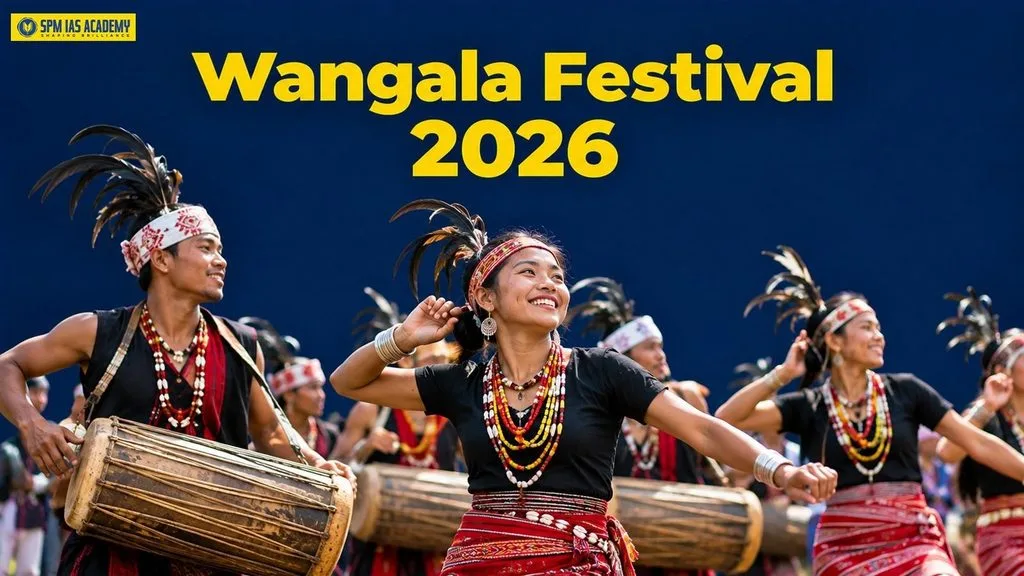
- The 100 Drums Dance: The festival is famous for its rhythmic drum performances. Men beat traditional drums while dancers move in coordinated formations. Moreover, the performances include gongs, flutes and traditional wind instruments.
- Traditional Garo Attire: Participants wear colourful traditional costumes and feathered headgear. Men and women perform coordinated dances that reflect the community’s cultural identity.
- Community Participation: The celebrations bring together different generations. Consequently, they encourage the transmission of traditional knowledge, music and customs.
What Is the Significance of the Wangala Festival?
The Wangala holds religious, agricultural, and cultural importance for the Garo community. Understanding such regional festivals, traditions, and cultural practices is essential for developing knowledge of Northeast India’s heritage. Aspirants preparing for civil services examinations through UPSC coaching in North East India can benefit from studying these topics as part of their regional history and culture preparation.
- Cultural Heritage Preservation: The festival preserves traditional Garo music, dance, clothing and rituals. Moreover, it helps younger generations understand their cultural roots.
- Agricultural Significance: Wangala celebrates the completion of the harvest. Therefore, it reflects the importance of agriculture in traditional Garo society.
- Community Identity and Unity: The celebrations bring families and communities together. Additionally, they strengthen social relationships and collective cultural identity.
- Tourism and Local Economy: The festival attracts visitors interested in Meghalaya’s indigenous traditions. Consequently, it creates opportunities for local artisans, performers and tourism-related businesses.
Conclusion
The Wangala highlights the rich cultural heritage of Meghalaya’s Garo community. Its traditional rituals, drum performances, and harvest celebrations reflect the community’s relationship with nature and agriculture. Understanding these cultural traditions is valuable for students preparing for competitive examinations. Enrolling in reputed APSC coaching in Assam can help aspirants strengthen their knowledge of Northeast India’s history, geography, festivals, and cultural heritage.
For UPSC, APSC and Meghalaya PCS aspirants, the festival is an important topic. It comes under Indian art and culture, tribal heritage and regional traditions.
Read More:
Source:
Frequently Asked Question
1. What is the Wangala Festival, and why is it celebrated?
The Wangala is a traditional harvest festival of the Garo community in Meghalaya. It honours Saljong, the Sun God associated with fertility and agricultural prosperity. Moreover, the festival marks the end of the harvesting season and expresses gratitude for a successful harvest.
2. Which community celebrates the Wangala and in which state?
The Garo community, also known as the A’chik, celebrates the Wangala in Meghalaya, particularly in the Garo Hills region. The festival showcases traditional Garo music, dance, rituals and cultural heritage. Additionally, it strengthens community unity and preserves indigenous traditions.
3. Why was the festival of Wangala 2026 in the news?
The 50th Hundred Drums Wangala Festival began on 11 November 2026 at Chibagre in Meghalaya’s West Garo Hills district. Moreover, the celebrations featured traditional rituals and large-scale cultural performances, including plans for a 1,000-drums performance aimed at Guinness World Record recognition.

Behind every article at SPM IAS Academy is a team of skilled content writers and subject experts committed to making preparation easier for aspirants. From answering common doubts to breaking down complex issues and current affairs, we create content that is accurate, easy to understand, and directly useful for UPSC, APSC, and other competitive exams.