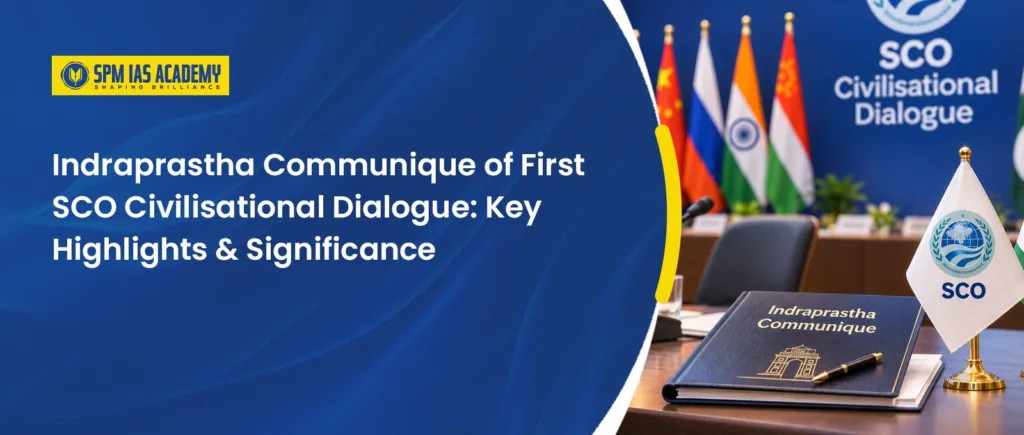
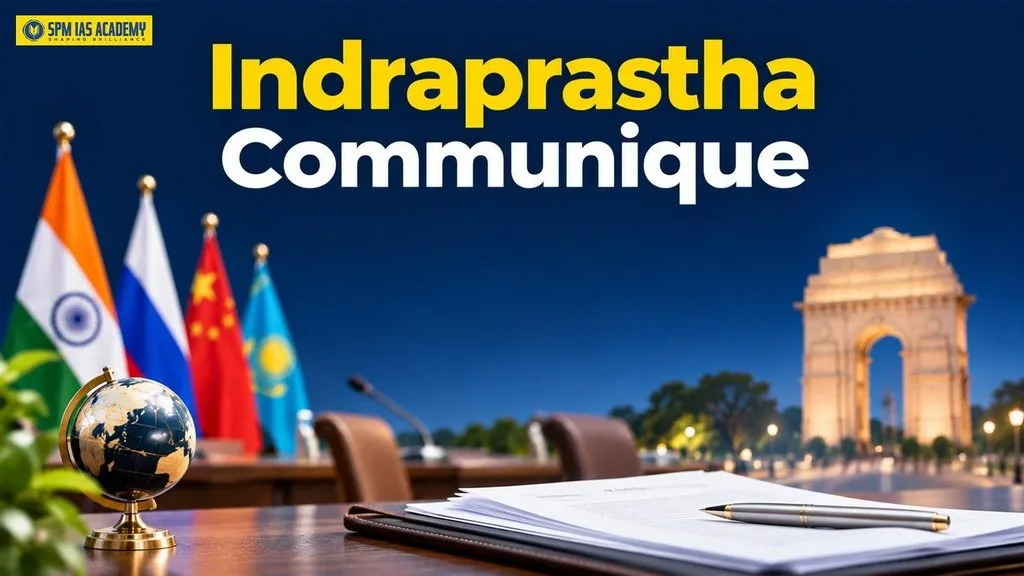
The Indraprastha Communique is an outcome document adopted at the first Shanghai Cooperation Organisation (SCO) Civilisational Dialogue Forum in New Delhi, India. It promotes respect for all civilisations as equal voices and calls for greater cooperation among SCO countries to protect cultural heritage, encourage cultural exchanges and strengthen people-to-people connections.
The Communique also highlights the responsible use of technology, including Artificial Intelligence (AI), in preserving and promoting cultural heritage. Such developments are important for aspirants studying at the best APSC coaching in Guwahati, as they connect current affairs with emerging technologies, cultural preservation and international cooperation.
In this article, you will learn what the SCO document is, its major provisions and significance for India. This topic is important for UPSC, APSC and other State PCS Examinations. It comes under GS II Paper – International Relations, Geopolitics and Regional Groupings. Moreover, it is also important for Art and Culture for Preservation of Civilisational Heritage.
Why Was Indraprastha Communique in the News?
The Indraprastha Communique was in the news after its adoption at the first SCO Civilisational Dialogue Forum. To know more about the Dialogue, read this – First SCO Civilisational Dialogue. This topic is also relevant for aspirants enrolled in UPSC coaching in North East India, as it covers important developments in international relations and current affairs.
Prime Minister Narendra Modi inaugurated the three-day forum on 20 November 2026. Notably, the forum brought together 116 delegates from 22 countries, including four ministers and the SCO Secretary-General. The Ministry of Culture and Ministry of External Affairs jointly organised the event. The forum adopted the Indraprastha Communique as its outcome document.
The initiative followed India’s proposal at the SCO Summit in Tianjin, China, in 2025 to establish a dedicated platform for civilisational dialogue. The proposal received support through the Bishkek Declaration in September 2026.
What Is Indraprastha Communique?
- The Indraprastha Communique is a collective outcome document of the first SCO Civilisational Dialogue. It records the key discussions, shared perspectives and areas of agreement emerging from the first SCO Civilisational Dialogue Forum.
- It seeks to promote the idea that every civilisation deserves equal respect, recognition and representation. There should not be inequality in relation to their historical influence, geographical size or cultural identity.
- The dialogue was held at Purana Qila in New Delhi. The name reflects the historical association of Purana Qila with Indraprastha, the ancient city mentioned in the Mahabharata.
- Unlike a legally binding international treaty, the Communique provides a framework for continued dialogue and cultural cooperation among SCO countries.
Key Highlights of the Indraprastha Communique
The Communique outlines several areas of cooperation among SCO countries, making it an important topic for APSC exam preparation, particularly for understanding international relations, regional cooperation and current affairs.
- Equal Respect for All Civilisations: It recognises every civilisation as an equal contributor to humanity. Moreover, it aims to promote cultural diversity, mutual respect and peaceful coexistence. It also encourages countries to preserve their distinct cultural identities while strengthening shared understanding.
- Protection of Cultural Heritage: The Communique calls for protecting monuments, manuscripts, literature, artworks and traditional knowledge systems. Simultaneously, it encourages cooperation against illegal trafficking of cultural property. Moreover, it also highlights threats from environmental degradation and natural disasters.
- Technology and Artificial Intelligence: It encourages the constructive use of AI and digital technologies to preserve and promote cultural heritage. Therefore, it supports digitisation, documentation and wider accessibility of historical records. Moreover, it emphasises accuracy, cultural context and the interests of local communities.
- Joint UNESCO Heritage Initiatives: The document encourages SCO countries to identify shared tangible, intangible and documentary heritage. Furthermore, it promotes joint nominations under relevant UNESCO conventions and programmes. It seeks greater international recognition of shared cultural traditions.
- Preservation of Languages and Manuscripts: Indraprastha Communique supports the preservation of languages, scripts, literature, manuscripts and oral traditions. Therefore, it encourages digitisation, translation, joint research and cataloguing. Moreover, it also proposes developing a digital repository to improve access to cultural knowledge.
- Institutional and People-to-People Cooperation: To promote collaboration among museums, libraries and research institutions, it encourages joint exhibitions. Moreover, it also promotes cultural festivals and exchanges of artists, scholars and students. It also highlights spiritual and philosophical traditions, monastic routes and historical centres of learning.
- Youth Participation: The Communique encourages young people to participate in preserving and promoting shared cultural heritage. Therefore, it recognises youth as important contributors to cultural understanding and international cooperation.
Significance of Indraprastha Communique for India
The Communique is significant for India’s cultural diplomacy and international relations.
- Strengthening India’s Soft Power: India can use its rich civilisational heritage. It will help to promote yoga, Buddhism, Ayurveda, literature and traditional knowledge, to strengthen its cultural influence globally.
- Promoting Cultural Diplomacy: The initiative creates opportunities for India to build stronger relationships with Eurasian countries through cultural exchanges rather than relying only on political and economic engagement.
- Strengthening Regional Cooperation: The SCO provides India opportunity to engage with countries such as China, Russia, Iran and Central Asian republics. It will promote collaboration on shared cultural and historical interests.
- Promoting India’s Civilisational Heritage: Hosting the forum at Purana Qila highlighted India’s historical connections. Moreover, it highlighted India’s role in promoting dialogue among different civilisations.
- Supporting Cultural Preservation: Joint research, manuscript digitisation and UNESCO heritage nominations can help preserve historical knowledge and traditional practices.
- Advancing India’s Global Cultural Leadership: The initiative complements India’s broader diplomatic approach based on peaceful coexistence, dialogue and the principle of Vasudhaiva Kutumbakam.
What Is the Shanghai Cooperation Organisation (SCO)?
The Shanghai Cooperation Organisation is a Eurasian intergovernmental organisation established on 15 June 2001 in Shanghai, China. It aims to promote regional security, economic cooperation, political trust and cultural exchanges among its members.
- Founding members: China, Russia, Kazakhstan, Kyrgyzstan, Tajikistan and Uzbekistan.
- Current members: 10 countries, including India, Pakistan, Iran and Belarus.
- India’s membership: India became a full member in 2017 at the Astana Summit.
- Headquarters: Beijing, China.
- Regional Anti-Terrorist Structure (RATS): Based in Tashkent, Uzbekistan.
The SCO also promotes cooperation in education, science, technology, tourism, culture and environmental protection. These topics are relevant for aspirants enrolled in online coaching in Assam, as they help strengthen their understanding of international cooperation and current affairs for competitive examinations.
What Are the Key Challenges Facing Indraprastha Communique?
Despite its potential, the Communique faces certain challenges:
- Political differences: Differences among SCO members may affect the implementation of cultural cooperation initiatives.
- Historical disagreements: Moreover, countries may interpret shared historical events and cultural traditions differently.
- Cultural heritage trafficking: Furthermore, illegal trade in artefacts and historical objects remains a major concern.
- Digital preservation: Countries need technical expertise, funding and institutional capacity to digitise and preserve cultural resources.
To address these challenges, SCO members should strengthen institutional partnerships, promote academic exchanges. Moreover, members should develop shared digital repositories ensuring effective implementation of agreed initiatives. The forum also proposed holding the SCO Civilisational Dialogue every two years at a venue decided by member states.
Conclusion
The Indraprastha Communique marks an important step towards strengthening cultural diplomacy within the Shanghai Cooperation Organisation. By promoting equal respect for civilisations and protecting shared heritage, it provides a platform for greater regional understanding. For India, the initiative offers an opportunity to strengthen its soft power and promote its civilisational heritage through international cooperation.
UPSC/APSC Mains Practice Question
Q. “The Indraprastha Communique reflects India’s efforts to promote cultural diplomacy and strengthen people-to-people ties among SCO member states.” Discuss its significance and examine the key challenges in its effective implementation.
Read More:
Source:
Frequently asked question
1. What is the Indraprastha Communique?
The Indraprastha Communique is the outcome document of the first SCO Civilisational Dialogue Forum held in New Delhi in November 2026. It promotes cultural cooperation and equal respect for all civilisations.
2. Why was the Indraprastha Communique in the news?
The forum adopted the Communique at Purana Qila, New Delhi, on 22 November 2026. It aims to strengthen cultural exchanges and heritage preservation among SCO countries.
3. What are the key highlights of the SCO’s Indraprastha document?
It promotes cultural heritage protection, AI-based preservation, language conservation, joint UNESCO initiatives and youth participation. It also encourages people-to-people exchanges among SCO members.
4. What is the significance of the Indraprastha Communique for India?
It strengthens India’s cultural diplomacy and soft power. Moreover, it creates opportunities to promote Indian heritage and build stronger ties with SCO countries.

Behind every article at SPM IAS Academy is a team of skilled content writers and subject experts committed to making preparation easier for aspirants. From answering common doubts to breaking down complex issues and current affairs, we create content that is accurate, easy to understand, and directly useful for UPSC, APSC, and other competitive exams.