

Assam GI Products have again come into focus after four traditional products from the state received the Geographical Indication tag. The newly recognised products are Karbi Anglong Handloom Products, Assam Bihu Pepa, Assam Bamboo Craft and Deuri Handloom Products. This is a major boost for Assam’s indigenous crafts, tribal heritage and rural economy.
For UPSC and APSC aspirants, Assam GI Products are important under Art and Culture, Economy, Intellectual Property Rights, Tribal Culture and Assam Current Affairs. Moreover, GI tags help students understand how local heritage can connect with livelihood, market protection and cultural identity.
Aspirants can prepare Assam current affairs, Art and Culture and competitive exams with guidance from UPSC coaching in Assam.
Why Assam GI Products Are in News
Four traditional products of Assam have been granted GI Tag by the Geographical Indications Registry, Government of India. These products represent Assam’s craft traditions, music culture and tribal handloom heritage.
The four new GI-tagged products are:
- Karbi Anglong Handloom Products
- Assam Bihu Pepa
- Assam Bamboo Craft
- Deuri Handloom Products
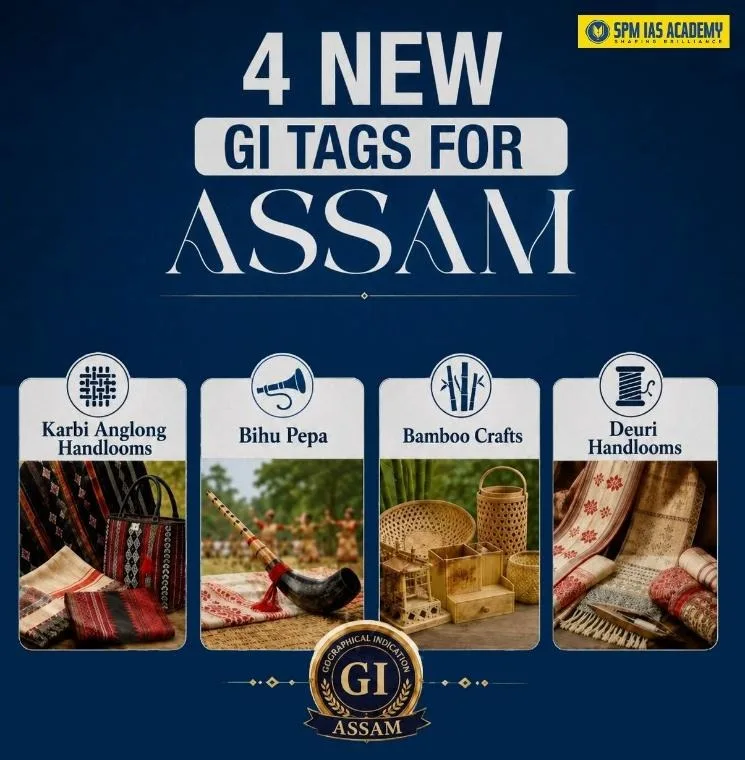
This recognition will help protect the identity of these products. It will also support artisans, weavers and local communities linked with their production. Therefore, this development is important not only for cultural recognition but also for rural livelihood.
Students preparing for civil services can access expert support through UPSC coaching in north east India for better preparation.
What is a GI Tag?
A Geographical Indication (GI) Tag is a form of Intellectual Property Right. It is given to products that have a specific geographical origin and possess qualities or reputation linked to that region.
India grants GI tags under the Geographical Indications of Goods (Registration and Protection) Act, 1999. The GI Registry in Chennai administers the registration process.
In simple words, a GI tag protects the unique identity of a product. For example, Muga Silk of Assam, Joha Rice, Tezpur Litchi and Gamosa of Assam already carry GI recognition. Now, the new additions have further strengthened the list of Assam GI Products.
Which are the 4 New GI-Tagged Products from Assam?
Karbi Anglong Handloom Products
Karbi Anglong Handloom Products are linked with the Karbi tribe of Assam. These products carry traditional motifs, indigenous designs and community-based weaving practices.
They reflect the cultural identity of the Karbi people. Moreover, they give visibility to local weavers who preserve traditional handloom knowledge. The GI tag can help these products gain better market recognition and prevent imitation.
Technology initiatives like BHASHINI Assam MoU show how digital solutions support inclusive development and regional growth.
Assam Bihu Pepa
The Bihu Pepa is a traditional wind instrument used during Bihu celebrations. Artisans traditionally make it from buffalo horn. It produces a distinct sound that remains closely associated with Rongali Bihu and Assamese folk music.
The GI tag for Assam Bihu Pepa is important because it protects a cultural symbol of Assam. It also highlights the role of folk instruments in preserving community memory and festive traditions.
Assam Bamboo Craft
Assam has a long tradition of bamboo-based craftsmanship. The state has abundant bamboo resources, and artisans use bamboo to make household items, decorative objects, utility products and craft materials.
Assam Bamboo Craft represents local skill, sustainability and rural entrepreneurship. Moreover, bamboo crafts are eco-friendly and have strong potential in modern markets. The GI tag can create better branding opportunities for artisans and self-help groups.
Deuri Handloom Products
Deuri Handloom Products are associated with the Deuri tribe of Assam. These products reflect distinctive weaving patterns and indigenous textile heritage.
Deuri Handloom Products are associated with the Deuri tribe of Assam. These products reflect distinctive weaving patterns and indigenous textile heritage. Such traditional crafts highlight the cultural diversity of Assam. Similarly, a well-optimized Google Business Profile helps businesses showcase their services, improve local visibility, and connect with customers through accurate digital information.
The Deuri community has preserved its handloom tradition through generations. Therefore, GI recognition will help protect this cultural knowledge. It can also improve the visibility of Deuri weavers in regional and national markets.
What Was the Role of NABARD in Securing GI Tag for Assam Products?
NABARD has played an important role in supporting GI certification for traditional products in Assam. It has helped in documentation, registration support and promotion of heritage-based rural livelihoods.
This support matters because many traditional artisans do not have easy access to legal or market systems. GI certification can protect their products from misuse. It can also improve branding, pricing and market reach.
Therefore, the growth of Assam GI Products shows how cultural heritage and rural development can work together.
Why GI Tags Matter for Assam?
GI tags can create many benefits for Assam.
- First, they protect traditional products from imitation by securing their authentic identity.
- Second, they help consumers identify authentic goods.
- Third, they improve the market value of local products leading to income generation.
- In addition, GI tags support artisans, farmers, weavers and tribal communities. They also promote tourism and cultural awareness.
- For a state like Assam, where culture and livelihood are deeply connected, GI tags can become tools of economic empowerment.
The new recognition also strengthens Assam’s position as a hub of handloom, handicraft and agricultural diversity.
Which are the Important Assam GI Products?
Apart from the four new additions, there are other important Assam GI Products. These include Gamosa of Assam, Muga Silk of Assam, Assam Orthodox Tea, Joha Rice, Boka Chaul, Kaji Nemu, Chokuwa Rice, Tezpur Litchi, Assam Karbi Anglong Ginger, Judima, Majuli Mask of Assam, Assam Jaapi and Assam Bihu Dhol.
List of GI Products of Assam
| Sl. No. | GI Product | Category |
| 1 | Assam Jaapi | Handicraft |
| 2 | Assam Asharikandi Terracotta Craft | Handicraft |
| 3 | Assam Mishing Handloom Products | Handicraft |
| 4 | Assam Bihu Dhol | Handicraft |
| 5 | Assam Pani Meteka Craft | Handicraft |
| 6 | Sarthebari Metal Craft | Handicraft |
| 7 | Majuli Mask of Assam | Handicraft |
| 8 | Assam Majuli Manuscript Painting | Handicraft |
| 9 | Bodo Dokhona | Handicraft |
| 10 | Bodo Eri Silk | Handicraft |
| 11 | Bodo Jwmgra | Handicraft |
| 12 | Bodo Gamsa | Handicraft |
| 13 | Bodo Keradapini | Agricultural |
| 14 | Bodo Thorkha | Handicraft |
| 15 | Bodo Gongar Dunjia | Agricultural |
| 16 | Bodo Kham | Handicraft |
| 17 | Bodo Serja | Handicraft |
| 18 | Bodo Sifung | Handicraft |
| 19 | Bodo Khardwi | Handicraft |
| 20 | Bodo Gongona | Handicraft |
| 21 | Bodo Jotha | Handicraft |
| 22 | Gamosa of Assam | Handicraft |
| 23 | Muga Silk of Assam | Handicraft |
| 24 | Assam Orthodox Tea | Agricultural |
| 25 | Muga Silk of Assam Logo | Handicraft |
| 26 | Assam Karbi Anglong Ginger | Agricultural |
| 27 | Tezpur Litchi | Agricultural |
| 28 | Joha Rice of Assam | Agricultural |
| 29 | Boka Chaul | Agricultural |
| 30 | Kaji Nemu | Agricultural |
| 31 | Chokuwa Rice of Assam | Agricultural |
| 32 | Judima | Manufactured |
| 33 | Arunachal Pradesh Singpho Phalap / Singpho Tea | Agricultural |
Conclusion
The recognition of four new Assam GI Products is a proud moment for the state. It protects Assam’s traditional crafts, tribal handloom practices and folk music heritage. Moreover, it creates new opportunities for artisans and rural communities.
For exam aspirants, this topic offers strong value in Art and Culture, Economy, Governance and Assam Current Affairs. Therefore, students should not treat GI tags as simple factual data. They should understand how GI recognition connects culture with identity, livelihood and sustainable development.
APSC Mains Practice Question:
Q. Geographical Indication tags can protect Assam’s cultural heritage while also strengthening rural livelihoods and local economies. Discuss with reference to the recent GI recognition of Karbi Anglong Handloom Products, Assam Bihu Pepa, Assam Bamboo Craft and Deuri Handloom Products.
Sources:
Frequently Asked Questions
The four new GI-tagged products from Assam are Karbi Anglong Handloom Products, Assam Bihu Pepa, Assam Bamboo Craft and Deuri Handloom Products.
Assam GI Products are important because they protect the state’s cultural identity, support local artisans and promote authentic regional products in wider markets.
The GI Registry in Chennai grants GI tags under the Geographical Indications of Goods (Registration and Protection) Act, 1999.

Behind every article at SPM IAS Academy is a team of skilled content writers and subject experts committed to making preparation easier for aspirants. From answering common doubts to breaking down complex issues and current affairs, we create content that is accurate, easy to understand, and directly useful for UPSC, APSC, and other competitive exams.