Celebrating Progress, Confronting Challenges, and Inspiring Real Change
Every year on March 8th, something remarkable happens. Across 6 continents, in over 100 countries, people pause — to remember, to celebrate, and to demand better. International Women’s Day is not a corporate hashtag or a greeting card holiday. It is one of the oldest political traditions in modern history, born from strikes and sacrifice, sustained by the quiet courage of billions of women who refused to be invisible.
But what does International Women’s Day really mean in 2026? And why does it matter more — not less — than ever before?
International Women’s Day is observed annually on 8 March. It serves as a powerful global platform that honors women’s achievements in various areas. These areas include social, economic, cultural, and political spheres.
In this article, we will look into the origin, evolution, achievements, and challenges of Women’s Day. We will also discuss its significance.
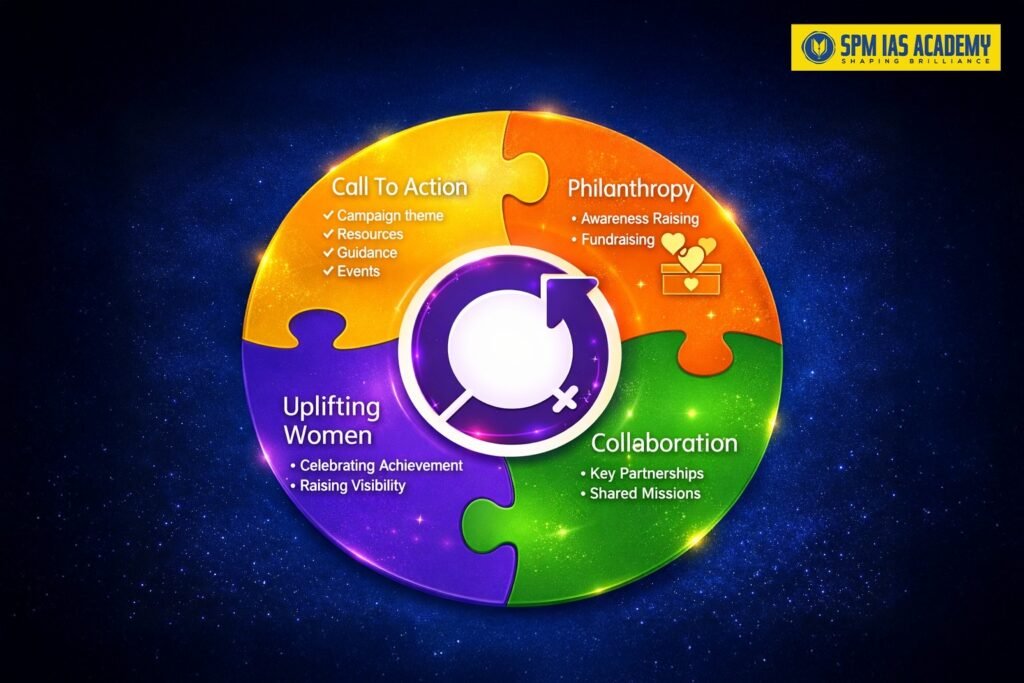
International Women’s Day 2026 Theme: Rights, Justice, and Action for All Women and Girls
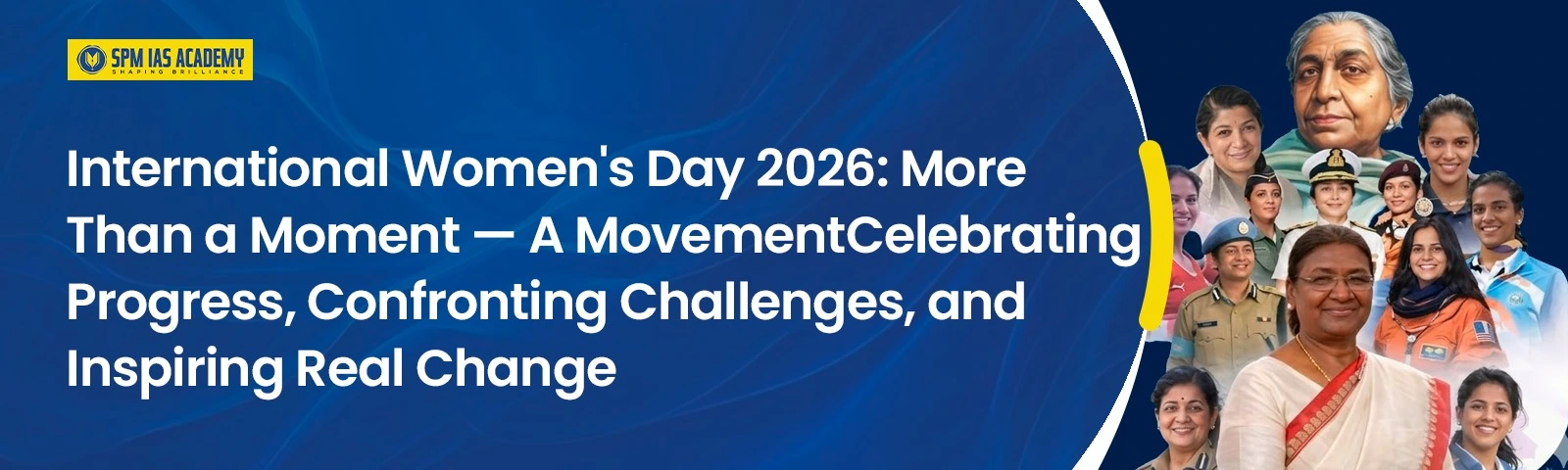
The theme for International Women’s Day 2026, “Rights. Justice. Action. For ALL Women and Girls,” highlights the urgent need to move beyond promises and ensure real change in the lives of women across the world. Led by UN Women, this campaign emphasizes closing the gap between the rights women are guaranteed by law and the realities they experience every day. While many countries have made progress in creating legal protections, millions of women and girls still face discrimination, violence, and unequal opportunities. The theme calls for stronger accountability, fair justice systems, and concrete actions from governments, institutions, and communities to ensure that every woman and girl can truly exercise her rights and live with dignity and equality.
The Origins and Evolution of International Women’s Day
International Women’s Day originated in the early 20th-century labour movements. During this time, women campaigned for better working conditions, fair pay, and political rights. For instance, in 1908, around 15,000 women marched in New York City for shorter hours and voting rights.
The movement transformed into an international event after Clara Zetkin’s proposal at the 1910 International Conference of Working Women. The first official Women’s Day was celebrated on 19 March 1911 in parts of Europe, leading to its annual celebration on 8 March.
In 1975, the United Nations (UN) recognized International Women Day, providing it with a global platform. Since then, the UN and other organizations have adopted themes each year to address specific challenges related to women’s empowerment.
The History You Weren’t Taught in School
International Women’s Day did not begin with flowers or brunch. It began with fury. On March 8, 1908, over 15,000 women marched through the streets of New York City, demanding shorter working hours, better pay, and the right to vote. They were garment workers, seamstresses, and factory laborers — women the world had tried to render powerless.
In 1910, German activist Clara Zetkin proposed a global day for women’s rights at the International Conference of Working Women. The idea was unanimous. The first official International Women’s Day was observed in 1911 across Austria, Denmark, Germany, and Switzerland. By 1917, Russian women were striking for “bread and peace” on this very day — a protest that ignited the February Revolution.
By the Numbers: Where We Stand in 2025
Progress is real — and deeply uneven. Here is what the data tells us about gender equality today:
- Women represent 49.7% of the global population but hold only 26.5% of parliamentary seats worldwide.
- The global gender pay gap stands at approximately 20% — women earn $0.80 for every dollar earned by men, on average.
- Over 750 million women alive today were married before the age of 18.
- Women perform 76% of the world’s unpaid care and domestic work.
- In 2023, 1 in 3 women globally experienced physical or sexual violence.
- Women make up only 8.8% of Fortune 500 CEOs, despite comprising nearly 47% of the U.S. workforce.
- Globally, 129 million girls are out of school.
These are not abstract statistics. Behind every data point is a daughter, a colleague, a neighbor. A woman whose potential the world is still choosing not to fully invest in.
The Many Faces of Women’s Equality
Gender equality is not a single issue. It is an ecosystem of interconnected rights, opportunities, and freedoms. International Women’s Day shines a light on all of them.
Economic Empowerment
When women work, economies grow. Studies by McKinsey Global Institute suggest that advancing women’s equality could add $12 trillion to global GDP. Yet structural barriers — unequal pay, lack of parental leave, the “glass cliff,” and limited access to capital for female entrepreneurs — persist across developed and developing nations alike. Women-owned businesses receive less than 5% of venture capital funding. That is not a pipeline problem. It is a systemic one.
Education and Opportunity
In many parts of the world, a girl’s access to education is still determined by her geography, her family’s income, or the simple fact of her gender. Yet research consistently shows that educating girls is one of the highest-return investments any society can make — reducing child marriage, improving maternal health, and lifting entire communities out of poverty. UNESCO estimates that each additional year of schooling increases a woman’s earnings by up to 12%.
Health and Bodily Autonomy
Women’s health has long been under-researched, under-funded, and under-acknowledged. Conditions that predominantly affect women — endometriosis, polycystic ovary syndrome, postpartum depression — receive a fraction of the medical research attention their prevalence warrants. Globally, maternal mortality remains unconscionably high in low-income countries. And access to reproductive healthcare is under threat in nations that once considered it settled law. Bodily autonomy is not a “women’s issue.” It is a human rights issue.
Violence and Safety
Gender-based violence is a global pandemic that largely goes unnamed. Femicide — the killing of women because they are women — claims hundreds of thousands of lives annually. Online harassment disproportionately silences women in public and professional spaces. Progress here requires not just law reform but cultural transformation: raising boys and men who understand that equality is not a threat, but an invitation.
Women Who Changed the World (and Aren’t in Your Textbook)
History has a selective memory. International Women’s Day is also an opportunity to reclaim the stories that were edited out. Consider these women:
- Hedy Lamarr — Hollywood actress and co-inventor of frequency-hopping spread spectrum technology, the foundation of modern Wi-Fi and Bluetooth.
- Alice Ball — a 23-year-old Black chemist who developed the first successful treatment for leprosy in 1915. A male colleague took credit for her discovery after her early death.
- Rosalind Franklin — whose X-ray crystallography work was pivotal to the discovery of DNA’s double-helix structure. Watson and Crick won the Nobel Prize. She did not.
- Wangari Maathai — Kenyan environmental activist who founded the Green Belt Movement, planting over 47 million trees across Africa, and became the first African woman to win the Nobel Peace Prize.
- Chien-Shiung Wu — a physicist whose experiment disproved the law of conservation of parity. The male colleagues whose theory she validated won the Nobel Prize in 1957. She did not.
These are not footnotes to history. They are its backbone. Representation matters in textbooks for the same reason it matters in boardrooms and parliaments: you cannot become what you cannot see.
What “Rights. Justice. Action.” Really Means in 2026
The theme for International Women’s Day 2026 — “Rights. Justice. Action. For ALL Women and Girls” — is not simply a slogan. It is a call for real change. Across the world, many women already have legal rights on paper, yet their everyday realities often tell a different story. The focus in 2026 is about closing this gap between promise and practice.
Delivering rights and justice means moving beyond celebration toward accountability. It means:
- Governments ensuring that laws protecting women’s rights are not just passed, but properly enforced with strong legal systems and real consequences for discrimination and violence.
- Institutions and workplaces creating safe, equitable environments where women have equal access to leadership, opportunities, and fair pay.
- Education systems empowering young girls with knowledge, confidence, and equal access to learning, while teaching respect, consent, and gender equality from an early age.
- Communities and families challenging harmful stereotypes that limit women’s roles and potential.
- Men and boys becoming active participants in building a more equal society, recognizing that gender justice benefits everyone.
- Media and public platforms highlighting women’s voices, achievements, and leadership as a normal part of public life.
Justice for women cannot remain a distant goal. The message of 2026 is clear: rights must be protected, justice must be delivered, and action must happen now. Only then can equality move from policy documents into everyday reality for women and girls everywhere.
Why International Women’s Day Matters
International Women’s Day is more than just a symbolic date. Instead, it serves as a catalyst for important dialogue and policy action. Specifically, this day brings attention to critical issues such as gender-based violence, educational and health disparities, economic inequalities, and the representation of women in leadership roles.
Moreover, various stakeholders, including governments, civil society groups, educational institutions, and corporations, utilize this occasion to launch initiatives. In addition, they advocate for reforms and showcase the achievements of women across multiple sectors. Overall, this day plays a significant role in promoting awareness and driving change for women everywhere.
Key Milestones in the History of International Women’s Day
Below are some key milestones in the history of International Women’s Day:
| Year | Milestone |
| 1908 | Women workers march for equal rights in New York City. |
| 1910 | Clara Zetkin proposes an IWD. |
| 1911 | The first official IWD was celebrated. |
| 1975 | UN officially recognizes IWD. |
| 1996 | UN begins annual themes for IWD. |
| 2025 | Campaign theme: Accelerate Action. |
| 2026 | Rights. Justice. Action. For ALL Women and Girls |
Themes and Focus Areas
Each year’s International Women’s Day (IWD) theme significantly shapes global campaigns and policy conversations. For example, the official theme for International Womens Day 2025 is “Accelerate Action.” This theme emphasizes the urgency of achieving tangible progress toward gender equality. Furthermore, it highlights the importance of women’s inclusion and empowerment across all aspects of life.
Moreover, the 2026 theme also builds upon established global commitments to gender equality. In particular, it aligns closely with United Nations initiatives such as Sustainable Development Goal 5, which aims to achieve gender equality and empower all women and girls by 2030. By emphasizing rights, justice, and action, the theme reinforces the need for stronger implementation of these global goals so that legal promises translate into real progress in the everyday lives of women worldwide.
How International Women’s Day Is Celebrated
International Women Day celebrations vary globally. In many countries, people wear purple, green, and white. These colors are associated with justice, dignity, and hope. Additionally, participants take part in rallies, seminars, workshops, and cultural events.
Moreover, international corporations utilize the day for various initiatives. For example, they host leadership forums, mentorship programs, and skill-building campaigns for women employees.
On a community level, groups organize local discussions and art exhibits. They also drive awareness campaigns on issues affecting women and girls.
How to Mark the Day Meaningfully
International Women’s Day can be hollow — a social media post, a bouquet, a discounted gym membership. Or it can be something real. Here is how to make it count:
- Donate to organizations doing frontline work: shelters for survivors of domestic violence, girls’ education funds, maternal health clinics.
- Read or listen to a book, podcast, or documentary by a woman whose voice has been underrepresented.
- Audit your own workplace: Are women paid equally? Promoted equitably? Safe to speak up?
- Have the harder conversations — with your children, your colleagues, your family — about what equality actually looks like day to day.
- Support women-owned businesses, not just today, but as a consistent purchasing habit.
- Amplify: Share the work of women whose contributions deserve a wider audience.
The Role of Men in International Women’s Day
International Women’s Day is for everyone. Gender equality is not a zero-sum game where women’s gains mean men’s losses. Research by the Promundo Institute and others consistently shows that men in more gender-equal societies live longer, have better mental health, enjoy more fulfilling relationships, and experience less occupational pressure.
The narrow definitions of masculinity that harm women — the expectation to suppress emotion, dominate, never ask for help — also harm men and boys. International Women’s Day is an invitation to men not to step aside, but to step up. To be deliberate in mentoring women at work, share domestic labor equitably, call out sexism when you see it, even when — especially when — it’s uncomfortable.
A Day. A Movement. A Choice.
International Women’s Day will come and go on March 8th, as it always does. The question is what happens on March 9th. And the 10th. And every day after.
The women who marched through New York in 1908 didn’t have social media. They didn’t have hashtags or awareness campaign but had conviction and had each other. And they had the radical belief that the world could be fairer — not just for them, but for everyone.
“In the future, there will be no female leaders. There will just be leaders.” — Sheryl Sandberg
That future is not inevitable. It is built — decision by decision, policy by policy, conversation by conversation. International Women’s Day reminds us that the building is still underway, and every person reading this is one of the builders.
Not someday. Now. Accelerate.
Challenges and the Road Ahead
Despite progress, gender disparities persist in many areas:
1. In politics, women are still underrepresented in leadership positions across many countries.
2. Economic gaps remain, with women earning less than men for comparable work in many sectors.
3. Gender-based violence and systemic discrimination continue to affect women’s safety and opportunities.
These challenges underscore why International Women Day is not only a day of celebration but a commitment to ongoing advocacy, reform and collective action.
Why is there no International Men’s Day celebration like Women’s Day?
International Men’s Day Actually Does Exist
Here’s the twist most people don’t know: International Men’s Day is November 19th. It’s been observed since 1999, focuses on men’s health, positive masculinity, and boys’ welfare — it just doesn’t get nearly the same cultural traction as March 8th.
So the real question becomes: why the visibility gap?
Why Women’s Day Has More Weight
International Women’s Day isn’t just a feel-good celebration — it was born from protest. The early 1900s saw women marching for the right to vote, to own property, to work without a husband’s permission. The UN officially recognized it in 1977, giving it institutional muscle. Decades of activism, policy fights, and cultural momentum built it into a global event.
It also has a measurable mission: close gaps that are still statistically documented — pay inequity, political underrepresentation, gender-based violence rates. The “problem” it addresses is traceable with data, which makes the day easy to rally around.
Men’s Issues Are Real — But Different in Nature
The challenges men disproportionately face are serious and underacknowledged:
- Men account for roughly 3 out of 4 suicides in many countries
- Boys are increasingly falling behind girls in education
- Men dominate the most dangerous occupations
- Fathers often face steeper battles in custody disputes
- The “man up” culture quietly discourages men from seeking help
The problem isn’t that these issues don’t matter — it’s that they’ve historically been framed as individual failures rather than systemic problems. That framing makes them harder to organize around politically.
Why the Debate Gets Heated
When someone asks “where’s Men’s Day?” on March 8th, it’s often perceived as deflection rather than genuine concern — similar to responding to any focused conversation with “but what about…?”
But when asked sincerely, it reveals something worth sitting with: society is genuinely better at building support structures around some forms of suffering than others. Men’s emotional struggles, in particular, have long been invisible by design.
The Honest Takeaway
These days don’t have to compete. Recognizing historical injustices against women doesn’t erase the real pressures men face — and vice versa. The visibility gap around November 19th says less about whether men matter and more about the fact that no sustained movement has yet demanded that the world stop and pay attention.
That’s not a reason to dismiss Men’s Day. It might actually be a reason to take it more seriously.
Do We Still Need International Women’s Day in Modern Times?
A fair question — and one worth answering honestly rather than defensively.
The Case That We Still Do
The gaps haven’t closed — they’ve just gotten quieter.
- The global gender pay gap still sits around 20% on average. In many industries, women earn less for comparable work.
- Women hold roughly 26% of parliamentary seats worldwide — progress, but hardly equal representation.
- 1 in 3 women globally experience physical or sexual violence in their lifetime, according to WHO data.
- In several countries, girls still face barriers to basic education, forced marriage, and restricted movement.
For the majority of the world’s women, “modern times” still means navigating systems that weren’t built with them in mind.
The Case That It Needs to Evolve
Critics — including many feminists — argue the day has become more corporate than consequential.
- Brands post pink graphics, run “women-themed” sales, and declare empowerment — then return to business as usual on March 9th.
- In wealthy, urban settings, the struggles IWD was built around feel distant to many women.
- The conversation sometimes centers privileged voices while women in conflict zones, extreme poverty, or under authoritarian rule go unheard.
The concern isn’t that the day exists — it’s that visibility without action is just aesthetics.
What the Two Sides Often Talk Past Each Other About
| Those who say “Yes, we need it” | Those who say “It’s outdated” |
| Point to global statistics | Point to progress in Western nations |
| Focus on structural inequality | Focus on individual opportunity |
| Emphasize what hasn’t changed | Emphasize how much has changed |
Both are looking at the same world through different windows. Neither is entirely wrong.
The Deeper Question
The real debate isn’t “does inequality still exist?” — the data settles that. The deeper question is:
Does a single annual day meaningfully move the needle, or has it become a ritual that lets institutions feel good without doing good?
That’s worth asking. Days like IWD are most powerful when they’re a launchpad for policy, legislation, and cultural change — not a substitute for it.
The Honest Answer
Yes — but not in the same way everywhere.
In parts of South Asia, Sub-Saharan Africa, the Middle East, and Latin America, IWD still carries genuine urgency. In more equal societies, its value lies less in awareness and more in accountability — holding governments and corporations to the progress they claim to champion.
We don’t need to retire the day. We need to rescue it from its greeting-card version and redirect it toward the places where the work is hardest and least visible.
Rethinking Stereotypes and the Real Meaning of Feminism
Gender conversations today are often louder than ever, yet many stereotypes about women continue to quietly shape how society thinks and behaves. The idea that women are overly emotional, or that they must flawlessly balance career, family, and social expectations, still lingers in subtle ways. While the past two decades have brought visible progress in education, workplaces, and leadership opportunities for women, true equality remains a work in progress. Modern feminism, often misunderstood as a movement of dominance, is simply a call for fairness, dignity, and equal opportunity. As writers, observers, and participants in society, it becomes important to question these long-held assumptions and contribute to conversations that move beyond stereotypes toward a more balanced and inclusive future.
International Women’s Day 2026 Essay & Speech Topics for UPSC, APSC, and Other Competitive Exams
For aspirants preparing for essays, speeches, or interview discussions in exams like the UPSC Civil Services Examination and the APSC Combined Competitive Examination, International Women’s Day 2026 offers several relevant themes connected to governance, social justice, and development. These topics can also be linked to different papers of the UPSC and APSC Mains examination:
- Justice as a Fundamental Right:
Understanding how legal equality, constitutional protections, and access to justice empower women.
Relevant for: GS Paper II (Polity & Governance) and Essay Paper. - Women in Leadership and Governance:
Examining the importance of women’s representation in political institutions, the judiciary, and civil services for inclusive policy-making.
Relevant for: GS Paper II (Polity, Representation, Governance) and Interview/Personality Test. - Breaking Gender Stereotypes in Society:
Analyzing how social norms and stereotypes restrict women’s participation in education, employment, and leadership.
Relevant for: GS Paper I (Indian Society) and Essay Paper. - Gender Equality and Sustainable Development:
Exploring how gender equality contributes to inclusive growth and aligns with global frameworks such as Sustainable Development Goal 5.
Relevant for: GS Paper III (Development, Inclusive Growth) and Essay Paper. - Role of Education, Media, and Policy in Women’s Empowerment:
Discussing how education, awareness, and government schemes can transform gender relations and improve opportunities for women.
Relevant for: GS Paper I (Society) and GS Paper II (Social Justice & Welfare Schemes).
These themes are highly useful for essay writing, GS answers, and interview discussions, as gender equality remains a recurring topic in civil services examinations.
From the Writer’s Desk
At SPM IAS Academy, women play an essential role in shaping the institution’s dynamic work environment. From the SEO Manager driving the institute’s digital presence, to the Graphic Designer crafting impactful visuals, and the Community Manager building meaningful engagement with students, women contribute significantly to the academy’s growth and vision. What truly stands out is the spirit of gender inclusivity that the institute upholds, where talent and dedication matter more than stereotypes or traditional roles. Being part of such an environment is both inspiring and empowering. I feel genuinely glad and proud to work at an institution that values equal opportunity and recognizes the strength that diversity brings to a team.
Also read :
FAQs on International Women’s Day
It is observed each year on 8 March to honor women’s contributions and mobilize action for gender equality.
The day highlights women’s achievements, raises awareness about gender inequality, and advocates for women’s rights and empowerment across the globe.
One stereotype I wish would disappear is the idea that women are “too emotional” to make rational decisions. Emotions are a normal human trait, not a weakness tied to gender. This stereotype often undermines women’s opinions in workplaces, politics, and leadership roles, even though women are equally capable of making logical and strategic decisions.
An unfair social expectation is that women should always balance everything perfectly—career, family, household responsibilities, and social life—without complaint. Society often expects women to be the primary caregivers while also excelling professionally, which creates unrealistic pressure and unequal workloads compared to men.
Yes, gender equality has improved in many ways over the last 20 years. More women are entering higher education, leadership roles, politics, and traditionally male-dominated fields. Conversations about workplace equality, pay gaps, and harassment have also become more visible. However, there is still progress to be made, especially regarding equal pay, representation in leadership positions, and breaking cultural stereotypes.
Many people misunderstand modern feminism as being about women wanting superiority over men. In reality, feminism is about equality—ensuring that women and men have the same rights, opportunities, and respect in society. It focuses on removing systemic barriers and challenging social norms that limit people based on gender.

Behind every article at SPM IAS Academy is a team of skilled content writers and subject experts committed to making preparation easier for aspirants. From answering common doubts to breaking down complex issues and current affairs, we create content that is accurate, easy to understand, and directly useful for UPSC, APSC, and other competitive exams.