GS Paper 1 Strategy for UPSC Mains is one of the most searched topics among Civil Services aspirants. Every year, thousands of candidates clear the UPSC Prelims but struggle to score well in General Studies Paper 1. The primary reason is not a lack of knowledge but the absence of a proper strategy.
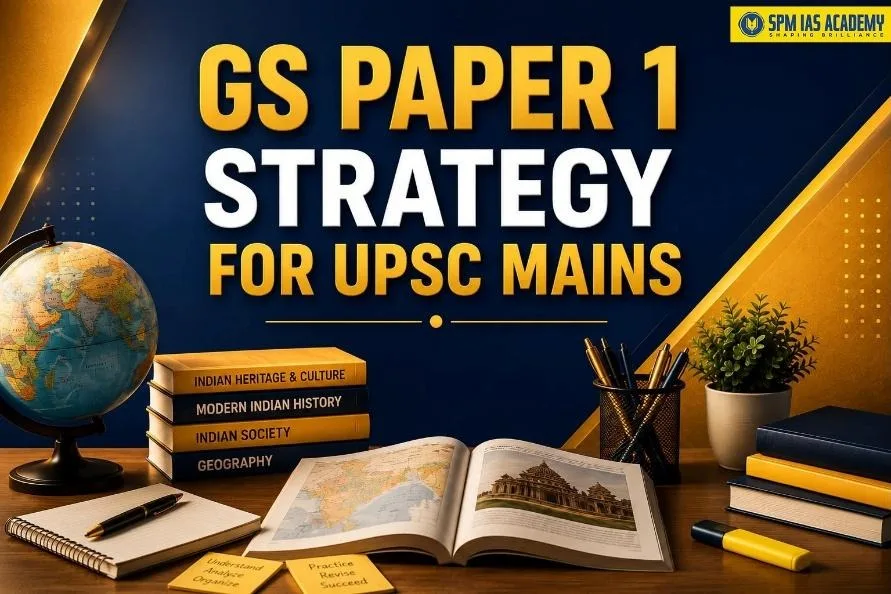
GS Paper 1 covers a wide range of subjects including Indian Heritage and Culture, Modern Indian History, World History, Indian Society, and Geography. Although the syllabus appears vast, it is highly manageable when approached systematically. Moreover, much of the content remains static, making it easier to revise multiple times before the examination.
To score high in GS Paper 1, one should focus on syllabus mapping, selective resources, answer writing, current affairs integration, and regular revision. This article provides a complete roadmap to help aspirants maximize their marks in UPSC Mains.
Students aiming for top civil services often choose IAS coaching in Assam or structured preparation and expert guidance.
Understanding the Importance of GS Paper 1
GS Paper 1 carries 250 marks and often becomes a deciding factor in the final merit list. Unlike optional subjects, every candidate attempts this paper. Therefore, even a difference of 20 to 30 marks can significantly impact rankings.
The paper tests both factual knowledge and analytical ability. UPSC expects candidates to connect historical events, social issues, geographical developments, and cultural traditions with contemporary realities.
Therefore, preparation should focus on understanding rather than memorization.
Many aspirants prefer civil services coaching in North East India to strengthen their preparation and competitive skills.
What is the GS Paper 1 Syllabus for UPSC Mains?
The GS Paper 1 Syllabus for UPSC Mains covers Indian Heritage and Culture, History, Geography, and Indian Society. It aims to assess a candidate’s understanding of India’s historical evolution, cultural diversity, social issues, and geographical phenomena. Therefore, a clear understanding of the syllabus is essential for focused preparation and effective answer writing.
A comprehensive UPSC preparation strategy helps aspirants understand the syllabus, exam stages, and effective study methods.
Indian Heritage and Culture
- Art forms
- Architecture
- Literature
- Cultural developments from ancient to modern times
Modern Indian History
- Significant events from the eighteenth century onwards
- Freedom struggle
- Important personalities
- Various stages of the national movement
Post-Independence India
- Consolidation of India
- Reorganization and integration
- Important developments after independence
World History
- Industrial Revolution
- American Revolution
- French Revolution
- World Wars
- Colonization and decolonization
Indian Society
- Diversity of India
- Women and society
- Population issues
- Globalization
- Urbanization
- Social empowerment
Geography
- Physical geography
- Indian geography
- World geography
- Natural resources
- Geophysical phenomena
A clear understanding of these topics helps candidates avoid unnecessary reading.
Topic-Wise Weightage in GS Paper 1
Although UPSC does not follow a fixed pattern, previous years reveal certain trends.
| Section | Average Questions |
| Geography | 6–8 |
| Indian Society | 4–5 |
| Modern History | 3–4 |
| Art and Culture | 2–3 |
| World History | 2–3 |
Geography and Society generally contribute the largest share of questions. Therefore, candidates should allocate more preparation time to these areas.
Art and Culture for UPSC
Art and Culture remains one of the most scoring sections in GS Paper 1. However, many aspirants find it difficult because of the factual content.
The solution is simple. Focus on understanding the evolution of Indian culture instead of memorizing isolated facts.
Important areas include:
- Temple architecture
- Buddhist architecture
- Sculpture schools
- Classical dance forms
- Indian music
- Paintings
- Literature
- UNESCO World Heritage Sites
Candidates should prepare concise notes that can be revised within a few hours before the examination.
Art and Culture Syllabus for UPSC
The UPSC syllabus mentions:
“Indian culture will cover the salient aspects of Art Forms, Literature and Architecture from ancient to modern times.”
However, aspirants should not restrict themselves to this statement alone.
A comprehensive preparation plan should include:
- Architecture
- Sculpture
- Paintings
- Music
- Dance
- Literature
- Religious traditions
- Cultural institutions
Furthermore, candidates should link static culture topics with current affairs such as UNESCO heritage recognitions and GI tags.
Modern Indian History Strategy
Modern History remains one of the most predictable parts of GS Paper 1.
Focus on:
- British expansion
- Revolt of 1857
- Social reform movements
- Freedom struggle
- Contribution of various sections like women, students in the freedom struggle
- Constitutional developments
Rather than memorizing dates and events, focus on understanding their causes, consequences, significance, and impact on Indian society. This approach develops analytical thinking and helps you connect historical developments with broader social and political changes. As a result, you can write more balanced and insightful answers in UPSC Mains instead of merely presenting a chronological narrative.
World History Strategy
World History usually contributes fewer questions. Nevertheless, it can provide easy marks if prepared strategically.
Important topics include:
- American Revolution
- French Revolution
- Industrial Revolution
- Russian Revolution
- World War I
- World War II
- Decolonization
Preparing timelines can significantly improve understanding and retention.
Indian Society Strategy
Indian Society has emerged as one of the most dynamic sections of GS Paper 1.
Important themes include:
- Women and society
- Population and demographic trends
- Urbanization
- Regionalism
- Communalism
- Globalization
- Poverty and development
Unlike history, society requires current affairs integration.
Therefore, candidates should use:
- Census data
- NFHS reports
- NCRB statistics
- NITI Aayog reports
- Government surveys
These additions improve answer quality considerably.
Geography Strategy for GS Paper 1
Geography consistently contributes a large number of questions.
Physical Geography
Focus on:
- Earthquakes
- Volcanoes
- Cyclones
- Ocean currents
- Climate systems
Indian Geography
Prepare:
- Agriculture
- Monsoon system
- Water resources
- Industries
- Mineral resources
World Geography
Study:
- Resource distribution
- Important regions
- Geopolitical geography
- Environmental challenges
Maps should become an integral part of preparation because they improve both understanding and presentation.
Answer Writing Strategy for GS Paper 1
Many aspirants possess adequate knowledge but fail to convert it into marks. While writing answers for UPSC Mains, you should follow a Structured Format. Every answer should contain:
Introduction
Body
Conclusion
This structure improves readability and examiner satisfaction.
Moreover, you should add Value to Answers by using
- Maps
- Flowcharts
- Diagrams
- Case studies
- Government reports
These elements help answers stand out.
Understand Directive Words
Pay attention to terms such as Discuss, Examine, Analyze, Evaluate, Critically analyze etc. Each directive demands a different approach. If your answers do not fulfill the demand of the question, it will lead to low scoring in UPSC Mains.
90-Day GS Paper 1 Strategy for UPSC Mains
First 30 Days: Build Your Foundation
During the first month, focus on completing the static and high-scoring portions of GS Paper 1. Start with Art and Culture, Modern Indian History, and Basic Geography. These subjects form the foundation of the paper and require multiple revisions. Therefore, concentrate on building conceptual clarity and preparing concise notes for future revision.
Next 30 Days: Expand Your Coverage
In the second phase, cover Indian Society, World History, and Advanced Geography. At the same time, begin daily answer-writing practice. This approach will help you improve analytical thinking and develop the habit of presenting answers in a structured manner. Moreover, regular writing practice will strengthen your understanding of the syllabus.
Final 30 Days: Focus on Revision and Testing
The last month should focus entirely on revision, Previous Year Questions, test series, and mock answer writing. Revise your notes multiple times and identify weak areas through practice tests. Most importantly, avoid starting any new source during this phase. Instead, strengthen what you have already studied and focus on improving answer quality and retention.
What Are the Common Mistakes Aspirants Make in GS Paper 1 Preparation?
Many aspirants lose valuable marks not because of a lack of knowledge, but because of avoidable mistakes during preparation. Therefore, identifying these mistakes early can significantly improve your performance in UPSC Mains.
Some of the most common mistakes include:
- Ignoring regular answer-writing practice
- Reading too many books and sources
- Neglecting revision of completed topics
- Avoiding the use of maps, diagrams, and flowcharts
- Ignoring current affairs integration
- Memorizing facts without understanding concepts
Moreover, candidates should focus on conceptual clarity, consistent revision, and structured answer writing. By avoiding these common errors, aspirants can improve both answer quality and overall GS Paper 1 scores.
What Are the High-Scoring Areas in GS Paper 1?
If your preparation time is limited, focus on the topics that consistently generate questions in UPSC Mains. These areas offer strong scoring opportunities and form the core of the GS Paper 1 syllabus. Therefore, prioritizing them can help you maximize your marks with a focused preparation strategy.
Some of the most important high-scoring areas include:
- Indian Society
- Physical Geography
- Indian Geography
- Modern Indian History
- Art and Culture
Moreover, these subjects have significant overlap with current affairs and answer writing. As a result, strong preparation in these areas can improve both your content quality and overall GS Paper 1 performance.
Conclusion
A well-planned GS Paper 1 Strategy for UPSC Mains can transform your performance in the examination. The syllabus may appear vast, but most topics are static and highly predictable. Therefore, aspirants should focus on conceptual clarity, concise notes, answer writing, and multiple revisions. Moreover, a balanced approach to Art and Culture, History, Society, and Geography can help candidates maximize marks and improve their overall UPSC Mains score.
Source:
Frequently Asked Questions
The best GS Paper 1 strategy for UPSC Mains is to understand the syllabus thoroughly, focus on conceptual clarity, prepare concise notes, and practice answer writing regularly. Moreover, candidates should integrate current affairs with static topics and revise multiple times before the examination.
GS Paper 1 includes Indian Heritage and Culture, Modern Indian History, World History, Indian Society, and Geography. Therefore, aspirants should prepare both static concepts and contemporary issues related to these subjects for effective coverage of the syllabus.
Indian Society, Physical Geography, Indian Geography, Modern Indian History, and Art and Culture are among the highest-scoring areas in GS Paper 1. Furthermore, these topics frequently appear in UPSC Mains and offer strong opportunities to improve overall marks.

Behind every article at SPM IAS Academy is a team of skilled content writers and subject experts committed to making preparation easier for aspirants. From answering common doubts to breaking down complex issues and current affairs, we create content that is accurate, easy to understand, and directly useful for UPSC, APSC, and other competitive exams.