
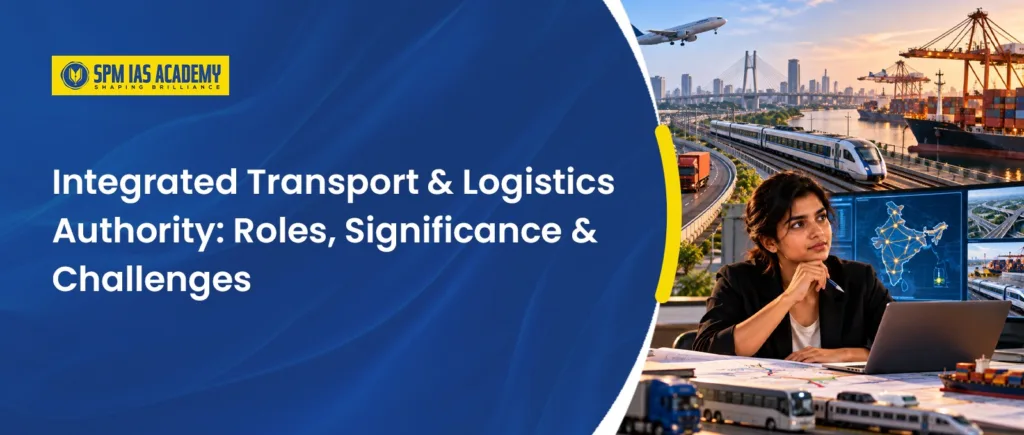
The Integrated Transport & Logistics Authority (ITLA) is a new national-level institution approved by the Union Cabinet in October 2026. The government will establish it as a Special Purpose Vehicle (SPV). It will strengthen integrated planning, research, project appraisal, monitoring and impact assessment across India’s transport and logistics sectors. Most importantly, ITLA aims to reduce fragmented planning among different ministries and agencies. It will promote coordinated development across roads, railways, ports, aviation, waterways, urban mobility and logistics.
For UPSC, APSC and other State PCS examinations, it is important to understand the Indian Economy, infrastructure development, PM Gati Shakti and Vision 2047. Enrolling in APSC coaching in Guwahati can help aspirants study these topics systematically and strengthen their preparation for competitive examinations.
In this article, you will learn about ITLA, its structure, major responsibilities, National Transport Master Plan, significance and key challenges.
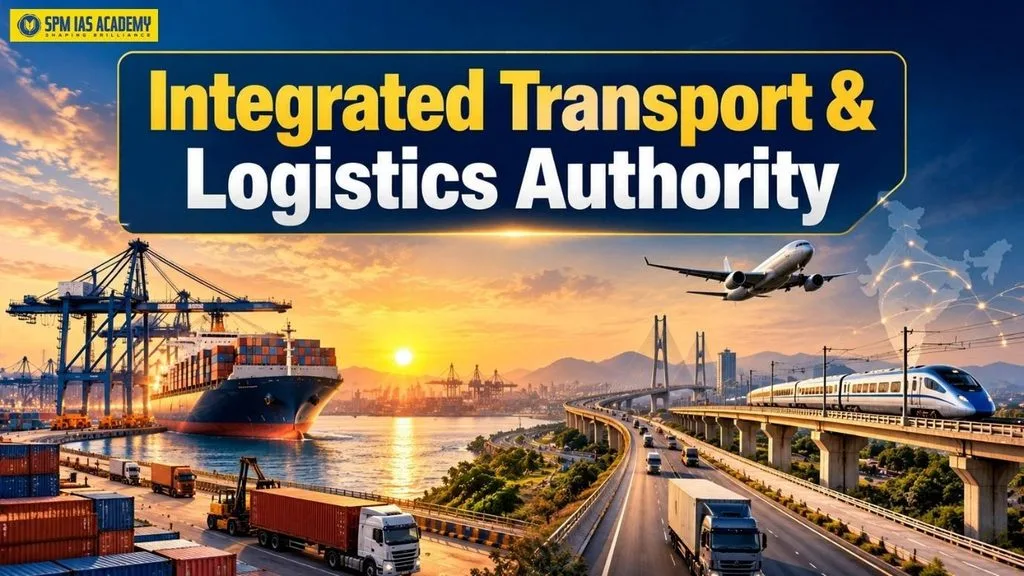
Why was the Integrated Transport & Logistics Authority in the News?
The Union Cabinet approved the establishment of the Integrated Transport & Logistics Authority in October 2026. Aspirants preparing for competitive examinations can study such current affairs topics as part of their preparation, with APSC coaching in Guwahati helping them follow a structured approach to the syllabus.
India is rapidly expanding highways, railways, ports, airports and waterways. However, different ministries and agencies often plan infrastructure separately. Therefore, ITLA will provide an institutional framework for integrated and multimodal transport planning. It will also complement existing initiatives such as the PM Gati Shakti and National Logistics Policy, 2022.
What Is the Integrated Transport & Logistics Authority (ITLA)?
The ITLA will be India’s national apex institution for integrated transport and logistics planning.
Its mandate will cover Roads and highways, Railways, Ports and shipping and Civil aviation. Moreover, it will also include inland waterways, coastal shipping, urban mobility and logistics. Furthermore, ITLA will support policy formulation through research, data analytics and evidence-based planning.
What Are the Roles and Responsibilities of the Integrated Transport & Logistics Authority?
The roles and responsibilities of ITLA will cover several important areas.
- National Transport Master Plan: ITLA will prepare a comprehensive National Transport Master Plan with a planning horizon of 10 years or more. It will integrate different transport modes under a common long-term framework.
- Integrated Transport Planning: ITLA will examine the short-term sectoral plans and annual plans of transport ministries. Consequently, it will help align them with the National Transport Master Plan and promote multimodal infrastructure.
- Project Appraisal and Monitoring: Moreover, it will technically appraise major infrastructure projects costing ₹500 crore or more. However, existing mechanisms will continue to conduct financial appraisal. Similarly, it will also monitor transport and infrastructure projects above ₹500 crore. Moreover, it will help different agencies resolve implementation issues and conduct post-implementation impact assessments.
- National Transport Data Repository: Another major responsibility is the creation of a National Transport Data Repository (NTDR). It will integrate data from sources such as GSTN e-way bills, FASTag, Vahan etc. Consequently, this information will help in freight-flow analysis, planning, project monitoring and impact assessment. Thus, it can strengthen data-driven infrastructure governance.
- Logistics Policy, Research and Skills: It will also advise and assist in reviewing and updating the National Logistics Policy, 2022. In addition, it will promote research and innovation while supporting capacity building, training and skilling in logistic sector.
Why Is Integrated Transport & Logistics Authority Important for India?
The ITLA can strengthen India’s infrastructure governance in several ways. Understanding such developments is also useful for aspirants preparing for civil service examinations, and UPSC coaching in North East India can help them study infrastructure governance and related current affairs systematically.
- Multimodal connectivity: It can improve coordination among roads, railways, ports, airports and waterways.
- Lower logistics costs: Better planning can reduce delays, duplication and inefficient movement of goods.
- Data-driven governance: The NTDR can support evidence-based infrastructure decisions.
- Better project outcomes: Technical appraisal and impact assessment can improve project quality.
- Global competitiveness: Efficient logistics can strengthen Indian manufacturing, exports and supply chains.
- Vision 2047: ITLA can support India’s long-term infrastructure and economic development goals.
What Are the Challenges for Integrated Transport & Logistics Authority?
The challenges for ITLA will mainly arise during implementation.
- Inter-ministerial coordination: ITLA must coordinate effectively with multiple ministries and agencies.
- Centre-State coordination: Many transport projects involve state governments and local authorities.
- Data integration: Moreover, combining datasets from different digital platforms will require common standards and reliable data-sharing systems.
- Institutional overlap: Furthermore, ITLA must clearly coordinate with existing mechanisms. Not having coordination with PM Gati Shakti and the National Logistics Policy may lead to institutional overlap.
- Implementation capacity: Effective monitoring will require skilled professionals in transport economics, logistics, engineering and data analytics.
- Environmental sustainability: Long-term transport planning must balance infrastructure expansion with climate and environmental concerns.
Therefore, clear institutional responsibilities, reliable data and cooperative federalism will be important for ITLA’s success. Similarly, understanding the syllabus, following a consistent study plan and practising mock tests can help aspirants learn how to crack APSC in the first attempt.
Conclusion
The Integrated Transport & Logistics Authority marks an important step towards integrated infrastructure planning in India. It can reduce fragmented decision-making and strengthen multimodal connectivity. Moreover, data-driven planning and better project monitoring can improve logistics efficiency. However, effective coordination among ministries, states and agencies will determine its success. Therefore, strong implementation can make ITLA an important institution for achieving Vision 2047 and improving India’s global logistics competitiveness.
Read More:
Source:
Frequently Asked Questions
1. What is the Integrated Transport & Logistics Authority?
The ITLA is India’s apex institution for integrated transport planning. It will coordinate roads, railways, ports, aviation, waterways and logistics.
2. What are the main functions of the Integrated Transport & Logistics Authority?
ITLA will prepare the National Transport Master Plan. Moreover, it will appraise major projects, monitor infrastructure development and strengthen data-driven transport planning.
3. Why is the Integrated Transport & Logistics Authority important for India?
ITLA will improve multimodal connectivity and reduce fragmented infrastructure planning. Therefore, it can lower logistics costs, strengthen competitiveness and support India’s Vision 2047.

Behind every article at SPM IAS Academy is a team of skilled content writers and subject experts committed to making preparation easier for aspirants. From answering common doubts to breaking down complex issues and current affairs, we create content that is accurate, easy to understand, and directly useful for UPSC, APSC, and other competitive exams.