India’s education system has made significant strides in equipping students with technical and professional skills, contributing to economic growth and individual success. However, it has often fallen short in nurturing values and ethics, leading to societal challenges. As Mahatma Gandhi said, “Education which does not mould character is absolutely worthless.” This statement highlights the gap between skill acquisition and value-based learning in our education system.
Strengths: Acquiring Skills through Education
A. Technical Proficiency:
- The Indian education system has produced world-class engineers, doctors, and IT professionals. Institutions like IITs and AIIMS have become global benchmarks.
- Example: India is a leading exporter of IT talent, with professionals excelling in firms like Google and Microsoft.
B. Economic Growth Contributions:
- Education has equipped the workforce with skills that drive industries like IT, pharmaceuticals, and space technology.
- Example: Initiatives like Skill India and vocational training programs have enhanced employability among youth.
C. STEM Dominance:
- Emphasis on science, technology, engineering, and mathematics (STEM) has placed India at the forefront of innovation, evident in achievements like the Chandrayaan missions and a thriving startup ecosystem.
Weaknesses: Failure in Inculcating Values and Ethics
A. Erosion of Moral Compass:
- While focusing on grades and technical skills, the system often neglects moral education, leading to ethical lapses in society.
- Example: Rising instances of corruption and unethical practices in workplaces reflect this gap.
- Quote: Dr. APJ Abdul Kalam stated, “The purpose of education is to make good human beings with skill and expertise. Enlightened human beings can be created by teachers.”
B. Material Success Over Humanity:
- Overemphasis on academic performance fosters a competitive rat race, sidelining empathy, compassion, and social responsibility.
- Example: Cases of cheating in exams or corporate fraud reveal a lack of integrity instilled during formative years.
C. Limited Ethical Awareness in Professions:
- Professional courses like medicine and management often overlook the importance of ethics.
- Example: Incidents of medical malpractice or corporate greed highlight the absence of values in professional education.
- Quote: Albert Einstein warned, “Try not to become a man of success, but rather try to become a man of value.”
D. Inadequate Focus on Civic and Social Values:
- Civic education is limited to theoretical teaching without practical application, resulting in a lack of civic responsibility.
- Example: Environmental studies are part of the curriculum, yet issues like littering and pollution remain rampant, reflecting a gap between knowledge and action.
E. Disconnection with Culture and Humanity:
- Education often neglects India’s rich cultural and ethical heritage.
- Example: Ancient Indian values like “Vasudhaiva Kutumbakam” (the world is one family) are rarely incorporated into modern education.
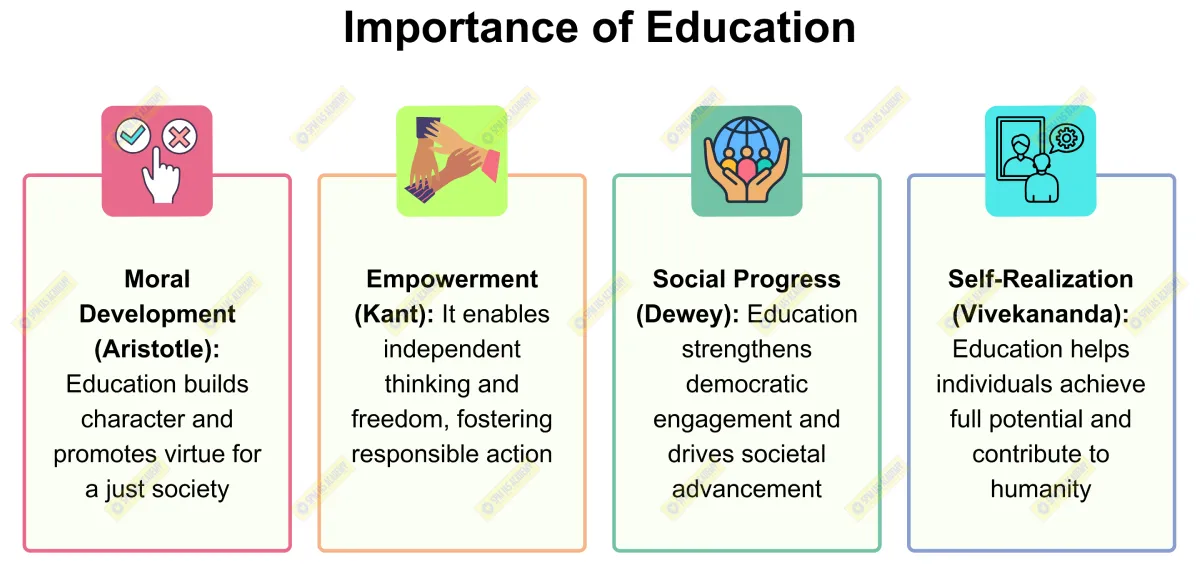
- Quote: Swami Vivekananda stressed, “Education is the manifestation of the perfection already in man,” highlighting the need for moral and spiritual development.
India’s education system has undoubtedly succeeded in imparting skills that drive economic and professional success. However, as Dr. S. Radhakrishnan aptly said, “The end-product of education should be a free creative man, who can battle against historical circumstances and adversities of nature.” Bridging the gap between skill acquisition and value-based education is essential to foster not just competent professionals, but also compassionate and ethical citizens. Integrating ethics, civic responsibility, and cultural values into the curriculum will create a balanced education system aligned with the holistic needs of society.