
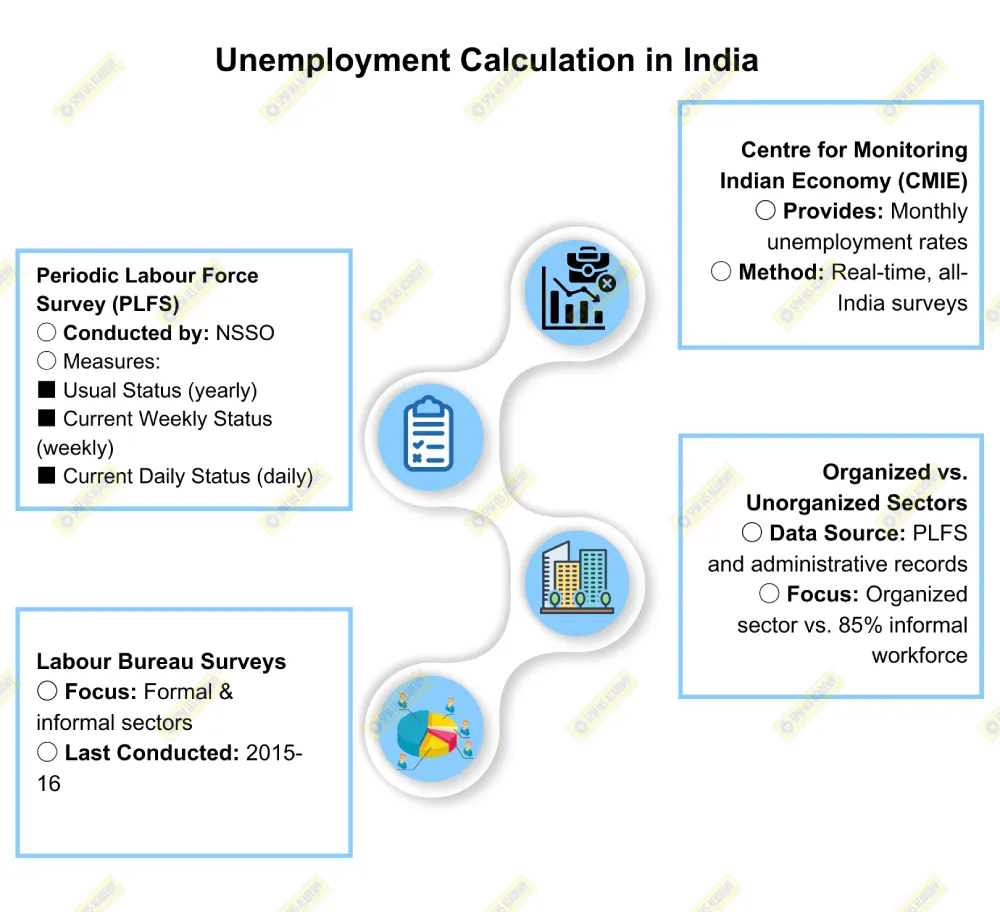
Educated unemployment, particularly among youth, is a pressing issue in India. Despite rapid educational expansion, India’s unemployment rate remains high among graduates, with youth unemployment estimated at around 24% in urban areas as per the Periodic Labour Force Survey (PLFS) 2021. The National Education Policy (NEP) 2020 aims to address this gap by aligning education with skill development and industry needs, offering an opportunity to reduce unemployment among educated youth by fostering employability and entrepreneurship.
Measures to Address Educated Unemployment under NEP 2020
1. Promotion of Vocational Education and Skill Development
- Integrating Vocational Skills: NEP 2020 mandates vocational education from Grade 6 with an aim to cover 50% of students by 2025, blending traditional academics with practical skills. This can prepare students for direct entry into the workforce by equipping them with market-relevant skills.
- Skill India Mission: By aligning with the Skill India Mission, NEP 2020 encourages partnerships with industries for hands-on training, ensuring that students acquire competencies aligned with market demands, thereby improving job readiness.
2. Encouraging Multidisciplinary Education and Flexibility
- Multidisciplinary Universities: NEP promotes multidisciplinary universities to enable students to gain a broad knowledge base. Programs combining STEM and liberal arts, for instance, help graduates adapt to various roles, thus enhancing employability.
- Multiple Entry and Exit Options: The Academic Bank of Credits allows students to exit and re-enter courses, offering flexibility to explore job opportunities or further studies without losing academic progress. This system can reduce dropout rates and promote lifelong learning and skill enhancement.
3. Focus on Digital and Technological Skills
- Expansion of Digital Literacy: NEP 2020 emphasizes digital literacy to prepare students for a tech-driven job market. Digital courses are designed to equip students with essential IT and coding skills that are in high demand.
- Promotion of Online Learning Platforms: NEP endorses platforms like SWAYAM and DIKSHA to offer affordable and accessible courses in cutting-edge areas such as data analytics, AI, and machine learning. Such skills can significantly improve employment prospects, especially in the digital economy.
4. Strengthening Industry-Academia Linkages
- Increased Internships and Apprenticeships: NEP encourages institutions to embed internships and apprenticeships within degree programs. As part of the Apprenticeship Embedded Degree Program supported by the University Grants Commission (UGC), students engage in hands-on learning, which increases industry exposure and employability.
- Setting up Research and Innovation Hubs: The policy recommends establishing research centers and industry collaboration hubs in colleges to foster a culture of innovation. This can boost entrepreneurship and help students develop skills for high-demand sectors.
5. Encouraging Entrepreneurship and Skill-Based Employment
- Entrepreneurship Education: The NEP’s focus on entrepreneurship and critical thinking aims to prepare students for self-employment, with plans to introduce entrepreneurial courses in school and higher education.
- National Initiative for Developing and Harnessing Innovations (NIDHI): The NEP recommends initiatives like NIDHI to support startups in academic institutions, offering funding, incubation, and training for budding entrepreneurs. This can reduce educated unemployment by fostering a job-creator mindset among youth.
The NEP 2020 provides a robust framework to address educated unemployment through skill development, industry alignment, digital literacy, and entrepreneurial support. By modernizing India’s education system, NEP 2020 aims to bridge the gap between education and employability, creating a more skilled, adaptable, and innovation-driven workforce. These measures, supported by effective implementation and industry collaboration, are crucial for transforming the educated workforce into a key driver of India’s economic growth and self-reliance.