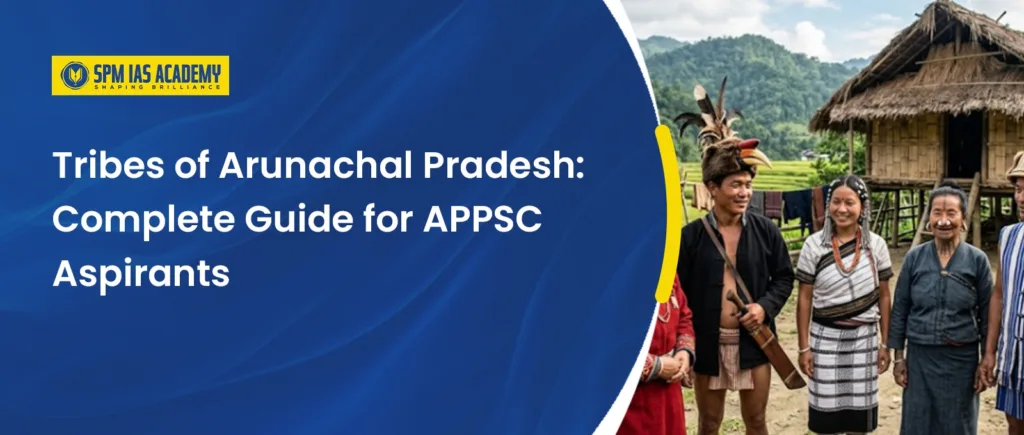
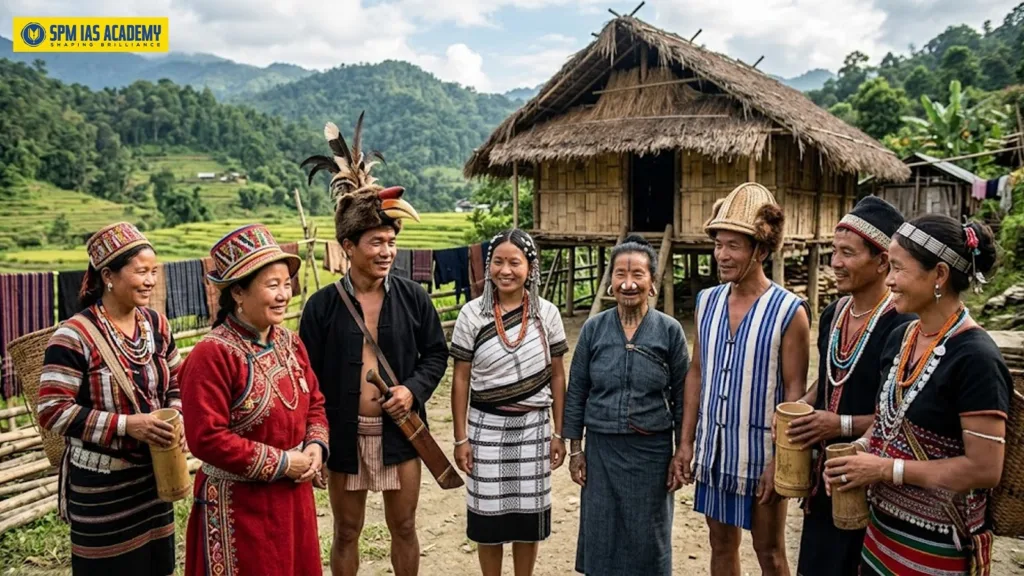
Many people think Arunachal Pradesh is known only for its breathtaking mountains and dense forests. However, the state is equally renowned for its rich tribal heritage and cultural diversity. Arunachal Pradesh is home to nearly 26 major tribes and more than 100 sub-tribes, each with its own unique language, customs, traditions, festivals, and way of life. Understanding these communities is essential for appreciating the cultural richness of Northeast India. This article explores the Major Tribes of Arunachal Pradesh, including prominent tribes such as the Nyishi, Adi, Apatani, and Monpa, along with their distinctive cultural and social characteristics. For aspirants enrolled in online UPSC coaching in Assam, this topic is highly important as questions on the tribes of Northeast India frequently appear in UPSC, APSC, and other competitive examinations under Art and Culture, Geography, Anthropology, and Current Affairs.
How Many Tribes Are There in Arunachal Pradesh?
Arunachal Pradesh is home to 26 major tribes and more than 100 sub-tribes. Each of the communities have their own language, festivals, dress, customs, and way of life. The major communities include the Nyishi, Adi, Galo, Apatani, Tagin, Monpa, Sherdukpen, Mishmi, Tai Khamti, Singpho, Nocte, Wancho, and Tangsa, among others.
Classification of the Tribes of Arunachal Pradesh
The tribes of Arunachal Pradesh can be broadly classified based on their language, geographical region, shared ancestry, and cultural practices. However, this is only a simplified academic classification, as each tribe has its own distinct identity, traditions, and social customs that make it unique. Understanding this classification helps aspirants gain a better understanding of the state’s cultural diversity. For students preparing through APSC online classes, this topic is particularly important, as questions related to the tribes of Northeast India frequently appear in APSC and UPSC examinations under Art and Culture, Anthropology, Geography, and General Studies.
Tani Group
The Tani group includes the Nyishi, Adi, Galo, Apatani and Tagin communities. Their traditional stories connect their origin with a common ancestor called Abo Tani. Although they speak different languages, they share several social customs and nature-based beliefs. Traditionally, agriculture and community festivals form an important part of their lives.
Mishmi Group
The Mishmi communities primarily inhabit the eastern and northeastern regions of Arunachal Pradesh. They include the Idu Mishmi, Digaru (Taraon) Mishmi, and Miju (Kaman) Mishmi, each with its own distinct language, traditions, and cultural practices. Despite these differences, the Mishmi tribes share several common characteristics, including rich oral traditions, exceptional weaving skills, and a deep spiritual and cultural connection with the forests and mountains that shape their way of life. Understanding the Mishmi tribes is important for aspirants preparing at SPM IAS Academy Guwahati, as questions on the tribes of Northeast India frequently appear in UPSC, APSC, and other competitive examinations.
Monpa–Sherdukpen Cultural Group
This broad cultural group is mainly found in Tawang and West Kameng. The Monpa and Sherdukpen communities have been strongly influenced by Tibetan culture and Mahayana Buddhism. Monasteries, prayer flags, Buddhist festivals and traditional crafts form important parts of their lives. The Brokpa, Memba and Khamba communities also share some features of the wider Himalayan Buddhist culture.
Tai Group
The Tai Khamti are the main Tai community of Arunachal Pradesh. They live mainly in Namsai and nearby areas. They follow Theravada Buddhism and have their own Tai language and They are also known for their settled farming practices, traditional manuscripts, Buddhist monasteries, and the vibrant Sangken Festival. The Singpho community follows Theravada Buddhism and shares several cultural similarities with the Tai Khamti people, although they belong to a distinct ethnic and linguistic tradition. Learning about these tribal communities is important for aspirants preparing at the Best UPSC Coaching in Guwahati, as the tribes of Northeast India are a frequently tested topic in UPSC, APSC, and other competitive examinations under Art and Culture, Geography, and Anthropology.
Naga-Related Groups
The Nocte, Wancho, Tangsa and Tutsa communities live mainly in Tirap, Longding and Changlang districts near the Myanmar border. Their cultures share certain similarities with communities in Nagaland and western Myanmar.
Geographical Distribution of Major Tribes in Arunachal Pradesh
The major tribes of Arunachal Pradesh are spread across different valleys, hills and border regions. However, their settlement does not always follow strict district boundaries. The following division shows where the main communities are concentrated:
- Western Arunachal Pradesh: The Monpa mainly live in Tawang and West Kameng. The Sherdukpen and Bugun are found largely in West Kameng, while the Aka or Hrusso live in parts of West and East Kameng.
- Central Arunachal Pradesh: The Nyishi are spread across Papum Pare, East Kameng, Kurung Kumey and Kra Daadi. The Apatani mainly inhabit Ziro Valley in Lower Subansiri, while the Tagin are concentrated in Upper Subansiri. The Galo mainly live in West Siang, Lepa Rada and Lower Siang.
- Eastern Arunachal Pradesh: The Adi communities mainly inhabit East Siang, Upper Siang, Siang and nearby areas. The Idu Mishmi are concentrated in Dibang Valley and Lower Dibang Valley. Other Mishmi groups live in Lohit and Anjaw. Meanwhile, the Tai Khamti and Singpho are found mainly in Namsai, Lohit and parts of Changlang.
- Southeastern Arunachal Pradesh: The Tangsa mainly live in Changlang, the Nocte in Tirap, and the Wancho in Longding. The Tutsa are found in parts of Changlang and Tirap.
Major Tribes of Arunachal Pradesh
Nyishi Tribe
- The Nyishi mainly live in Papum Pare, East Kameng, Kurung Kumey and Kra Daadi. They speak Nyishi and traditionally depend on farming
- Many follow Donyi-Polo and celebrate Nyokum Yullo. Their cane headgear, woven clothes, bamboo work and strong community system are well known.
Adi Tribe
- The Adi mainly inhabit East Siang, Siang and Upper Siang. They speak different Adi language forms and traditionally practise farming.
- Solung is one of their main festivals. They are known for the Ponung dance, colourful weaving, bamboo work and rich oral stories.
Galo Tribe
- The Galo mainly live in West Siang, Lepa Rada and Lower Siang. They speak Galo and traditionally depend on farming and fishing.
- They follow indigenous beliefs and celebrate Mopin. Popir dance, handwoven clothes, bamboo craft and village councils are important parts of Galo life
Apatani Tribe
- The Apatani live mainly in Ziro Valley of Lower Subansiri. They speak Apatani and practise wet-rice farming along with fish farming.
- Dree is their major agricultural festival. They are also known for traditional weaving and their careful use of land and water.
Tagin Tribe
- The Tagin mainly inhabit Upper Subansiri and speak the Tagin language. Farming and animal rearing have long supported their daily life.
- They follow indigenous beliefs linked with Donyi-Polo and celebrate Si-Donyi. Their colourful clothes, cane work and oral stories are culturally important.
Monpa Tribe
- The Monpa mainly live in Tawang and West Kameng. They speak different Monpa languages and traditionally practise farming, trade and yak rearing.
- They follow Mahayana Buddhism and celebrate Losar. Monasteries, Thangka paintings, carpets, wooden masks and carved objects shape their cultural identity.
Sherdukpen Tribe
- The Sherdukpen mainly live around Shergaon and Rupa in West Kameng. They speak Sherdukpen and traditionally depend on farming and livestock.
- Their beliefs combine Buddhism with older local traditions. They celebrate Khikshaba and Choskor and are known for weaving and colourful traditional dress.
Mishmi Tribes
- The Mishmis include the Idu, Kaman or Miju, and Taraon or Digaru groups. They live mainly in Dibang Valley, Lower Dibang Valley, Lohit and Anjaw. Each group has its own language.
- The Idu Mishmi celebrate Reh, while the Kaman and Taraon groups celebrate Tamladu. Mishmi communities are known for fine weaving, forest knowledge and traditional priests.
Tai Khamti Tribe
- The Tai Khamti mainly live in Namsai and parts of Lohit. They speak Tai Khamti and traditionally practise settled rice farming.
- They follow Theravada Buddhism and celebrate Sangken. Their monasteries, traditional script, Buddhist manuscripts, silk weaving and metalwork are especially important.
Singpho Tribe
- The Singpho mainly inhabit Changlang and parts of Namsai. They speak Singpho and traditionally depend on farming and forest resources.
- They follow Theravada Buddhism along with older ancestral beliefs. Shapawng Yawng Manau Poi is their major festival, and they are famous for their traditional knowledge of tea.
Nocte Tribe
- The Nocte mainly live in Tirap and speak the Nocte language. Agriculture, including shifting cultivation, has traditionally supported their livelihood.
- They celebrate Chalo Loku. Bamboo work, woodcraft, and the traditional system of village chiefs are important features of Nocte society.
Wancho Tribe
- The Wancho mainly inhabit Longding and speak the Wancho language. Traditionally, they depended on farming and forest resources.
- Oriah is their major festival. Their beadwork, wood carving, chief-led village system, and old tattooing tradition make their culture distinctive.
Tangsa Tribe
- The Tangsa mainly live in Changlang. They have several sub-groups that speak different but related language forms. Farming remains their main traditional occupation
- They celebrate Moh-Mol. Christianity, Buddhism and indigenous faiths are followed by different groups, while weaving and basket-making remain important crafts.
Aka or Hrusso Tribe
- The Aka, who call themselves Hrusso, mainly live in East Kameng and West Kameng. They speak Hrusso and traditionally depend on farming and trade.
- They follow indigenous beliefs with some Buddhist influence. Nyethrii-Dow and Sarok are important festivals, while weaving and cane work are popular crafts.
Bugun Tribe
- The Bugun mainly live around Singchung in West Kameng. They speak Bugun and traditionally practise agriculture.
- They celebrate Pham-Kho-Sowai and are known for weaving and bamboo craft. The community has also played an important role in protecting the rare Bugun liocichla bird.
Tribes and Their Major Festivals
| Tribe | Major Festival |
| Nyishi | Nyokum Yullo |
| Adi | Solung |
| Galo | Mopin |
| Apatani | Dree |
| Tagin | Si-Donyi |
| Monpa | Losar |
| Sherdukpen | Khikshaba |
| Idu Mishmi | Reh |
| Kaman and Taraon Mishmi | Tamladu |
| Tai Khamti | Sangken |
| Singpho | Shapawng Yawng Manau Poi |
| Nocte | Chalo Loku |
| Wancho | Oriah |
| Tangsa | Moh-Mol |
| Aka or Hrusso | Nyethrii-Dow |
| Bugun or Khowa | Pham-Kho-Sowai |
| Puroik | Gumkum Gumpa |
| Miji or Sajolang | Chindang |
Religious Beliefs of Arunachal Pradesh Tribes
The tribes of Arunachal Pradesh follow different religions and indigenous faiths. In many communities, older traditions continue alongside Buddhism, Christianity, or Hindu practices. Therefore, one tribe may include followers of more than one religion.
Donyi-Polo and Other Indigenous Faiths
- Donyi means the Sun, while Polo means the Moon. Together, they represent truth, balance and the natural order.
- Donyi-Polo is mainly associated with the Adi, Nyishi, Galo, Apatani and Tagin communities.
- The Mishmi, Aka, Bugun and Puroik also follow distinct indigenous traditions centred on nature, spirits and ancestors.
Mahayana Buddhism
- Mahayana Buddhism is mainly followed by the Monpa, Sherdukpen, Memba and Khamba communities
- Monasteries, prayer flags, prayer wheels and Buddhist monks play an important role in religious life.
- Losar and Choskar are important festivals, while Thangka paintings and sacred manuscripts preserve Buddhist teachings.
Theravada Buddhism
- Theravada Buddhism is mainly followed by the Tai Khamti and Singpho communities of eastern Arunachal Pradesh.
- Monks and monasteries guide religious learning, prayer and community activities.
- Sangken is a major festival, while the Tai Khamti also preserve Buddhist texts through their traditional script.
Christianity
- Christianity is followed by people from several communities, including sections of the Nocte, Wancho, Tangsa, Nyishi, Adi and Galo.
- Churches serve as centres for prayer, education and community gatherings.
- Many Christian families also preserve their tribal languages, traditional dress, festivals and customary practices.
Hindu Influences
- Hindu traditions reached tribal communities through long contact with neighbouring Assam and other regions.
- Vaishnavite influence is historically visible among sections of the Nocte and some other eastern communities.
- Some families observe Hindu customs while continuing to follow their traditional tribal practices.
APPSC Prelims Quick Revision Table
| Wancho | District: LongdingFestival: Oriah; Beliefs: Christianity and indigenous faithFeature: Beadwork, wood carving and historical tattooing |
| Tangsa | District: Changlang Festival: Moh-Mol Beliefs: Christianity, Buddhism and indigenous faithsFeature: Numerous sub-groups and language varieties |
| Aka or Hrusso | Districts: East Kameng, West KamengFestival: Nyethrii-Dow Belief: Indigenous faith with Buddhist influenceFeature: Cane work and colourful dress |
| Bugun or Khowa | District: West KamengFestival: Pham-Kho-SowaiBelief: Indigenous faith with Buddhist influence. Feature: Conservation of the Bugun liocichla |
| Puroik | Districts: East Kameng, Papum Pare, Kurung Kumey, Upper SubansiriFestival: Gumkum GumpaBelief: Indigenous faith and other religionsFeature: Bamboo craft and forest knowledge |
| Miji or Sajolang | Districts: East Kameng, West Kameng Festival: ChindangBelief: Indigenous faith with Buddhist influence Feature: Weaving, bamboo craft and oral traditions |
Conclusion
The tribes of Arunachal Pradesh reflect the state’s deep cultural diversity. Each community has its own language, festival, belief system and traditional knowledge. At the same time, farming, nature and community life connect many of them. For APPSC aspirants, understanding their distribution and customs is essential. Protecting these living traditions will help Arunachal Pradesh develop without losing its unique identity and heritage.
Frequently Asked Questions
Arunachal Pradesh has 26 major tribes and more than 100 sub-tribes. However, the number can vary between records because some communities are counted as tribes in one source and sub-tribes in another. Each community has its own language, festivals, customs, and traditional knowledge, making the state culturally diverse.
The tribes are not one uniform community. Each has its own language, dress, festival, belief system and customary practices. Yet many remain closely connected with farming, forests and village life. From Apatani wet-rice farming to Monpa monasteries, every community adds a different chapter to Arunachal Pradesh’s cultural story.

Behind every article at SPM IAS Academy is a team of skilled content writers and subject experts committed to making preparation easier for aspirants. From answering common doubts to breaking down complex issues and current affairs, we create content that is accurate, easy to understand, and directly useful for UPSC, APSC, and other competitive exams.