

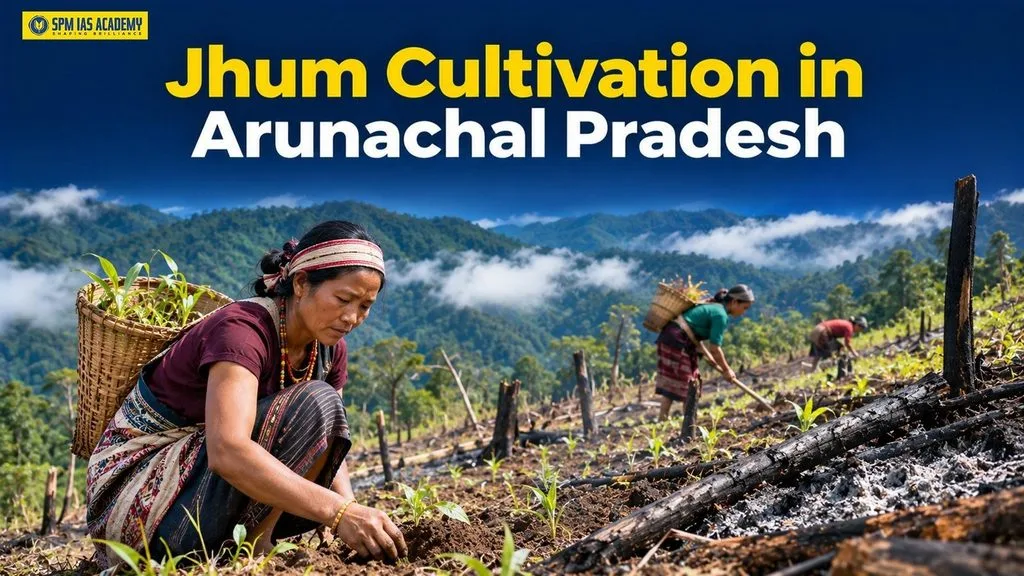
Jhum Cultivation in Arunachal Pradesh is a traditional form of shifting agriculture practised by indigenous communities in the state’s hilly regions. Farmers clear vegetation, burn the dried biomass and grow crops on the land for a short period. Afterwards, they leave the field fallow to restore soil fertility and shift cultivation to another plot. This traditional agricultural practice is an important topic in Northeast India’s geography and is relevant for aspirants preparing through UPSC coaching in Guwahati.
Also called slash-and-burn agriculture, jhum is closely linked to tribal livelihoods, food security and cultural traditions in Northeast India.
This article explains what jhum cultivation is in Arunachal Pradesh, its methods, significance, environmental impacts and sustainable alternatives. This topic is important for APPSC, UPSC and also for other state PCS examinations.
Why Was Jhum Cultivation in Arunachal Pradesh in the News?
Jhum Cultivation in Arunachal Pradesh recently gained attention. The state is gradually shifting from traditional shifting cultivation to settled and sustainable farming practices. Moreover, the state announced new investment projects worth ₹56.46 crore in 2021-22. This transition aims to promote eco-friendly agriculture, reduce environmental degradation and improve farmers’ livelihoods. Therefore, a phased shift towards modern farming methods can strengthen environmental conservation and long-term agricultural sustainability in Arunachal Pradesh.
What Is Jhum Cultivation?
Jhum cultivation is a traditional farming method. This agricultural system is also called Shifting cultivation and the slash-and-burn method. In this farming method, farmers cultivate one plot temporarily before shifting to another. The abandoned land remains fallow, allowing vegetation and soil nutrients to recover naturally. Understanding this agricultural practice is important for aspirants preparing for civil services examinations through UPSC coaching in North East India.
Unlike permanent farming, jhum follows a rotational land-use system. Moreover, farmers often grow several crops together without extensive machinery or chemical fertilisers.
Key Facts About Jhum Cultivation in Arunachal Pradesh
| Particular | Details |
| Other Name | Shifting cultivation/Slash-and-burn agriculture |
| Major Region | Hilly areas of Northeast India |
| Practising Communities | Adi, Galo, Nyishi and other indigenous communities |
| Major Crops | Rice, maize, millets, pulses, vegetables and tubers |
| Farming Method | Clearing, burning, sowing, harvesting and fallowing |
| Main Characteristic | Rotation of cultivated plots |
| Major Concern | Shortening fallow periods and soil degradation |
How is Jhum Cultivation in Arunachal Pradesh Practiced?
Farmers practise Jhum Cultivation in Arunachal Pradesh through several traditional stages. Understanding these stages is useful for studying the state’s agricultural practices and regional geography as part of APSC exam preparation.
- Selection of Land: Firstly, farmers select a suitable hillside plot for cultivation.
- Clearing Vegetation: They cut shrubs and smaller trees, usually during the dry season.
- Drying and Burning: Next, farmers burn the dried vegetation. The ash temporarily adds nutrients to the soil.
- Sowing Seeds: Farmers use simple tools to sow rice, maize, millets, vegetables and other crops.
- Mixed Cropping: Moreover, they grow several crops together to diversify food production.
- Harvesting: Farmers harvest crops after the growing season.
- Fallow Period: Finally, they leave the plot unused for several years so vegetation can regenerate.
However, the length of the fallow period varies according to land availability, population pressure and local farming traditions.
Benefits and Concerns of Jhum Cultivation in Arunachal Pradesh
Jhum cultivation in Arunachal Pradesh supports livelihoods and preserves indigenous knowledge. However, shorter fallow periods raise environmental and economic concerns.
| Benefits of Jhum Cultivation | Concerns of Jhum Cultivation |
| 1. Traditional Livelihoods: Jhum supports the livelihoods of tribal communities, including the Adi, Nyishi and Galo. | 1. Deforestation: Repeated clearing of forest vegetation leads to reduced forest cover and damage natural habitats. |
| 2. Crop Diversity: Farmers grow rice, maize, millets, pulses and vegetables together. This promotes mixed cropping and dietary diversity. | 2. Soil Erosion: Clearing vegetation exposes steep hill slopes to heavy monsoon rainfall. Consequently, topsoil erosion increases. |
| 3. Indigenous Knowledge: Jhum preserves traditional agricultural practices, seed varieties and community-based farming knowledge. | 3. Declining Soil Fertility: Shorter fallow periods prevent soil nutrients and vegetation from recovering naturally. |
| 4. Low External Inputs: Farmers generally use locally available seeds and traditional tools. Therefore, they depend less on chemical fertilisers and pesticides. | 4. Environmental Pollution: Burning vegetation releases smoke, particulate matter and greenhouse gases. |
| 5. Ecological Regeneration: Long fallow periods allow secondary forests to regenerate and restore soil fertility. | 5. Biodiversity Loss: Frequent burning and shortened fallow cycles can damage habitats and reduce biodiversity. |
| 6. Food Security: Mixed cropping provides different food crops and helps reduce dependence on a single harvest. | 6. Low Productivity: Shortened cultivation cycles, limited irrigation and difficult terrain can restrict agricultural yields. |
| 7. Cultural Significance: Jhum forms part of the traditional identity and community practices of several indigenous groups. | 7. Climate Vulnerability: Irregular rainfall, prolonged dry spells and changing monsoon patterns threaten jhum crop production. |
| 8. Adaptation to Hilly Terrain: Jhum allows farmers to cultivate crops on hill slopes where permanent farming infrastructure may be difficult to develop. | 8. Land-Use Pressure: Population growth and reduced access to fallow land can increase pressure on existing cultivation areas. |
What Are the Different Names of Jhum Cultivation?
Jhum cultivation, also known as shifting cultivation, is famous by different names across the world. These practices vary according to climate, crops and traditional farming methods.
- Swidden Cultivation: Farmers clear and burn vegetation to grow crops. Subsequently, they leave the land fallow to restore soil fertility.
- Milpa Farming: Farmers in Mesoamerica grow maize, beans and squash together. Thus, this traditional intercropping system promotes crop diversity.
- Taungya System: Farmers grow agricultural crops alongside young forest plantations. Consequently, this system combines crop production with forest establishment.
- Roca Cultivation: Under this, farmers in parts of South America clear vegetation and cultivate crops such as cassava and plantains. Later, they allow the land to regenerate.
- Ladang Farming: Communities in Southeast Asia practise rotational farming. Moreover, they cultivate different crops and shift fields after a cultivation period.
- Conuco Farming: Caribbean communities practise small-scale mixed cropping. This traditional system supports crop diversity and local food production.
- Ray Cultivation: In parts of the Amazon region, farmers traditionally rotate cultivation areas and allow fallow periods to restore soil fertility.
- Chena Cultivation: Farmers in Sri Lanka clear vegetation and grow seasonal crops. Subsequently, they leave the land fallow to support natural regeneration.
Why Is Jhum Cultivation Significant in Arunachal Pradesh?
Jhum cultivation supports the economy, culture and food systems of several tribal communities. Understanding its significance is important for aspirants studying Assam’s regional economy, tribal communities and agricultural practices at an APSC coaching centre in Assam.
- Livelihood Security: Firstly, it provides food and income to rural households in remote hill areas.
- Cultural Importance: Agricultural activities remain connected with traditional festivals, rituals and community cooperation.
- Crop Diversity: Moreover, mixed cropping supports the cultivation of rice, millets, vegetables and pulses.
- Low External Inputs: Farmers generally depend on local seeds, rainfall and traditional tools.
- Traditional Knowledge: Indigenous communities preserve knowledge about soil, rainfall, crop selection and forest regeneration.
For example, the Galo community combines mixed cropping with traditional soil and water conservation techniques.
What are the Negative Impacts of Jhum Cultivation in Arunachal Pradesh?
Despite its benefits, poorly managed jhum cultivation can create environmental challenges.
- Deforestation: Firstly, repeated clearing can reduce forest cover when vegetation lacks sufficient recovery time.
- Soil Erosion: Secondly, heavy rainfall can wash away exposed topsoil from steep slopes.
- Loss of Soil Fertility: Moreover, short fallow periods prevent adequate nutrient recovery.
- Air Pollution: Furthermore, burning vegetation releases smoke and greenhouse gases. Therefore, it aggravates air pollution leaving catastrophic impact on ecology and biodiversity.
- Biodiversity Loss: Similarly, repeated disturbance may damage forest habitats and reduce species diversity.
- Low Productivity: On the other hand, declining soil fertility can reduce agricultural yields.
However, traditional long-fallow jhum systems can support forest regeneration and biodiversity. Therefore, environmental damage depends largely on farming intensity and land-management practices.
What are the Sustainable Alternatives to Jhum Cultivation in Arunachal Pradesh?
Sustainable farming can reduce environmental damage while protecting tribal livelihoods.
- Agroforestry: Farmers can grow trees alongside crops. Consequently, agroforestry improves soil protection, biodiversity and income opportunities.
- Terrace and Contour Farming: Terrace farming reduces runoff on suitable hillsides. Similarly, contour cultivation slows water movement and prevents soil erosion.
- Improved Mixed Cropping: Farmers can combine cereals, pulses and vegetables to maintain soil health and improve food security.
- Indigenous Soil Conservation: Under Jhum cultivation, the Galo community uses a traditional technique ‘Paper’. It involves placing bamboo or wooden logs across slopes to reduce soil erosion. Furthermore, farmers use bamboo irrigation channels, mulching and vegetative barriers to conserve water and soil.
- Community-Based Land Management: Government agencies can support longer fallow periods, soil conservation and alternative livelihoods through community participation.
Conclusion
Jhum Cultivation in Arunachal Pradesh remains an important part of indigenous agriculture and cultural heritage. It supports food security and livelihoods. But it faces challenges from shorter fallow cycles, soil erosion and forest degradation. Therefore, sustainable farming practices, agroforestry and community-based conservation can help balance agricultural development with environmental protection.
UPSC/APPSC Mains Practice Question
Q. Discuss the environmental impacts of jhum cultivation in Arunachal Pradesh and suggest sustainable alternatives.
Read More:
Source:
Frequently asked question
1. What is Jhum Cultivation in Arunachal Pradesh?
Jhum Cultivation in Arunachal Pradesh is a traditional form of shifting agriculture. Farmers clear vegetation, burn dried biomass and grow crops for a short period. Afterwards, they leave the land fallow to restore soil fertility and shift to another plot.
2. Which tribal communities practise Jhum Cultivation in Arunachal Pradesh?
Several indigenous communities, including the Adi, Galo and Nyishi, traditionally practise jhum cultivation. Moreover, they grow rice, maize, millets, pulses and vegetables through mixed cropping. This farming system supports their livelihoods, food security and cultural traditions.
3. What are the major environmental impacts of Jhum Cultivation?
Poorly managed jhum cultivation can cause deforestation, soil erosion, biodiversity loss and air pollution. Furthermore, shorter fallow periods reduce soil fertility and prevent natural vegetation from recovering. However, traditional long-fallow systems can support ecological regeneration.
4. What are the sustainable alternatives to Jhum Cultivation in Arunachal Pradesh?
Farmers can adopt agroforestry, terrace farming, contour cultivation and improved mixed cropping. Moreover, community-based land management can protect soil and forest resources. These sustainable alternatives can improve agricultural productivity while preserving indigenous livelihoods and traditional knowledge.

Behind every article at SPM IAS Academy is a team of skilled content writers and subject experts committed to making preparation easier for aspirants. From answering common doubts to breaking down complex issues and current affairs, we create content that is accurate, easy to understand, and directly useful for UPSC, APSC, and other competitive exams.