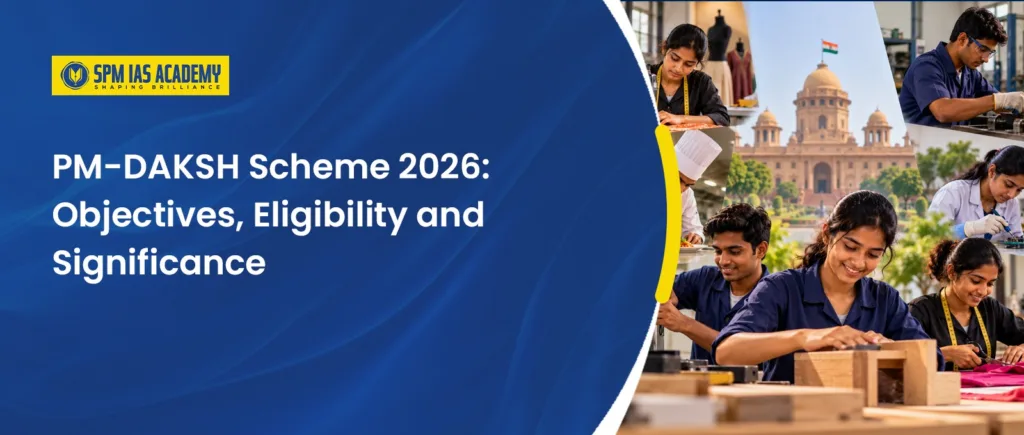
PM-DAKSH or Pradhan Mantri Dakshta Aur Kushalta Sampann Hitgrahi Yojana, is a Central Sector Scheme launched in 2020-21. The Ministry of Social Justice and Empowerment launched this scheme to provide skill training. It provides free skill development training to disadvantaged communities, including SCs, OBCs, EWS, DNTs, and sanitation workers. The scheme aims to improve employability, encourage entrepreneurship and create sustainable livelihoods.
For UPSC, APSC, and other State PCS examinations, PM-DAKSH is an important topic under social justice, government welfare schemes, and inclusive development. This article explains PM-DAKSH, its objectives, eligibility, benefits, and significance for Indian society. Aspirants preparing with the best APSC coaching in Assam can study this scheme to strengthen their understanding of government initiatives and their relevance to competitive examinations.

Why Was PM-DAKSH in the News?
The scheme received attention in 2026 following government updates on its implementation and effectiveness. Aspirants enrolled in UPSC coaching in Guwahati can follow such developments to stay informed about government welfare schemes, policy implementation, and their relevance to current affairs.
In February and March 2026, the government informed Parliament that an evaluation study found encouraging outcomes:
- Over 90% of beneficiaries reported that training aligned with their career goals, local employment needs and intended learning outcomes.
- Beneficiaries reported improved confidence, self-esteem and social recognition, particularly among women and marginalised communities.
- Many trainees continued using their acquired skills and expected long-term income improvements.
Furthermore, a March 2026 parliamentary reply reported that 1,87,305 beneficiaries had received training under the scheme.
What Is PM-DAKSH?
PM-DAKSH is a government-funded skill development initiative that helps disadvantaged communities secure jobs or start small businesses. Moreover, the scheme follows the National Skills Qualification Framework (NSQF) to provide employment-oriented training.
Key Facts of PM-DAKSH
| Feature | Details |
| Launch year | 2020-21 |
| Nodal ministry | Ministry of Social Justice and Empowerment |
| Type | Central Sector Scheme |
| Target groups | SCs, OBCs, EWS, DNTs and sanitation workers, including waste pickers |
| Age eligibility | 18-45 years |
| Training cost | Free for eligible beneficiaries |
| Main objective | Skill development, employment and entrepreneurship |
What Are the Objectives of PM-DAKSH?
The scheme aims to improve the skills, employment opportunities, and economic independence of disadvantaged communities. Its major objectives include: Aspirants enrolled in UPSC coaching in North East India can study these objectives to understand how government welfare schemes support inclusive development and social justice.
- Promote Skill Development: The scheme provides free, industry-relevant training to SCs, OBCs, EWS, DNTs and sanitation workers.
- Improve Employment Opportunities: It equips beneficiaries with practical skills. Consequently, they can access better employment opportunities.
- Encourage Entrepreneurship: The scheme supports self-employment through entrepreneurship development programmes. Moreover, it helps beneficiaries develop business skills.
- Enhance Existing Skills: It offers upskilling and reskilling programmes. Thus, workers can improve their productivity and adapt to changing job requirements.
- Promote Social Inclusion: The scheme focuses on economically and socially disadvantaged groups. Therefore, it aims to reduce inequalities and improve livelihood opportunities.
- Support Safer Livelihoods: It provides skill training to sanitation workers, including waste pickers. Additionally, it promotes safer working practices and alternative livelihood opportunities.
Who Is Eligible for PM-DAKSH?
- Eligible applicants must be Indian citizens aged between 18 and 45 years.
- The scheme covers SCs, OBCs, EWS, DNTs and sanitation workers, including waste pickers.
- For OBC and EWS applicants, the annual family income must be below ₹3 lakh. However, SC, DNT and eligible sanitation-worker applicants have no income ceiling under the published scheme criteria.
What Training and Benefits Does PM-DAKSH Provide?
The scheme offers three major categories of training. Understanding these categories can support APSC exam preparation by helping aspirants learn about government skill-development initiatives, employment opportunities, and welfare measures for disadvantaged communities.
- Upskilling and Reskilling: These programmes help sanitation workers, including waste pickers, improve existing skills and learn safer working practices.
- Short-Term Training: These courses focus on employable skills such as tailoring, food processing, furniture making and other market-oriented occupations.
- Entrepreneurship Development Programmes: These programmes help eligible participants develop business skills and explore self-employment opportunities.
Additionally, beneficiaries receive free training, certification after successful assessment, applicable stipends and assistance with employment or self-employment. Stipend amounts vary by training category and beneficiary group.
What Is the Significance of PM-DAKSH?
This skill training scheme plays an important role in promoting inclusive growth, social empowerment and sustainable livelihoods. Its major significance includes:
- Promotes Social and Economic Inclusion: It provides skill training to disadvantaged communities. Therefore, it helps reduce social and economic inequalities.
- Improves Employment Opportunities: The scheme equips beneficiaries with industry-relevant skills. Consequently, it improves their chances of securing jobs and earning stable incomes.
- Encourages Self-Employment: It offers entrepreneurship development programmes. Moreover, it helps beneficiaries develop skills to start small businesses and become financially independent.
- Empowers Marginalised Communities: The scheme supports SCs, OBCs, EWS, DNTs and sanitation workers. Thus, it promotes equal opportunities and strengthens their participation in economic activities.
- Supports Safer Working Conditions: It provides upskilling and reskilling opportunities to sanitation workers, including waste pickers. Additionally, it encourages safer occupational practices and alternative livelihoods.
- Strengthens India’s Skilled Workforce: The scheme connects vocational training with employment needs. As a result, it supports workforce development and contributes to India’s goal of inclusive economic growth.
Conclusion
PM-DAKSH promotes social and economic empowerment by connecting disadvantaged communities with practical skills and livelihood opportunities. Its focus on employment, entrepreneurship and inclusion makes it an important government scheme for UPSC, APSC and other State PCS examinations.
Read More:
Source:
Frequently Asked Questions
1. What is PM-DAKSH and what is its main objective?
PM-DAKSH stands for Pradhan Mantri Dakshta Aur Kushalta Sampann Hitgrahi Yojana. The Ministry of Social Justice and Empowerment launched this scheme in 2020-21. It provides free skill development training to disadvantaged communities. Moreover, it aims to improve employment opportunities, encourage entrepreneurship and promote economic independence.
2. Who is eligible for the PM-DAKSH scheme?
Indian citizens aged 18-45 years from SC, OBC, EWS, DNT and eligible sanitation-worker communities can apply for PM-DAKSH. OBC and EWS applicants must meet the annual family income limit of ₹3 lakh. However, the scheme does not impose an income ceiling on eligible SC, DNT and sanitation-worker applicants.
3. What are the benefits and significance of PM-DAKSH?
This scheme provides free skill training, certification, applicable stipends and employment assistance. It also offers entrepreneurship development programmes. Consequently, beneficiaries can improve their employability and explore self-employment opportunities. Moreover, the scheme promotes social inclusion, safer livelihoods and economic empowerment among disadvantaged communities across India.

Behind every article at SPM IAS Academy is a team of skilled content writers and subject experts committed to making preparation easier for aspirants. From answering common doubts to breaking down complex issues and current affairs, we create content that is accurate, easy to understand, and directly useful for UPSC, APSC, and other competitive exams.